2025 AML Regulations: High-Value Retail Compliance Steps
The 2025 Anti-Money Laundering (AML) regulations introduce significant changes for high-value retail transactions, necessitating robust compliance frameworks, enhanced due diligence, and proactive risk mitigation strategies for businesses to avoid penalties.
Understanding the 2025 Anti-Money Laundering Regulations for High-Value Retail Transactions: Key Compliance Steps is no longer just a recommendation but a critical imperative for businesses operating in the United States. With new regulatory frameworks on the horizon, retailers must prepare to navigate a more stringent landscape designed to combat financial crime. This article will guide you through the essentials, helping your business adapt and thrive.
The Evolving Landscape of AML in Retail
The retail sector, particularly businesses dealing with high-value goods like luxury items, electronics, and vehicles, has long been a target for money launderers. The anonymity offered by cash transactions and the ease of converting illicit funds into tangible assets make it attractive. As a result, regulators are intensifying their focus, leading to the forthcoming 2025 Anti-Money Laundering (AML) regulations.
These new regulations aim to close loopholes and enhance transparency across all sectors, with a particular emphasis on transactions that could facilitate money laundering. Retailers, therefore, face increased scrutiny and a greater burden of responsibility to identify and report suspicious activities. Ignoring these changes could lead to severe penalties, reputational damage, and operational disruptions.
Key Drivers Behind the 2025 Changes
Several factors are driving the updated AML regulations. Global efforts to combat financial crime, technological advancements making illicit activities easier to conceal, and a growing understanding of money laundering typologies have all contributed to the need for a stronger regulatory framework. The U.S. government, through agencies like FinCEN, is committed to safeguarding the financial system.
- Increased global cooperation on financial crime.
- Technological advancements in illicit fund transfers.
- Analysis of emerging money laundering methods.
- Pressure from international bodies to strengthen AML regimes.
The evolving nature of financial crime means that static regulations are insufficient. The 2025 updates are designed to be more dynamic and responsive, requiring retailers to adopt equally agile compliance programs. This proactive stance is essential for maintaining integrity and avoiding the pitfalls of non-compliance.
In essence, the evolving landscape demands a paradigm shift in how retailers approach AML. It’s not just about ticking boxes but embedding a culture of vigilance and responsibility throughout the organization to effectively counter money laundering risks. This foundational understanding is the first step toward successful compliance.
Defining High-Value Retail Transactions Under 2025 AML
Understanding what constitutes a high-value retail transaction under the 2025 AML regulations is paramount for retailers. While specific thresholds may vary and will be detailed in the final regulatory texts, the general intent is to target transactions that present a higher risk of money laundering. This typically involves large cash payments or combinations of payment methods that, when aggregated, exceed certain monetary limits.
Previously, many retailers focused primarily on cash transactions exceeding $10,000, triggering Currency Transaction Reports (CTRs). The new regulations are expected to broaden this scope, potentially including complex transactions involving multiple payment types or structured payments designed to evade reporting thresholds. Retailers must be prepared for a more expansive definition that captures a wider array of potentially suspicious activities.
Anticipated Transaction Thresholds and Reporting Obligations
While the exact figures are pending, it is anticipated that the 2025 regulations will either lower existing thresholds or introduce new ones for certain types of retail transactions. This could mean more transactions falling under the reporting umbrella, requiring retailers to file Suspicious Activity Reports (SARs) or other relevant documentation with FinCEN. Proactive monitoring systems will be crucial.
- Lowered cash transaction reporting thresholds.
- Inclusion of aggregated transactions across different payment methods.
- Enhanced scrutiny of transactions involving virtual assets or emerging payment technologies.
- Mandatory reporting of suspicious patterns, even below monetary thresholds.
The emphasis will shift from purely cash-based reporting to a more holistic view of customer behavior and transaction patterns. Retailers will need to develop sophisticated internal systems to identify these potentially problematic transactions, moving beyond simple monetary limits to behavioral indicators.
Ultimately, defining high-value retail transactions in 2025 will require a nuanced understanding of both monetary values and behavioral red flags. Retailers must train their staff to recognize these indicators and implement robust systems to capture and report the necessary information accurately and promptly. This proactive approach will be key to avoiding compliance breaches.
Implementing Robust Customer Due Diligence (CDD)
Customer Due Diligence (CDD) is a cornerstone of any effective AML program, and the 2025 regulations will likely place even greater emphasis on its thorough and consistent application in the retail sector. Beyond simply verifying a customer’s identity, CDD involves understanding the nature of their business, the purpose of the transaction, and the source of funds, particularly for high-value purchases.
For retailers, this means moving beyond basic identity checks. It requires implementing processes to gather and analyze more comprehensive customer information, especially when dealing with new customers or those engaging in unusual transaction patterns. The goal is to build a clearer picture of who you are doing business with and to assess the associated money laundering risks.
Enhanced Due Diligence (EDD) for Higher-Risk Scenarios
In certain situations, standard CDD may not be sufficient. The 2025 regulations are expected to mandate Enhanced Due Diligence (EDD) for transactions or customers deemed higher risk. This could include transactions involving politically exposed persons (PEPs), customers from high-risk jurisdictions, or those conducting unusually large or complex transactions.
- Identifying politically exposed persons (PEPs).
- Assessing risks associated with specific geographic locations.
- Verifying the source of wealth and funds for significant transactions.
- Conducting ongoing monitoring of high-risk customer relationships.
EDD processes are more intensive, requiring additional layers of verification and scrutiny. This might involve obtaining additional documentation, conducting background checks, or even seeking third-party verification. Retailers must have clear policies and procedures in place to determine when EDD is necessary and how to execute it effectively.
The implementation of robust CDD and EDD programs is not merely a regulatory obligation; it’s a critical risk management tool. By knowing your customers better, retailers can proactively identify and mitigate potential money laundering risks, protecting both their business and the integrity of the financial system. This commitment to due diligence forms the bedrock of compliance.
Transaction Monitoring and Suspicious Activity Reporting (SARs)
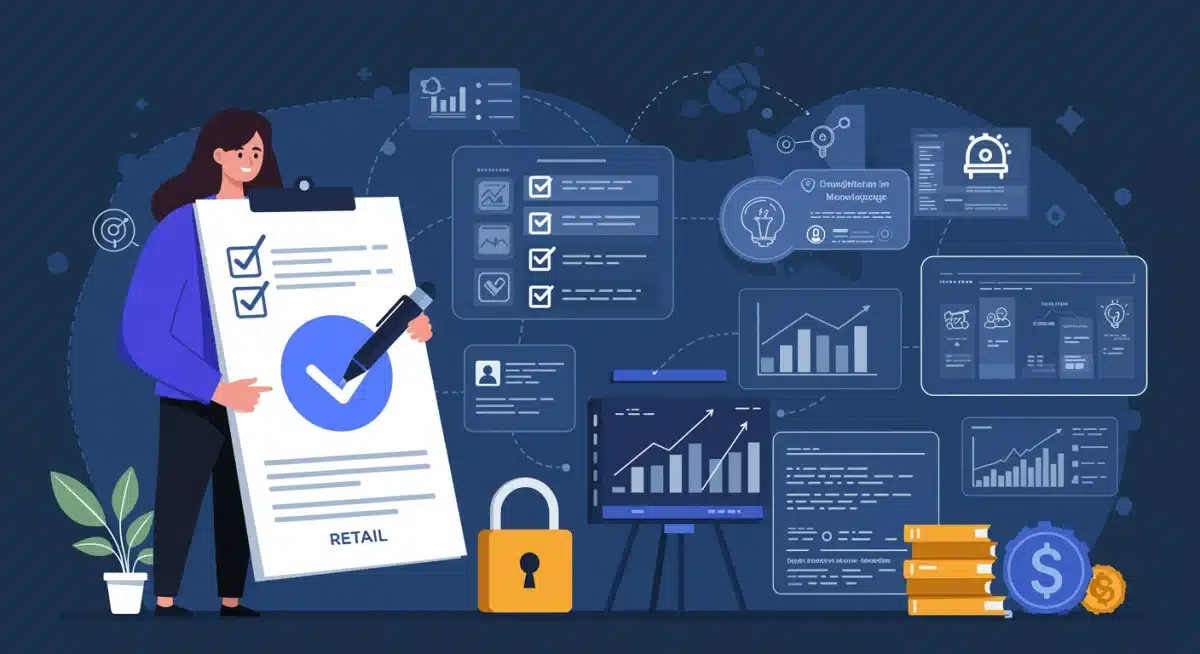
Effective transaction monitoring is the operational heart of AML compliance for retailers, especially with the anticipated 2025 regulations. It involves scrutinizing customer transactions for patterns and behaviors that deviate from normal activity and could indicate money laundering. This goes beyond just looking at individual transactions; it includes analyzing cumulative activities over time.
Retailers will need to invest in or upgrade their transaction monitoring systems to cope with the increased volume and complexity of data. These systems should be capable of identifying red flags such as structured transactions (breaking large amounts into smaller ones to avoid thresholds), frequent large cash purchases, or payments from seemingly unrelated third parties. The goal is to catch unusual activity that might otherwise go unnoticed.

Timely and Accurate SAR Filings
Once a suspicious activity is identified through transaction monitoring, the next critical step is to file a Suspicious Activity Report (SAR) with FinCEN. The 2025 regulations will likely reinforce the importance of timely and accurate SAR filings. Delays or inaccuracies can result in severe penalties and undermine the effectiveness of the AML regime.
- Establishing clear internal procedures for identifying suspicious activity.
- Training staff on red flags and reporting protocols.
- Ensuring prompt investigation and documentation of suspicious incidents.
- Filing SARs within the mandated timeframe, typically 30 days.
The process of filing a SAR is sensitive and requires careful handling to avoid tipping off the suspect. Retailers must ensure that their compliance teams are well-versed in the reporting requirements and that their systems facilitate the secure and confidential submission of these reports. Maintaining detailed records of investigations and decisions is also crucial for demonstrating compliance.
In conclusion, robust transaction monitoring systems coupled with diligent and timely SAR filings are indispensable for retailers under the 2025 AML regulations. These mechanisms not only help in detecting financial crime but also serve as a crucial defense against regulatory enforcement actions, demonstrating a commitment to combating illicit financial flows.
Training and Technology: Essential Tools for Compliance
As the 2025 AML regulations draw near, two pillars become indispensable for retail compliance: comprehensive training and advanced technology. The complexity of the new rules means that without a well-informed workforce and sophisticated tools, even the most well-intentioned compliance programs can fall short. Investing in these areas is not an expense but a strategic necessity.
Employee training must extend beyond basic awareness; it needs to be practical, role-specific, and regularly updated. From frontline sales associates who interact directly with customers to senior management responsible for overall oversight, everyone needs to understand their role in preventing money laundering. Technology, on the other hand, provides the infrastructure to manage data, monitor transactions, and automate reporting processes efficiently.
Developing Effective AML Training Programs
An effective AML training program should be dynamic and tailored to the retail environment. It should cover the latest regulatory requirements, explain common money laundering typologies relevant to retail, and provide clear guidance on how to identify and escalate suspicious activities. Practical examples and role-playing can significantly enhance learning and retention.
- Regular refresher courses for all relevant employees.
- Specialized training for compliance officers and management.
- Modules on identifying red flags specific to high-value retail.
- Training on data privacy and secure information handling.
The goal is to empower employees to act as the first line of defense against financial crime. When employees are confident in their knowledge and skills, they are more likely to identify and report suspicious transactions, thereby strengthening the retailer’s overall AML posture. Training should be an ongoing process, adapting to new threats and regulatory updates.
Leveraging Technology for Enhanced AML Compliance
Modern AML compliance cannot function effectively without robust technological solutions. These include transaction monitoring software, customer relationship management (CRM) systems with integrated CDD functionalities, and secure data storage and reporting tools. AI and machine learning are increasingly being employed to detect subtle patterns indicative of money laundering that human eyes might miss.
Implementing the right technology can streamline compliance processes, reduce manual errors, and provide a more accurate and comprehensive view of financial risks. It also serves as a crucial audit trail, demonstrating due diligence to regulators. Selecting scalable and customizable solutions that can evolve with future regulatory changes is a smart long-term strategy.
In summary, a synergistic approach combining continuous, relevant training with cutting-edge technology is vital for retailers preparing for the 2025 AML regulations. These tools not only ensure compliance but also enhance operational efficiency and protect the business from financial and reputational harm.
Risk Assessment and Internal Controls Frameworks
A proactive approach to the 2025 AML regulations necessitates a comprehensive risk assessment and the establishment of robust internal controls frameworks. Retailers must understand that not all transactions or customers carry the same level of risk. A well-executed risk assessment allows businesses to allocate resources effectively, focusing on areas with the highest potential for money laundering exposure.
This process involves identifying, assessing, and understanding the money laundering and terrorist financing risks specific to the retailer’s operations, products, services, customers, and geographic locations. Once risks are identified, internal controls are designed and implemented to mitigate these risks, ensuring compliance with regulatory requirements and protecting the business from illicit activities.
Conducting a Thorough AML Risk Assessment
An effective AML risk assessment is not a one-time event but an ongoing process. It should consider various factors, including the types of products sold, the payment methods accepted, the customer base, and the channels through which products are offered. The 2025 regulations will likely require more granular and dynamic risk assessments.
- Categorizing customers based on risk profiles (e.g., high, medium, low).
- Assessing risks associated with new products, services, or technologies.
- Evaluating geographical risks related to customer origins or destinations.
- Regularly reviewing and updating the risk assessment based on emerging threats.
The output of the risk assessment should directly inform the design and implementation of the retailer’s AML program. It helps determine the appropriate level of CDD, the intensity of transaction monitoring, and the specific training needs for employees. A strong risk assessment demonstrates a clear understanding of the business’s vulnerabilities.
Establishing and Maintaining Internal Controls
Internal controls are the policies, procedures, and systems put in place to manage and mitigate identified AML risks. For high-value retail transactions, these controls must be particularly stringent. This includes clear guidelines for transaction approval, record-keeping, reporting, and internal audits.
Effective internal controls ensure that the AML program is consistently applied across the organization and that any deviations are promptly identified and addressed. Regular audits and independent reviews are crucial to verify the effectiveness of these controls and to make necessary adjustments. The 2025 regulations will likely demand demonstrable evidence of robust internal control frameworks.
In essence, a well-defined risk assessment coupled with a strong internal controls framework forms the strategic backbone of AML compliance for retailers. These elements enable businesses to not only meet regulatory obligations but also to proactively safeguard against the evolving threats of financial crime.
Future-Proofing Your Retail Business for 2025 and Beyond
The 2025 AML regulations represent a significant milestone, but the regulatory landscape for combating financial crime is constantly evolving. For retailers, merely complying with the current requirements is not enough; true success lies in future-proofing their businesses. This involves adopting a forward-thinking approach that anticipates future changes and embeds flexibility into their compliance strategies.
Future-proofing means staying abreast of technological advancements, understanding emerging money laundering typologies, and actively engaging with regulatory bodies. It’s about building a compliance program that is adaptable and resilient, capable of responding quickly to new threats and legislative updates without requiring a complete overhaul.
Anticipating Future Regulatory Changes
The fight against money laundering is dynamic. Retailers should assume that the 2025 regulations are just another step in an ongoing process. Staying informed about legislative discussions, industry best practices, and international standards will be crucial. Subscribing to financial crime intelligence services and participating in industry forums can provide valuable insights.
- Monitoring legislative developments at federal and state levels.
- Engaging with industry associations for compliance updates.
- Analyzing international AML trends and their potential impact.
- Preparing for potential shifts in reporting technologies or data standards.
Proactive engagement allows retailers to influence policy where possible and, more importantly, to prepare internal systems and processes well in advance of new mandates. This reduces the burden of last-minute adjustments and ensures a smoother transition when new rules come into effect.
Building a Culture of Compliance
Ultimately, the most effective way to future-proof a retail business against AML risks is by fostering a strong culture of compliance. This means embedding AML principles into the company’s DNA, from the executive suite to the newest employee. A culture where integrity, transparency, and vigilance are core values will naturally adapt to new challenges.
Leadership commitment is paramount in this endeavor. When management champions compliance, it sends a clear message throughout the organization. Regular communication, positive reinforcement, and clear accountability mechanisms help to solidify this culture, ensuring that AML is seen as a shared responsibility rather than just a departmental task.
By prioritizing continuous adaptation, technological integration, and a deeply ingrained culture of compliance, retailers can not only meet the demands of the 2025 AML regulations but also establish a resilient framework that will safeguard their businesses against future financial crime threats for years to come.
| Key Compliance Area | Brief Description |
|---|---|
| Customer Due Diligence | Verify customer identity and understand transaction purpose, especially for high-value purchases. |
| Transaction Monitoring | Implement systems to detect unusual patterns and behaviors indicating potential money laundering. |
| Risk Assessment | Periodically identify and evaluate inherent money laundering risks within business operations. |
| Staff Training | Educate employees on AML regulations, red flags, and reporting procedures for effective compliance. |
Frequently Asked Questions About 2025 AML Retail Compliance
The primary goal is to enhance the detection and prevention of money laundering and terrorist financing in the retail sector, particularly concerning high-value transactions. This aims to close regulatory gaps and increase transparency in financial flows, safeguarding the integrity of the U.S. financial system from illicit activities.
While specific thresholds are pending, it’s anticipated that the definition will broaden beyond simple cash limits. It may include aggregated transactions, complex payment structures, and potentially transactions involving virtual assets, requiring retailers to monitor for patterns rather than just single large sums.
Retailers will likely face enhanced CDD requirements, including deeper verification of customer identity, understanding the source of funds for high-value purchases, and potentially mandating Enhanced Due Diligence (EDD) for higher-risk customers or unusual transaction types to mitigate risks effectively.
Technology is crucial for effective compliance, enabling automated transaction monitoring, robust data management, and efficient reporting. Advanced solutions like AI and machine learning can help detect subtle suspicious patterns, streamlining compliance processes and reducing manual effort for retailers.
Future-proofing involves continuous employee training, investing in adaptable technology, conducting regular risk assessments, and fostering a strong culture of compliance. Staying informed about evolving threats and regulatory changes will ensure the business remains resilient against future financial crime challenges.
Conclusion
The advent of the 2025 Anti-Money Laundering regulations signals a pivotal shift for retailers engaged in high-value transactions. Navigating this new landscape successfully hinges on proactive preparation, comprehensive understanding, and robust implementation of compliance measures. From redefining high-value transactions and strengthening Customer Due Diligence to leveraging advanced technology and fostering a pervasive culture of compliance, every step taken now will contribute to a more secure and resilient retail operation. Businesses that embrace these changes not only mitigate risks and avoid penalties but also enhance their reputation and contribute significantly to the global fight against financial crime.