2025 Federal AI Regulations for Retail: Compliance & Ethics

The 2025 federal AI regulations for retail establish a comprehensive framework for ethical deployment and compliance, mandating transparency, fairness, and accountability in AI systems across the United States retail sector.
As we approach 2025, the retail landscape is on the cusp of a significant transformation, driven not only by technological advancements but also by impending regulatory shifts. The anticipated federal AI retail regulations are set to reshape how businesses leverage artificial intelligence, introducing a new era of ethical guidelines and compliance mandates. This guide will delve into what these regulations entail and how retail businesses can prepare.
The Dawn of Federal AI Regulation in Retail
The rapid integration of Artificial Intelligence (AI) into the retail sector has brought unprecedented efficiency and personalization, yet it has also raised complex ethical questions and concerns regarding data privacy, algorithmic bias, and consumer protection. Recognizing the need for a standardized approach, the U.S. federal government has been diligently working towards establishing a comprehensive regulatory framework. These forthcoming 2025 regulations aim to balance innovation with responsibility, ensuring that AI technologies are deployed in a manner that benefits both businesses and consumers.
The primary impetus behind these regulations stems from a collective desire to foster trust in AI systems. Consumers are becoming increasingly aware of how their data is used and how AI influences their purchasing decisions. Without clear guidelines, the potential for misuse, discrimination, and privacy breaches could undermine public confidence and hinder the long-term growth of AI adoption in retail. Therefore, these regulations are not merely restrictive but are designed to provide a stable and predictable environment for AI development and deployment.
Key Drivers for Regulatory Action
- Consumer Protection: Safeguarding personal data and ensuring fair treatment in AI-driven interactions.
- Algorithmic Transparency: Requiring clarity on how AI systems make decisions that impact consumers.
- Bias Mitigation: Addressing and preventing discriminatory outcomes from AI algorithms.
- Data Security: Establishing robust standards for protecting sensitive customer information.
In essence, the upcoming regulations represent a pivotal moment for the retail industry. Businesses that proactively understand and adapt to these changes will not only avoid potential penalties but will also build stronger, more trustworthy relationships with their customer base. This foundational shift underscores the critical need for retailers to begin assessing their current AI practices and strategizing for future compliance.
Ethical Guidelines: Building Trust Through Responsible AI
The core of the 2025 federal AI retail regulations lies in a robust set of ethical guidelines designed to ensure AI systems are used responsibly and equitably. These guidelines extend beyond mere legal compliance, encouraging retailers to adopt a proactive stance on ethical considerations in their AI deployments. Building trust with consumers is paramount, and these guidelines provide a roadmap for achieving that through transparent and fair AI practices.
One of the central tenets of these ethical guidelines is the principle of fairness. AI algorithms, if not carefully designed and monitored, can perpetuate and even amplify existing societal biases. The regulations will mandate that retailers implement measures to identify, assess, and mitigate algorithmic bias in areas such as personalized recommendations, pricing, and credit assessments. This means a critical examination of data sources, model training, and continuous performance monitoring to ensure equitable outcomes for all consumer demographics.
Transparency and Explainability
Retailers will be required to provide greater transparency regarding the use of AI in customer-facing applications. This includes informing consumers when they are interacting with an AI system and, where appropriate, explaining how certain AI-driven decisions were made. Explainable AI (XAI) will become increasingly important, allowing businesses to articulate the rationale behind AI outputs in a way that is understandable to non-technical stakeholders and consumers.
- Clear Disclosure: Informing customers about AI interactions.
- Decision Rationale: Providing explanations for AI-driven outcomes.
- Data Sourcing: Transparency on data used for AI training.
Furthermore, accountability is a key pillar. The regulations will likely establish clear lines of responsibility for AI system failures, errors, or ethical breaches. This necessitates internal frameworks for governance, risk assessment, and incident response related to AI. Retailers must establish internal processes to review and audit their AI systems regularly, ensuring ongoing adherence to ethical standards and regulatory requirements. The move towards ethical AI is not just about avoiding penalties; it’s about fostering a sustainable and trustworthy relationship with the consumer.
Compliance Mandates: Navigating the Legal Landscape
Beyond ethical considerations, the 2025 federal AI retail regulations will introduce specific compliance mandates that carry legal weight and potential penalties for non-adherence. Retail businesses must meticulously review their current AI implementations against these mandates and develop robust strategies for compliance. This involves not only technological adjustments but also comprehensive policy and procedural overhauls.
Data privacy forms a significant portion of these compliance mandates. Building upon existing privacy laws, the new regulations will likely impose stricter requirements on how retailers collect, store, process, and share consumer data used for AI. This could include enhanced consent mechanisms, clearer data retention policies, and stronger data security protocols. Retailers will need to ensure that their data governance strategies are fully aligned with these updated privacy requirements, potentially necessitating investments in privacy-enhancing technologies and dedicated privacy officers.

Operationalizing Compliance
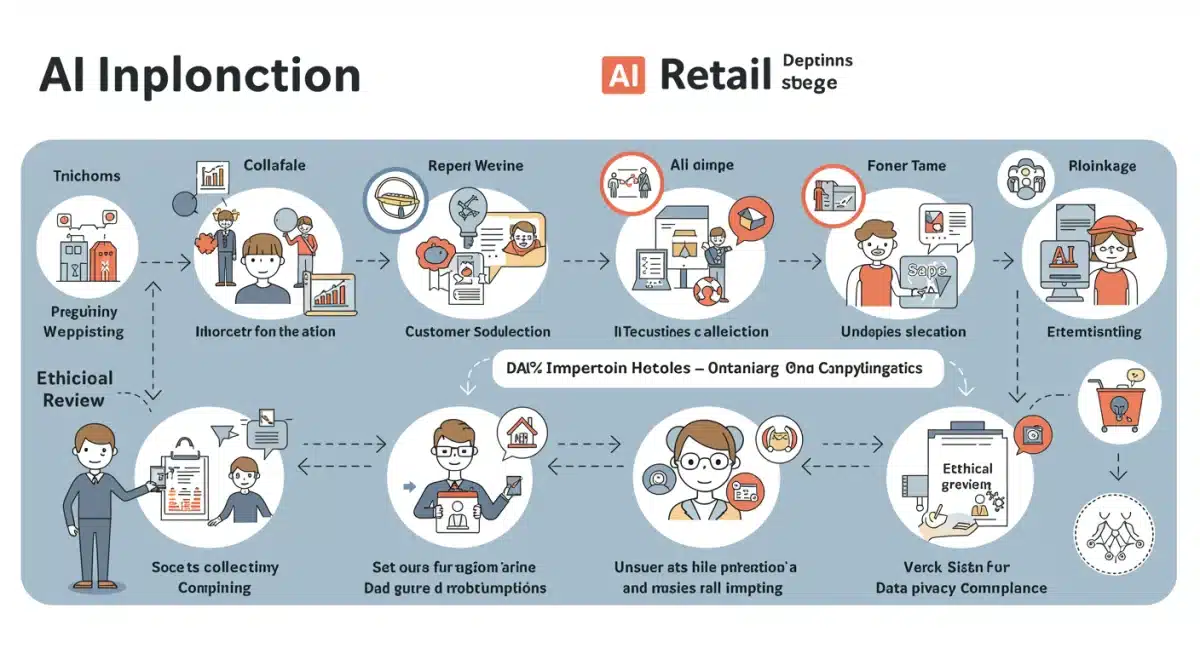
Achieving compliance will require a multi-faceted approach. Retailers will need to conduct thorough audits of all AI systems currently in use, identifying areas of potential non-compliance. This includes evaluating the data used for training AI models, the algorithms themselves, and the interfaces through which AI interacts with customers. Developing a clear roadmap for remediation and ongoing monitoring will be crucial for maintaining compliance in the long term.
- AI System Audits: Regular checks for compliance and bias.
- Data Governance Updates: Aligning with new privacy requirements.
- Employee Training: Educating staff on AI ethics and regulations.
- Incident Response Plans: Preparing for AI-related breaches or failures.
Furthermore, the mandates are expected to address the need for human oversight in critical AI-driven decisions. While AI can automate many processes, certain sensitive areas may require human review or intervention to prevent errors or ensure fairness. This implies establishing clear protocols for human-in-the-loop systems and defining scenarios where human judgment must supersede algorithmic recommendations. The focus is on creating a symbiotic relationship between human intelligence and artificial intelligence, ensuring accountability remains at the forefront.
Impact on Retail Operations and Innovation
The introduction of the 2025 federal AI retail regulations will undoubtedly have a profound impact on retail operations, necessitating significant adjustments across various departments. While the initial response might involve concerns about increased compliance costs and potential limitations on innovation, these regulations also present an opportunity for retailers to refine their AI strategies, foster greater consumer trust, and ultimately drive more sustainable growth.
One immediate impact will be on the development lifecycle of AI solutions. Retailers and their technology partners will need to integrate ethical considerations and compliance checks from the very initial stages of AI design, rather than treating them as afterthoughts. This ‘ethics-by-design’ approach will ensure that new AI tools are inherently compliant and trustworthy, minimizing the need for costly retrofits later on. It will also foster a culture of responsible innovation, where the potential societal impacts of AI are considered alongside its business benefits.
Adapting Business Processes
Changes will span across customer service, marketing, inventory management, and supply chain logistics. For example, AI-powered personalized marketing campaigns will need to adhere to stricter data privacy and non-discrimination guidelines. AI-driven pricing algorithms will face scrutiny for fairness and transparency. Retailers will need to invest in new tools and training to ensure their teams are equipped to manage AI systems in a compliant manner.
Moreover, the regulations could spur innovation in areas like explainable AI and privacy-preserving AI. As compliance becomes a competitive differentiator, retailers might find themselves investing more in technologies that inherently offer greater transparency and data protection. This could lead to the development of more sophisticated and trustworthy AI solutions that ultimately benefit the entire industry, setting new standards for responsible technology use. The long-term vision is one where AI innovation thrives within a clear and ethical framework.
Strategic Preparation for Retailers
Proactive strategic preparation is not merely advisable but essential for retailers aiming to navigate the 2025 federal AI retail regulations successfully. Delaying preparation could lead to significant compliance risks, reputational damage, and missed opportunities. A comprehensive strategy involves several key pillars, from internal assessments to external partnerships, all aimed at fostering a culture of responsible AI adoption.
Firstly, retailers should initiate a thorough internal audit of all existing AI systems and data practices. This audit should identify potential areas of non-compliance with anticipated regulations, including data sourcing, algorithmic bias, privacy protocols, and human oversight mechanisms. Understanding the current state of AI deployment is the foundational step towards remediation and future planning. This involves engaging legal, IT, and business teams to gain a holistic view of AI usage across the organization.
Building a Compliance Framework
- Cross-functional Task Force: Establish a team dedicated to AI regulation compliance.
- Legal Counsel Review: Engage legal experts specializing in AI and data privacy.
- Technology Upgrades: Invest in tools for data anonymization, bias detection, and explainable AI.
- Vendor Management: Ensure third-party AI providers also comply with regulations.
Secondly, investing in employee training and development is crucial. All personnel involved in AI development, deployment, or management must be educated on the ethical guidelines and legal mandates. This includes understanding what constitutes algorithmic bias, the importance of data privacy, and the protocols for human intervention in AI decision-making. A well-informed workforce is a retailer’s first line of defense against non-compliance and ethical breaches.
Finally, retailers should consider engaging with industry associations and regulatory bodies. Participating in discussions and providing feedback can help shape the future of AI regulation and ensure that the mandates are practical and effective for the retail sector. Early engagement can also provide valuable insights into evolving interpretations of the regulations, allowing businesses to adapt their strategies ahead of time. Strategic preparation is about foresight and agility in a rapidly changing regulatory environment.
The Role of Data Governance in AI Compliance
Effective data governance will assume a central and critical role in ensuring compliance with the 2025 federal AI retail regulations. Given that AI systems are fundamentally driven by data, the quality, integrity, and ethical handling of this data directly impact the fairness, transparency, and legality of AI outputs. Retailers must therefore elevate data governance from a technical concern to a strategic imperative.
A robust data governance framework encompasses policies, procedures, and technologies designed to manage data throughout its lifecycle, from collection to deletion. For AI compliance, this means establishing clear guidelines for data acquisition, ensuring that data is collected with appropriate consent and is representative of the target population to mitigate bias. It also involves implementing stringent data quality checks to prevent erroneous or incomplete data from corrupting AI models, which could lead to unfair or inaccurate outcomes.
Key Data Governance Components for AI
Data privacy, a cornerstone of the new regulations, will require retailers to re-evaluate their data anonymization and pseudonymization techniques. The ability to effectively de-identify personal data while still enabling its use for AI training will be a key compliance challenge. Furthermore, data retention policies must be updated to align with regulatory requirements, ensuring that data is not held longer than necessary and is securely disposed of when no longer needed.
- Data Quality Management: Ensuring accuracy and completeness of AI training data.
- Consent Management Systems: Streamlining and documenting consumer data consent.
- Data Anonymization: Implementing techniques to protect personal identifiable information.
- Access Control: Restricting data access to authorized personnel only.
Moreover, data lineage and audit trails will become indispensable. Retailers must be able to trace the origin of data used in AI models, understand how it has been transformed, and demonstrate its compliance with regulatory standards. This level of transparency is vital for auditing purposes and for responding to inquiries from regulators or consumers regarding AI-driven decisions. Ultimately, strong data governance is not just about avoiding penalties; it is about building a foundation of trust and reliability for all AI initiatives within the retail enterprise.
Future-Proofing Your Retail AI Strategy
As the 2025 federal AI retail regulations draw nearer, future-proofing your retail AI strategy becomes paramount. This involves not just meeting the immediate compliance requirements but also developing a forward-looking approach that anticipates future regulatory changes and technological advancements. A resilient AI strategy will enable retailers to maintain their competitive edge while upholding the highest ethical and legal standards.
One key aspect of future-proofing is adopting a flexible and adaptable AI infrastructure. This means investing in modular AI systems that can be easily updated or reconfigured to meet evolving regulatory demands. Cloud-based AI platforms, for instance, often provide the scalability and flexibility needed to implement new compliance features or adjust algorithmic parameters without extensive overhauls. Agility in technology will be a significant advantage in a dynamic regulatory landscape.
Continuous Monitoring and Adaptation
Beyond technology, cultivating a culture of continuous learning and adaptation within the organization is crucial. This includes staying abreast of emerging AI ethics research, participating in industry dialogues, and closely monitoring regulatory developments. Establishing an internal AI ethics committee or designating a chief AI ethics officer can help ensure that ethical considerations are consistently integrated into decision-making processes and strategy formulation.
- Agile AI Infrastructure: Leveraging flexible, scalable AI platforms.
- Dedicated AI Ethics Role: Appointing an ethics officer or committee.
- Industry Collaboration: Engaging with peers and regulatory bodies.
- Scenario Planning: Preparing for various regulatory and technological futures.
Furthermore, retailers should explore opportunities to leverage AI itself to aid in compliance. AI-powered tools can assist in monitoring for algorithmic bias, identifying data privacy risks, and even automating parts of the compliance reporting process. By turning AI into an ally for compliance, businesses can reduce the burden of regulatory adherence while simultaneously enhancing the integrity and trustworthiness of their AI systems. Future-proofing is about creating a symbiotic relationship between innovation and responsibility, ensuring long-term success in the AI-driven retail era.
| Key Aspect | Brief Description |
|---|---|
| Ethical Guidelines | Focus on fairness, transparency, and accountability in AI use to build consumer trust. |
| Compliance Mandates | Legal requirements for data privacy, bias mitigation, and human oversight in AI systems. |
| Operational Impact | Requires adjustments in AI development, business processes, and technology infrastructure. |
| Strategic Preparation | Involves internal audits, employee training, and fostering an ethics-by-design approach for AI. |
Frequently Asked Questions About 2025 AI Retail Regulations
The primary goals are to establish a clear framework for ethical AI use, ensure consumer protection, mitigate algorithmic bias, and promote transparency and accountability in AI systems deployed across the U.S. retail sector. They aim to balance innovation with responsible technology adoption.
The regulations are expected to introduce stricter requirements for data collection, storage, processing, and sharing, particularly concerning consumer data used by AI. Retailers will need enhanced consent mechanisms, clearer data retention policies, and robust data security protocols to comply.
Retailers should conduct internal audits of existing AI systems, invest in employee training on AI ethics, review and update data governance policies, and consider engaging legal counsel specializing in AI. Proactive preparation is key to avoiding penalties and building trust.
While compliance may require initial adjustments, the regulations are designed to foster responsible innovation. By establishing clear ethical boundaries and legal mandates, they aim to create a predictable environment that encourages the development of trustworthy and sustainable AI solutions, ultimately benefiting both businesses and consumers.
Human oversight is crucial, especially for critical AI-driven decisions. The regulations will likely mandate protocols for human review and intervention in sensitive areas to prevent errors, ensure fairness, and maintain accountability, fostering a symbiotic relationship between human intelligence and AI.
Conclusion
The impending 2025 federal AI retail regulations mark a significant turning point for the industry, emphasizing the critical need for ethical deployment and robust compliance. Far from being mere obstacles, these mandates represent an opportunity for retailers to solidify consumer trust, enhance operational integrity, and future-proof their AI strategies. By proactively embracing transparency, fairness, and accountability, businesses can not only navigate the new regulatory landscape but also emerge as leaders in responsible AI innovation, ensuring a sustainable and ethical future for artificial intelligence in retail.