2025 Federal Supply Chain Act: Compliance & Penalties

The 2025 Federal Supply Chain Transparency Act mandates enhanced disclosure and traceability across federal supply chains, requiring businesses to proactively implement robust compliance frameworks to mitigate risks and avoid substantial penalties.
The landscape of global commerce is ever-evolving, and with it, the demands for greater accountability and ethical practices. For businesses operating within the United States, a pivotal shift is on the horizon with the enactment of The 2025 Federal Supply Chain Transparency Act: Ensuring Compliance and Avoiding Penalties. This landmark legislation promises to redefine how organizations manage their supply chains, placing a premium on visibility and ethical sourcing. Are you prepared to navigate these new requirements and safeguard your operations from potential repercussions?
Understanding the 2025 Federal Supply Chain Transparency Act
The 2025 Federal Supply Chain Transparency Act represents a significant legislative effort aimed at enhancing visibility and accountability throughout federal supply chains. This act seeks to address critical vulnerabilities, ranging from national security concerns to environmental and human rights issues, by compelling businesses to disclose more comprehensive information about their sourcing and operational practices.
At its core, the Act mandates a higher degree of transparency, requiring companies that contract with the federal government to meticulously track and report on their supply chain components. This includes identifying the origins of raw materials, manufacturing processes, and labor conditions. The goal is to create a more resilient and ethical supply network, reducing reliance on opaque or high-risk sources.
Key Provisions and Scope
The scope of the 2025 Federal Supply Chain Transparency Act is broad, impacting a wide array of industries and businesses, particularly those engaged in federal contracts. Understanding its key provisions is the first step toward effective compliance.
- Mandatory Disclosure: Companies must disclose detailed information about their supply chain, including suppliers, subcontractors, and the geographic origin of goods and services.
- Risk Assessment Requirements: Businesses are now required to conduct thorough risk assessments to identify and mitigate potential vulnerabilities within their supply chains, such as forced labor, environmental exploitation, or geopolitical instability.
- Due Diligence Standards: The Act establishes new due diligence standards, obligating companies to actively investigate and verify the ethical and legal compliance of their suppliers at every tier.
- Reporting Mechanisms: Standardized reporting frameworks will be introduced to ensure consistency and comparability of disclosed information across various entities.
These provisions are designed to foster an environment where businesses are not only aware of their supply chain’s intricacies but are also actively responsible for its integrity. The Act emphasizes proactive measures rather than reactive responses to supply chain disruptions or ethical breaches.
Who is Affected by the New Regulations?
The reach of the 2025 Federal Supply Chain Transparency Act extends far beyond prime federal contractors. Its implications ripple through various tiers of the supply chain, affecting a broad spectrum of businesses, both large and small. Any company that contributes, directly or indirectly, to goods or services procured by the federal government will likely find itself subject to these new regulations.
This includes manufacturers, distributors, service providers, and even technology companies whose software or hardware is integrated into federal projects. The Act’s intent is to create a holistic view of the supply chain, meaning that even a small component supplier could fall under its purview if their product is part of a larger federal contract. Businesses need to assess their current engagement with federal contracts and subcontracts to determine their exposure.
Identifying Your Role in the Federal Supply Chain
Determining whether your organization is directly or indirectly impacted by the 2025 Federal Supply Chain Transparency Act requires a careful evaluation of your business operations and client portfolio. It’s not always immediately obvious where the federal government’s influence might touch your supply chain.
- Direct Contractors: If your company holds prime contracts with any federal agency, you are directly subject to the Act’s requirements.
- Subcontractors and Suppliers: If you supply goods or services to a prime contractor, or even to a subcontractor of a prime contractor, your operations may be indirectly affected, as prime contractors will likely push compliance requirements down the chain.
- Component Manufacturers: Companies that produce raw materials or components used in products ultimately purchased by the federal government should also prepare for increased scrutiny and data requests.
The Act encourages a ‘trickle-down’ effect, where prime contractors will likely impose stringent transparency and reporting obligations on their partners to ensure their own compliance. Therefore, even if your direct contracts are not with the federal government, understanding your customers’ exposure is crucial for proactive preparation.
Strategies for Ensuring Compliance
Achieving compliance with the 2025 Federal Supply Chain Transparency Act requires a proactive and systematic approach. It’s not merely about filling out forms; it involves a fundamental reassessment of your supply chain management practices, data collection capabilities, and risk mitigation strategies. Businesses must move beyond traditional compliance models to embrace a more integrated and transparent operational framework.
Developing robust internal policies and procedures is paramount. This includes establishing clear guidelines for supplier selection, contract negotiation, and ongoing performance monitoring. Companies should also invest in technology solutions that can facilitate data collection, analysis, and reporting across complex supply networks.
Implementing Robust Supply Chain Due Diligence
Effective due diligence is the cornerstone of compliance under the new Act. This goes beyond basic background checks and delves into a comprehensive understanding of your suppliers’ operations, ethical standards, and legal adherence. It requires continuous monitoring and verification.
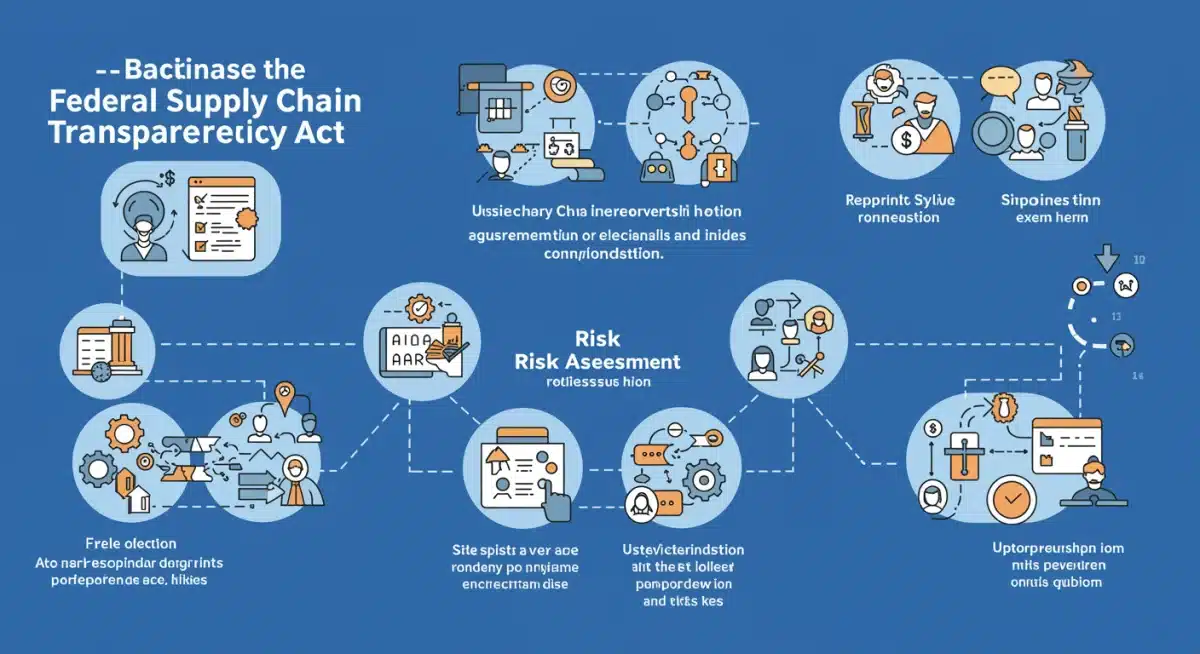
- Supplier Mapping: Create a detailed map of your entire supply chain, identifying all tiers of suppliers and their geographical locations.
- Risk Assessments: Conduct regular and thorough risk assessments for each supplier, focusing on areas like labor practices, environmental impact, and adherence to international trade laws.
- Audits and Certifications: Implement a program of regular supplier audits and require relevant certifications (e.g., ISO standards, ethical sourcing certifications) to validate their compliance.
- Contractual Clauses: Incorporate specific clauses in supplier contracts that mandate compliance with the Act’s provisions and allow for audits and information sharing.
Building strong, collaborative relationships with your suppliers, based on mutual transparency and shared commitment to ethical practices, will be instrumental in navigating these new requirements successfully. This collaborative approach can transform potential compliance burdens into opportunities for enhanced supply chain resilience.
Common Pitfalls and How to Avoid Them
While the 2025 Federal Supply Chain Transparency Act aims to create more ethical and resilient supply chains, navigating its complexities can present several challenges for businesses. Awareness of common pitfalls is crucial for developing effective mitigation strategies and ensuring smooth compliance. Many companies underestimate the depth of data required or the effort involved in engaging with multiple tiers of suppliers.
One significant challenge is the sheer volume and granularity of data that needs to be collected and reported. Legacy systems and fragmented data sources can hinder this process, leading to incomplete or inaccurate disclosures. Another pitfall is a lack of clear ownership or responsibility for supply chain transparency within an organization, leading to fragmented efforts and missed deadlines.
Proactive Measures for Risk Mitigation
Avoiding these pitfalls requires a proactive and integrated approach to supply chain management. It’s about embedding transparency and compliance into the very fabric of your business operations, rather than treating it as a separate, isolated task.
- Invest in Technology: Utilize supply chain management software that offers robust data tracking, analytics, and reporting capabilities to streamline compliance efforts.
- Cross-Functional Teams: Establish a dedicated cross-functional team, including representatives from legal, procurement, operations, and IT, to oversee compliance.
- Supplier Engagement Programs: Develop programs to educate and support your suppliers in understanding and meeting their transparency obligations, fostering a collaborative compliance ecosystem.
- Regular Internal Audits: Conduct frequent internal audits of your supply chain data and processes to identify gaps and rectify issues before they become compliance violations.
By taking these proactive steps, businesses can transform potential compliance challenges into opportunities for operational improvement, enhanced reputation, and stronger, more resilient supply chains.
Penalties for Non-Compliance
The 2025 Federal Supply Chain Transparency Act is not merely a set of guidelines; it carries significant consequences for non-compliance. Businesses that fail to meet the Act’s requirements face a range of penalties, which can have severe financial, reputational, and operational impacts. Understanding these potential repercussions is a powerful motivator for prioritizing compliance.
Penalties can vary depending on the nature and severity of the violation, ranging from monetary fines to contract termination and even exclusion from future federal contracts. The financial implications alone can be substantial, particularly for larger organizations with extensive federal engagements. Beyond direct financial penalties, the damage to a company’s reputation can be long-lasting and difficult to repair, impacting investor confidence and consumer trust.
Financial, Reputational, and Operational Impacts
The consequences of non-compliance extend far beyond simple fines. They can undermine the very foundation of a business, making it difficult to operate effectively and competitively in the market.
- Monetary Fines: Significant financial penalties can be levied for each instance of non-compliance, which can quickly accumulate.
- Contractual Sanctions: Federal agencies may impose contractual sanctions, including suspension of payments, termination of existing contracts, and debarment from future federal contracting opportunities.
- Reputational Damage: Public disclosure of non-compliance can severely damage a company’s brand image, leading to a loss of customer trust, investor skepticism, and difficulty attracting talent.
- Operational Disruptions: Investigations, audits, and corrective actions required due to non-compliance can divert significant resources, disrupt operations, and strain management capacity.
Given the severe implications, it is imperative for businesses to view compliance with the 2025 Federal Supply Chain Transparency Act not as an optional endeavor, but as a critical component of their overall risk management strategy and long-term business sustainability. Proactive investment in compliance infrastructure is a safeguard against these potentially devastating penalties.
Leveraging Technology for Transparency
The complexities of modern supply chains, coupled with the stringent requirements of the 2025 Federal Supply Chain Transparency Act, make manual compliance efforts increasingly impractical. Technology emerges as an indispensable tool for achieving the necessary levels of visibility, data management, and reporting accuracy. Embracing innovative solutions can transform compliance from a burden into a strategic advantage.
Advanced technologies like blockchain, artificial intelligence (AI), and sophisticated supply chain management (SCM) platforms offer powerful capabilities for tracking products from origin to destination, verifying ethical sourcing, and automating compliance reporting. These tools can aggregate data from disparate sources, provide real-time insights, and significantly reduce the administrative load associated with transparency mandates.
Innovations in Supply Chain Management
The integration of cutting-edge technology is revolutionizing how businesses approach supply chain transparency and compliance. These innovations offer unprecedented opportunities to gain granular control and insight into complex global networks.
- Blockchain for Traceability: Distributed ledger technology provides an immutable and transparent record of every transaction and movement within the supply chain, making it easier to verify product origins and ethical practices.
- AI and Machine Learning: AI can analyze vast datasets to identify patterns, predict potential risks, and flag anomalies that might indicate non-compliance, such as discrepancies in supplier information or unusual shipping routes.
- IoT Sensors: Internet of Things (IoT) devices can track environmental conditions, location, and other critical parameters of goods in transit, providing real-time data for enhanced visibility and accountability.
- Integrated SCM Platforms: Modern SCM platforms offer centralized dashboards for managing supplier information, tracking compliance status, automating document workflows, and generating comprehensive reports required by the Act.
By strategically adopting these technological solutions, businesses can not only meet the demands of the 2025 Federal Supply Chain Transparency Act but also gain a competitive edge through improved efficiency, reduced risk, and enhanced stakeholder trust.
Preparing for Future Supply Chain Regulations
The 2025 Federal Supply Chain Transparency Act is likely just one step in a broader trend toward increased regulatory oversight of global supply chains. Businesses should view this legislation not as a one-off compliance exercise, but as a foundational element for future preparedness. The regulatory environment is continually evolving, driven by growing consumer demand for ethical products, escalating geopolitical tensions, and urgent environmental concerns.
Proactive preparation involves establishing adaptable and resilient supply chain frameworks that can absorb new requirements without significant disruption. This means building flexibility into contracts, fostering strong supplier relationships, and investing in continuous improvement of data management and risk assessment capabilities. The goal is to create a ‘future-proof’ supply chain that can quickly pivot to meet new legislative demands.
Building a Resilient and Adaptable Supply Chain
To thrive in an era of dynamic regulation, companies must cultivate supply chains that are inherently resilient and adaptable. This involves moving beyond mere compliance to strategic foresight and continuous innovation.
- Continuous Monitoring: Implement systems for continuous monitoring of both internal operations and external regulatory developments to anticipate future requirements.
- Scenario Planning: Conduct regular scenario planning to assess how potential new regulations or global events could impact your supply chain and develop contingency plans.
- Diversification: Explore diversifying your supplier base and sourcing locations to reduce reliance on single points of failure or regions prone to regulatory shifts.
- Stakeholder Collaboration: Engage proactively with industry associations, government bodies, and technology providers to stay informed and influence the development of future standards.
By embedding these principles into their core strategy, businesses can not only ensure compliance with the 2025 Federal Supply Chain Transparency Act but also position themselves as leaders in responsible and sustainable global commerce, ready to face the challenges of tomorrow’s regulatory landscape.
| Key Aspect | Brief Description |
|---|---|
| Act’s Core Purpose | Enhance transparency and accountability in federal supply chains to mitigate risks. |
| Who is Affected | All businesses, direct or indirect, involved in federal contracts and their supply chains. |
| Compliance Strategy | Implement robust due diligence, supplier mapping, and technology integration. |
| Consequences of Non-Compliance | Fines, contract termination, reputational damage, and operational disruptions. |
Frequently Asked Questions About the Transparency Act
The Act aims to increase visibility and accountability across federal supply chains. Its primary goal is to mitigate risks related to national security, forced labor, and environmental exploitation by requiring comprehensive disclosure from businesses involved in federal contracts.
Small businesses, especially those acting as subcontractors or component suppliers to larger federal contractors, will likely experience increased demands for data and compliance. They may need to adapt their reporting systems and enhance their own due diligence processes to meet new requirements.
Companies must disclose detailed information about their supply chain, including supplier identities, geographic origins of materials, manufacturing processes, and labor conditions. The Act emphasizes traceability and ethical sourcing practices across all tiers.
Non-compliance can lead to significant penalties, including monetary fines, termination of federal contracts, and debarment from future contracting opportunities. Additionally, companies risk severe reputational damage and operational disruptions due to investigations and corrective actions.
Absolutely. Technologies like blockchain for traceability, AI for risk analysis, IoT for real-time tracking, and integrated SCM platforms are crucial. They can streamline data collection, automate reporting, and provide the transparency needed to meet the Act’s stringent requirements efficiently.
Conclusion
The 2025 Federal Supply Chain Transparency Act: Ensuring Compliance and Avoiding Penalties marks a new era for businesses engaged in federal contracts, demanding unprecedented levels of visibility and ethical accountability within their supply chains. This legislation is not merely a regulatory hurdle but an opportunity to build more resilient, ethical, and trustworthy operations. By proactively understanding its provisions, implementing robust due diligence, leveraging technological advancements, and preparing for future regulatory shifts, companies can not only avoid costly penalties but also enhance their competitive standing and contribute to a more responsible global economy. The time for strategic adaptation and comprehensive preparation is now, ensuring that your business is well-positioned to thrive in this evolving landscape of supply chain governance.