Holiday Shopping Trends: Capture 25% More Market Share by 2025

To capture an additional 25% market share by December 2025, retailers must urgently adopt data-driven strategies that leverage emerging holiday shopping trends and optimize omnichannel experiences.
The holiday shopping season represents a pivotal moment for retailers, offering a unique, time-sensitive opportunity: capitalizing on holiday shopping trends to capture 25% more market share by December 2025. Understanding and adapting to the rapid shifts in consumer behavior are not just advantageous but absolutely critical for sustained growth.
Understanding the Evolving Holiday Shopper Landscape
The modern holiday shopper is more informed, digitally savvy, and demanding than ever before. Their journey is rarely linear, often involving multiple touchpoints across various platforms before a purchase is made. This complexity necessitates a holistic approach to engagement and conversion.
Demographic shifts also play a significant role. Younger generations, particularly Gen Z and Millennials, are not only early adopters of new technologies but also prioritize values such as sustainability, authenticity, and personalized experiences. Their purchasing power continues to grow, making them a crucial segment to understand and target effectively during the holiday rush.
The Rise of Digital-First Shopping Behaviors
- Mobile Dominance: A substantial portion of holiday browsing and purchasing now occurs on mobile devices, making mobile optimization non-negotiable.
- Social Commerce Integration: Platforms like Instagram, TikTok, and Pinterest are increasingly becoming direct sales channels, blurring the lines between discovery and transaction.
- Livestream Shopping: Interactive live video sessions are gaining traction, offering real-time engagement and immediate purchase opportunities, especially for exclusive deals.
Understanding these fundamental shifts is the first step toward tailoring strategies that resonate. Retailers who fail to acknowledge these evolving behaviors risk falling behind competitors who are already adapting their models to meet these new consumer expectations.
The holiday shopping landscape is a dynamic ecosystem, continuously reshaped by technological advancements and changing consumer values. A deep dive into these evolving behaviors allows retailers to anticipate needs and craft compelling, relevant offers.
Leveraging Data Analytics for Predictive Insights
In the race to capture market share, data is power. Retailers who can effectively collect, analyze, and act on consumer data will gain a significant competitive edge. Predictive analytics, in particular, offers a crystal ball into future trends and individual customer preferences, enabling proactive strategy adjustments.
By analyzing past purchase history, browsing patterns, and demographic information, businesses can forecast demand for specific products, identify potential surges in interest, and even predict churn. This foresight allows for optimized inventory management, targeted marketing campaigns, and personalized customer experiences that drive loyalty and sales.
Implementing Advanced Analytics Tools
- Customer Segmentation: Grouping customers based on shared characteristics allows for highly targeted marketing messages and product recommendations.
- Behavioral Tracking: Monitoring how customers interact with your website and ads provides insights into their decision-making process and pain points.
- Sentiment Analysis: Understanding customer feedback from social media and reviews can highlight areas for improvement and opportunities for engagement.
Beyond individual customer insights, data analytics can reveal broader market trends. Identifying emerging product categories, shifts in preferred shopping channels, or even the impact of economic factors on purchasing behavior provides a macro view essential for strategic planning. This granular and holistic understanding of data transforms guesswork into informed decision-making.
Ultimately, leveraging data analytics effectively means moving beyond mere reporting to predictive modeling. This enables retailers to not only react to market changes but to anticipate and shape them, positioning themselves for substantial growth during critical shopping periods.
Optimizing Omnichannel Experiences for Seamless Journeys
The distinction between online and offline shopping continues to blur, with consumers expecting a cohesive and effortless experience regardless of the channel. An optimized omnichannel strategy ensures that every touchpoint a customer has with your brand, from social media ads to in-store visits, is integrated and consistent.
This means a customer might discover a product on Instagram, add it to their cart on a desktop, check its availability in a local store via their mobile app, and then pick it up in person. Each step should feel like a natural progression within a single, unified brand experience. Friction points in this journey can lead to abandoned carts and lost sales.
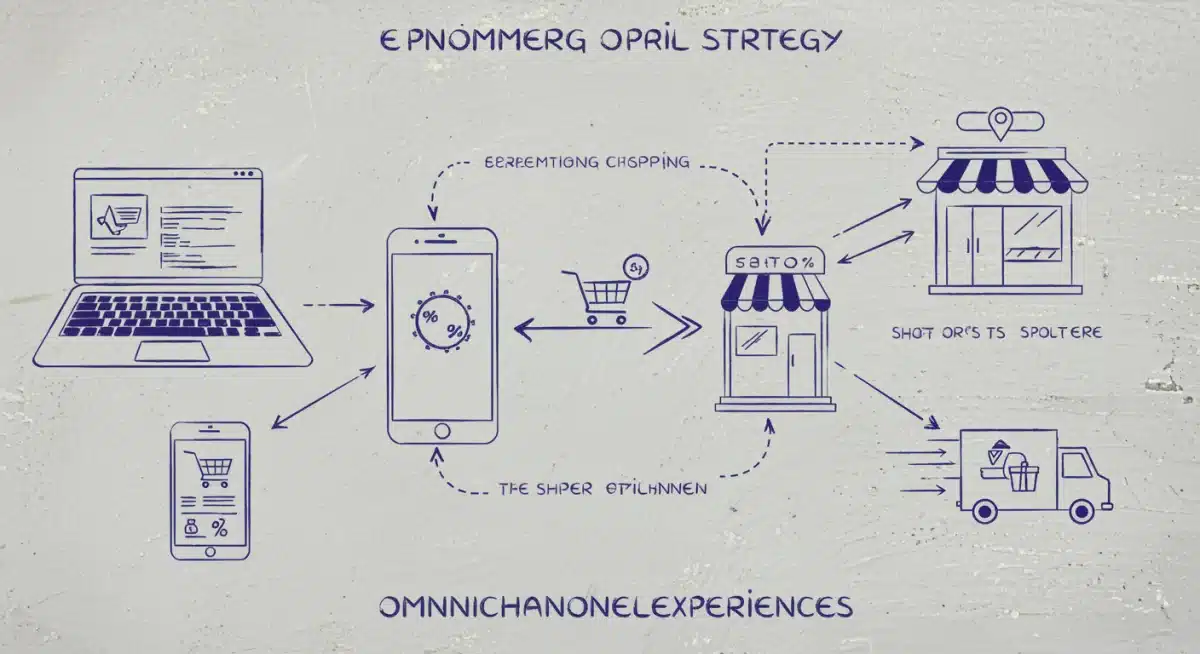
Key Components of a Strong Omnichannel Strategy
- Unified Inventory Management: Real-time inventory updates across all channels prevent stockouts and improve customer satisfaction.
- Personalized Communication: Consistent messaging and offers across email, SMS, and in-app notifications enhance the customer journey.
- Flexible Fulfillment Options: Offering buy online, pick up in-store (BOPIS), curbside pickup, and various shipping speeds caters to diverse customer needs.
A truly effective omnichannel approach extends beyond just sales; it encompasses customer service, returns, and loyalty programs. Ensuring that customer service representatives have access to a complete view of a customer’s interactions, regardless of channel, allows for more efficient and personalized support. This holistic view builds trust and reinforces brand loyalty.
By removing barriers between channels and providing a seamless customer journey, retailers can significantly improve conversion rates and customer retention. This integrated approach is no longer a luxury but a necessity for thriving in the competitive holiday retail environment.
Personalization at Scale: Beyond Basic Recommendations
Today’s consumers expect more than just their name in an email. True personalization involves delivering highly relevant content, product recommendations, and offers that anticipate individual needs and preferences. This level of customization fosters a deeper connection with the brand and significantly impacts purchasing decisions.
Moving beyond basic ‘customers who bought this also bought that’ suggestions, advanced personalization leverages AI and machine learning to understand subtle behavioral cues. This can include adapting website layouts based on browsing history, offering unique promotions tied to past purchases, or even customizing product imagery based on demographic data.
Strategies for Advanced Personalization
- Dynamic Content Delivery: Tailoring website content, emails, and ads in real-time based on user behavior and preferences.
- AI-Powered Product Discovery: Utilizing artificial intelligence to suggest products that genuinely align with individual tastes, not just broad categories.
- Hyper-Segmented Campaigns: Creating micro-segments of customers for highly specific and relevant marketing messages, leading to higher engagement.
The goal is to make each customer feel understood and valued, transforming a transactional relationship into a personal one. This approach can lead to increased average order values, higher conversion rates, and a stronger sense of brand loyalty. However, it requires a robust data infrastructure and a commitment to continuous optimization.
Personalization at scale is about creating individualized experiences for millions of customers simultaneously. It’s a complex endeavor but one that promises substantial returns, particularly during the high-stakes holiday shopping season when consumers are inundated with choices.
Harnessing the Power of Social Commerce and Influencer Marketing
Social media platforms have evolved far beyond mere communication tools; they are now powerful engines for discovery, engagement, and direct sales. For retailers, ignoring the potential of social commerce and influencer marketing during the holiday season is akin to leaving money on the table.
Social commerce integrates the shopping experience directly into social media feeds, allowing users to browse, select, and purchase products without ever leaving the platform. This reduces friction and capitalizes on impulse buying. Influencer marketing, on the other hand, leverages trusted voices to promote products, building authenticity and driving demand.
Effective Social Commerce and Influencer Tactics
- Shoppable Posts and Stories: Direct links or product tags within social content simplify the path to purchase.
- Collaborate with Micro-Influencers: These influencers often have highly engaged, niche audiences that trust their recommendations, leading to higher conversion rates.
- User-Generated Content (UGC) Campaigns: Encouraging customers to share their holiday purchases or experiences creates authentic social proof and expands reach.
The key to success lies in authenticity and relevance. Consumers are increasingly wary of overtly promotional content. Partnering with influencers whose values align with your brand and who genuinely use and love your products will yield far better results. Similarly, creating social content that entertains and informs, rather than just sells, will foster stronger connections.
By strategically integrating social commerce and influencer marketing into your holiday strategy, retailers can tap into vast, engaged audiences, drive direct sales, and build brand advocacy. This dynamic duo offers a potent combination for capturing significant market share.
Proactive Inventory Management and Supply Chain Resilience
The best marketing and sales strategies are meaningless if products aren’t available or can’t be delivered on time. The holiday season inevitably brings increased demand and potential supply chain disruptions, making proactive inventory management and building resilience absolutely critical.
Forecasting demand accurately, especially with the insights gained from data analytics, is paramount. This allows for optimal stocking levels, minimizing both overstocking (which ties up capital) and understocking (which leads to missed sales and dissatisfied customers). Diversifying suppliers and building strong relationships with logistics partners are also essential steps.
Building a Robust Supply Chain for the Holidays
- Demand Forecasting with AI: Utilizing advanced algorithms to predict product popularity and required stock levels with greater accuracy.
- Diversified Supplier Network: Reducing reliance on a single supplier to mitigate risks associated with disruptions.
- Automated Warehouse Operations: Implementing automation to speed up order fulfillment and reduce human error during peak times.
Beyond simply having products in stock, the speed and reliability of delivery are major differentiators. Consumers expect fast, often free, shipping, and clear communication about their order status. Investing in efficient last-mile delivery solutions or offering convenient in-store pickup options can significantly enhance the customer experience.
A resilient supply chain isn’t just about avoiding problems; it’s about creating a competitive advantage. By ensuring products are available and delivered seamlessly, retailers can enhance customer satisfaction, build trust, and ultimately convert more holiday shoppers into loyal customers, contributing directly to market share growth.
Embracing Agile Marketing and Rapid Iteration
The pace of change in retail, particularly during the holiday season, demands agility. What worked last year might not work this year, and what works today might be obsolete tomorrow. An agile marketing approach allows retailers to quickly adapt strategies, test new ideas, and optimize campaigns in real-time.
This involves breaking down traditional, rigid marketing plans into smaller, iterative cycles. Instead of launching a single, large campaign, marketers can deploy several smaller tests, analyze their performance, and rapidly scale up what works while discarding what doesn’t. This continuous feedback loop ensures resources are always allocated to the most effective strategies.
Principles of Agile Marketing
- Test and Learn Culture: Encouraging experimentation and using data to inform decisions, rather than relying solely on assumptions.
- Cross-Functional Teams: Bringing together marketing, sales, and product teams to collaborate closely and respond quickly to market changes.
- Real-Time Performance Monitoring: Constantly tracking key metrics to identify opportunities and issues as they arise, allowing for immediate adjustments.
Agile marketing during the holidays means being prepared to pivot quickly in response to competitor actions, unexpected global events, or sudden shifts in consumer sentiment. It could involve adjusting ad spend across channels, modifying promotional offers, or even launching entirely new product bundles based on emerging trends.
By embracing an agile mindset, retailers can remain responsive and competitive in a fast-evolving market. This flexibility is crucial for seizing fleeting opportunities and ensuring that holiday marketing efforts are as impactful and efficient as possible, ultimately driving towards that 25% market share increase.
| Key Strategy | Brief Description |
|---|---|
| Data-Driven Insights | Utilize analytics and AI for predictive forecasting and personalized customer understanding. |
| Omnichannel Optimization | Create seamless, integrated customer experiences across all digital and physical touchpoints. |
| Advanced Personalization | Deliver hyper-relevant content and offers beyond basic recommendations using AI. |
| Agile Marketing | Implement flexible, iterative campaigns to quickly adapt to changing market conditions and consumer behavior. |
Frequently asked questions about holiday shopping trends
Key emerging trends include heightened demand for personalized experiences, the continued rise of social commerce, increased preference for sustainable products, and a greater emphasis on flexible fulfillment options like BOPIS (buy online, pick up in-store) and curbside pickup. Digital-first strategies will dominate consumer engagement.
Data analytics, especially predictive analytics, enables retailers to forecast demand accurately, personalize marketing messages, optimize inventory, and identify emerging consumer preferences. This allows for proactive decision-making, targeted campaigns, and improved customer satisfaction, directly contributing to increased market share.
An omnichannel strategy ensures a seamless, consistent customer experience across all touchpoints, whether online or in-store. This integration reduces friction in the buying journey, enhances customer satisfaction, and caters to modern shoppers who expect flexibility and convenience, ultimately boosting conversions and loyalty.
Personalization moves beyond basic recommendations to deliver highly relevant content, product suggestions, and offers based on individual customer behavior. This fosters a deeper connection, makes shoppers feel understood, and significantly increases engagement, conversion rates, and average order values during the competitive holiday season.
Small businesses can leverage agility, hyper-personalization, strong community engagement, unique product offerings, and exceptional customer service. Focusing on niche markets, local appeal, and authentic storytelling can create deep customer loyalty that larger retailers often struggle to replicate, securing a valuable market segment.
Conclusion
The opportunity to capture an additional 25% market share by December 2025 during the holiday shopping season is not merely aspirational; it is an attainable goal for retailers who embrace foresight, adaptability, and a customer-centric approach. By deeply understanding evolving consumer behaviors, leveraging cutting-edge data analytics, and meticulously optimizing omnichannel experiences, businesses can navigate the complexities of the modern retail landscape with confidence. Furthermore, a commitment to advanced personalization, strategic social commerce, robust supply chain resilience, and an agile marketing framework will collectively empower retailers to not only meet but exceed the heightened expectations of holiday shoppers. The time to act is now, transforming these insights into tangible strategies to secure a significant competitive advantage and achieve substantial growth.