IoT Sensors for Predictive Maintenance: US Retail’s Path to 30% Less Downtime by 2025
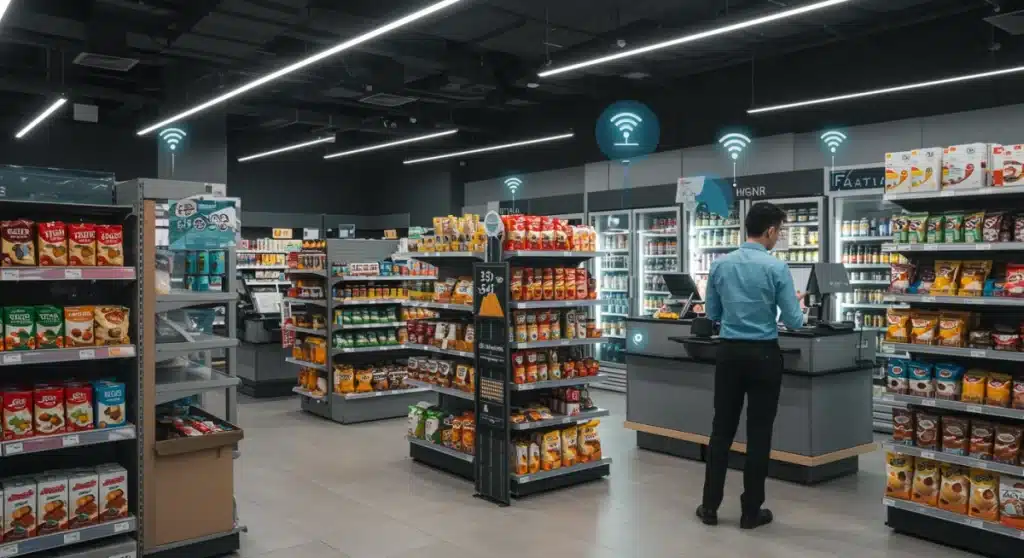
Leveraging IoT sensors for predictive maintenance: Averting 30% of equipment downtime in US retail by 2025 is a critical strategy for retailers seeking to optimize operations, reduce costs, and enhance customer experience through proactive equipment management.
The retail landscape is undergoing a profound transformation, driven by technological advancements and consumer expectations. In this dynamic environment, operational efficiency is paramount, and equipment downtime can translate directly into lost sales and diminished customer satisfaction. This article delves into how leveraging IoT sensors for predictive maintenance: averting 30% of equipment downtime in US retail by 2025 is not just an aspiration but a tangible goal that smart retailers are actively pursuing to secure a competitive edge.
The imperative of predictive maintenance in retail
In the fast-paced world of US retail, every minute of equipment uptime contributes to profitability and customer satisfaction. From refrigeration units in grocery stores to point-of-sale (POS) systems and HVAC units, the smooth operation of various assets is crucial. Traditional reactive maintenance approaches often lead to unexpected breakdowns, costly emergency repairs, and significant disruptions to business operations. This is where predictive maintenance, powered by IoT sensors, emerges as a game-changer.
Predictive maintenance uses data analytics to forecast equipment failures before they occur. By continuously monitoring the condition of assets, retailers can schedule maintenance proactively, minimizing downtime and optimizing resource allocation. The shift from reactive to predictive strategies is not merely an upgrade; it’s a fundamental change in how retail operations manage their physical infrastructure, leading to substantial improvements in efficiency and cost savings.
Understanding the cost of downtime
The financial implications of equipment downtime in retail are staggering. Beyond the immediate repair costs, there are hidden expenses that significantly impact a retailer’s bottom line. These include lost sales due to non-functional equipment, decreased customer satisfaction, potential for inventory spoilage (especially in temperature-sensitive goods), and the strain on staff dealing with unexpected issues.
- Lost sales: Inoperable POS systems or display units directly impact transactions.
- Spoiled inventory: Refrigeration failures can lead to significant product loss.
- Customer dissatisfaction: Malfunctioning equipment creates a negative shopping experience.
- Emergency repair costs: Expedited services and parts often come at a premium.
By understanding these costs, retailers can more clearly see the return on investment (ROI) in predictive maintenance technologies. The goal of averting 30% of equipment downtime is ambitious but achievable, offering a clear pathway to enhanced operational resilience and profitability.
The transition to predictive maintenance is an essential step for US retailers aiming to modernize their operations and mitigate the substantial financial and reputational risks associated with unexpected equipment failures. This proactive approach ensures that assets perform optimally, supporting a seamless and efficient retail environment.
How IoT sensors enable predictive maintenance
The backbone of any effective predictive maintenance strategy is the data collected from equipment. This is precisely where IoT sensors play a pivotal role. These small, interconnected devices are designed to gather real-time data on various operational parameters, transforming inanimate objects into intelligent, communicative assets. This constant stream of information provides an unprecedented level of insight into the health and performance of retail equipment.
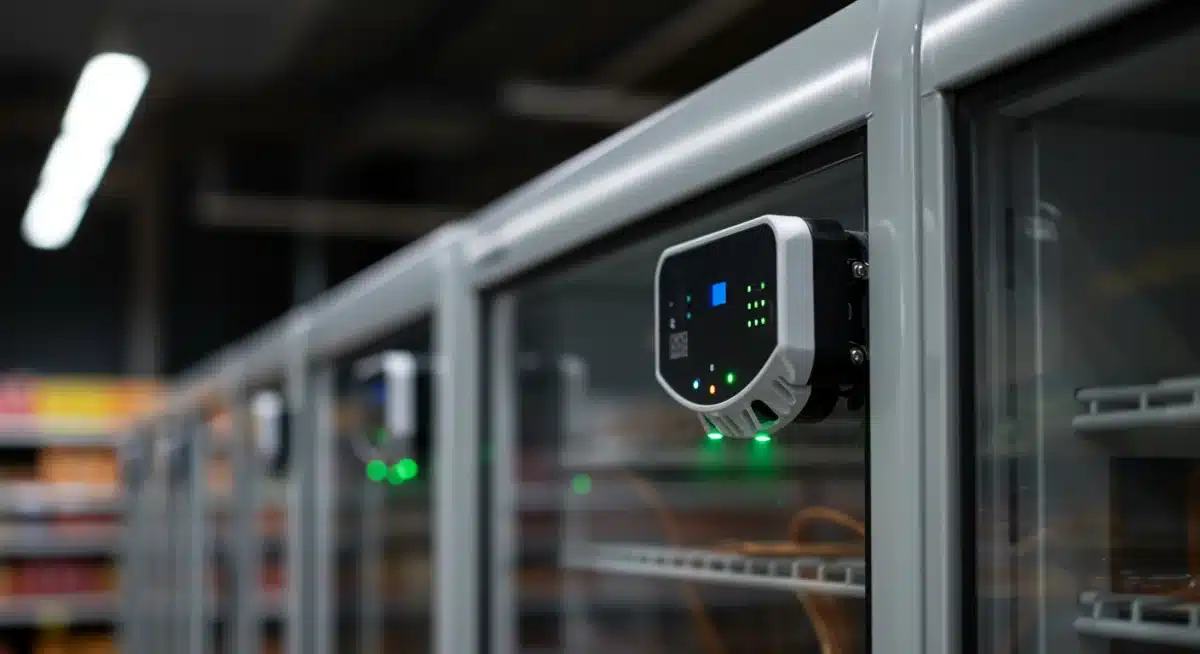
IoT sensors can monitor a wide array of metrics, depending on the type of equipment and the specific needs of the retail environment. For example, temperature sensors can track refrigeration units, vibration sensors can monitor motors in HVAC systems, and current sensors can detect anomalies in electrical components. The data collected is then transmitted to a central platform, often cloud-based, where it is analyzed using advanced algorithms and machine learning.
Types of data collected by IoT sensors
The versatility of IoT sensors allows for the collection of diverse data points that are crucial for identifying potential equipment issues before they escalate. This rich data set forms the foundation for accurate predictions and timely interventions.
- Temperature: Essential for refrigeration, HVAC, and sensitive electronics.
- Vibration: Indicates mechanical wear and tear in rotating machinery.
- Current/Voltage: Signals electrical anomalies or motor strain.
- Humidity: Important for product storage and environmental control.
- Pressure: Monitored in systems like hydraulic lifts or pneumatic tools.
By continuously analyzing these parameters, anomalies that might indicate impending failure can be identified. For instance, a gradual increase in a motor’s vibration or a slight but consistent rise in a refrigeration unit’s temperature could signal a need for inspection or maintenance, long before a catastrophic breakdown occurs. This capability is central to achieving the ambitious goal of significantly reducing downtime.
The integration of IoT sensors into retail infrastructure provides a powerful mechanism for moving beyond reactive repairs. By providing continuous, real-time insights into equipment health, these sensors empower retailers to make informed maintenance decisions, ultimately preventing costly disruptions and ensuring operational continuity.
Implementing IoT predictive maintenance in retail
Implementing an IoT-driven predictive maintenance program requires careful planning and strategic execution. It’s not just about installing sensors; it involves integrating technology, processes, and people to create a cohesive and effective system. Retailers need to consider the types of equipment to monitor, the data platforms to use, and the training required for their maintenance teams.
The first step typically involves conducting a thorough assessment of existing equipment to identify critical assets that would benefit most from predictive monitoring. This includes evaluating the cost of downtime for each asset and the feasibility of sensor integration. Following this, selecting the right IoT sensors and a robust data analytics platform is crucial. The platform should be capable of ingesting large volumes of data, performing real-time analysis, and providing actionable insights through user-friendly dashboards.
Key steps for successful implementation
A structured approach to implementation ensures that retailers can maximize the benefits of IoT predictive maintenance, leading to significant reductions in equipment downtime and operational costs.
- Asset assessment: Identify critical equipment and potential failure points.
- Sensor deployment: Strategically install appropriate IoT sensors on selected assets.
- Data integration: Connect sensors to a centralized data platform or cloud service.
- Analytics and insights: Utilize machine learning models to analyze data and predict failures.
- Workflow automation: Integrate predictive insights into maintenance scheduling systems.
Training staff is also a vital component. Maintenance technicians need to understand how to interpret data insights and respond to predictive alerts. This often involves a cultural shift from reactive problem-solving to proactive prevention. Successful implementation means creating a feedback loop where data-driven insights continuously refine maintenance strategies.
By carefully planning and executing the implementation of IoT predictive maintenance, US retailers can unlock significant operational efficiencies. This strategic investment not only minimizes disruptive downtime but also extends the life of valuable assets, contributing to long-term profitability and sustainability.
Challenges and considerations for US retailers
While the benefits of leveraging IoT sensors for predictive maintenance are clear, US retailers face several challenges in adopting and scaling these solutions. Addressing these considerations upfront is crucial for a successful deployment and for realizing the full potential of this transformative technology. These challenges range from initial investment costs to data security and integration complexities.
One significant hurdle is the initial capital investment required for sensors, infrastructure, and software platforms. While the long-term ROI is compelling, securing budget for these upfront costs can be an obstacle, particularly for smaller retailers. Another critical consideration is data security and privacy. IoT devices collect vast amounts of data, and ensuring this data is protected from cyber threats is paramount, especially when sensitive operational information is involved.
Overcoming common obstacles
Navigating these challenges requires a strategic approach that balances technological innovation with practical business realities. Many solutions involve careful vendor selection, phased implementation, and robust cybersecurity protocols.
- High upfront costs: Explore leasing models, phased rollouts, and clear ROI projections.
- Data security: Implement robust encryption, access controls, and compliance with regulations.
- Integration complexity: Choose platforms with open APIs and prioritize interoperability.
- Lack of skilled personnel: Invest in training programs or partner with specialized providers.
- Scalability: Select solutions designed for easy expansion across multiple retail locations.
Furthermore, integrating IoT systems with existing legacy systems can present technical difficulties. Retailers must ensure that new solutions can communicate effectively with their current infrastructure, such as enterprise resource planning (ERP) or computerized maintenance management systems (CMMS). Overcoming these challenges requires a clear strategy, strong partnerships, and a commitment to continuous improvement.
Despite these challenges, the competitive advantages offered by predictive maintenance make it an unavoidable consideration for US retailers. Proactive planning and a structured approach to addressing these obstacles will enable businesses to successfully integrate IoT solutions and achieve their operational efficiency goals.
Measuring impact: Averting 30% downtime by 2025
The ambitious goal of averting 30% of equipment downtime in US retail by 2025 through IoT predictive maintenance is not just a target; it’s a measurable outcome that can significantly impact a retailer’s bottom line and operational efficiency. Measuring this impact involves tracking key performance indicators (KPIs) before and after the implementation of predictive maintenance systems. This data-driven approach allows retailers to quantify the benefits and demonstrate a clear return on investment.
Key metrics to monitor include mean time between failures (MTBF), mean time to repair (MTTR), overall equipment effectiveness (OEE), and, of course, the total percentage reduction in unplanned downtime. By establishing baseline metrics prior to implementation, retailers can accurately assess the improvements brought about by IoT-enabled predictive maintenance. This continuous measurement and analysis also provide valuable insights for optimizing the system further.
Key performance indicators for success
Tracking specific KPIs is essential for evaluating the effectiveness of predictive maintenance initiatives and confirming progress towards the 30% downtime reduction goal. These metrics provide a clear picture of operational improvements.
- Reduction in unplanned downtime: Direct measure of averted failures.
- Decrease in maintenance costs: Lower emergency repair and labor expenses.
- Extended asset lifespan: Proactive maintenance prolongs equipment utility.
- Improved OEE: Higher equipment availability and performance.
- Enhanced customer satisfaction: Fewer disruptions lead to better shopping experiences.
The 30% target is achievable through a combination of early fault detection, optimized maintenance scheduling, and a shift from reactive to proactive strategies. By continuously monitoring equipment health and acting on predictive insights, retailers can dramatically reduce the incidence of unexpected breakdowns. This not only saves money but also enhances the overall reliability and reputation of the retail operation. Regular reporting and analysis of these KPIs are crucial for demonstrating the value and driving continued investment in these technologies.
Ultimately, measuring the impact of IoT predictive maintenance goes beyond just numbers; it’s about building a more resilient, efficient, and customer-centric retail business. The objective data collected validates the strategic shift and reinforces the benefits of modernizing maintenance practices.
The future of retail: Smart stores and IoT integration
The journey towards leveraging IoT sensors for predictive maintenance is part of a broader trend: the evolution of smart stores. As retailers increasingly adopt digital technologies, IoT integration will extend far beyond maintenance, creating highly intelligent and interconnected retail environments. This future vision encompasses everything from personalized shopping experiences to optimized supply chains, all powered by a network of smart devices and data analytics.
In smart stores, IoT sensors will not only predict equipment failures but also monitor inventory levels, track customer flow, optimize lighting and climate control, and enhance security. The data generated from these diverse applications will converge to create a holistic view of store operations, enabling unprecedented levels of efficiency, personalization, and responsiveness. Predictive maintenance is a foundational element of this future, ensuring the underlying infrastructure is always operational and reliable.
Expanded role of IoT in retail operations
The capabilities of IoT are rapidly expanding, promising to revolutionize nearly every aspect of retail operations. This comprehensive integration will redefine how stores function and interact with customers.
- Inventory management: Real-time tracking to prevent stockouts and optimize replenishment.
- Customer analytics: Understanding foot traffic patterns and in-store behavior.
- Energy efficiency: Smart lighting and HVAC systems adapting to occupancy and conditions.
- Enhanced security: Proactive monitoring and incident detection.
- Personalized experiences: Tailoring offers and information based on customer presence.
The vision of a fully integrated smart store is one where operational issues are minimized, customer experiences are maximized, and business decisions are consistently data-driven. Predictive maintenance ensures that the physical backbone of these smart stores – the equipment – is always functioning optimally, providing a stable platform for other advanced technologies. This holistic approach will be critical for US retailers aiming to thrive in an increasingly competitive and technologically advanced market.
The future of retail is undoubtedly smart, and IoT integration is at its core. By embracing predictive maintenance and expanding IoT applications, retailers can build robust, efficient, and customer-focused operations that are well-prepared for the demands of tomorrow.
| Key Point | Brief Description |
|---|---|
| IoT Sensor Role | Collects real-time data (temp, vibration, current) on retail equipment to monitor health. |
| Predictive Maintenance Goal | Avert 30% of US retail equipment downtime by 2025 through proactive interventions. |
| Benefits for Retailers | Reduces operational costs, minimizes lost sales, and enhances customer experience. |
| Implementation Challenges | Includes initial costs, data security, and integration with existing legacy systems. |
Frequently asked questions about IoT predictive maintenance
IoT predictive maintenance in retail involves using Internet of Things sensors to collect real-time data from store equipment. This data is then analyzed to predict potential failures before they occur, allowing retailers to schedule maintenance proactively and prevent unexpected downtime. It’s a shift from reactive repairs to data-driven prevention.
By continuously monitoring key operational parameters like temperature, vibration, and current, IoT sensors can detect subtle anomalies that indicate impending equipment failure. This early detection enables maintenance teams to intervene before a breakdown occurs, significantly reducing unplanned downtime and contributing to the 30% target.
High-value and critical equipment with significant impact on operations benefit most. This includes refrigeration units, HVAC systems, elevators, escalators, POS terminals, and automatic doors. Any equipment whose failure would disrupt sales or customer experience is a prime candidate for IoT monitoring.
Adopting IoT predictive maintenance offers numerous benefits for US retailers, including reduced operational costs from fewer emergency repairs, increased equipment lifespan, minimized inventory loss due to equipment failure, enhanced customer satisfaction from uninterrupted service, and improved overall operational efficiency and profitability.
Yes, challenges exist, such as the initial investment in sensors and platforms, ensuring data security and privacy, integrating new systems with existing legacy infrastructure, and the need for specialized technical skills. However, these can be managed through careful planning, phased implementation, and strategic partnerships with technology providers.
Conclusion
The journey toward leveraging IoT sensors for predictive maintenance: averting 30% of equipment downtime in US retail by 2025 is not merely a technological upgrade but a strategic imperative for modern retailers. By embracing these advanced solutions, businesses can transcend the limitations of reactive maintenance, moving towards a proactive, data-driven operational model. This shift promises not only significant cost savings and enhanced efficiency but also a superior customer experience, free from the disruptions of unexpected equipment failures. As the retail landscape continues to evolve, the integration of IoT for predictive maintenance will undoubtedly be a cornerstone of resilient, profitable, and future-ready retail operations across the United States, setting a new standard for operational excellence.