Micro-Fulfillment Centers: Halving Shipping Times by 2025
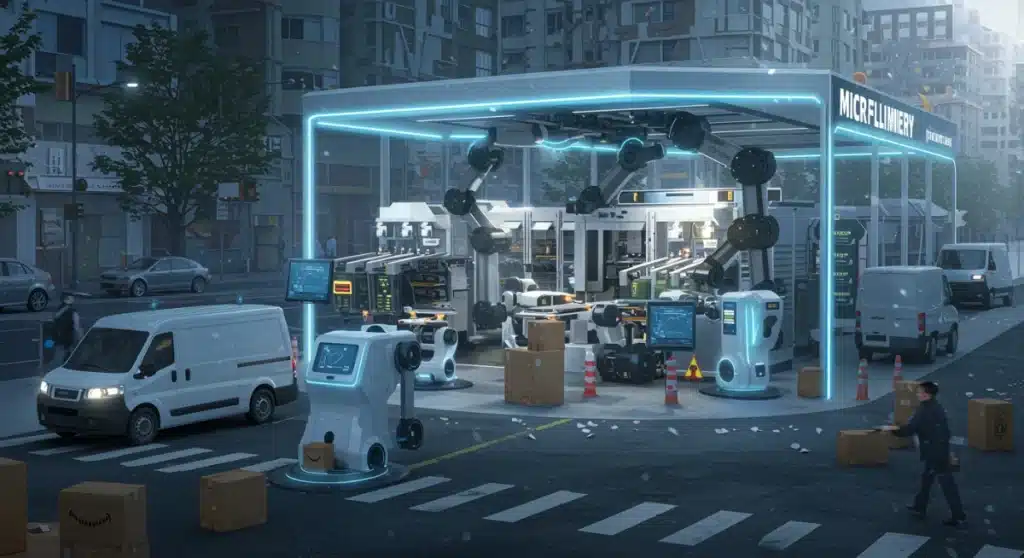
Micro-fulfillment centers are transforming urban delivery by bringing inventory closer to consumers, utilizing automation to expedite order processing, and are on track to reduce shipping times by 50% by 2025 across the United States.
The landscape of retail is undergoing a profound transformation, driven by an insatiable consumer demand for speed and convenience. In this evolving environment, micro-fulfillment centers: revolutionizing urban delivery and reducing shipping times by 50% in 2025 have emerged as a pivotal innovation, promising to redefine how goods move from seller to buyer in bustling urban areas.
The rise of micro-fulfillment in modern retail
The exponential growth of e-commerce has placed unprecedented pressure on traditional supply chains. Consumers today expect their online orders to arrive not just quickly, but almost instantaneously. This expectation has spurred retailers to rethink their logistical strategies, leading to the widespread adoption of micro-fulfillment centers (MFCs).
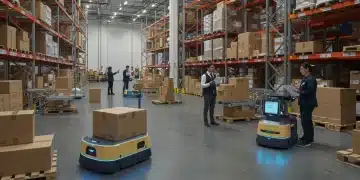
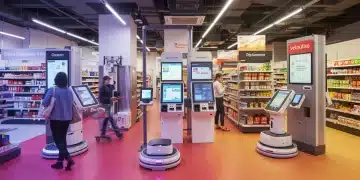
MFCs are essentially compact, automated warehouses strategically located in urban or suburban areas, often within existing retail spaces. Their primary function is to store and process online orders much closer to the end consumer, dramatically cutting down on last-mile delivery times and costs. This proximity is key to meeting the demands of same-day and even hourly delivery services, which are becoming standard rather than premium offerings.
From large warehouses to localized hubs
Historically, fulfillment operations relied on massive, centralized distribution centers located far from urban cores. While efficient for bulk storage and regional distribution, these facilities struggled with the intricacies of individual order fulfillment and rapid urban delivery. The shift to MFCs represents a paradigm change, decentralizing inventory and bringing it directly into the communities they serve.
- Reduced transportation costs: Shorter distances mean less fuel and fewer vehicle miles.
- Faster delivery speeds: Orders can be picked, packed, and dispatched in minutes, not hours.
- Optimized inventory management: Stock is closer to demand, reducing stockouts and overstocking.
This strategic relocation of inventory is not merely a logistical adjustment; it’s a fundamental reimagining of the retail supply chain. By embedding fulfillment capabilities within urban environments, retailers can offer a seamless, expedited shopping experience that was previously unattainable, solidifying customer loyalty in a highly competitive market.
The emergence of MFCs signifies a crucial evolution in retail logistics, directly addressing the modern consumer’s need for speed and efficiency. They are not just warehouses; they are integral components of a new urban retail ecosystem designed for rapid response and unparalleled convenience.
Technological backbone: automation and AI in MFCs
The efficiency and effectiveness of micro-fulfillment centers are intrinsically linked to the advanced technologies they employ. These facilities are miniature marvels of engineering, relying heavily on automation, artificial intelligence (AI), and sophisticated software to manage complex operations within a confined footprint. Without these technological advancements, the promise of reduced shipping times would remain largely aspirational.
Automated storage and retrieval systems (AS/RS) are at the heart of many MFCs. These robotic systems can quickly move inventory, retrieve specific items for orders, and return them to storage with precision and speed. This capability far surpasses manual picking methods, especially in high-volume environments.
Robotics and intelligent picking systems
- Autonomous mobile robots (AMRs): These robots navigate the MFC floor, transporting goods and assisting with various tasks, improving throughput and reducing human effort.
- Robotic arms: Utilized for precise picking and packing of diverse products, adapting to different shapes and sizes with remarkable accuracy.
- Vision systems: AI-powered cameras guide robots, ensuring correct item identification and placement, minimizing errors.
Beyond the physical machinery, AI plays a critical role in optimizing MFC operations. AI algorithms analyze vast amounts of data, including sales forecasts, inventory levels, and customer order patterns, to predict demand and strategically position products. This predictive analytics capability ensures that the most frequently ordered items are readily accessible, further accelerating the picking process.
Order management systems (OMS) integrated with AI not only track orders from placement to delivery but also dynamically route them to the most efficient picking stations or automated systems. This level of optimization allows MFCs to handle a high volume of orders simultaneously, maintaining speed and accuracy even during peak demand periods.
The synergistic combination of robotics and AI in MFCs creates a highly efficient, scalable, and adaptable fulfillment solution. These technologies are not merely supplementary; they are foundational to the operational success and competitive advantage that micro-fulfillment centers offer to modern retailers.
Impact on urban delivery: cutting shipping times by 50%
The most compelling promise of micro-fulfillment centers lies in their potential to drastically reduce shipping times, with projections indicating a 50% cut by 2025. This isn’t just about faster delivery; it’s about fundamentally reshaping the customer experience and setting new benchmarks for logistical efficiency in urban environments.
By positioning inventory closer to the customer, MFCs minimize the distance goods need to travel for the final leg of their journey—the critical last mile. This proximity directly translates into quicker dispatch and delivery, allowing retailers to offer same-day, or even sub-hour, delivery windows with greater consistency and lower operational costs.
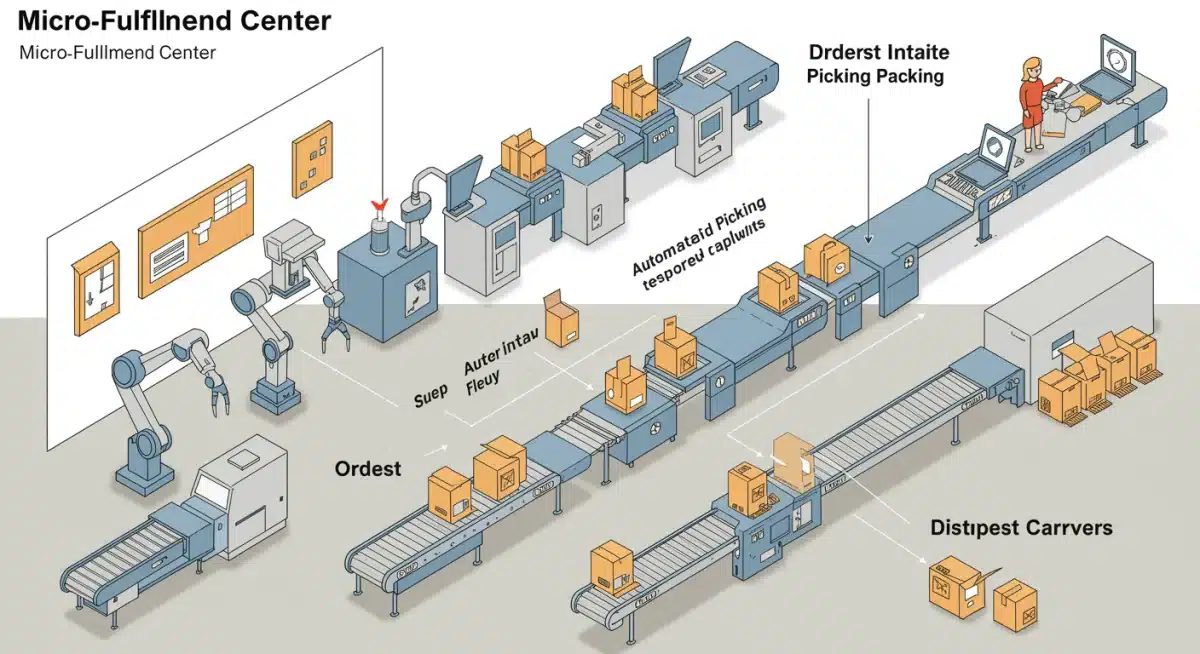
Consider the traditional model: an order placed online might travel from a regional distribution center hours away. With an MFC, that same order could be picked and packed within minutes, then handed off to a local courier for a short drive. This streamlined process eliminates significant transit time, especially in congested urban areas where traffic can be a major impediment.
Redefining customer expectations
The ability to deliver products almost on-demand has a profound psychological effect on consumers. It transforms online shopping from a planned event into an immediate gratification experience. This shift compels other retailers to adapt, creating a competitive environment where rapid delivery becomes a standard expectation rather than a luxury.
- Increased customer satisfaction: Faster delivery directly correlates with higher ratings and repeat business.
- Reduced cart abandonment: The promise of quick delivery can convert hesitant shoppers into buyers.
- Competitive advantage: Retailers leveraging MFCs gain a significant edge over those with slower delivery options.
Furthermore, the data collected from MFC operations allows for continuous improvement in delivery routes and schedules, further refining efficiency. AI-driven route optimization, coupled with real-time traffic updates, ensures that even the last mile is executed with peak performance, contributing to the overall reduction in shipping times.
The projected 50% reduction in shipping times by 2025 is not an arbitrary figure; it’s an achievable goal driven by the strategic implementation of MFCs and their integrated technologies. This transformation will undoubtedly set a new standard for urban delivery, benefiting both businesses and consumers.
Economic advantages for retailers and consumers
The widespread adoption of micro-fulfillment centers is not merely a logistical upgrade; it brings substantial economic advantages for both retailers and consumers. For businesses, MFCs offer a pathway to increased profitability through operational efficiencies, while for consumers, they translate into more affordable and convenient shopping experiences.
From a retailer’s perspective, the initial investment in MFC technology can be significant, but the long-term returns are compelling. By reducing last-mile delivery costs, which often represent the most expensive part of the supply chain, MFCs directly impact the bottom line. Shorter delivery distances mean less fuel consumption, lower vehicle maintenance, and optimized labor utilization for delivery personnel.
Cost savings and operational efficiency
Beyond delivery costs, MFCs contribute to overall operational efficiency by:
- Minimizing real estate footprint: Unlike large warehouses, MFCs can be housed in smaller, often existing, urban spaces, reducing rental or ownership costs.
- Optimizing inventory holding: By keeping stock closer to demand and leveraging predictive analytics, retailers can reduce excess inventory, freeing up capital.
- Reducing returns: Faster, more accurate fulfillment can lead to fewer order errors and, consequently, fewer costly returns.
For consumers, the economic benefits are equally attractive. The cost savings achieved by retailers can be passed on, in part, through competitive pricing or reduced shipping fees. Furthermore, the convenience of faster delivery can be viewed as a form of added value, enhancing the overall shopping experience without necessarily incurring premium costs.
The ability to receive items quickly can also reduce impulse purchases of unnecessary items, as consumers know they can get what they need when they truly need it. This fosters a more deliberate and satisfying purchasing pattern, aligning consumer needs with efficient fulfillment capabilities.
Ultimately, the economic advantages of MFCs create a virtuous cycle: retailers become more profitable and competitive, which in turn allows them to offer better services and prices to consumers, driving further demand. This synergy underscores the transformative economic potential of micro-fulfillment in the modern retail landscape.
Challenges and future outlook for MFCs
While the benefits of micro-fulfillment centers are clear, their widespread implementation is not without challenges. Addressing these hurdles will be crucial for MFCs to fully realize their potential and become an even more integral part of the urban delivery ecosystem. The future outlook, however, remains overwhelmingly positive, with continuous innovation driving progress.
One significant challenge is the initial capital investment required to set up and automate an MFC. The cost of robotics, software, and specialized infrastructure can be substantial, posing a barrier for smaller retailers. Additionally, finding suitable urban real estate that meets both logistical and regulatory requirements can be complex and expensive.
Overcoming integration complexities
Integrating MFCs into existing supply chain networks also presents a challenge. Retailers need robust software solutions that can seamlessly connect MFCs with their e-commerce platforms, inventory management systems, and last-mile delivery partners. Data synchronization and real-time communication are paramount to avoid bottlenecks and ensure smooth operations.
Another consideration is the operational complexity of managing a distributed network of smaller fulfillment centers compared to a few large ones. This requires sophisticated management tools and a highly skilled workforce, even with automation, to oversee the technology and troubleshoot issues.
Despite these challenges, the future of MFCs looks promising. Continuous advancements in robotics and AI are making these systems more affordable, flexible, and easier to deploy. The development of modular and scalable MFC solutions is also helping to lower the barrier to entry for a wider range of businesses.
Furthermore, partnerships between technology providers, logistics companies, and retailers are fostering innovative solutions that address integration complexities and optimize network performance. As urban populations continue to grow and e-commerce penetration deepens, the demand for efficient, localized fulfillment will only intensify.
The trajectory of micro-fulfillment centers is one of exponential growth and refinement. While obstacles exist, the industry is actively developing solutions, ensuring that MFCs will continue to play a pivotal role in shaping the future of urban delivery and meeting evolving consumer expectations.
The role of micro-fulfillment in sustainable urban logistics
Beyond speed and economic benefits, micro-fulfillment centers are poised to play a crucial role in fostering more sustainable urban logistics. As cities grapple with traffic congestion, pollution, and noise, MFCs offer a pathway to significantly reduce the environmental footprint of e-commerce delivery, aligning with broader urban sustainability goals.
The most direct impact on sustainability comes from the reduction in last-mile travel distances. By locating inventory closer to customers, MFCs enable shorter delivery routes, which translates directly into less fuel consumption and fewer emissions from delivery vehicles. This effect is amplified when coupled with the increasing adoption of electric vehicles for urban deliveries.
Reducing carbon footprint and congestion
Consider the environmental advantages:
- Lower greenhouse gas emissions: Fewer miles driven by delivery vans directly reduce carbon dioxide and other pollutants.
- Decreased urban congestion: Optimized routes and fewer long-distance trips alleviate traffic, especially during peak hours.
- Reduced noise pollution: Quieter electric vehicles, often used for MFC deliveries, contribute to a more peaceful urban environment.
Moreover, the efficient use of space within MFCs can contribute to sustainable urban planning. By converting underutilized retail spaces or integrating into mixed-use developments, MFCs prevent the need for new, large-scale construction on the outskirts of cities, preserving green spaces and reducing urban sprawl.
The automation within MFCs also plays a role in resource efficiency. Optimized picking and packing processes lead to less material waste, and intelligent inventory management reduces the likelihood of product obsolescence, further contributing to a circular economy model. This holistic approach to efficiency extends beyond just delivery times.
The integration of micro-fulfillment centers into urban planning represents a strategic move towards a more sustainable future for retail and logistics. By embracing these localized hubs, cities can enjoy the convenience of rapid e-commerce delivery while simultaneously making significant strides towards environmental responsibility and improved urban living quality.
| Key Aspect | Brief Description |
|---|---|
| Urban Proximity | Locating inventory closer to consumers for faster last-mile delivery. |
| Advanced Automation | Utilizing robotics and AI for efficient order picking and packing within compact spaces. |
| 50% Shipping Reduction | Projected decrease in delivery times by 2025 due to MFC efficiency. |
| Sustainable Logistics | Lower emissions and reduced urban congestion through optimized delivery routes. |
Frequently asked questions about micro-fulfillment
An MFC is a small, automated warehouse located in or near urban areas. It uses robotics and AI to quickly process online orders, bringing inventory closer to customers for faster and more efficient last-mile delivery, often within existing retail spaces.
MFCs reduce shipping times by minimizing the distance products need to travel for final delivery. Their automated systems rapidly pick and pack orders, allowing for same-day or even sub-hour delivery, cutting down transit time and improving efficiency.
Key technologies include automated storage and retrieval systems (AS/RS), autonomous mobile robots (AMRs), robotic arms for picking, and AI-powered software for inventory management, demand forecasting, and route optimization. These enable high-speed processing.
While large retailers were early adopters, the trend is towards more scalable and modular MFC solutions. This makes them increasingly accessible to mid-sized and even smaller businesses, allowing them to compete in the rapid delivery market.
MFCs enhance sustainability by reducing last-mile travel distances, leading to lower fuel consumption and fewer emissions. They also alleviate urban congestion and can be integrated into existing structures, minimizing new construction and preserving green spaces.
Conclusion
The journey towards a 50% reduction in shipping times by 2025 is not merely an ambitious target; it is a tangible reality being shaped by the strategic deployment of micro-fulfillment centers. These automated, urban-centric hubs are fundamentally redefining the retail landscape, offering unparalleled speed, efficiency, and customer satisfaction. While challenges in investment and integration exist, the continuous evolution of automation and AI, coupled with a growing imperative for sustainable logistics, positions MFCs as a cornerstone of future retail. Their impact extends beyond just faster delivery, fostering economic advantages for businesses and consumers alike, while simultaneously contributing to more sustainable and livable urban environments. The era of instant gratification in e-commerce is here, driven largely by the silent revolution happening within these compact, technologically advanced fulfillment centers.