Cloud Retail Solutions: Scalability & 20% IT Cost Reduction by 2025
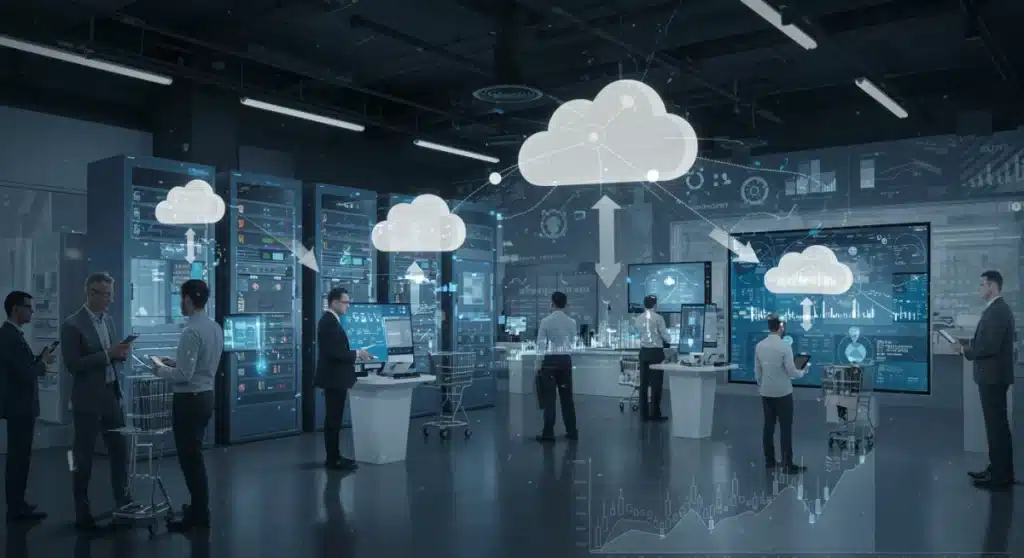
By 2025, cloud-based retail solutions are projected to significantly boost scalability and cut IT expenditures by 20% for US businesses, transforming operational efficiency and fostering growth.
The retail landscape in the United States is undergoing a profound transformation, driven by technological advancements and evolving consumer expectations. Amidst this change, cloud-based retail solutions are emerging as a pivotal force, promising not only enhanced scalability but also a substantial reduction in IT costs, potentially by 20% for US businesses by 2025. This shift isn’t just about adopting new software; it’s about fundamentally rethinking how retail operations are managed, optimized, and grown in an increasingly digital world.
The imperative for cloud adoption in US retail
US retailers face a dynamic market characterized by rapid shifts in consumer behavior, intense competition, and the constant need for innovation. Traditional, on-premise IT infrastructures often struggle to keep pace with these demands, leading to bottlenecks, high maintenance costs, and limited agility. Cloud adoption, therefore, isn’t merely an option but a strategic imperative for businesses aiming to thrive.
The transition to cloud-based platforms offers a robust framework for retailers to adapt quickly to market changes, streamline operations, and deliver superior customer experiences. This move away from legacy systems unlocks significant potential for efficiency gains and cost savings, which are critical in today’s competitive environment.
Addressing market volatility with cloud agility
Market volatility, driven by economic shifts, supply chain disruptions, and unforeseen global events, demands that retailers possess extreme agility. Cloud solutions provide this by allowing businesses to scale resources up or down as needed, without significant capital expenditure on hardware.
- Seasonal Peaks: Easily handle increased website traffic and transaction volumes during peak shopping seasons like Black Friday.
- Rapid Expansion: Quickly deploy new store locations or e-commerce channels without extensive IT setup time.
- Market Contraction: Efficiently reduce IT expenditures during slower periods, aligning costs with revenue.
This inherent flexibility ensures that retailers can maintain operational continuity and optimize spending, regardless of external pressures. The ability to pivot quickly is a cornerstone of modern retail success.
In essence, the move to cloud-based solutions is about building a resilient and responsive retail enterprise. It enables US businesses to not only meet the current challenges but also to position themselves for future growth and innovation. The strategic advantages offered by cloud technology are undeniable, making it a cornerstone of modern retail strategy.
Unlocking scalability: meeting demand with elastic infrastructure
One of the most compelling advantages of cloud-based retail solutions is their unparalleled scalability. For US businesses, this means the ability to effortlessly expand or contract IT resources to match fluctuating demand, a crucial capability in an industry known for its peaks and troughs. This elasticity ensures that retailers can always serve their customers efficiently, without over-provisioning or under-provisioning resources.
Elastic infrastructure provides a foundation for growth, allowing businesses to seize new opportunities without being hampered by IT limitations. Whether it’s a sudden surge in online orders or the need to process vast amounts of data for analytics, cloud platforms can handle it all seamlessly.
On-demand resource allocation
Traditional IT infrastructure requires significant upfront investment and often leads to either underutilized capacity or performance bottlenecks. Cloud solutions eliminate this by offering resources on an as-needed basis. This pay-as-you-go model transforms IT from a fixed cost to a variable one, directly tied to usage.
- Dynamic Computing Power: Instantly provision additional servers or processing power during high-demand periods.
- Storage Expansion: Scale data storage capacity without downtime or complex hardware upgrades.
- Network Bandwidth: Adjust network resources to support increased traffic for e-commerce sites or internal operations.
This dynamic allocation of resources is a game-changer for retailers, particularly those experiencing rapid growth or facing unpredictable market conditions. It ensures that the technology infrastructure can evolve alongside the business, rather than acting as a constraint.
The ability to scale infrastructure effortlessly means retailers can focus on their core business activities, such as product development, marketing, and customer service, rather than worrying about IT capacity. This strategic advantage contributes significantly to operational efficiency and overall business growth, making scalability a key driver for cloud adoption.
Reducing IT costs by 20%: tangible financial benefits
Beyond scalability, the promise of reducing IT costs by an average of 20% is a powerful motivator for US retailers to embrace cloud solutions by 2025. This significant cost saving isn’t a mere aspiration; it’s a realistic outcome driven by several factors inherent in cloud computing models. From eliminating capital expenditures to optimizing operational overhead, the financial benefits are substantial and directly impact a retailer’s bottom line.
Moving to the cloud shifts IT spending from a capital expenditure (CapEx) model to an operational expenditure (OpEx) model, which can free up significant capital for other investments, such as marketing, product innovation, or store modernization. This financial flexibility is invaluable for businesses looking to grow and remain competitive.
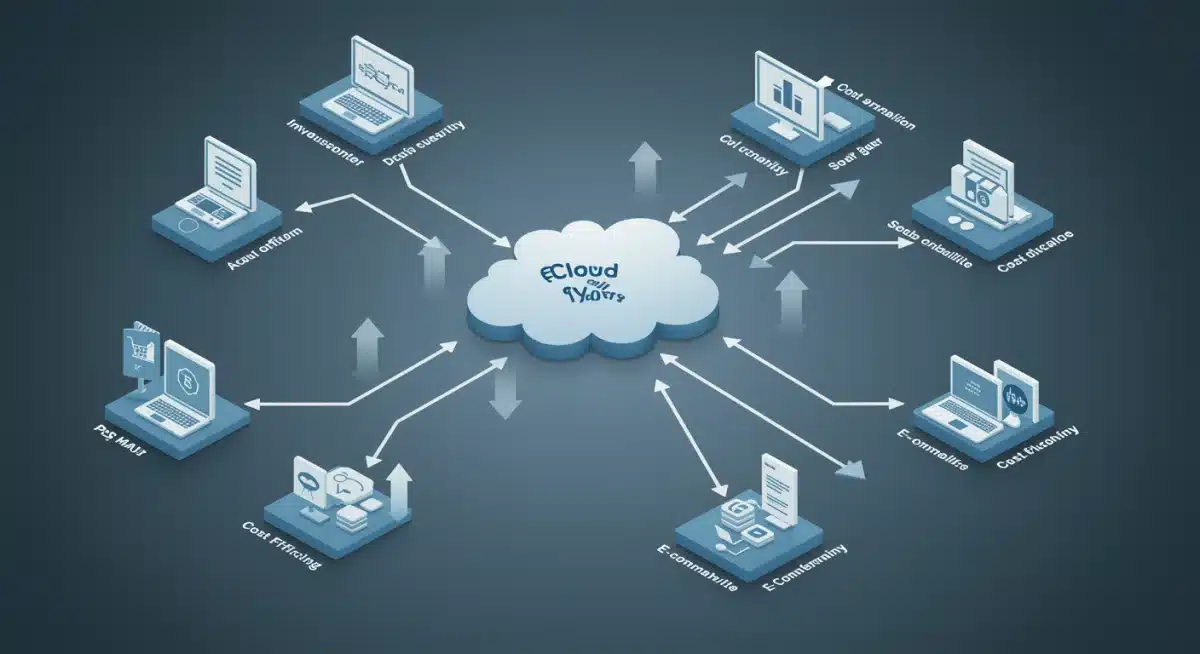
The reduction in IT costs is a multifaceted benefit that stems from efficiencies across the entire IT lifecycle. It’s not just about cheaper software; it’s about a more cost-effective way of doing business.
Optimizing operational and maintenance expenses
One of the primary drivers of cost reduction is the elimination of the need to purchase, maintain, and upgrade expensive hardware. Cloud providers handle all infrastructure management, including server maintenance, security updates, and data backups, which significantly reduces the burden on internal IT teams.
- Reduced Hardware Costs: No need to buy or replace servers, storage devices, or networking equipment.
- Lower Energy Consumption: Cloud data centers are highly efficient, and retailers no longer bear the direct costs of powering and cooling their own servers.
- Streamlined IT Staffing: Less time spent on routine maintenance frees up IT personnel to focus on strategic initiatives rather than reactive problem-solving.
These operational efficiencies translate directly into measurable savings. Furthermore, the pay-as-you-go model ensures that retailers only pay for the resources they actually consume, preventing wasteful spending on idle capacity. This precise cost control contrasts sharply with traditional models where resources are often over-provisioned to handle theoretical peak loads.
Ultimately, the 20% IT cost reduction by 2025 is a conservative estimate, with many businesses potentially realizing even greater savings. These financial benefits position cloud-based retail solutions as a smart investment for US businesses seeking to enhance profitability and achieve sustainable growth.
Enhancing customer experience and operational efficiency
Beyond the direct financial advantages, cloud-based retail solutions are instrumental in elevating the customer experience and dramatically improving operational efficiency. In today’s retail environment, customer satisfaction is paramount, and seamless, personalized interactions are key to fostering loyalty. Cloud technology provides the backbone for delivering these enhanced experiences.
By integrating various data sources and applications, cloud platforms offer a unified view of the customer, enabling personalized marketing, streamlined service, and a more cohesive shopping journey across all touchpoints. This integration is critical for meeting the high expectations of modern consumers.
Personalization and seamless shopping journeys
Cloud solutions facilitate the collection and analysis of vast amounts of customer data, enabling retailers to understand individual preferences and behaviors with unprecedented detail. This insight is then used to deliver highly personalized shopping experiences.
- Personalized Recommendations: AI-driven engines suggest products based on past purchases and browsing history.
- Omnichannel Consistency: Ensure a consistent brand experience whether a customer shops online, in-store, or via mobile app.
- Faster Service: Access to real-time inventory and customer history allows for quicker, more informed customer service interactions.
The ability to offer a truly personalized and frictionless shopping experience sets leading retailers apart. Cloud technology makes this level of personalization achievable and scalable, directly contributing to increased customer engagement and sales.
Operationally, cloud solutions automate many manual processes, from inventory management to order fulfillment, reducing errors and speeding up workflows. This efficiency translates into faster delivery times, better stock management, and ultimately, a more satisfied customer base. The synergy between enhanced customer experience and operational efficiency is a powerful driver for cloud adoption.
Security and compliance in the cloud era
A common concern for businesses considering cloud migration is data security and regulatory compliance. However, modern cloud-based retail solutions, particularly those offered by major cloud providers, often boast security measures that surpass what many individual retailers can implement on their own. These platforms are built with robust security protocols and are designed to meet stringent industry standards.
Cloud providers invest heavily in security infrastructure, employing dedicated teams of experts and utilizing advanced technologies to protect data. This level of security is difficult and costly for individual businesses to replicate, making cloud a more secure option in many cases.
Advanced security protocols and certifications
Leading cloud platforms adhere to a multitude of global and industry-specific security certifications and compliance standards, offering retailers peace of mind regarding their sensitive data.
- Data Encryption: Data is encrypted both in transit and at rest, protecting it from unauthorized access.
- Regular Audits: Cloud providers undergo frequent security audits and penetration testing to identify and address vulnerabilities.
- Compliance Standards: Adherence to PCI DSS (for payment processing), HIPAA (for health-related data, if applicable), GDPR, and other relevant regulations.
For US retailers, ensuring compliance with data privacy laws and safeguarding customer information is not just a legal requirement but a fundamental aspect of maintaining trust. Cloud solutions simplify this complex task by providing built-in compliance features and a secure environment.
While the responsibility for data security is shared between the cloud provider and the retailer, the robust foundation provided by cloud platforms significantly mitigates risks. This allows retailers to leverage powerful technologies without compromising on the integrity and privacy of their data, fostering a secure environment for innovation and growth.
The future landscape: AI, IoT, and cloud integration
The true power of cloud-based retail solutions extends far beyond basic infrastructure, serving as the essential foundation for integrating advanced technologies like Artificial Intelligence (AI) and the Internet of Things (IoT). By 2025, the seamless integration of these technologies within a cloud framework will redefine retail operations, offering unprecedented insights and automation for US businesses.
Cloud platforms provide the scalable computing power and data storage necessary to process the vast amounts of information generated by AI and IoT devices. Without the cloud, harnessing the full potential of these transformative technologies would be virtually impossible for most retailers.
Leveraging data for predictive analytics and automation
AI, powered by cloud infrastructure, enables retailers to move beyond reactive decision-making to proactive strategies. IoT devices, deployed across stores and supply chains, feed real-time data into these AI systems, creating a powerful feedback loop.
- Predictive Inventory: AI analyzes sales data, seasonality, and external factors to forecast demand, optimizing stock levels and reducing waste.
- Personalized Marketing: AI-driven algorithms identify customer segments and deliver highly targeted promotions in real-time.
- Smart Store Operations: IoT sensors monitor foot traffic, shelf stock, and equipment performance, enabling automated alerts and predictive maintenance.
The synergy between cloud, AI, and IoT promises a future where retail operations are not just efficient but intelligent. This integration will empower US businesses to anticipate customer needs, optimize every facet of their supply chain, and create truly immersive in-store and online experiences.
As retailers continue to navigate an increasingly complex and competitive market, the ability to leverage these advanced technologies will be a critical differentiator. Cloud-based solutions are the gateway to this intelligent future, ensuring that US businesses remain at the forefront of retail innovation.
| Key Aspect | Description for US Retail by 2025 |
|---|---|
| Scalability Enhancement | Cloud solutions offer elastic infrastructure, allowing US retailers to dynamically adjust IT resources to meet fluctuating demand, ensuring seamless operations during peak periods and growth. |
| IT Cost Reduction | Projected 20% IT cost reduction by 2025 for US businesses, achieved through lower hardware, maintenance, and energy costs, shifting to an OpEx model. |
| Customer Experience | Cloud enables personalized shopping, omnichannel consistency, and faster service through integrated data, enhancing satisfaction and loyalty for American consumers. |
| Future Integration | Cloud platforms facilitate the seamless integration of AI and IoT, driving predictive analytics, automation, and smart store operations for competitive advantage. |
Frequently asked questions about cloud retail solutions
Cloud-based retail solutions refer to software and services delivered over the internet, rather than being hosted on local servers. This includes everything from point-of-sale (POS) systems and inventory management to e-commerce platforms and customer relationship management (CRM) tools, all accessible via the cloud.
Cost reduction stems from eliminating capital expenditures on hardware, reducing maintenance and energy costs, and shifting to a flexible operational expenditure model. Retailers pay only for the resources they consume, avoiding over-provisioning and associated waste, leading to significant savings by 2025.
Absolutely. Cloud platforms are designed with elasticity in mind, allowing retailers to scale computing resources up or down dynamically. This ensures seamless performance during peak shopping seasons like holidays, preventing website crashes and maintaining optimal customer experience, a key benefit for US businesses.
Yes, leading cloud providers invest heavily in advanced security measures, including data encryption, robust access controls, and adherence to global compliance standards like PCI DSS. While security is a shared responsibility, cloud platforms often offer higher security levels than many on-premise setups.
Cloud platforms integrate various data points to create a unified customer view, enabling personalized recommendations, consistent omnichannel experiences, and faster, more informed customer service. This leads to higher satisfaction, increased loyalty, and ultimately, better sales outcomes for retailers.
Conclusion
The trajectory for US retail by 2025 clearly points towards a future dominated by cloud-based solutions. The compelling benefits of enhanced scalability and a projected 20% reduction in IT costs are not merely theoretical; they are tangible outcomes that are already reshaping the industry. Beyond these financial and operational advantages, cloud technology acts as the essential enabler for integrating next-generation innovations such as AI and IoT, paving the way for smarter, more responsive, and customer-centric retail operations. For businesses seeking to remain competitive and thrive in a rapidly evolving market, embracing cloud-based retail solutions is not just an upgrade, but a strategic imperative for sustained success and growth.