Wearable Tech in Retail: Boost US Employee Efficiency 15% by 2025
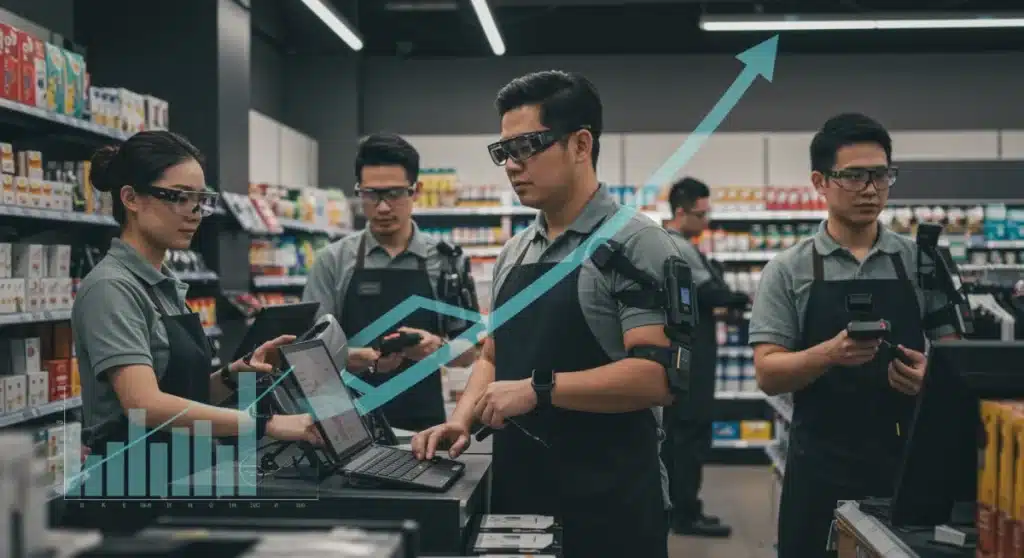
Wearable technology is fundamentally transforming US retail operations, with strategic adoption anticipated to boost employee efficiency by 15% by 2025 through streamlined workflows and enhanced real-time data access.
The retail landscape is constantly evolving, driven by consumer expectations and technological advancements. One of the most significant shifts on the horizon for US stores is The Role of Wearable Technology in Retail Operations: Improving Employee Efficiency by 15% for US Stores in 2025. This isn’t just about gadgets; it’s about fundamentally rethinking how tasks are performed, how employees interact, and how data empowers better decision-making on the store floor.
The Dawn of Wearable Technology in Retail
Wearable technology, once confined to science fiction, is now a tangible tool reshaping various industries, with retail at the forefront of its adoption. These devices, ranging from smartwatches to augmented reality (AR) glasses and specialized sensors, offer unprecedented opportunities to optimize daily store operations. For US retailers, integrating these solutions presents a clear pathway to unlocking significant gains in productivity and overall employee performance.
The promise of wearables extends beyond mere convenience; they are designed to provide real-time information, facilitate hands-free operations, and streamline complex tasks that traditionally consume valuable employee time. This innovative approach addresses common pain points in retail, such as inventory management, customer assistance, and communication between staff members, ultimately leading to a more agile and responsive retail environment.
Enhancing Task Management and Workflow
Wearable devices are proving invaluable in optimizing task management for retail associates. By delivering instructions and updates directly to the employee, wearables minimize the need for manual checks or reliance on fixed terminals. This direct data flow ensures that staff are always informed about their next task, priorities, and any urgent customer requests, reducing idle time and improving response rates.
- Real-time Task Assignment: Managers can assign tasks directly to smartwatches or AR glasses, ensuring employees receive immediate notifications.
- Guided Workflows: Step-by-step instructions for complex procedures, such as merchandise placement or display setup, can be displayed visually.
- Performance Monitoring: Wearables can track task completion times, providing valuable data for process optimization and training needs.
The integration of these technologies into daily routines allows employees to focus more on customer interaction and less on administrative overhead. This shift not only boosts individual efficiency but also contributes to a more cohesive and productive team dynamic, critical for achieving the ambitious 15% efficiency improvement target.
In conclusion, the initial foray into wearable technology sets the stage for a dramatic transformation in retail efficiency. By enabling smarter task management and providing instant access to critical information, these devices are empowering employees to perform their roles with greater precision and speed, laying the groundwork for a more efficient operational model.
Streamlining Inventory and Stock Management
One of the most labor-intensive aspects of retail operations is inventory and stock management. Traditional methods often involve manual scanning, paperwork, and frequent trips to back-of-house storage, all of which are time-consuming and prone to human error. Wearable technology offers a transformative solution, significantly streamlining these processes and freeing up employees for more customer-facing roles.
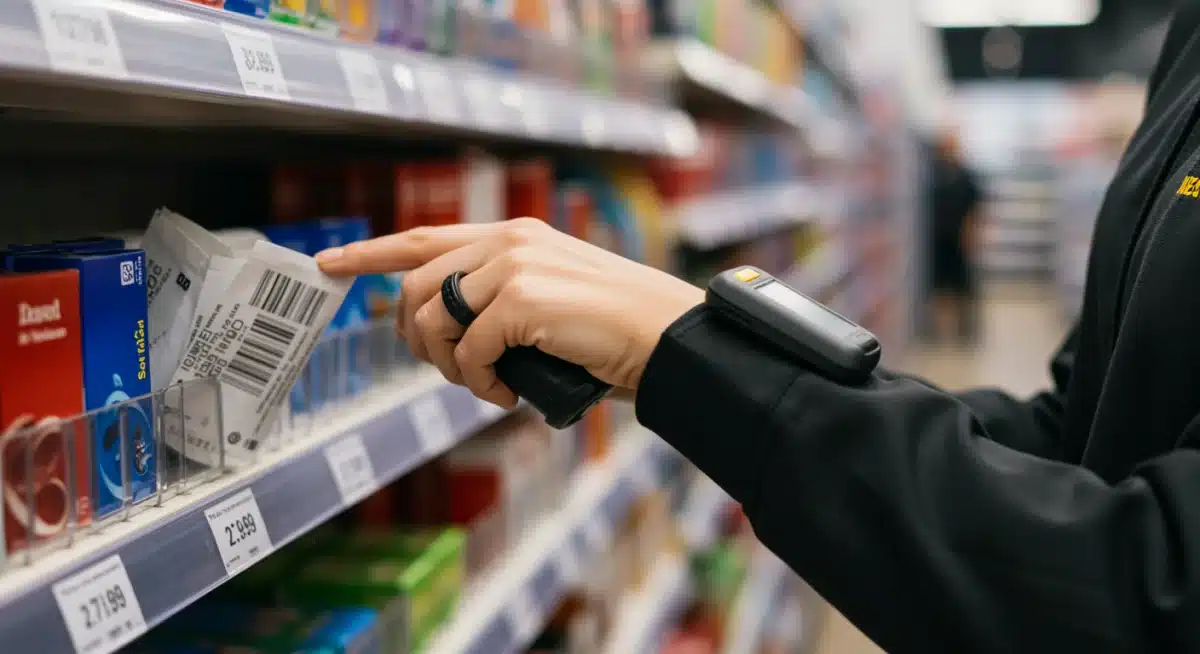
Devices such as smart rings with integrated scanners or wrist-mounted terminals allow associates to perform inventory checks, receive shipments, and restock shelves with unprecedented speed and accuracy. This hands-free approach means employees can simultaneously handle products and scan them, eliminating the need to put items down or carry separate scanning equipment. The immediate data capture updates the inventory system in real-time, providing an accurate overview of stock levels.

Real-time Stock Visibility and Replenishment
With wearable devices, retail staff gain instant access to stock information, whether they are on the sales floor or in the stockroom. This real-time visibility enables them to quickly locate items, verify availability, and initiate replenishment requests without delay. This capability is crucial during peak shopping hours, ensuring that popular products are always on the shelves and customer demand is met efficiently.
- Instant Stock Checks: Employees can scan a product to immediately see its availability, location, and quantity in the store or other branches.
- Automated Replenishment Alerts: Wearables can notify staff when stock levels are low for specific items, prompting timely replenishment.
- Reduced Shrinkage: Improved inventory accuracy helps in identifying discrepancies and minimizing losses due to theft or misplacement.
The impact of this enhanced inventory management extends beyond mere time-saving. It contributes to a better customer experience by reducing out-of-stock situations and allowing associates to provide accurate product information on the spot. This efficiency gain is a cornerstone of achieving the projected 15% improvement in employee efficiency within US retail by 2025, demonstrating how technology directly addresses operational challenges.
In summary, the application of wearable technology in inventory and stock management fundamentally transforms a traditionally cumbersome process into a highly efficient and accurate operation. By providing real-time data and hands-free capabilities, wearables empower employees to manage stock effectively, directly contributing to operational excellence and customer satisfaction.
Enhancing Customer Service and Engagement
Beyond back-end operations, wearable technology significantly elevates the quality of customer service and engagement on the retail floor. Empowering associates with instant information and communication tools allows for more personalized and efficient interactions, directly impacting customer satisfaction and loyalty. This direct benefit to the customer experience is a key driver for the adoption of wearables in US retail.
Consider a scenario where a customer asks about a product’s features, availability, or alternative options. Traditionally, an associate might need to leave the customer to check a computer terminal or consult a colleague. With a smartwatch or AR glasses, this information can be accessed instantly, allowing the associate to remain engaged with the customer, providing immediate and accurate answers. This seamless interaction builds trust and enhances the perception of knowledgeable staff.
Personalized Recommendations and Support
Wearables can be integrated with customer relationship management (CRM) systems and point-of-sale (POS) data to provide associates with valuable insights into customer preferences and purchase history. This allows for highly personalized recommendations and targeted assistance, transforming a generic sales interaction into a tailored shopping experience.
- Customer Profile Access: Associates can view customer loyalty information, past purchases, and preferences directly on their wearable device.
- Product Information On-Demand: Detailed product specs, reviews, and comparisons are accessible instantly, enabling informed recommendations.
- Multilingual Support: Some AR glasses can offer real-time translation, bridging language barriers for diverse customer bases.
Furthermore, wearable devices can facilitate discreet communication among staff. An associate can quickly alert a colleague for assistance with a specific product or customer query without leaving the customer’s side or disrupting the shopping environment. This internal communication efficiency ensures that customers receive prompt and comprehensive support, regardless of the complexity of their request.
The enhanced customer service capabilities provided by wearable technology are not just about speed; they are about quality and personalization. By equipping employees with the tools to be more informed, responsive, and connected, retailers can create memorable shopping experiences that drive repeat business and contribute to the overall efficiency and success of their stores. This focus on customer-centricity is integral to the 15% efficiency improvement goal for US retailers by 2025.
Optimizing Communication and Collaboration Among Staff
Effective communication and seamless collaboration are the bedrock of any successful retail operation. In a fast-paced store environment, delays in relaying information or coordinating tasks can lead to inefficiencies, missed opportunities, and frustrated staff. Wearable technology offers robust solutions to enhance internal communication, fostering a more connected and productive workforce.
Traditional communication methods, such as walkie-talkies or overhead announcements, can be disruptive and less efficient. Wearable devices, like smartwatches or specialized headsets, enable discreet, real-time communication between team members. This allows associates to share critical updates, request assistance, or coordinate tasks without disturbing the shopping experience for customers or creating unnecessary noise on the sales floor.
Instant Alerts and Task Coordination
Managers can use wearables to send immediate alerts to specific individuals or groups, such as notifying stockroom staff about an urgent replenishment need or directing sales associates to a particular section for customer support. This targeted communication ensures that the right information reaches the right person at the right time, minimizing delays and improving operational flow.
- Group Communication Channels: Create virtual teams for specific departments or tasks, allowing for focused discussions and information sharing.
- Emergency Notifications: Rapidly alert all staff about critical situations, ensuring quick and coordinated responses.
- Hands-Free Voice Commands: Some wearables allow for voice-activated communication, letting employees keep their hands free for other tasks.
Beyond simple messaging, some advanced wearable systems can integrate with store management software, allowing for automatic task delegation based on employee location or availability. This intelligent assignment of duties reduces downtime and ensures that all operational needs are met promptly. The result is a more synchronized team that can respond dynamically to the ever-changing demands of a retail environment, making a significant contribution to the overall efficiency gains.
In essence, wearable technology transforms internal communication from a potential bottleneck into a powerful enabler of efficiency. By facilitating instant, discreet, and context-aware communication, these devices empower retail teams to collaborate more effectively, driving the collective effort towards the ambitious 15% efficiency improvement target for US stores by 2025.
Training and Onboarding with Wearable Technology
The retail sector often experiences high employee turnover, making efficient training and onboarding processes crucial for maintaining operational standards. Wearable technology presents an innovative approach to these challenges, offering immersive, interactive, and highly effective methods for educating new hires and upskilling existing staff. This translates directly into faster ramp-up times and improved employee proficiency.
Augmented reality (AR) glasses, for example, can overlay digital instructions onto the real world, guiding new employees through tasks such as operating a POS system, setting up a product display, or even handling complex machinery. This hands-on, visual learning experience is far more engaging and effective than traditional manual-based training, allowing trainees to learn by doing in a guided environment.
Interactive Learning Modules
Wearables can deliver interactive training modules directly to the employee, allowing them to learn at their own pace and revisit information as needed. This self-directed learning approach reduces the burden on trainers and ensures consistency in the quality of instruction across all new hires. Furthermore, these modules can be updated easily to reflect new procedures or product lines, keeping training content always current.
- AR-Guided Procedures: Step-by-step visual instructions for new tasks, projected directly into the employee’s field of vision.
- Gamified Training: Incorporate game-like elements and challenges to make learning more engaging and track progress.
- Performance Feedback: Wearables can provide immediate feedback on task completion, helping employees correct mistakes in real-time.
Beyond initial onboarding, wearables can also support continuous learning and upskilling. Experienced staff can access advanced product knowledge, sales techniques, or compliance updates on demand, ensuring they remain highly competent and adaptable. This ongoing professional development is vital for maintaining a competitive edge and fostering a culture of continuous improvement within the retail workforce.
Ultimately, by leveraging wearable technology for training and onboarding, US retailers can significantly reduce the time and resources traditionally allocated to these processes. The result is a workforce that is not only more quickly brought up to speed but also more knowledgeable and confident in their roles, contributing directly to the projected 15% improvement in overall employee efficiency by 2025. This innovative approach to learning is a game-changer for retail human resources.
Challenges and Future Outlook for Wearable Adoption
While the benefits of wearable technology in retail are compelling, their widespread adoption is not without challenges. Addressing these hurdles is crucial for US retailers aiming to realize the projected 15% efficiency improvement by 2025. Understanding the current landscape and anticipating future trends will allow businesses to strategically plan their integration of these transformative devices.
One significant challenge lies in the initial investment cost. Implementing a comprehensive wearable system involves not only purchasing the devices but also integrating them with existing IT infrastructure, developing custom applications, and providing adequate training. Retailers must conduct thorough cost-benefit analyses to justify these investments and ensure a clear return on investment. Data security and privacy concerns also emerge, particularly when devices collect sensitive operational or customer data. Robust cybersecurity measures and clear data governance policies are essential to build trust and ensure compliance.
Overcoming Implementation Hurdles
Employee acceptance is another critical factor. Staff may initially be resistant to adopting new technologies, fearing job displacement or simply finding the devices cumbersome. Effective change management strategies, involving employees in the selection and testing process, and highlighting the benefits to their daily work, are vital for successful integration. User-friendly interfaces and comfortable designs will also play a key role in encouraging adoption.
- Pilot Programs: Start with small-scale implementations to test effectiveness, gather feedback, and refine strategies before a wider rollout.
- Employee Training and Support: Provide comprehensive training and ongoing technical support to ensure smooth adoption and problem-solving.
- Data Integration: Ensure seamless integration with existing POS, CRM, and inventory management systems to maximize data utility.
Looking ahead, the future of wearable technology in retail is bright. Advancements in artificial intelligence (AI) and machine learning (ML) will further enhance the capabilities of these devices, enabling more predictive insights and automated decision-making. Miniaturization, improved battery life, and enhanced durability will make wearables even more practical for demanding retail environments. Furthermore, as the technology matures, costs are expected to decrease, making it more accessible to a broader range of retailers.
In conclusion, while challenges exist, the strategic implementation of wearable technology promises substantial returns for US retail. By proactively addressing investment, security, and adoption concerns, retailers can position themselves to harness the full potential of these devices, driving unprecedented levels of employee efficiency and operational excellence in the years to come. The journey towards a 15% efficiency boost by 2025 is an achievable and exciting prospect.
| Key Benefit | Description |
|---|---|
| Enhanced Task Efficiency | Real-time task assignments and guided workflows reduce idle time and improve completion rates. |
| Streamlined Inventory | Hands-free scanning and instant stock visibility optimize management and replenishment. |
| Improved Customer Service | Associates gain instant access to product and customer data for personalized interactions. |
| Better Staff Collaboration | Discreet, real-time communication tools enhance team coordination and responsiveness. |
Frequently Asked Questions About Wearable Tech in Retail
Smartwatches, smart glasses (AR/VR), and specialized scanners (ring or wrist-mounted) are highly relevant. Smartwatches facilitate communication and task management, AR glasses provide visual guidance, and scanners streamline inventory and POS interactions, all contributing to improved efficiency on the retail floor.
By minimizing manual tasks, providing instant access to information, enabling hands-free operations, and facilitating real-time communication. This reduces time spent on searching for products, verifying stock, or coordinating with colleagues, allowing employees to complete tasks faster and serve customers more effectively.
Key challenges include the initial investment cost, ensuring seamless integration with existing IT systems, addressing data security and privacy concerns, and managing employee adoption and training. Overcoming these requires strategic planning and a focus on user experience and robust support.
Absolutely. Wearables empower associates with immediate access to product details, customer profiles, and stock information, enabling personalized recommendations and faster service. This leads to more informed interactions, reduced waiting times, and an overall more engaging and satisfactory shopping journey for customers.
Future trends include deeper integration with AI and machine learning for predictive analytics, further miniaturization and improved battery life, and enhanced durability for demanding retail environments. These advancements will make wearables even more intuitive, powerful, and cost-effective for widespread adoption.
Conclusion
The strategic adoption of wearable technology is rapidly emerging as a critical driver for enhancing operational efficiency within US retail stores. As we approach 2025, the projected 15% improvement in employee efficiency underscores the transformative potential of these devices. By streamlining inventory management, optimizing task allocation, fostering seamless communication, and enriching customer interactions, wearables are not merely tools but fundamental enablers of a more agile, productive, and customer-centric retail environment. While challenges in implementation exist, the long-term benefits in terms of cost savings, increased sales, and heightened employee and customer satisfaction make the investment in wearable technology an imperative for forward-thinking retailers.