Augmented Reality in Retail: Boosting US Conversion Rates
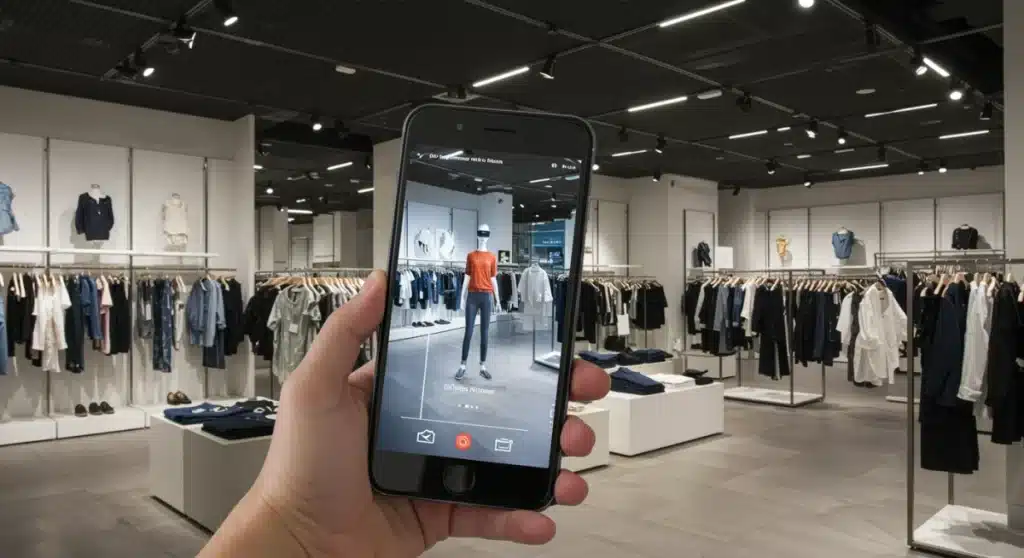
Augmented reality in retail is set to revolutionize consumer engagement, with projections indicating a 25% surge in online conversion rates for US brands by early 2025 by offering immersive and interactive shopping experiences.
The landscape of retail is undergoing a profound transformation, driven by technological advancements that redefine how consumers interact with products and brands. One of the most impactful innovations emerging is augmented reality (AR), a technology poised to significantly elevate the online shopping experience. This shift is not merely incremental; rather, it forecasts a substantial impact, with projections indicating that Augmented Reality in Retail: Driving a 25% Increase in Online Conversion Rates for US Brands by Early 2025 is a tangible and achievable goal for forward-thinking businesses.
The Rise of Augmented Reality in Consumer Engagement
Augmented reality (AR) has transitioned from a niche technological concept to a mainstream tool, fundamentally altering how consumers perceive and interact with products. Its integration into retail is creating a new paradigm of immersive shopping, bridging the gap between digital convenience and the tactile experience of physical stores. This evolution is driven by consumer demand for more engaging and informative purchasing journeys.
The immediate appeal of AR lies in its ability to overlay digital information onto the real world, offering a dynamic and interactive view of products. This capability not only enhances product visualization but also empowers consumers with a deeper understanding of what they are buying, leading to more confident purchasing decisions. The immersive nature of AR experiences cultivates a stronger emotional connection between the consumer and the brand.
Redefining Product Visualization
Traditional online shopping often leaves consumers guessing about product scale, fit, or appearance in their own environment. AR eliminates much of this uncertainty. By allowing customers to virtually place furniture in their living rooms, try on clothes, or see how makeup shades look on their face, AR provides an unprecedented level of detail and personalization.
- Virtual Try-On: Enables customers to try on apparel, accessories, or cosmetics digitally, reducing returns.
- Home Decor Previews: Allows shoppers to visualize furniture and decor items in their actual living spaces.
- Interactive Product Demos: Provides 3D models of products that users can manipulate and explore from all angles.
These applications go beyond simple images or videos, offering a true sense of presence and utility. The ability to interact with a product virtually before purchase is a game-changer for many consumers who value both convenience and assurance in their online transactions.
Enhancing the Shopping Journey
AR doesn’t just improve product viewing; it transforms the entire path to purchase. From discovery to decision-making, AR tools provide valuable touchpoints that guide consumers. This seamless integration of digital content into the physical world makes the shopping experience more intuitive and enjoyable, directly contributing to higher engagement and satisfaction.
Ultimately, the rise of AR in retail is a testament to its power to meet evolving consumer expectations. By offering rich, interactive, and personalized experiences, AR is not just a technological gimmick but a strategic imperative for brands looking to thrive in the competitive digital marketplace. It promises not only to increase conversion rates but also to build stronger, more loyal customer relationships.
Key AR Applications Driving Conversion Rates
The tangible benefits of augmented reality in retail are becoming increasingly evident, particularly in its capacity to directly influence online conversion rates. Various AR applications are proving instrumental in moving customers from browsing to buying, addressing critical pain points in the digital shopping journey. These tools are designed to diminish uncertainty and enhance product appeal, thereby accelerating purchasing decisions.
One of the most significant contributions of AR is its ability to provide a richer, more informative product experience than static images or videos. This deeper engagement fosters greater confidence in the customer’s choice, which is a direct precursor to increased conversions. The interactive nature of AR makes the entire process more memorable and enjoyable.
Virtual Try-On Experiences
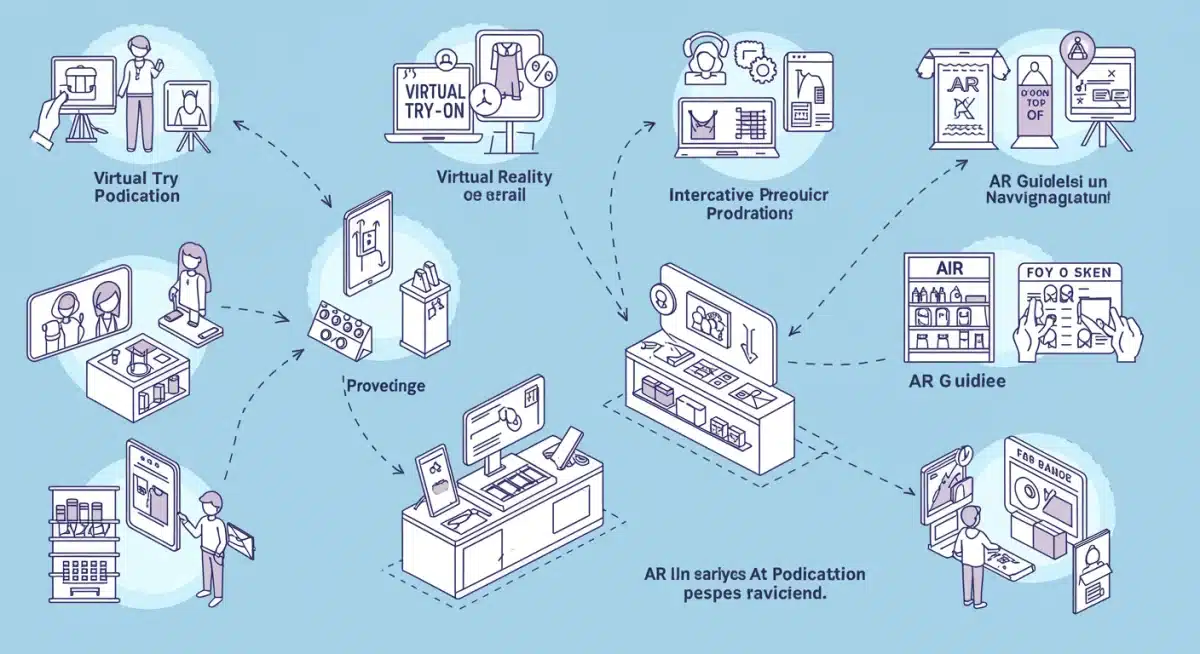
Virtual try-on (VTO) applications are perhaps the most impactful AR tools for categories like fashion, beauty, and eyewear. These technologies allow customers to see how products would look on them without physical interaction. This is especially crucial for items where fit, style, or color are highly personal and subjective.
- Apparel and Footwear: Customers can virtually try on clothes and shoes, assessing fit and style from home.
- Beauty Products: Users can experiment with different makeup shades and styles on their own faces, minimizing guesswork.
- Eyewear and Jewelry: AR enables virtual fitting of glasses, sunglasses, and jewelry, providing a realistic preview.
The reduction in uncertainty achieved through VTO directly translates into fewer returns and more satisfied customers, bolstering brand reputation and encouraging repeat purchases. This direct impact on consumer confidence is a primary driver of higher conversion rates.
Immersive Product Visualization
Beyond personal try-on, AR significantly enhances general product visualization for a wide range of goods. This involves allowing customers to place 3D models of products into their real-world environment, offering a true sense of scale and aesthetic integration. This is particularly valuable for larger items or those where spatial context is important.
For instance, furniture retailers can enable customers to ‘place’ a new sofa in their living room, checking its dimensions and how it complements existing decor. Similarly, electronics brands can show how a new TV will look mounted on a wall. This level of immersion helps customers overcome the common hurdle of imagining how a product will fit into their lives, making the purchase decision much easier. The ability to interact with a product in a simulated environment fosters a sense of ownership even before the transaction is complete.
Measuring the Impact: From Engagement to Conversion
The promise of augmented reality in retail extends beyond mere novelty; its true value lies in its measurable impact on business metrics, particularly online conversion rates. Understanding how AR translates increased engagement into actual purchases is crucial for brands investing in this technology. The transition from a customer exploring an AR experience to completing a transaction is a direct indicator of its effectiveness.
AR experiences are intrinsically designed to be more engaging than traditional static content. This heightened interaction captivates consumer attention for longer periods, allowing for deeper product exploration. The longer a customer engages with a product virtually, the more invested they become, which significantly increases the likelihood of a purchase.
Quantifying the Conversion Boost
Numerous studies and early adopter results consistently show a positive correlation between AR integration and improved conversion metrics. Brands that implement AR features often report a notable uplift in their online sales figures. This uplift is not uniform across all industries but is particularly pronounced in sectors where visual and spatial understanding of a product is paramount.
- Reduced Uncertainty: AR helps consumers visualize products accurately, minimizing doubts about fit, size, or appearance.
- Enhanced Product Understanding: Interactive 3D models provide more comprehensive details than traditional images or descriptions.
- Emotional Connection: Immersive experiences create a stronger bond between the consumer and the product, fostering desire.
These factors collectively contribute to a more confident and informed purchasing decision, directly leading to higher conversion rates. The ability to ‘try before you buy’ virtually removes significant barriers that often deter online shoppers.
Analyzing User Behavior and Data
Beyond direct conversion numbers, AR tools provide invaluable data on user behavior and preferences. By tracking how customers interact with AR features—what products they view, how long they engage, and which features they utilize—brands can gain deeper insights into consumer psychology. This data can then be used to refine product offerings, personalize marketing efforts, and optimize the AR experience itself.
For example, if data reveals that customers spend more time using AR for certain product categories, it indicates a strong demand for immersive experiences in those areas. This analytical feedback loop allows businesses to continuously improve their AR strategies, ensuring they are always delivering the most impactful and conversion-driving experiences possible. The insights gained from AR interactions are as valuable as the conversions they generate, providing a holistic view of customer engagement.
Challenges and Considerations for AR Implementation
While the potential of augmented reality in retail to boost conversion rates is undeniable, successful implementation is not without its challenges. Brands must navigate various technical, financial, and user experience considerations to fully realize the benefits of AR. Addressing these hurdles proactively is essential for a smooth and effective integration into the retail ecosystem.
The initial investment in AR technology can be substantial, requiring not only software development but also the creation of high-quality 3D models for all products. This process demands specialized skills and resources, which might be a barrier for smaller businesses. However, the long-term ROI often justifies this upfront cost.
Technical Hurdles and Development Costs
Developing robust AR applications requires expertise in 3D modeling, computer vision, and mobile development. Ensuring compatibility across various devices and operating systems can also be complex. The quality of 3D models is paramount; poorly rendered or inaccurate models can detract from the user experience rather than enhance it.
- High-Quality 3D Models: Creating realistic and accurate digital assets for every product is a time-consuming and costly process.
- Platform Compatibility: Ensuring AR experiences function seamlessly across diverse devices (iOS, Android, web browsers) requires extensive development and testing.
- Integration with Existing Systems: AR solutions must integrate effectively with e-commerce platforms, inventory management, and CRM systems.
These technical demands necessitate a clear strategy and often involve partnerships with specialized AR development firms. Brands must carefully evaluate their internal capabilities versus the benefits of outsourcing AR development.
User Experience and Adoption
Even with advanced technology, if the user experience is clunky or unintuitive, adoption rates will suffer. AR applications must be easy to access, simple to use, and provide clear value to the customer. Slow loading times, complex interfaces, or inaccurate AR renderings can quickly lead to user frustration and abandonment.
Furthermore, not all consumers are equally tech-savvy, and some may require education on how to use AR features. Brands need to invest in clear instructions and intuitive designs to ensure a broad user base can benefit from the technology. Successful AR implementation hinges not just on the technology itself, but on how effectively it is presented and integrated into the overall customer journey, making it a natural and valuable part of their shopping experience.
The Future Outlook: AR’s Role in Retail Evolution
The trajectory of augmented reality in retail points towards an increasingly central role in shaping the future of commerce. As technology advances and consumer expectations evolve, AR is poised to become an indispensable tool for brands aiming to deliver cutting-edge shopping experiences. Its potential extends far beyond current applications, promising a more integrated and personalized retail landscape.
The continuous development of AR hardware, such as more sophisticated smartphones and emerging AR glasses, will make these experiences even more accessible and seamless. As these devices become ubiquitous, the barriers to entry for AR adoption will diminish, paving the way for broader integration across all retail segments. This widespread availability will further accelerate its impact on conversion rates and customer loyalty.
Personalization and Hyper-Relevance
The future of AR in retail will heavily lean into hyper-personalization. Imagine AR experiences that not only show you how a product looks but also recommend items based on your past purchases, style preferences, and even real-time environmental data. This level of tailored interaction will make shopping feel less like a transaction and more like a curated personal service.
- AI-Powered Recommendations: AR combined with artificial intelligence will offer highly relevant product suggestions within the AR environment.
- Contextual Shopping: AR will adapt product displays and information based on the user’s location, time of day, or even current weather conditions.
- Customization on Demand: Customers could virtually design and customize products in real-time, seeing the changes immediately through AR.
This deep integration of personalization will foster unparalleled customer satisfaction and create powerful incentives for conversion. Brands that master this will gain a significant competitive edge.
Bridging Online and Offline Experiences
AR is uniquely positioned to blur the lines between online and physical retail, creating a truly omnichannel experience. In-store AR applications can enhance the physical shopping journey, providing digital information overlays on products, interactive navigation, or even virtual try-ons within the store itself. This hybrid approach offers the best of both worlds, combining the immediate gratification of physical retail with the rich information of digital platforms.
The seamless transition between online AR experiences at home and AR-enhanced interactions in brick-and-mortar stores will create a cohesive and engaging customer journey. This fusion will not only drive online conversion rates but also revitalize the physical retail space, proving that AR is not just about digital sales but about enriching the entire retail ecosystem. The future is one where AR is an invisible yet integral part of every shopping interaction.
Strategies for US Brands to Maximize AR ROI
For US brands looking to capitalize on the transformative power of augmented reality and achieve a 25% increase in online conversion rates, a strategic approach is paramount. Simply implementing AR features without a clear plan will likely yield suboptimal results. Maximizing return on investment (ROI) from AR requires careful planning, execution, and continuous optimization, focusing on both technological prowess and consumer needs.
The first step involves a thorough assessment of which product categories stand to benefit most from AR. Not all items will gain equally from immersive visualization. Identifying high-value products where visual appeal, fit, or spatial context are critical will ensure that AR development efforts are concentrated where they can have the greatest impact on conversions.
Invest in High-Quality Content Creation
The effectiveness of any AR experience hinges on the quality of its digital assets. Low-resolution, inaccurate, or poorly optimized 3D models will deter users and undermine the technology’s potential. Brands must allocate sufficient resources to create photorealistic and dimensionally accurate representations of their products, ensuring a seamless and believable AR overlay.
- Professional 3D Modeling: Partner with experts to create high-fidelity 3D models that accurately reflect physical products.
- Texture and Material Accuracy: Ensure that digital renditions precisely match the textures, colors, and materials of real-world items.
- Performance Optimization: Optimize AR assets for quick loading and smooth performance across a wide range of devices to avoid user frustration.
Investing in superior content not only enhances the user experience but also reinforces brand credibility, fostering trust that directly contributes to higher conversion rates.
Seamless Integration and User Experience Design
Beyond content, the user experience (UX) and seamless integration of AR into the existing e-commerce platform are critical. AR features should be intuitive, easy to access, and naturally flow within the customer’s shopping journey. A complex or disjointed AR experience will lead to abandonment, regardless of the underlying technology.
This means designing user interfaces that guide customers effectively, providing clear calls to action, and ensuring that the transition from AR interaction to adding to cart is effortless. Furthermore, brands should continuously collect feedback on their AR experiences and iterate based on user data to refine and improve the functionality. A well-designed AR integration feels like a natural extension of the brand’s digital presence, making the path to purchase both enjoyable and efficient for the consumer.
Overcoming Obstacles: Data, Privacy, and Accessibility
While the benefits of augmented reality in retail are compelling, several significant obstacles related to data, privacy, and accessibility must be meticulously addressed for widespread and ethical adoption. Brands must not only focus on technological implementation but also on building trust and ensuring equitable access to these advanced shopping experiences. Neglecting these areas could undermine the positive impact AR is designed to deliver.
The collection and use of user data, particularly in a context as personal as augmented reality, raise important privacy concerns. As AR applications become more sophisticated, they will inevitably gather more detailed information about user environments, preferences, and even biometric data. Brands must be transparent about their data practices and adhere to stringent privacy regulations to maintain consumer trust.
Navigating Data Privacy Regulations
With increasing data privacy regulations like GDPR and CCPA, brands must be proactive in ensuring their AR applications are compliant. This involves implementing robust data encryption, obtaining explicit user consent for data collection, and providing clear policies on how data will be used and stored. A data breach or misuse of personal information could severely damage a brand’s reputation and lead to legal repercussions.
- Transparent Data Policies: Clearly communicate what data is collected, why it’s needed, and how it will be used.
- Consent Management: Implement clear mechanisms for users to give and revoke consent for data collection.
- Data Security: Invest in strong cybersecurity measures to protect sensitive user data from breaches.
Prioritizing data privacy is not just a regulatory requirement; it’s a fundamental aspect of building long-term customer loyalty and trust in the AR ecosystem.
Ensuring Accessibility and Inclusivity
Another crucial consideration is the accessibility of AR technology. Not all consumers have access to the latest smartphones or high-speed internet, which can limit their ability to engage with AR features. Brands must strive to make their AR experiences as inclusive as possible, considering various device capabilities and network conditions. This might involve offering lighter versions of AR applications or alternative ways to access product information.
Furthermore, AR design should consider users with disabilities, ensuring that features are navigable and understandable for everyone. This includes aspects like contrast ratios, text size, and audio cues. By prioritizing accessibility, brands can expand their reach and ensure that the benefits of AR are available to a wider audience, thereby maximizing its potential impact on overall market conversion rates rather than just a segment. Overcoming these obstacles is not merely about compliance but about fostering a truly inclusive and trustworthy digital retail environment.
The Competitive Edge: Why AR is Essential for US Brands
In the fiercely competitive US retail market, mere participation is no longer sufficient; brands must actively seek and cultivate a distinctive competitive edge. Augmented reality offers precisely this advantage, moving beyond incremental improvements to fundamentally redefine the customer experience and operational efficiency. For US brands aiming not just to survive but to thrive and capture a larger market share, AR is rapidly becoming an essential investment rather than a luxury.
The ability to offer immersive and interactive product experiences sets a brand apart from competitors relying on traditional e-commerce models. In a digital landscape saturated with options, AR provides a memorable differentiator that can significantly influence consumer choice and loyalty. It transforms passive browsing into active engagement, creating a deeper connection with the product and the brand.
Differentiating Through Innovation
Early adopters of AR in retail have already demonstrated its power to capture market attention and drive engagement. By providing novel and exciting ways to shop, brands can position themselves as innovators and leaders in their respective categories. This reputation for forward-thinking not only attracts new customers but also reinforces loyalty among existing ones, who appreciate the enhanced shopping experience.
- Enhanced Brand Image: Brands leveraging AR are often perceived as modern, customer-centric, and innovative.
- Unique Customer Experiences: AR offers interactions that traditional online shopping cannot replicate, creating a distinct advantage.
- Media and PR Opportunities: Innovative AR implementations can generate significant media coverage and positive buzz.
This differentiation is critical in a market where product parity is often high, and the customer experience becomes the primary battleground for consumer dollars.
Meeting Evolving Consumer Expectations
Today’s consumers, particularly younger generations, expect seamless, personalized, and engaging digital interactions. They are not just looking for products; they are seeking experiences. AR directly addresses these evolving expectations by offering a dynamic and interactive shopping journey that aligns with modern digital lifestyles. Brands that fail to adapt risk being perceived as outdated and losing relevance.
By integrating AR, US brands are not just adopting a new technology; they are aligning with the future of consumer behavior. The ability of AR to bridge the physical and digital worlds, provide instant gratification, and offer unparalleled product understanding fundamentally reshapes the value proposition for online shoppers. This proactive approach ensures that brands remain relevant, responsive, and ultimately, more successful in driving online conversion rates and securing their competitive position for the long term.
| Key Aspect | Impact on Conversion Rates |
|---|---|
| Virtual Try-On | Reduces product uncertainty, leading to higher purchase confidence and fewer returns. |
| Product Visualization | Allows customers to see products in their environment, improving perceived fit and aesthetic. |
| Enhanced Engagement | Increased interaction time with products fosters stronger emotional connection and purchase intent. |
| Data Insights | Provides valuable behavioral data to optimize marketing and product offerings for better conversion. |
Frequently Asked Questions About AR in Retail
Augmented reality (AR) in retail overlays digital content onto the real world, allowing shoppers to visualize products in their own environment. This includes virtual try-ons for clothing or placing furniture models in a room, enhancing the online shopping experience and reducing purchase uncertainty.
AR boosts conversion by providing immersive product visualization, reducing customer uncertainty about fit and appearance. It increases engagement, builds confidence in purchasing decisions, and differentiates brands, leading to more completed sales and fewer abandoned carts.
Key challenges include high development costs for quality 3D models, ensuring platform compatibility across devices, and seamlessly integrating AR with existing e-commerce systems. Additionally, designing intuitive user experiences and addressing data privacy concerns are crucial for success.
Sectors where visual and spatial understanding of a product is critical benefit most. This includes fashion (virtual try-on), home furnishings (furniture placement), beauty (makeup previews), and automotive (car customization), where AR significantly enhances the decision-making process.
Yes, AR adoption is rapidly growing among US brands. As consumer expectations for interactive and personalized shopping experiences increase, more retailers are investing in AR to stay competitive, drive engagement, and achieve higher online conversion rates by 2025.
Conclusion
The journey of augmented reality in retail is clearly on an upward trajectory, fundamentally reshaping how US brands engage with their customers and drive sales. The projection of a 25% increase in online conversion rates by early 2025 is not merely an ambitious forecast but a reflection of AR’s proven ability to deliver tangible business outcomes. By offering immersive product visualization, personalized experiences, and bridging the gap between digital and physical shopping, AR empowers consumers with confidence and delight. While challenges in implementation, data privacy, and accessibility exist, strategic investment in high-quality content, seamless integration, and a focus on user experience will enable brands to overcome these hurdles. Ultimately, AR is no longer an optional innovation but a crucial competitive differentiator, essential for any US brand aiming to thrive in the evolving landscape of modern retail and secure a leading position in the digital economy.