Sustainability in Retail: New Consumer Demands Driving Market Shift

New consumer demands for sustainability are projected to drive a significant 5% market share shift in retail by mid-2025, forcing businesses to re-evaluate their operational and ethical frameworks.
The retail landscape is undergoing a profound transformation, driven by an increasingly conscious consumer base. This shift, where new consumer demands for retail sustainability demands are reshaping purchasing decisions, is not merely a trend but a fundamental change projected to drive a significant 5% market share shift by mid-2025.
Understanding the Evolving Consumer Mindset
Consumers today are more informed and ethically driven than ever before. They are actively seeking out brands that align with their values, particularly concerning environmental and social responsibility. This evolving mindset transcends mere product preference; it’s about supporting companies that demonstrate genuine commitment to sustainability throughout their entire value chain.
The influence of social media and accessible information has amplified this demand. Shoppers can quickly research a brand’s practices, from sourcing raw materials to labor conditions, and are not hesitant to voice their approval or disapproval. This transparency holds retailers accountable in unprecedented ways, pushing them towards greater ethical conduct.
The Rise of Conscious Consumption
Conscious consumption is no longer a niche market; it’s becoming mainstream. This movement is characterized by consumers making purchasing decisions based on ethical, environmental, and social criteria, alongside traditional factors like price and quality. They consider the impact of their choices on the planet and society.
- Environmental Impact: Concern over climate change, plastic pollution, and resource depletion.
- Social Responsibility: Fair labor practices, ethical sourcing, and community engagement.
- Transparency: Demand for clear information about product origins and production processes.
- Health and Wellness: Preference for natural, non-toxic, and organic products.
This shift means retailers cannot simply greenwash their products; they must embed sustainability into their core business model. Those who fail to adapt risk losing a substantial portion of their customer base to more ethically aligned competitors.
The Economic Imperative of Sustainable Practices
Beyond ethical considerations, embracing sustainability has become an economic imperative for retailers. The projected 5% market share shift by mid-2025 highlights that ignoring these demands is not just a moral oversight but a significant business risk. Sustainable practices can lead to cost savings, enhanced brand reputation, and access to new market segments.
Investing in energy efficiency, waste reduction, and sustainable logistics can lower operational costs in the long run. Furthermore, a strong sustainability profile can attract environmentally conscious investors and improve access to green financing options. This financial upside makes the transition to sustainable models even more compelling for forward-thinking businesses.
Cost Savings Through Efficiency
Implementing sustainable operational practices often translates directly into cost reductions. This includes optimizing supply chains, reducing energy consumption in stores and warehouses, and minimizing waste through recycling and upcycling initiatives. These efficiencies contribute directly to the bottom line.
- Energy Optimization: LED lighting, smart thermostats, and renewable energy sources.
- Waste Reduction: Streamlined packaging, recycling programs, and upcycling initiatives.
- Water Conservation: Efficient water usage in facilities and product manufacturing.
Retailers who proactively adopt these measures not only reduce their environmental footprint but also enhance their financial performance, demonstrating that sustainability and profitability are not mutually exclusive.
Innovations in Sustainable Retail Models
The pressure from consumer demands has spurred significant innovation within the retail sector. Companies are exploring novel approaches to product design, supply chain management, and customer engagement to meet sustainability expectations. These innovations are not just about incremental improvements but often involve rethinking entire business models.
From circular economy principles to advanced traceability technologies, retailers are finding creative ways to reduce their environmental impact while delivering value to consumers. This includes offering repair services, product rental schemes, and take-back programs that extend product lifecycles and minimize waste.
Circular Economy in Retail
The circular economy model is gaining traction as a sustainable alternative to the traditional linear ‘take-make-dispose’ approach. In retail, this means designing products for durability, reuse, repair, and recycling, minimizing waste and maximizing resource efficiency. It represents a fundamental shift in how products are conceived, produced, and consumed.
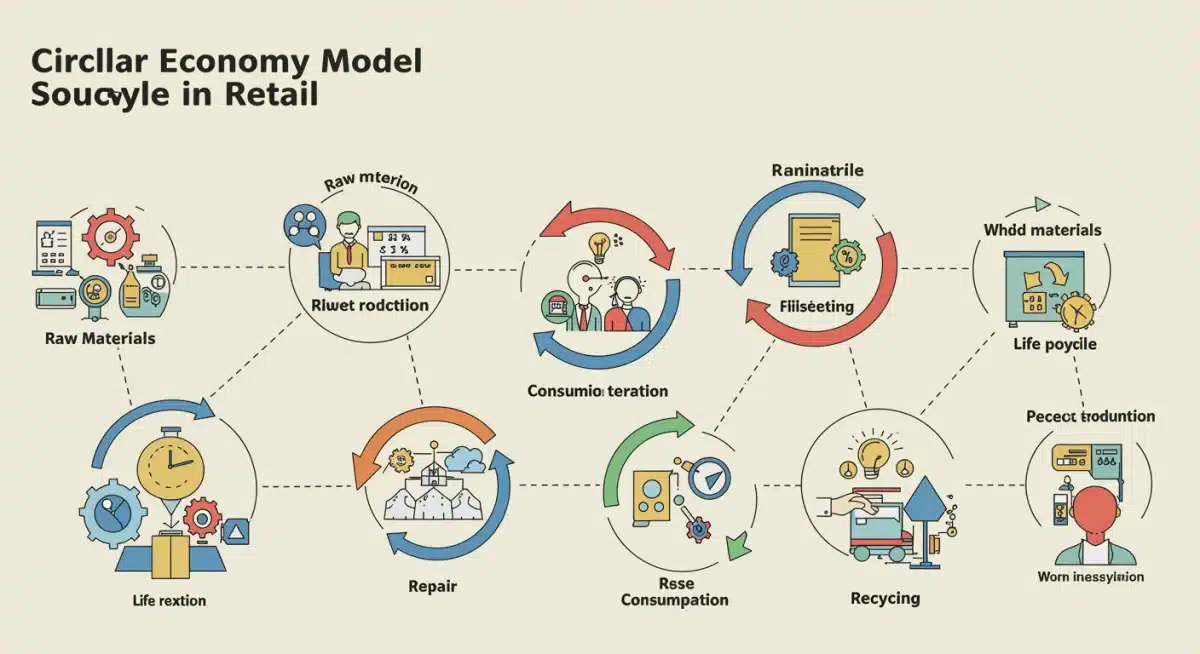

- Product-as-a-Service: Offering products for lease or rental rather than outright purchase.
- Repair and Refurbishment: Providing services to extend product life and reduce waste.
- Take-back Programs: Collecting used products for recycling or repurposing.
- Sustainable Sourcing: Prioritizing materials that are renewable, recycled, or ethically produced.
Embracing circularity allows retailers to create closed-loop systems, significantly reducing their reliance on virgin resources and minimizing their environmental footprint. This also resonates strongly with consumers who seek to reduce their own consumption impact.
Challenges and Opportunities for Retailers
While the shift towards sustainability presents immense opportunities, it also comes with significant challenges. Retailers must navigate complex supply chains, invest in new technologies, and educate both their employees and customers about sustainable practices. The initial investment can be substantial, but the long-term benefits often outweigh these upfront costs.
One of the primary challenges is ensuring authenticity and avoiding accusations of greenwashing. Consumers are savvy and can detect superficial attempts at sustainability. Retailers must demonstrate genuine commitment through verifiable actions and transparent reporting.
Overcoming Supply Chain Complexities
Transforming a global supply chain to be more sustainable is a monumental task. It requires collaboration with suppliers, auditing practices, and sometimes completely re-evaluating sourcing strategies. This complexity can be a barrier for many retailers, particularly smaller ones with limited resources.
- Supplier Engagement: Working closely with suppliers to implement sustainable practices.
- Traceability Technology: Using blockchain and other tools to track product origins.
- Logistics Optimization: Reducing carbon emissions in transportation and warehousing.
Despite these challenges, retailers who successfully navigate supply chain complexities will gain a significant competitive advantage, building trust and loyalty with their customer base.
Measuring Impact and Transparency
For sustainability initiatives to be credible, retailers must effectively measure their environmental and social impact and communicate these findings transparently to consumers. This involves setting clear goals, tracking progress, and reporting on key performance indicators (KPIs) related to sustainability.
Tools and frameworks for sustainability reporting are becoming more sophisticated, allowing companies to accurately assess their footprint. Beyond reporting, retailers are increasingly using certifications and labels to signal their commitment to specific standards, helping consumers make informed choices.
Effective Communication Strategies
Communicating sustainability efforts effectively is crucial. Retailers need to tell their story authentically, highlighting their achievements while also acknowledging areas for improvement. This builds trust and fosters a deeper connection with consumers who value honesty and progress.
- Sustainability Reports: Publishing annual reports detailing environmental and social impact.
- Product Labeling: Using clear and verifiable labels for sustainable products.
- Digital Storytelling: Engaging consumers through online content about their sustainable journey.
By being transparent and proactive in their communication, retailers can strengthen their brand image and demonstrate their commitment to a more sustainable future.
The Future of Retail: A Sustainable Paradigm
The retail sector is at a crossroads, with sustainability emerging as a defining factor for future success. The projected 5% market share shift by mid-2025 is a clear indicator that businesses must embrace a sustainable paradigm not just as a compliance requirement, but as a core strategic advantage. Those who lead this charge will not only capture market share but also contribute to a more resilient and responsible economy.
This future involves deeper integration of technology, enhanced collaboration across the value chain, and a continuous dialogue with consumers. Retailers must be agile, adaptive, and genuinely committed to their sustainability goals to thrive in this evolving landscape. The transformation is ongoing, promising a more ethical and environmentally conscious retail experience for all.
| Key Point | Brief Description |
|---|---|
| Consumer Demand Shift | New consumer demands for sustainability are driving a 5% market share shift by mid-2025. |
| Economic Imperative | Adopting sustainable practices leads to cost savings and enhanced brand reputation. |
| Circular Economy | Retailers are embracing models for product reuse, repair, and recycling. |
| Transparency & Impact | Measuring and transparently communicating sustainability efforts builds consumer trust. |
Frequently Asked Questions About Retail Sustainability
The shift is primarily driven by evolving consumer preferences. Shoppers are increasingly prioritizing brands that demonstrate clear commitments to environmental protection, ethical sourcing, and social responsibility. This conscious consumption directly influences purchasing decisions and market dynamics.
Retailers can measure impact through various methods, including life cycle assessments, carbon footprint tracking, and waste audits. Utilizing standardized reporting frameworks and third-party certifications helps ensure accuracy and credibility, allowing for transparent communication with stakeholders and consumers.
Adopting a circular economy model offers multiple benefits, such as reduced waste, lower reliance on virgin resources, and potential cost savings through reuse and recycling. It also enhances brand perception and resonates with eco-conscious consumers, fostering loyalty and market differentiation.
Key challenges include managing complex global networks, ensuring supplier compliance with ethical standards, and the initial investment in new technologies for traceability. Overcoming these requires strong collaboration, transparent auditing, and a long-term strategic commitment to sustainability across the entire value chain.
To avoid greenwashing, retailers must ensure their sustainability claims are backed by verifiable data and tangible actions. Transparency in reporting, obtaining credible third-party certifications, and engaging in honest communication about both successes and ongoing challenges are crucial for building and maintaining consumer trust.
Conclusion
The imperative for sustainability in retail is undeniable, with new consumer demands driving a significant market share shift. Retailers who proactively embrace ethical practices, innovate their business models, and transparently communicate their efforts are poised to thrive in this evolving landscape. This transformation is not merely about adapting to a trend; it’s about fundamentally reshaping the industry for a more responsible and resilient future, where profitability and planetary well-being go hand-in-hand.