Predictive Analytics: 18% Inventory Optimization for US Retailers
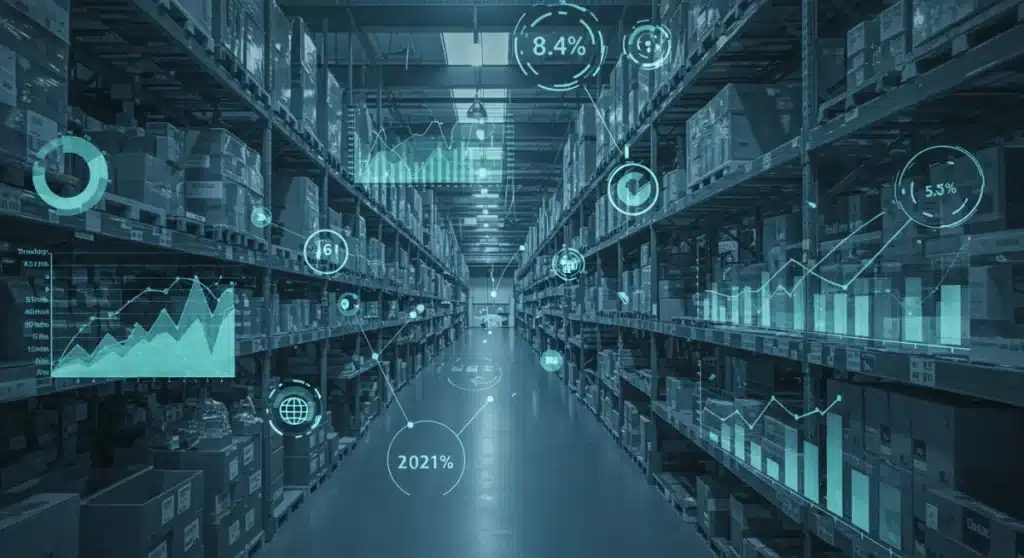
Predictive analytics is fundamentally transforming demand forecasting in the US retail sector, empowering businesses to achieve an impressive 18% optimization in inventory levels, thereby boosting operational efficiency and profitability.
In an increasingly complex and competitive retail landscape, the ability to accurately predict customer demand is no longer a luxury but a strategic imperative. This year, US retailers are witnessing a remarkable transformation, with the adoption of predictive analytics for demand forecasting: optimizing inventory levels by 18% for US retailers this year. This technological leap is not just about numbers; it’s about fundamentally reshaping how businesses manage their stock, reduce waste, and ultimately, enhance profitability. Are you ready to discover how this powerful tool is driving unprecedented efficiency?
The foundational shift in retail forecasting
The retail industry has always grappled with the inherent uncertainties of consumer behavior. Historically, demand forecasting relied heavily on historical sales data, often leading to either overstocking, resulting in costly storage and markdowns, or understocking, leading to lost sales and customer dissatisfaction. However, the advent of predictive analytics has ushered in a new era, offering a more nuanced and accurate approach.
This shift is characterized by moving beyond simple averages and seasonal trends. Modern predictive analytics models integrate a multitude of variables, providing a holistic view of potential demand. By doing so, retailers can anticipate fluctuations with greater precision, making their inventory management more agile and responsive to market dynamics.
Understanding the core mechanics
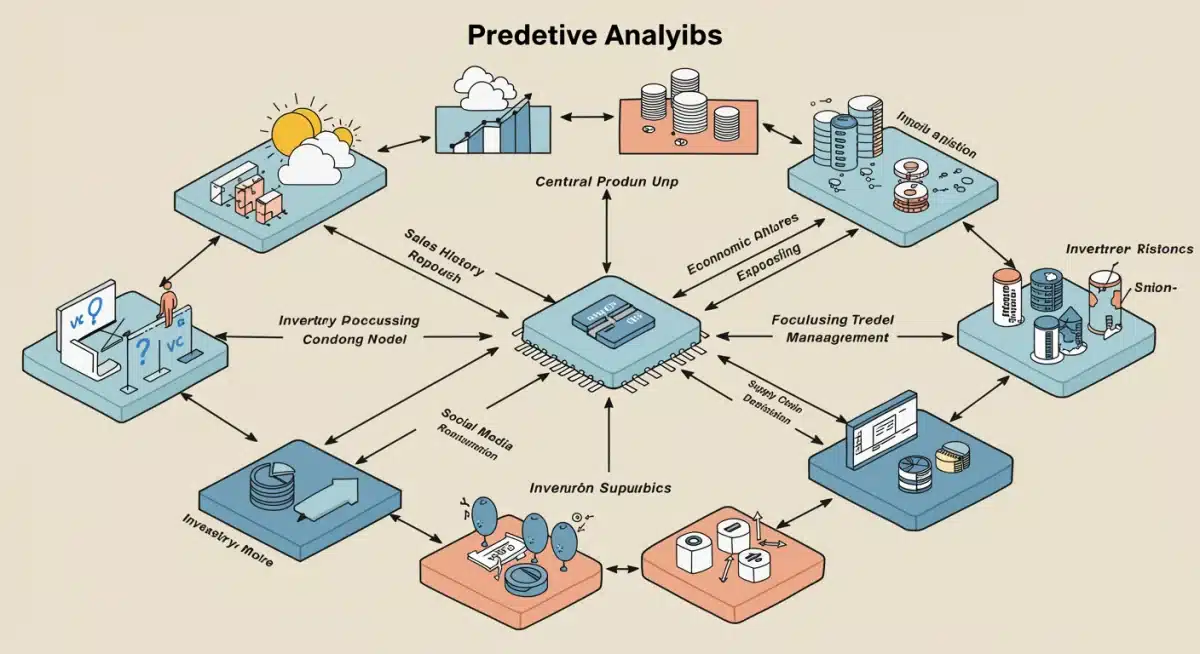
At its heart, predictive analytics employs advanced statistical algorithms and machine learning techniques to identify patterns and predict future outcomes. For demand forecasting, this means analyzing vast datasets that go far beyond traditional sales records.
- Historical Sales Data: The fundamental baseline, providing insights into past purchasing patterns.
- Economic Indicators: Factors like GDP growth, inflation, and unemployment rates that influence consumer spending power.
- Weather Patterns: Significant for seasonal goods and products affected by climate variations.
- Promotional Activities: The impact of marketing campaigns, discounts, and holiday sales.
- Social Media Trends: Real-time insights into emerging product interests and consumer sentiment.
The integration of these diverse data streams allows for the creation of sophisticated models that can foretell demand with a level of accuracy previously unattainable. This enhanced foresight directly translates into more efficient inventory strategies, minimizing both excess stock and stockouts.
The move towards predictive analytics represents a paradigm shift, enabling retailers to move from reactive inventory management to a proactive and data-driven strategy. This not only optimizes stock levels but also improves cash flow, reduces operational costs, and ultimately boosts the bottom line.
Leveraging big data for precise demand prediction
The sheer volume and velocity of data generated in today’s digital economy provide an unprecedented opportunity for retailers. Big data, encompassing everything from transaction records to customer browsing behavior and external market signals, forms the bedrock upon which effective predictive analytics models are built. Without robust data collection and processing capabilities, the power of these analytical tools remains untapped.
The challenge for many retailers lies not just in collecting this data, but in effectively structuring, cleaning, and analyzing it to extract actionable insights. This often requires significant investment in data infrastructure and specialized talent.
The role of machine learning algorithms
Machine learning (ML) algorithms are the workhorses of predictive analytics. They learn from historical data, identifying complex relationships and patterns that human analysts might miss. As more data becomes available, these algorithms continuously refine their predictions, becoming increasingly accurate over time. This adaptive learning capability is crucial in the dynamic retail environment.
Different ML techniques are employed depending on the specific forecasting challenge:
- Regression Models: Used for predicting continuous values, such as the exact quantity of a product to be sold.
- Time Series Analysis: Ideal for identifying trends and seasonality in data over time.
- Neural Networks: Capable of handling highly complex, non-linear relationships in vast datasets.
- Decision Trees and Random Forests: Provide interpretable models for understanding the factors driving demand.
The selection and fine-tuning of these algorithms are critical to the success of any predictive analytics initiative. An effective model not only predicts demand but also provides insights into the factors influencing that demand, allowing retailers to adjust their strategies accordingly.
By harnessing the power of big data and advanced machine learning, retailers can move beyond educated guesses to make data-driven decisions that directly impact their inventory efficiency and profitability. The ability to process and interpret massive datasets is what truly differentiates modern demand forecasting from its predecessors.
Achieving 18% inventory optimization: a measurable impact
The figure of 18% inventory optimization is not an arbitrary number; it represents a tangible and significant improvement that many US retailers are realizing through the strategic implementation of predictive analytics. This level of optimization directly impacts a retailer’s bottom line by reducing carrying costs, minimizing waste, and preventing lost sales.
Achieving such a measurable impact requires a clear understanding of what inventory optimization entails and how predictive insights contribute to it. It’s a continuous process of refinement, driven by data and responsive to market changes.
Key areas of impact
The 18% optimization is an aggregate metric, reflecting improvements across several critical areas of inventory management:
- Reduced Overstocking: By accurately forecasting demand, retailers can order only what is needed, significantly cutting down on excess inventory. This frees up capital that would otherwise be tied up in unsold goods and reduces storage costs.
- Minimized Stockouts: Precise predictions ensure that popular items are always in stock, preventing lost sales and improving customer satisfaction. This is crucial for maintaining customer loyalty in a competitive market.
- Improved Cash Flow: Lower inventory levels mean less capital expenditure on stock, leading to better cash flow management and greater financial flexibility for other investments.
- Enhanced Supply Chain Efficiency: Accurate demand signals allow for better coordination with suppliers, leading to more efficient ordering, reduced lead times, and optimized logistics.
These improvements collectively contribute to a healthier financial standing for retailers. The ability to consistently meet customer demand while minimizing holding costs is a powerful competitive advantage in today’s retail environment. The 18% figure underscores the transformative potential of predictive analytics when applied diligently and strategically.
Challenges and considerations for implementation
While the benefits of predictive analytics are clear, implementing these systems effectively is not without its challenges. Retailers must navigate a complex landscape of data integration, technological adoption, and organizational change to fully realize the potential of these tools. Understanding these hurdles is the first step towards overcoming them.
Successful implementation requires more than just purchasing software; it demands a strategic roadmap, skilled personnel, and a culture that embraces data-driven decision-making.
Overcoming common obstacles
Retailers often encounter several common challenges during the implementation process:
- Data Quality and Integration: Poor data quality, siloed data sources, and incompatible systems can hinder the effectiveness of predictive models. Ensuring clean, consistent, and integrated data is paramount.
- Talent Gap: A shortage of data scientists and analytics professionals who can build, manage, and interpret predictive models can be a significant barrier. Investing in training or outsourcing expertise may be necessary.
- Resistance to Change: Employees accustomed to traditional forecasting methods may resist new analytical approaches. Effective change management and demonstrating the tangible benefits are crucial for adoption.
- Cost of Implementation: The initial investment in technology, data infrastructure, and talent can be substantial. Retailers must carefully evaluate the ROI and secure executive buy-in.
Addressing these challenges proactively is key to a successful predictive analytics deployment. A phased approach, starting with pilot projects and gradually scaling up, can help mitigate risks and build internal confidence in the new systems. The journey to a fully optimized inventory system is continuous, requiring ongoing adjustments and improvements.
The future landscape: AI, IoT, and hyper-personalization
The evolution of predictive analytics in retail is far from over. The integration of artificial intelligence (AI), the Internet of Things (IoT), and advancements in hyper-personalization are set to further revolutionize demand forecasting and inventory management. These emerging technologies promise even greater levels of precision and efficiency, pushing the boundaries of what’s possible.
Retailers who embrace these innovations will be best positioned to thrive in the rapidly changing market, staying ahead of consumer expectations and competitive pressures.
Next-gen forecasting capabilities
The synergy between these technologies will unlock unprecedented forecasting accuracy:
- AI-Powered Models: More sophisticated AI algorithms will be able to process even more complex data, identify subtle patterns, and make real-time adjustments to forecasts. This includes deep learning techniques that can adapt to entirely new market conditions.
- IoT for Real-Time Inventory Tracking: Sensors and RFID tags can provide real-time visibility into inventory levels across the supply chain, from warehouses to store shelves. This eliminates discrepancies and feeds accurate, live data into predictive models.
- Hyper-Personalized Demand: By analyzing individual customer preferences and behaviors, retailers can forecast demand at a granular, personalized level, optimizing inventory for specific customer segments or even individual shoppers.
- Predictive Maintenance for Supply Chain: AI can also predict potential disruptions in the supply chain, such as equipment failures or shipping delays, allowing retailers to proactively adjust inventory plans.
These advancements will move retailers closer to a truly autonomous inventory management system, where orders are placed, stock is moved, and shelves are replenished with minimal human intervention, all driven by highly accurate predictive insights. The future promises a level of efficiency and responsiveness that will redefine retail operations.
Strategic imperatives for US retailers
For US retailers aiming to replicate and even exceed the 18% inventory optimization benchmark, a strategic and forward-thinking approach is essential. It’s not merely about adopting technology, but about embedding a data-driven culture throughout the organization and continuously adapting to evolving market dynamics. The competitive edge will belong to those who can most effectively leverage their data assets.
This means fostering collaboration between IT, merchandising, and operations teams, ensuring that predictive insights are actionable and integrated into daily workflows.
Building a data-driven retail ecosystem
Several strategic imperatives stand out for retailers looking to maximize their predictive analytics investment:
- Invest in Data Infrastructure: A robust, scalable, and integrated data platform is the backbone of effective predictive analytics. This includes data lakes, warehouses, and real-time processing capabilities.
- Cultivate Analytics Talent: Develop internal capabilities by hiring data scientists, analysts, and machine learning engineers, or partner with specialized external providers. Ongoing training is also crucial.
- Foster Cross-Functional Collaboration: Break down silos between departments. Predictive insights are most valuable when understood and utilized by teams across the organization, from procurement to marketing.
- Start Small, Scale Fast: Begin with pilot projects to demonstrate ROI and build confidence, then rapidly scale successful initiatives across the enterprise.
- Embrace Continuous Improvement: The retail landscape is constantly changing. Regularly review and refine predictive models, incorporating new data sources and adapting to emerging trends.
By focusing on these strategic imperatives, US retailers can not only achieve significant inventory optimization but also build a resilient, agile, and highly profitable business model for the long term. The 18% figure is a testament to what’s achievable, but continuous innovation and strategic execution are key to sustaining and improving upon these gains.
| Key Point | Brief Description |
|---|---|
| Demand Forecasting Shift | Moving from historical data to multi-variable predictive analytics for enhanced accuracy. |
| Big Data & ML | Leveraging vast data sets and machine learning algorithms for precise predictions. |
| 18% Optimization | Achieving significant inventory reduction, minimizing stockouts and improving cash flow. |
| Future Trends | Integration of AI, IoT, and hyper-personalization for next-level forecasting. |
Frequently asked questions about predictive analytics in retail
Predictive analytics in retail demand forecasting uses historical data, machine learning, and statistical algorithms to anticipate future customer demand. It integrates various factors like economic trends, weather, and promotions to provide highly accurate predictions, moving beyond traditional methods.
By accurately forecasting demand, predictive analytics helps retailers avoid both overstocking and understocking. This leads to reduced carrying costs, minimized waste from unsold goods, fewer lost sales due to stockouts, and improved cash flow, contributing to overall inventory optimization.
Effective predictive forecasting relies on diverse data sources including historical sales, promotional data, economic indicators, weather patterns, social media trends, and even competitor analysis. The quality and integration of this big data are paramount for accurate model performance.
Key challenges include ensuring high data quality and integration, addressing the talent gap for data scientists, overcoming organizational resistance to new technologies, and managing the initial cost of implementation. Strategic planning and a phased approach can help mitigate these hurdles.
AI will bring more sophisticated algorithms for deeper insights and real-time adjustments. IoT will provide live inventory tracking and supply chain visibility, feeding accurate data into predictive models. Together, they will enable hyper-personalized and highly autonomous inventory management systems.
Conclusion
The journey towards optimizing inventory levels by 18% through predictive analytics is a testament to the transformative power of data in the US retail sector. This shift represents more than just a technological upgrade; it signifies a fundamental change in how retailers approach strategy, efficiency, and customer satisfaction. By embracing advanced analytics, integrating diverse data streams, and fostering a culture of continuous improvement, businesses can not only achieve significant financial gains but also build a more resilient and responsive operation. The ongoing evolution of AI and IoT promises to further enhance these capabilities, ensuring that retailers who invest in these technologies will remain at the forefront of innovation and profitability in the years to come.