Edge Computing in Retail: Boosting Real-Time Data by 50% for US Stores
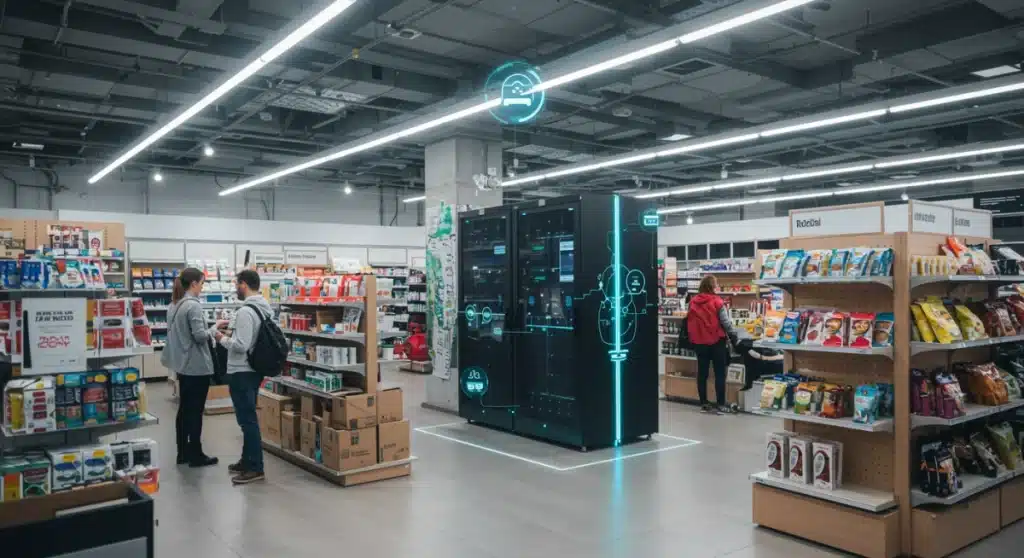
Edge computing is poised to transform US retail by significantly enhancing real-time data processing, leading to crucial improvements in operational efficiency, customer personalization, and inventory management by 2025, with a projected 50% boost in capabilities.
Imagine a retail landscape where every transaction, every customer interaction, and every inventory movement is processed and analyzed in an instant. This isn’t a futuristic dream; it’s the imminent reality driven by Edge Computing in Retail: Boosting Real-Time Data Processing by 50% for US Stores in 2025. This technological revolution promises to redefine how US retailers operate, offering unprecedented insights and operational agility.
Understanding the Edge: Why it Matters for Retail
Edge computing represents a paradigm shift from traditional centralized cloud processing, moving computational power closer to the data source. For the retail sector, this means processing information directly at the store level, rather than sending it all to a remote data center. This localized approach dramatically reduces latency and bandwidth usage, opening doors for real-time applications that were previously impossible.
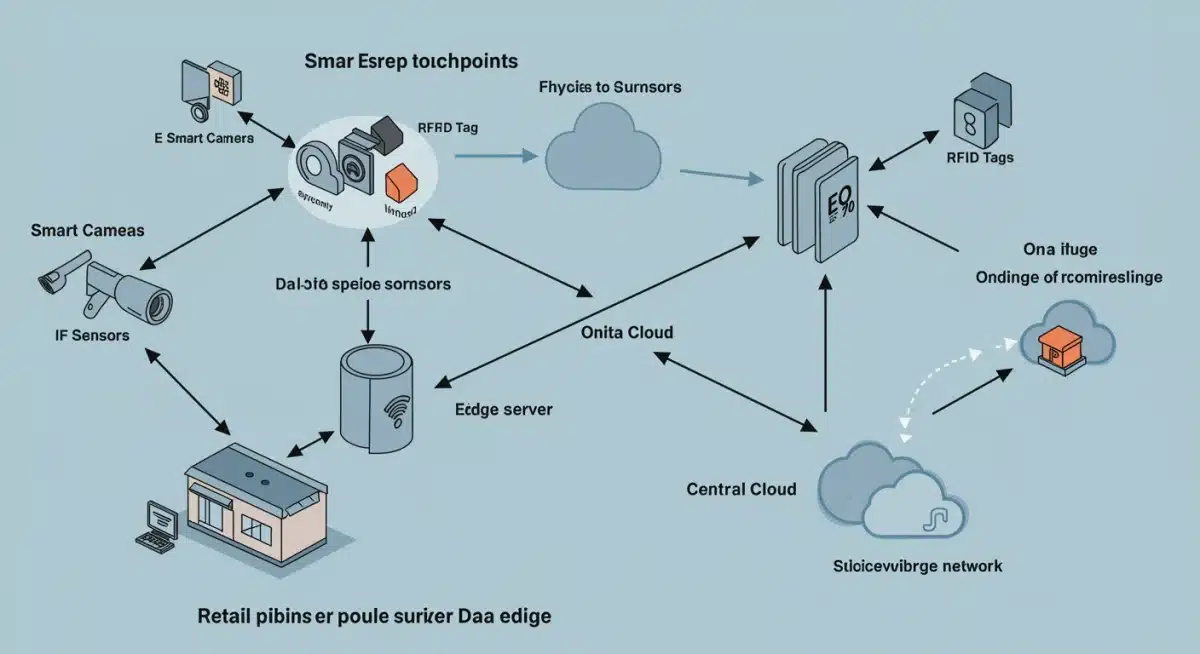
The core principle behind edge computing is simple yet profound: analyze data where it’s generated. In a retail environment, this could be a point-of-sale (POS) system, an IoT sensor on a shelf, or a smart camera monitoring foot traffic. By processing this data on-site, retailers gain immediate actionable insights, which is crucial in today’s fast-paced market.
The limitations of traditional cloud computing in retail
- High Latency: Sending all data to the cloud and back can introduce delays, impacting real-time decision-making for in-store operations.
- Bandwidth Constraints: The sheer volume of data generated by modern retail environments can overwhelm network infrastructure if constantly streamed to the cloud.
- Security Concerns: Transmitting sensitive customer and operational data over public networks to the cloud can present security vulnerabilities.
Ultimately, edge computing addresses these challenges by decentralizing data processing. It allows retailers to leverage technologies like artificial intelligence and machine learning at the store level, providing immediate feedback and enabling a more dynamic and responsive retail experience. The shift is not about replacing the cloud, but rather augmenting it, creating a more efficient and resilient data ecosystem.
Enhancing Customer Experience with Real-Time Data
One of the most significant impacts of edge computing in retail is its ability to revolutionize the customer experience. By processing data at the edge, retailers can gain immediate insights into customer behavior, preferences, and needs, enabling highly personalized and dynamic interactions within the store. This real-time understanding empowers associates to offer tailored recommendations and address issues proactively.
Imagine a scenario where a customer picks up an item, and almost instantly, a nearby digital display shows complementary products or personalized offers based on their past purchase history and current in-store movements. This level of responsiveness is only achievable when data processing happens at the edge, eliminating the delays associated with cloud-based systems.
Personalized shopping journeys
Edge computing facilitates the creation of truly personalized shopping journeys. From the moment a customer enters the store, their interactions with smart shelves, digital signage, and even mobile apps can be analyzed in real-time. This allows for:
- Dynamic Pricing: Adjusting prices based on demand, inventory levels, or competitor pricing, all in real-time.
- Targeted Promotions: Delivering personalized discounts or loyalty rewards directly to a customer’s device as they browse.
- Assisted Shopping: Empowering store associates with real-time customer profiles and product information to offer highly relevant assistance.
The ability to react instantly to customer actions not only improves satisfaction but also drives sales and fosters loyalty. Edge computing transforms the physical store into a dynamic, intelligent environment that anticipates and responds to individual customer needs, making each visit unique and engaging.
Optimizing Operations and Inventory Management
Beyond customer experience, edge computing is a game-changer for retail operations and inventory management. The ability to process vast amounts of data locally and in real-time provides unprecedented visibility and control over in-store processes. This leads to significant improvements in efficiency, cost reduction, and waste minimization, directly impacting the bottom line.
Consider the complexities of managing inventory across multiple SKUs in a large store. Traditional methods often involve manual checks or delayed updates. With edge computing, IoT sensors on shelves and smart cameras can continuously monitor stock levels, triggering automatic alerts for replenishment or identifying misplaced items. This proactive approach minimizes out-of-stocks and overstocking, ensuring products are always available when and where customers want them.
Streamlined supply chain integration
Edge technology extends its benefits to the broader supply chain by providing real-time data from the store floor back to distribution centers and suppliers. This seamless integration enables:
- Automated Replenishment: Orders are triggered automatically based on actual sales and predicted demand, optimizing stock levels.
- Reduced Shrinkage: Real-time monitoring helps identify and mitigate theft or damage more effectively.
- Optimized Labor Allocation: Data on foot traffic and customer behavior can inform staffing schedules, ensuring adequate coverage during peak hours.
By bringing data processing closer to the source, edge computing transforms inventory management from a reactive task to a highly proactive and predictive function. This operational agility is critical for US retailers looking to stay competitive and maximize profitability in a dynamic market.
Security and Data Privacy at the Edge
While the benefits of edge computing are clear, questions around security and data privacy are paramount, especially in the sensitive retail environment. Processing data closer to the source can, paradoxically, enhance security by reducing the amount of sensitive information transmitted to the cloud. However, it also introduces new considerations for protecting distributed data points.
Edge devices are often less robust in their security infrastructure compared to centralized cloud data centers. This necessitates a strong emphasis on securing each edge node, implementing encryption, access controls, and regular security audits. The goal is to ensure that while data is processed locally for speed, it remains protected from unauthorized access or breaches.
Building a secure edge infrastructure
- Robust Device Security: Implementing strong authentication, secure boot, and tamper detection on all edge devices.
- Data Encryption: Encrypting all data processed and stored at the edge, as well as data transmitted to the cloud.
- Network Segmentation: Isolating edge networks from the main corporate network to limit potential breach impact.
By carefully designing and implementing security protocols, retailers can harness the power of edge computing without compromising customer trust or regulatory compliance. The distributed nature of edge processing requires a distributed security strategy, ensuring protection at every point where data is handled.
Implementation Challenges and Future Outlook
While the promise of edge computing in retail is significant, its widespread adoption is not without challenges. Implementing edge infrastructure requires substantial upfront investment in hardware, software, and skilled personnel. Integrating new edge systems with existing legacy retail systems can also be complex, demanding careful planning and execution. Additionally, managing a distributed network of edge devices presents operational complexities that differ from traditional centralized IT management.
Despite these hurdles, the trajectory for edge computing in US retail is overwhelmingly positive. As technology matures and deployment costs decrease, more retailers are expected to embrace this model. The competitive advantages offered by real-time data processing—from enhanced customer experiences to optimized operations—are too significant to ignore. The projected 50% boost in real-time data processing capability by 2025 underscores the rapid pace of this transformation.
Key considerations for successful edge deployment
Retailers embarking on an edge computing journey should consider several factors:
- Scalability: Ensuring the edge infrastructure can grow with the business needs and data volumes.
- Interoperability: Choosing solutions that integrate seamlessly with existing retail technology stacks.
- Talent: Investing in training or hiring personnel with expertise in edge computing deployment and management.
The future of retail is intrinsically linked to its ability to leverage data effectively. Edge computing provides the necessary infrastructure to unlock the full potential of real-time insights, driving innovation and efficiency across the entire retail ecosystem. The coming years will see edge technology become an indispensable component of successful retail strategies in the US.
Strategic Advantages of Edge Computing for US Retailers
The competitive landscape for US retailers is more intense than ever, with consumer expectations constantly rising. Edge computing offers strategic advantages that can differentiate businesses, improve profitability, and build stronger customer relationships. These advantages stem directly from the technology’s ability to deliver immediate, localized data insights, enabling more agile and responsive business decisions.
One primary advantage is the ability to create truly immersive and interactive in-store experiences. With real-time processing, retailers can deploy augmented reality (AR) applications, smart mirrors, and personalized digital assistants that respond instantly to customer queries and preferences. This transforms the physical store from a mere transaction point into an engaging destination, blurring the lines between online and offline shopping.
Beyond operational efficiency
While operational efficiency is a key benefit, the strategic advantages extend further:
- Competitive Differentiation: Offering unique, technology-driven experiences that competitors cannot match without similar investments.
- Faster Innovation Cycles: The ability to test and deploy new in-store technologies and services more rapidly due to localized processing power.
- Enhanced Brand Loyalty: Personalized experiences and seamless interactions foster deeper connections with customers.
By embracing edge computing, US retailers are not just adopting a new technology; they are investing in a future where their physical stores are intelligent, dynamic hubs capable of delivering unparalleled value. This proactive approach ensures relevance and growth in a rapidly evolving market, setting the stage for significant advancements by 2025.
| Key Aspect | Description |
|---|---|
| Real-Time Data Boost | Edge computing is projected to increase real-time data processing by 50% in US retail stores by 2025. |
| Customer Experience | Enables hyper-personalization, dynamic pricing, and immediate responses to customer behavior in-store. |
| Operational Efficiency | Optimizes inventory, reduces shrinkage, and streamlines supply chain integration through local processing. |
| Security & Privacy | Requires robust, distributed security measures to protect data processed at various edge points. |
Frequently Asked Questions About Edge Computing in Retail
Edge computing in retail involves processing data closer to its source, such as within a physical store, rather than sending it all to a remote cloud server. This reduces latency and bandwidth usage, enabling real-time insights for operations and customer interactions.
By eliminating the need to send all data to the cloud for processing, edge computing significantly reduces data transmission times. This localized processing capability allows for faster analysis and immediate actionable insights, leading to a projected 50% increase in real-time data efficiency.
Edge computing enables highly personalized shopping experiences, including dynamic pricing, targeted promotions, and real-time product recommendations. It allows retailers to respond instantly to customer behavior, enhancing satisfaction and fostering deeper engagement within the store environment.
It provides real-time visibility into stock levels, customer traffic, and operational workflows. This leads to automated replenishment, reduced shrinkage, optimized labor allocation, and more efficient supply chain integration, minimizing waste and maximizing product availability.
While edge computing can enhance security by localizing data, it requires robust, distributed security measures. This includes securing individual edge devices, encrypting data at rest and in transit, and implementing strong access controls to protect sensitive information across the network.
Conclusion
The retail sector stands on the cusp of a profound transformation, with edge computing emerging as a pivotal technology. Its ability to process data at the source, offering real-time insights and unparalleled agility, is set to revolutionize everything from customer engagement to operational efficiency. As US retailers look towards 2025, the projected 50% boost in real-time data processing capability underscores the critical role edge computing will play in shaping competitive strategies and delivering superior shopping experiences. Embracing this technology is not merely an upgrade; it is a strategic imperative for sustained growth and innovation in the modern retail landscape.