AI-Powered Inventory Management: 15% Shrinkage Reduction for US Retailers
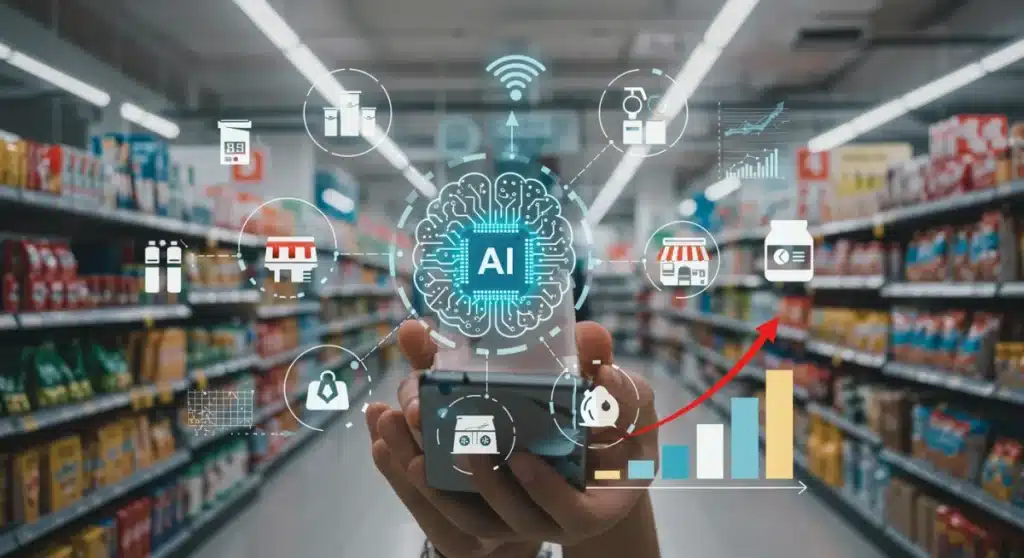
AI-powered inventory management is projected to significantly reduce retail shrinkage for US retailers by 15% by 2025, offering a pragmatic approach to optimizing stock and minimizing losses.
The retail landscape is constantly evolving, presenting both opportunities and challenges. Among the most persistent challenges is shrinkage, a term encompassing inventory loss due to theft, damage, administrative errors, and vendor fraud. For US retailers, this represents billions of dollars annually. This guide explores how AI inventory shrinkage reduction strategies are poised to deliver a 15% reduction in these losses by 2025, offering practical, data-driven solutions.
Understanding retail shrinkage and its impact
Retail shrinkage isn’t just a minor inconvenience; it’s a significant drain on profitability that impacts every aspect of a retail business, from supply chain efficiency to customer satisfaction. It’s a complex issue with multiple contributing factors, each requiring a nuanced approach to mitigation. Understanding the root causes is the first step toward effective prevention, and AI is proving to be an invaluable ally in this endeavor.
The financial implications for US retailers are staggering. Studies consistently show that shrinkage accounts for a substantial percentage of total sales, often eroding profit margins that are already thin. Beyond the direct financial hit, there are indirect costs such as increased insurance premiums, diverted resources for investigation, and potential reputational damage. Addressing shrinkage effectively is not merely about recovering lost goods; it’s about safeguarding the financial health and long-term viability of retail operations.
The multifarious causes of shrinkage
Shrinkage stems from a variety of sources, making it a multifaceted problem that traditional inventory management systems often struggle to fully address. Each cause requires specific attention and a robust system to identify and counteract it.
- External Theft (Shoplifting): This remains a primary driver of shrinkage, with organized retail crime becoming increasingly sophisticated.
- Internal Theft (Employee Theft): Dishonest employees can exploit vulnerabilities in inventory processes, leading to significant losses.
- Administrative Errors: Mistakes in receiving, stocking, or pricing goods can lead to discrepancies that are often categorized as shrinkage.
- Vendor Fraud: Deceptive practices by suppliers, such as short-shipping or billing for undelivered goods, contribute to inventory discrepancies.
- Damage: Goods damaged in transit, storage, or on the sales floor become unsellable and contribute to lost inventory value.
Effectively combating shrinkage requires a holistic strategy that leverages advanced technologies to gain deeper insights into these diverse causes. AI’s ability to analyze vast datasets and identify patterns is precisely what retailers need to move beyond reactive measures to proactive prevention.
The AI revolution in inventory management
Artificial Intelligence is transforming inventory management from a reactive, labor-intensive process into a proactive, data-driven system. By leveraging machine learning algorithms and advanced analytics, AI can predict demand, optimize stock levels, and most importantly, identify potential sources of shrinkage before they escalate. This shift represents a paradigm change for retailers looking to gain a competitive edge.
Traditional inventory systems often rely on historical data and manual adjustments, which can be slow and prone to human error. AI, however, processes data in real-time, learning from every transaction, movement, and discrepancy. This continuous learning allows for dynamic adjustments and more accurate forecasting, leading to a significant reduction in overstocking and understocking, both of which can contribute to shrinkage.
Predictive analytics for demand forecasting
One of the most powerful applications of AI in inventory management is its ability to perform highly accurate demand forecasting. By analyzing a multitude of factors, AI algorithms can predict future sales with remarkable precision.
- Historical sales data: AI identifies complex patterns and seasonality that human analysts might miss.
- External factors: Weather patterns, local events, social media trends, and economic indicators are integrated into predictions.
- Promotional impact: The effect of sales, discounts, and marketing campaigns on demand is accurately modeled.
- Product lifecycle: AI considers the stage of a product’s lifecycle, from introduction to decline, to refine forecasts.
By accurately predicting demand, retailers can ensure they have the right amount of product at the right time, minimizing both excess inventory that ties up capital and stockouts that lead to lost sales and potential customer dissatisfaction. This precision directly reduces the likelihood of goods sitting unsold and becoming vulnerable to damage or theft.
The integration of AI into inventory management is not merely an upgrade; it’s a fundamental reimagining of how retailers can control their stock, moving from guesswork to informed, intelligent decision-making. This technological leap is crucial for achieving the ambitious goal of a 15% reduction in shrinkage.
How AI specifically tackles shrinkage
AI’s strength in combating shrinkage lies in its ability to analyze vast and complex datasets to uncover anomalies and patterns that would be invisible to human observation or traditional systems. This allows retailers to move beyond simply reacting to losses and instead implement preventative measures based on intelligent insights. AI doesn’t just count inventory; it understands its behavior and vulnerabilities.
From identifying suspicious transaction patterns to optimizing store layouts for better visibility, AI provides a comprehensive toolkit for loss prevention. Its capacity for continuous learning means that the system becomes more effective over time, adapting to new threats and evolving retail environments. This adaptive intelligence is what makes AI a game-changer in the fight against shrinkage.
Identifying and preventing internal theft
Internal theft can be particularly damaging due to its insidious nature and the trust placed in employees. AI provides powerful tools to detect and deter such activities.
- Transaction analysis: AI flags unusual discounts, excessive voids, or frequent cash discrepancies that could indicate employee misconduct.
- Behavioral pattern recognition: The system can identify deviations from normal employee behavior related to inventory handling or POS operations.
- Anomaly detection: Sudden drops in inventory for specific products without corresponding sales can trigger alerts for investigation.
By cross-referencing sales data with inventory movements and employee schedules, AI can pinpoint suspicious activities, allowing management to intervene proactively and address potential issues before they escalate into significant losses. This level of oversight was previously unattainable, offering a new layer of security.
Combating external theft and organized retail crime
External theft, particularly organized retail crime, is a growing concern. AI tools can enhance existing security measures and provide new avenues for prevention.
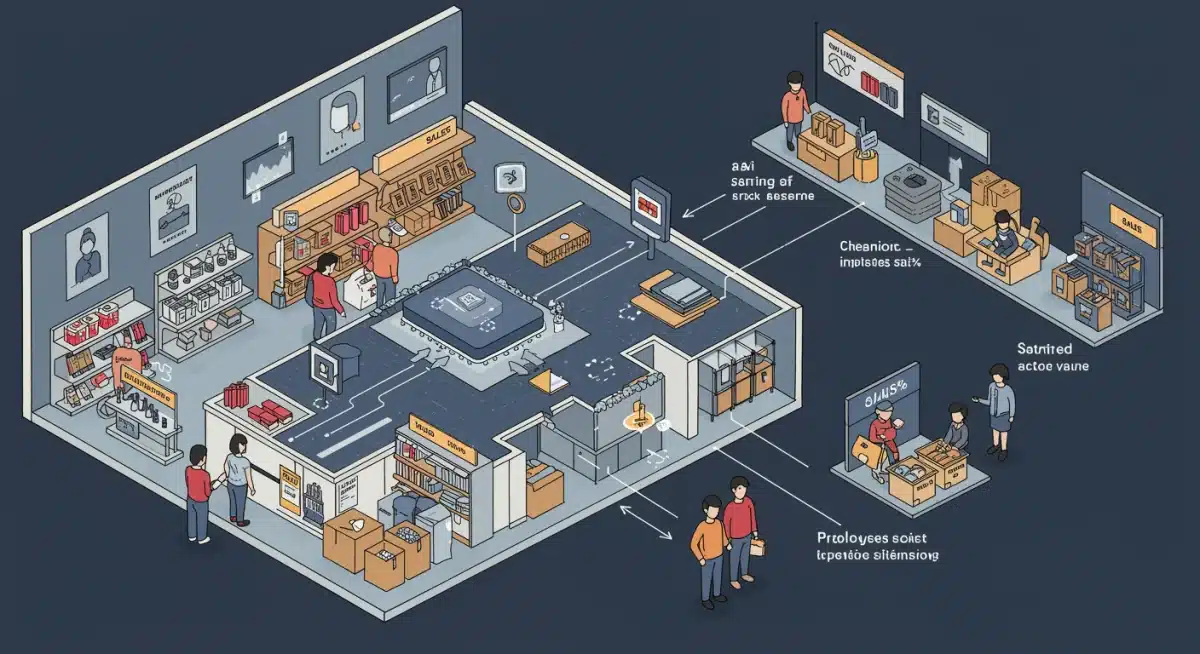
Real-time video analytics, powered by AI, can identify suspicious behaviors like loitering, concealing merchandise, or unusual group movements. These systems can alert staff to potential threats, enabling them to intervene or observe more closely. Furthermore, AI can integrate data from various sources, such as point-of-sale systems, security cameras, and even external databases of known offenders, to create a more robust defense against shoplifting and organized crime. This multi-faceted approach transforms security from a passive deterrent into an active, intelligent defense system.
The application of AI in tackling both internal and external theft is about creating a more intelligent, responsive, and ultimately more secure retail environment. By leveraging predictive and analytical capabilities, AI moves beyond simple surveillance to provide actionable insights that directly contribute to reducing shrinkage.
Implementing AI: A practical roadmap for US retailers
Adopting AI-powered inventory management isn’t just about purchasing new software; it’s a strategic undertaking that requires careful planning, integration, and a willingness to adapt. For US retailers aiming to achieve a 15% reduction in shrinkage by 2025, a practical roadmap is essential, focusing on phased implementation and continuous optimization. The journey begins with understanding current pain points and identifying areas where AI can deliver the most immediate impact.
Successful implementation often involves a collaborative effort between IT, operations, and loss prevention teams. It’s crucial to select solutions that are scalable, compatible with existing infrastructure, and user-friendly, ensuring that staff can effectively utilize the new tools. A well-executed AI strategy can not only reduce shrinkage but also streamline operations, improve forecasting accuracy, and enhance overall profitability.
Phase 1: Assessment and data readiness
Before deploying any AI solution, retailers must thoroughly assess their current inventory processes and data infrastructure. This foundational step is critical for successful integration.
- Audit existing systems: Identify current inventory management software, POS systems, and security infrastructure to understand integration points.
- Data quality assessment: Evaluate the cleanliness, completeness, and accuracy of historical inventory and sales data, as AI thrives on high-quality data.
- Define key performance indicators (KPIs): Establish clear metrics for measuring shrinkage and the impact of AI solutions.
- Pilot program selection: Choose a specific store or product category for an initial AI pilot to test effectiveness and refine strategies.
This phase is about laying the groundwork, ensuring that the data environment is robust enough to support AI analytics and that clear objectives are set for the project. Without a solid data foundation, even the most advanced AI will struggle to deliver its full potential.
Phase 2: Solution selection and integration
Once the assessment is complete, retailers can proceed with selecting the appropriate AI solutions and integrating them into their existing ecosystem.
Choosing the right AI vendor is paramount. Retailers should look for providers with proven experience in the retail sector, scalable solutions, and strong customer support. Integration often involves connecting the AI platform with existing POS, ERP, and supply chain management systems to ensure a seamless flow of data. This can be complex, requiring careful planning and execution to avoid disruptions to daily operations. Training staff on the new systems and workflows is also a critical component, ensuring that employees understand how to interact with and leverage AI insights effectively. The goal is to create a unified system where data flows freely, enabling AI to provide comprehensive, actionable intelligence across the entire retail operation.
Measuring success: KPIs and ROI of AI in shrinkage reduction
Implementing AI for shrinkage reduction is a significant investment, and like any investment, it requires clear metrics to measure its success and demonstrate a tangible return on investment (ROI). For US retailers targeting a 15% reduction by 2025, establishing robust KPIs and consistently tracking performance is paramount. This not only validates the AI initiative but also provides insights for continuous improvement and optimization.
Measuring success goes beyond just looking at the bottom line. It involves analyzing various operational and financial indicators to understand the full impact of AI. Transparent reporting and regular reviews are essential to keep stakeholders informed and to make data-driven decisions about scaling the AI solution across the organization. The ultimate goal is to prove that AI is not just a cost, but a powerful engine for profitability.
Key performance indicators for shrinkage reduction
Several KPIs can be used to effectively measure the impact of AI on shrinkage. These metrics provide a holistic view of the program’s effectiveness.
- Shrinkage rate: The primary metric, calculated as the value of lost inventory divided by sales, should show a clear downward trend.
- Inventory accuracy: Improved accuracy between physical inventory counts and system records indicates better control.
- Loss event frequency: A reduction in the number of theft incidents, administrative errors, or damaged goods.
- Investigation efficiency: Faster identification and resolution of shrinkage incidents, thanks to AI-driven insights.
- Labor cost savings: Reduced manual effort in inventory reconciliation and loss prevention activities.
By monitoring these KPIs, retailers can quantify the direct financial benefits of AI, such as recovered losses and improved inventory turns. Beyond financial metrics, there are also operational benefits, including enhanced employee productivity and a more secure retail environment, all contributing to a stronger business.
Calculating the return on investment (ROI)
Calculating the ROI for AI-powered shrinkage reduction involves comparing the investment in AI technology with the financial gains achieved through reduced losses and improved operational efficiency.
The calculation should include both direct cost savings from reduced shrinkage and indirect benefits such as improved inventory turnover, reduced carrying costs, and enhanced employee productivity. For example, if an AI system costs X dollars but prevents Y dollars in losses and saves Z dollars in operational expenses, the ROI can be clearly demonstrated. It’s important to consider the long-term benefits as well, as AI systems become more sophisticated and effective over time with continuous data input and learning. A positive ROI not only justifies the initial investment but also builds a strong case for expanding AI adoption across more stores or product lines, solidifying its role as a core component of modern retail strategy.
Overcoming challenges in AI adoption for retailers
While the promise of AI in reducing retail shrinkage is compelling, its adoption is not without challenges. US retailers venturing into this technological frontier must be prepared to navigate various hurdles, from data integration complexities to resistance to change within the organization. Addressing these proactively is crucial for successful implementation and realizing the targeted 15% reduction in shrinkage by 2025.
The perception that AI is overly complex or expensive can be a barrier, as can concerns about data privacy and security. Overcoming these challenges requires clear communication, strategic planning, and a commitment to investing in both technology and human capital. It’s about building a foundation of trust and understanding around the new tools and processes.
Data integration and quality issues
One of the most significant challenges in AI adoption is ensuring high-quality, integrated data. AI models are only as good as the data they are fed.
- Legacy system compatibility: Older systems may not easily integrate with modern AI platforms, requiring custom solutions or significant upgrades.
- Data silos: Information often resides in disparate systems (POS, ERP, WMS), making a unified view difficult to achieve.
- Data cleanliness: Inaccurate, inconsistent, or incomplete data can lead to skewed AI insights and poor performance.
- Real-time data flow: Ensuring a continuous, real-time stream of data is essential for AI to provide timely and actionable insights.
Retailers must invest in data governance strategies to clean, standardize, and integrate their data sources. This often involves data warehousing solutions and APIs to create a unified data fabric that AI can effectively leverage. Without a robust data infrastructure, the potential of AI remains largely untapped.
Change management and employee training
Technology alone is insufficient; successful AI adoption also hinges on people. Resistance to new technologies and processes is a common challenge that requires careful management.
Comprehensive training programs are essential to ensure employees understand how AI works, its benefits, and how to effectively use the new tools. This includes not just technical training but also emphasizing how AI can augment their roles, making tasks easier and more efficient, rather than replacing them. Clear communication about the goals of AI implementation and its positive impact on the business and individual roles can help mitigate resistance. Fostering a culture of innovation and continuous learning is key to successfully integrating AI into daily retail operations and ensuring its long-term success. By addressing these challenges head-on, retailers can pave the way for a smoother transition to AI-powered inventory management.
The future of retail: Beyond 2025 with AI
Looking beyond the immediate goal of a 15% shrinkage reduction by 2025, AI is set to continue its transformative impact on the retail sector, ushering in an era of unprecedented efficiency, personalization, and profitability. The foundational capabilities established now will serve as a springboard for even more sophisticated applications, further solidifying AI’s role as a cornerstone of modern retail operations. The future promises a retail environment that is not only more secure but also more responsive to customer needs and market dynamics.
As AI technologies mature and become more accessible, retailers will unlock new possibilities for optimizing every facet of their business, from supply chain resilience to hyper-personalized customer experiences. The continuous evolution of AI will empower retailers to stay ahead of challenges and proactively seize opportunities in an increasingly competitive landscape.
Hyper-personalization and intelligent customer experiences
AI’s ability to analyze vast amounts of customer data will lead to highly personalized shopping experiences, extending beyond inventory management.
- Personalized recommendations: AI will offer product suggestions tailored to individual customer preferences and purchasing history.
- Dynamic pricing: Prices will adjust in real-time based on demand, inventory levels, competitor pricing, and customer segments.
- Optimized store layouts: AI will analyze foot traffic and purchasing patterns to design store layouts that maximize sales and customer flow.
- Predictive customer service: AI will anticipate customer needs and proactively offer support or solutions, improving satisfaction.
These advancements will not only enhance the customer journey but also indirectly contribute to shrinkage reduction by ensuring that products are where they are most likely to be purchased, reducing dead stock and improving overall sales velocity. This creates a virtuous cycle where efficiency and customer satisfaction reinforce each other.
Autonomous retail and smart stores
The long-term vision for AI in retail includes the development of increasingly autonomous operations and smart store environments.
Imagine stores where inventory counts are performed autonomously by drones or robots, where shelves automatically reorder stock based on real-time sales and predictive analytics, and where security systems can identify and prevent theft with minimal human intervention. These smart stores will leverage a dense network of IoT devices, sensors, and AI algorithms to create a highly efficient, self-optimizing ecosystem. This level of automation promises to virtually eliminate many forms of shrinkage by removing human error and enhancing surveillance capabilities. The evolution towards autonomous retail represents the ultimate frontier in leveraging AI for operational excellence and loss prevention, fundamentally reshaping how we experience and manage retail environments.
| Key Point | Brief Description |
|---|---|
| Shrinkage Impact | Significant financial drain for US retailers, caused by theft, errors, and damage, eroding profit margins. |
| AI’s Role | Transforms inventory management with predictive analytics, real-time monitoring, and anomaly detection to prevent losses. |
| Implementation Roadmap | Requires assessment, data readiness, careful solution selection, and robust integration with existing systems. |
| Future Outlook | Beyond 2025, AI will enable hyper-personalization, autonomous retail, and further enhance loss prevention. |
Frequently asked questions about AI in retail inventory
Retail shrinkage refers to inventory losses due to theft, damage, or administrative errors. AI is crucial because its advanced analytics can identify subtle patterns and anomalies in vast datasets, allowing retailers to predict and prevent losses more effectively than traditional methods, leading to significant cost savings.
AI helps prevent internal theft by analyzing transaction data for unusual discounts, excessive voids, or frequent cash discrepancies. It can also identify behavioral patterns that deviate from normal employee conduct related to inventory handling, triggering alerts for management investigation and proactive intervention.
Initial steps include assessing current inventory processes and data quality, ensuring data readiness for AI integration. Retailers should then define clear KPIs, select a suitable AI vendor, and consider a pilot program in a specific store or product category to test effectiveness before a broader rollout.
ROI is measured by comparing the investment in AI technology against the financial gains from reduced shrinkage and improved operational efficiency. Key metrics include a decreased shrinkage rate, enhanced inventory accuracy, fewer loss events, and potential labor cost savings from automated processes and predictive insights.
Retailers may encounter challenges such as integrating AI with legacy systems, resolving data quality issues across disparate sources, and managing organizational change. Overcoming these requires robust data governance, comprehensive employee training, and clear communication to foster acceptance and effective utilization of new AI tools.
Conclusion
The journey towards a 15% reduction in retail shrinkage by 2025 for US retailers through AI-powered inventory management is not merely aspirational; it’s a tangible objective grounded in the transformative capabilities of artificial intelligence. By strategically implementing AI solutions, retailers can move beyond traditional, reactive loss prevention methods to proactive, data-driven strategies that optimize inventory, deter theft, and enhance overall operational efficiency. The future of retail is intelligent, secure, and increasingly profitable, with AI serving as the indispensable engine driving this evolution.