Future of Payments: Contactless & Mobile Trends by 2025
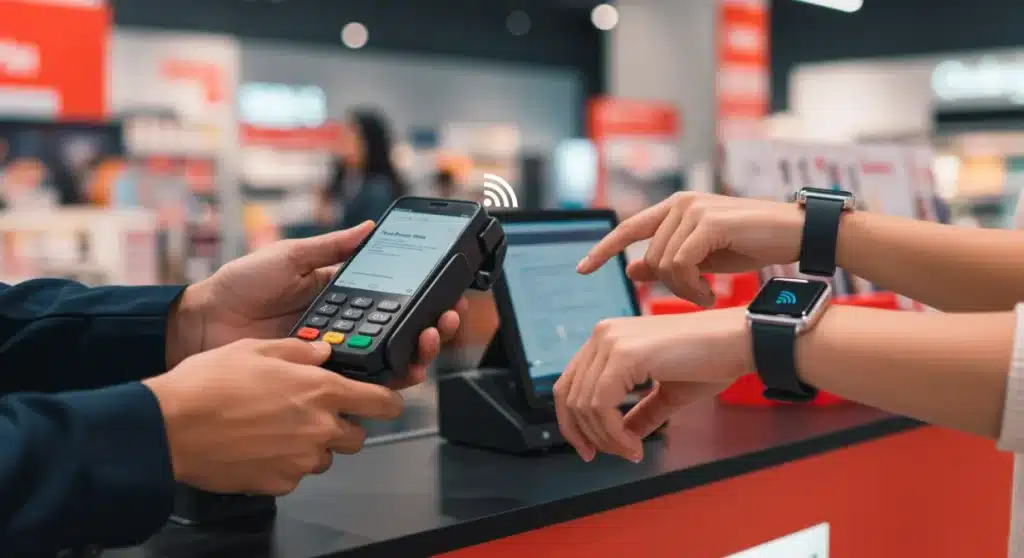
Contactless and mobile payment trends are rapidly reshaping the U.S. retail landscape, projected to account for 40% of all transactions by 2025, driven by convenience and technological advancements.
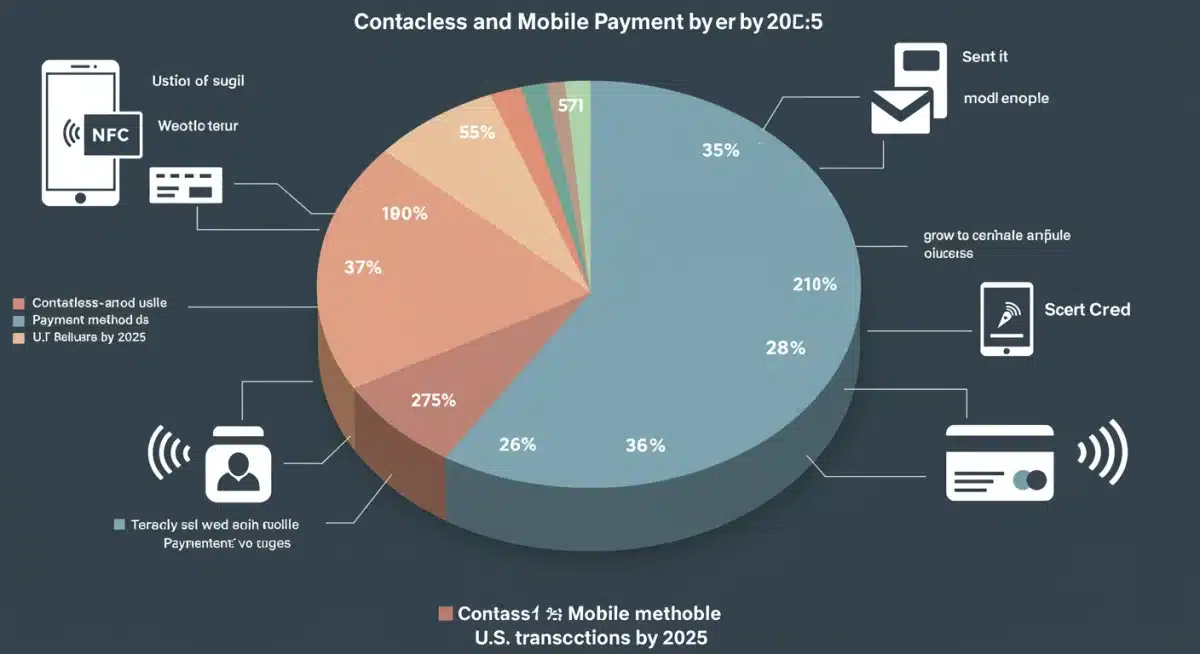
The landscape of how consumers pay for goods and services is undergoing a profound transformation. By 2025, it’s projected that the future of payments: contactless and mobile payment trends driving 40% of U.S. retail transactions by 2025 will be a reality, marking a significant shift from traditional methods. This evolution is driven by a confluence of technological innovation, changing consumer expectations, and a global push towards more convenient and secure transaction methods.
The rise of contactless payments in the U.S. retail sector
Contactless payments, once a niche option, have rapidly ascended to prominence within the U.S. retail sector. This surge is largely due to the inherent convenience and speed they offer, allowing consumers to complete transactions with a simple tap of a card or device. The pandemic further accelerated this adoption, as businesses and consumers sought ways to minimize physical contact, making contactless transactions an appealing and safer alternative.
The technology behind contactless payments, primarily Near Field Communication (NFC), has become ubiquitous in modern payment terminals and devices. This widespread availability has demystified the process for many, fostering greater trust and encouraging broader usage across various retail environments, from grocery stores to coffee shops.
NFC technology and its impact
NFC technology enables two electronic devices to communicate when they are brought within a few centimeters of each other. For payments, this means a quick, secure exchange of data without physical contact. The simplicity of tapping a card or phone has eliminated the need for swiping or inserting, streamlining the checkout experience.
- Speed: Transactions are completed in seconds, reducing wait times.
- Security: Encrypted data and tokenization protect sensitive information.
- Convenience: No need to carry cash or fumble with chip insertions.
- Hygiene: Reduces physical contact with payment terminals.
The impact of NFC extends beyond just speed; it has fundamentally altered consumer expectations regarding payment efficiency. Retailers who have embraced this technology often report higher customer satisfaction and improved operational flow, especially during peak hours.
As more banks and credit card companies issue NFC-enabled cards, and as smartphones become the primary payment device for many, the infrastructure for contactless payments continues to solidify. This robust ecosystem is a key factor in the projected growth, signaling a future where physical interaction with payment terminals becomes increasingly rare.
Mobile wallets: A paradigm shift in consumer behavior
Mobile wallets, such as Apple Pay, Google Pay, and Samsung Pay, represent a significant paradigm shift in how consumers manage their finances and execute transactions. These digital platforms consolidate credit, debit, and loyalty cards into a single, secure application on a smartphone or smartwatch. Their appeal lies in the seamless integration with daily life, offering a blend of convenience, security, and added functionalities.
The adoption of mobile wallets has been steadily climbing, driven by younger, tech-savvy demographics, but increasingly resonating with a broader audience. The ability to leave physical wallets at home, coupled with robust security features like biometric authentication, has made mobile payments an attractive alternative to traditional methods.
Security and convenience of mobile payments
One of the primary drivers of mobile wallet adoption is the enhanced security they provide. Unlike physical cards, which can be easily compromised if lost or stolen, mobile payments often employ tokenization. This process replaces sensitive card details with a unique, encrypted token for each transaction, rendering the actual card number useless to potential fraudsters. Additionally, many mobile wallets require biometric authentication, such as fingerprint or facial recognition, adding another layer of protection.
- Tokenization: Replaces actual card numbers with unique, encrypted tokens.
- Biometric authentication: Fingerprint or facial recognition for added security.
- Device encryption: Data stored on the device is often encrypted.
- Lost device features: Ability to remotely wipe payment information if a device is lost.
Beyond security, the convenience factor is undeniable. Carrying a smartphone, which most people do habitually, eliminates the need for a separate wallet. This streamlines the checkout process, particularly in fast-paced retail environments. The integration of loyalty programs and digital receipts within mobile wallets further enhances the user experience, making it a comprehensive payment solution.
The continuous innovation in mobile payment technology, including features like peer-to-peer payments and integration with public transport, suggests that their utility will only expand. As consumers become more accustomed to these digital conveniences, the reliance on physical payment methods will continue to diminish, paving the way for a truly digital economy.
Factors accelerating contactless and mobile payment adoption
Several critical factors are converging to accelerate the adoption of contactless and mobile payments across the U.S. retail landscape. Beyond the obvious benefits of speed and security, broader economic and societal shifts are playing a pivotal role in this rapid transition. Understanding these accelerators is key to grasping the trajectory of payment evolution.
The retail sector itself is undergoing significant digital transformation, with businesses investing heavily in upgrading their point-of-sale (POS) systems to accommodate these modern payment methods. This infrastructure investment is a clear indicator of the industry’s commitment to meeting evolving consumer demands and staying competitive.
Technological advancements and infrastructure upgrades
The continuous evolution of payment technology is a primary catalyst. Newer POS systems are designed with NFC capabilities as standard, making it easier for retailers of all sizes to accept contactless payments. Furthermore, the proliferation of smartphones with built-in NFC chips has created a massive user base ready to adopt mobile wallets.
- Modern POS systems: Equipped with NFC readers as standard.
- Smartphone penetration: High adoption rates of NFC-enabled devices.
- Cloud-based payment platforms: Facilitate seamless integration and management.
- Improved network infrastructure: Faster and more reliable transaction processing.
These technological advancements are not isolated; they are supported by a robust and improving digital infrastructure. Faster internet speeds and more reliable cellular networks ensure that transactions are processed quickly and efficiently, minimizing friction at the checkout. This reliability builds consumer confidence and encourages repeat usage.
Consumer demand and generational shifts
Consumer demand, particularly from younger generations, is a powerful force driving this change. Millennials and Gen Z, who have grown up with digital technology, inherently prefer convenient, tech-driven solutions. They are often early adopters of new payment methods and influence older demographics.
The expectation for instant gratification and seamless experiences extends to payments. Consumers increasingly value speed and efficiency, viewing traditional payment methods as cumbersome. Retailers who fail to offer modern payment options risk losing customers to competitors who do.
Moreover, the heightened awareness around hygiene post-pandemic has cemented contactless payments as a preferred option for many. The psychological comfort of not touching shared surfaces has become a significant consideration for a broad segment of the population, further solidifying the trend.
The impact on U.S. retail businesses
The widespread adoption of contactless and mobile payments is having a multifaceted impact on U.S. retail businesses, transforming everything from operational efficiency to customer engagement. Retailers are increasingly recognizing that embracing these payment trends is not merely an option but a strategic imperative to remain relevant and competitive in a rapidly evolving market.
Businesses that have successfully integrated these payment solutions often report improved customer satisfaction, faster transaction times, and enhanced data collection capabilities, all of which contribute to a stronger bottom line.
Operational efficiency and customer experience
One of the most immediate benefits for retailers is the significant boost in operational efficiency. Contactless and mobile payments are inherently faster than traditional methods, which rely on chip insertion or swiping. This speed reduces checkout lines, allowing staff to process more transactions in less time and allocate resources more effectively.

- Reduced queue times: Faster transactions mean shorter lines.
- Increased throughput: More customers can be served per hour.
- Simplified accounting: Digital records streamline reconciliation.
- Improved employee productivity: Staff can focus on customer service rather than payment processing.
From the customer’s perspective, the experience is smoother and more convenient. The ability to pay quickly and securely, often with just a tap of their phone or card, enhances their overall shopping journey. This positive experience can translate into increased loyalty and repeat business, as consumers gravitate towards retailers that offer seamless payment options.
Data insights and personalized marketing
Beyond operational benefits, digital payment methods offer retailers invaluable data insights. Each contactless or mobile transaction generates a wealth of data that can be analyzed to understand consumer spending habits, peak transaction times, and popular products. This data is crucial for informed decision-making and strategic planning.
By leveraging this information, businesses can develop highly personalized marketing campaigns, optimize inventory management, and tailor promotions to specific customer segments. For example, understanding that a particular demographic prefers mobile payments for certain product categories allows for targeted advertising through mobile channels, potentially increasing conversion rates.
The integration of loyalty programs within mobile wallets further enhances this data collection, allowing retailers to track customer behavior more holistically. This leads to more effective loyalty rewards and a deeper understanding of customer preferences, fostering stronger relationships and driving long-term value.
Challenges and considerations for widespread adoption
While the trajectory towards widespread contactless and mobile payment adoption in the U.S. retail sector appears inevitable, several challenges and considerations must be addressed to ensure a smooth and equitable transition. These hurdles range from technological infrastructure gaps to consumer education and security concerns.
Overcoming these challenges requires a concerted effort from payment providers, retailers, and regulatory bodies to build trust, enhance accessibility, and ensure the security of these evolving payment ecosystems.
Infrastructure and technological disparities
Despite significant progress, not all retailers, particularly smaller businesses and those in rural areas, have fully upgraded their payment infrastructure to support contactless and mobile options. The cost of new POS systems and the associated training can be prohibitive for some, creating a digital divide.
- Cost of upgrades: Investment in new hardware and software.
- Legacy systems: Older systems may not be compatible.
- Internet connectivity: Reliable internet access is crucial for digital transactions.
- Technical expertise: Staff training on new systems is essential.
Ensuring that all businesses, regardless of size or location, have access to affordable and reliable payment technology is crucial for achieving truly widespread adoption. This may involve government incentives, subsidies, or partnerships with payment processors to lower the barrier to entry.
Security concerns and consumer education
Despite the inherent security advantages of tokenization and encryption in contactless and mobile payments, consumer apprehension remains a significant challenge. Concerns about data privacy, potential hacking, and the security of personal financial information can deter adoption.
Effective consumer education campaigns are vital to address these fears. Clearly communicating the security measures in place, such as tokenization, biometric authentication, and fraud protection, can build trust and encourage greater usage. Transparency about how data is collected and used is also critical.
Furthermore, ensuring accessibility for all demographics, including those less tech-savvy or without smartphones, is an ongoing consideration. While the trend is clear, completely phasing out traditional payment methods without inclusive alternatives could alienate a segment of the population.
The future outlook: Beyond 2025
Looking beyond the 2025 projection of 40% of U.S. retail transactions being contactless and mobile, the future of payments promises even more transformative changes. This initial milestone is merely a stepping stone towards a more integrated, intelligent, and seamless payment ecosystem. The evolution will continue to be driven by emerging technologies and an ever-increasing demand for convenience and personalization.
Innovations such as biometric payments, cryptocurrency integration, and embedded payments within the Internet of Things (IoT) are already on the horizon, signaling a future where transactions are almost invisible, yet highly secure and efficient.
Emerging payment technologies and trends
Biometric payments, utilizing fingerprints, facial recognition, or even iris scans directly at the point of sale, are gaining traction. These methods offer unparalleled security and convenience, eliminating the need for cards or even smartphones, and are already being piloted in various retail settings.
- Biometric payments: Fingerprint, facial, or iris recognition for authentication.
- Cryptocurrency integration: Acceptance of digital currencies like Bitcoin and Ethereum.
- IoT payments: Transactions initiated by smart devices (e.g., smart refrigerators reordering groceries).
- Invisible payments: Seamless transactions without explicit action, often through recurring subscriptions or automated reorders.
The increasing acceptance of cryptocurrencies by mainstream businesses also points to a future where digital assets play a more significant role in everyday transactions. While volatility and regulatory challenges remain, the underlying blockchain technology offers unprecedented security and transparency.
Furthermore, the concept of invisible payments, where transactions occur seamlessly in the background, will become more prevalent. Imagine smart refrigerators automatically reordering groceries when supplies run low, or vehicles paying for fuel and tolls without driver intervention. These IoT-driven payment experiences will redefine convenience.
Personalization and integrated retail experiences
The future of payments is also deeply intertwined with the quest for highly personalized retail experiences. As data collection capabilities become more sophisticated, payment systems will integrate seamlessly with loyalty programs, personalized offers, and contextual recommendations.
This integration will allow retailers to offer real-time discounts, tailored product suggestions, and hyper-relevant marketing messages based on individual purchasing history and preferences. The payment itself will become an integral part of a holistic, customized shopping journey, rather than a separate, transactional step.
The ultimate goal is to create payment experiences that are not only efficient and secure but also add value to the customer relationship. By leveraging data and advanced analytics, retailers can foster deeper engagement and loyalty, ensuring that the future of payments is as much about customer experience as it is about technology.
| Key Trend | Brief Description |
|---|---|
| Contactless Payment Growth | Driven by NFC technology, offering speed, security, and hygiene benefits for transactions. |
| Mobile Wallet Dominance | Consolidates cards, enhances security with tokenization and biometrics, shifting consumer habits. |
| Retailer Benefits | Improved operational efficiency, faster checkouts, and valuable data for personalized marketing. |
| Future Innovations | Emergence of biometric, cryptocurrency, and IoT-integrated invisible payments beyond 2025. |
Frequently asked questions about payment trends
Contactless payments are transactions made by tapping a payment card or mobile device near a point-of-sale terminal, using Near Field Communication (NFC) technology. This method allows for quick and secure exchanges without physical contact, enhancing both speed and hygiene at checkout points.
Mobile wallets enhance security through tokenization, where actual card numbers are replaced with unique, encrypted tokens for each transaction. They often incorporate biometric authentication, such as fingerprint or facial recognition, adding multiple layers of protection against fraud and unauthorized access to financial data.
U.S. retailers are adopting these payment methods to meet evolving consumer demands for speed and convenience, improve operational efficiency by reducing checkout times, and leverage data insights for personalized marketing. It also provides a competitive edge and enhances overall customer experience in a digital-first economy.
Challenges for widespread adoption include the cost of upgrading legacy payment infrastructure for smaller businesses, ensuring reliable internet connectivity, and addressing consumer security concerns. Educating consumers about the safety features and benefits of these technologies is crucial to building trust and encouraging broader usage.
Beyond 2025, innovations like biometric payments (fingerprint, facial recognition), increased cryptocurrency integration, and embedded payments within the Internet of Things (IoT) are anticipated. These advancements aim to create even more seamless, secure, and personalized transaction experiences, further integrating payments into daily life.
Conclusion
The journey towards a future dominated by contactless and mobile payments in U.S. retail is not just a technological shift but a fundamental transformation of consumer behavior and business operations. With projections indicating that these methods will account for 40% of transactions by 2025, the imperative for businesses to adapt and innovate is clearer than ever. While challenges related to infrastructure and consumer trust persist, the undeniable benefits of speed, security, and convenience are propelling this evolution forward. As we look beyond 2025, the payment landscape will continue to evolve, integrating even more sophisticated technologies like biometrics and IoT-driven transactions, ultimately leading to a retail experience that is more seamless, personalized, and efficient than ever before.