Improve Customer Satisfaction: A 6-Month Feedback Loop Guide

Implementing a robust customer feedback loop is a strategic imperative for businesses aiming to significantly enhance customer satisfaction, providing actionable insights to drive measurable improvements within a six-month timeframe.
In today’s competitive retail landscape, understanding and acting upon customer sentiment is not just good practice; it’s essential for survival and growth. This step-by-step guide: implementing a feedback loop to improve customer satisfaction scores by 12% in 6 months (practical solutions) offers a clear roadmap for businesses looking to make tangible improvements to their customer experience. By focusing on practical, actionable strategies, we aim to transform how your organization perceives and utilizes customer feedback, leading to significant gains in satisfaction and loyalty.
Understanding the Customer Feedback Loop
The customer feedback loop is more than just collecting opinions; it’s a cyclical process designed to capture, analyze, act on, and monitor customer insights. This continuous cycle ensures that customer voices directly influence business decisions and operational adjustments, fostering an environment of constant improvement.
Many businesses collect feedback but often fail to close the loop effectively. This means they gather data but either don’t analyze it thoroughly, don’t act on the insights, or don’t communicate the changes back to the customers. A broken loop can lead to customer frustration and a perception that their input is not valued, ultimately hurting satisfaction instead of helping it.
Why a Closed Loop is Crucial
A truly closed loop demonstrates to customers that their opinions matter and that the company is committed to addressing their needs. This transparency builds trust and strengthens relationships, which are vital for long-term customer retention. Without a closed loop, feedback collection becomes a performative exercise with little real impact.
- Builds Trust: Shows customers their input is valued.
- Drives Innovation: Uncovers pain points and opportunities for new products or services.
- Increases Loyalty: Customers feel heard and are more likely to remain committed.
- Enhances Reputation: Positive customer experiences lead to word-of-mouth referrals.
Ultimately, a well-implemented feedback loop turns passive data into active improvements. It allows companies to identify trends, pinpoint specific issues, and implement targeted solutions that directly address customer concerns. This proactive approach is fundamental to achieving measurable improvements in customer satisfaction scores over time.
Setting Clear Goals and Metrics for Improvement
Before embarking on any feedback initiative, it is essential to define what success looks like. For this guide, our ambitious yet achievable goal is to improve customer satisfaction scores by 12% within six months. This requires establishing clear, measurable metrics and benchmarks to track progress effectively.
Defining specific objectives ensures that all efforts are aligned and focused. Without clear goals, feedback collection can become an aimless endeavor, yielding data that is difficult to interpret or act upon meaningfully. A precise target, like a 12% increase, provides a powerful motivator and a clear indicator of success.
Key Metrics to Monitor
Several key performance indicators (KPIs) can help measure customer satisfaction and the effectiveness of your feedback loop. Choosing the right metrics is vital for understanding where you stand and how much progress you are making.
- Net Promoter Score (NPS): Measures customer loyalty by asking how likely they are to recommend your business.
- Customer Satisfaction Score (CSAT): Directly measures satisfaction with a specific interaction or overall experience.
- Customer Effort Score (CES): Assesses how much effort a customer had to exert to get an issue resolved or a request fulfilled.
- Churn Rate: Tracks the percentage of customers who stop doing business with you.
By regularly monitoring these metrics, businesses can gain a holistic view of customer sentiment and identify areas that require immediate attention. Setting a baseline for each metric at the beginning of the six-month period is crucial for accurately measuring the 12% improvement target. This data-driven approach transforms abstract goals into concrete, trackable objectives.
Choosing the Right Feedback Collection Channels
The effectiveness of a customer feedback loop heavily relies on selecting appropriate channels for data collection. Different channels cater to various customer segments and types of feedback, ensuring a comprehensive understanding of their experiences. A multi-channel approach often yields the richest insights.
It’s not enough to simply ask for feedback; you must make it easy and convenient for customers to provide it. This means integrating feedback opportunities into their natural interaction points with your business, whether online, in-store, or through direct communication channels. The less friction involved, the more likely customers are to share their thoughts.
Popular and Effective Channels
A blend of passive and active feedback mechanisms can provide a balanced perspective. Passive methods capture unsolicited feedback, while active methods involve direct requests for input. Each has its unique advantages and limitations.
- Surveys (Email, In-App, Website Pop-ups): Excellent for structured, quantifiable data.
- Social Media Monitoring: Captures organic, real-time sentiment and direct mentions.
- Customer Service Interactions: Logs and analyses of calls, chats, and emails reveal common issues.
- Review Sites (Yelp, Google, industry-specific): Provides public perception and detailed narratives.
- In-Store Kiosks/Comment Cards: Offers immediate feedback at the point of experience for physical retail.
The choice of channels should align with your target audience’s preferences and where they naturally engage with your brand. For instance, a tech-savvy audience might prefer in-app surveys, while an older demographic might appreciate email surveys or direct phone calls. Regularly evaluating the effectiveness of each channel ensures you are capturing the most relevant and actionable insights.
Analyzing and Interpreting Feedback Data
Collecting feedback is only half the battle; the real value lies in how you analyze and interpret the data. This stage transforms raw opinions into actionable insights, identifying patterns, trends, and root causes of customer satisfaction or dissatisfaction. Without proper analysis, even the most extensive data set remains just noise.
Effective analysis requires a systematic approach, moving beyond superficial readings to uncover deeper meanings. This often involves combining quantitative data (like survey scores) with qualitative insights (from open-ended comments or social media posts) to paint a complete picture of the customer experience. Tools and techniques can significantly streamline this process.
Tools and Techniques for Insight Extraction
Leveraging technology can greatly enhance your ability to process large volumes of feedback efficiently. From basic spreadsheets to advanced AI-driven platforms, the right tools can make a significant difference in identifying key themes and sentiments.
- Sentiment Analysis Software: Automatically categorizes feedback as positive, negative, or neutral.
- Text Analytics: Identifies recurring keywords, phrases, and topics in open-ended responses.
- Root Cause Analysis: Techniques like the ‘5 Whys’ help uncover the underlying reasons for customer issues.
- Data Visualization Dashboards: Presents complex data in an easy-to-understand visual format.
The goal is to move from simply knowing ‘what’ customers are saying to understanding ‘why’ they are saying it. This deeper understanding enables businesses to prioritize issues, allocate resources effectively, and develop targeted solutions that address the core problems. Regular analysis sessions involving cross-functional teams can foster a shared understanding and commitment to customer-centric improvements.
Implementing Actionable Solutions and Closing the Loop
The analysis phase naturally leads to the most critical step: implementing actionable solutions. This is where insights are translated into concrete changes that directly address customer pain points and enhance their experience. Merely identifying problems without taking action renders the entire feedback process moot.
Effective implementation involves more than just making a change; it requires careful planning, resource allocation, and cross-departmental collaboration. Solutions should be prioritized based on their potential impact on customer satisfaction and feasibility of execution, ensuring that efforts are focused on areas that will yield the greatest returns.
Strategies for Effective Action
To ensure that actions are effective and the loop is truly closed, businesses must develop a clear strategy for executing changes and communicating them to customers. Transparency about the changes being made reinforces the value placed on customer input.
- Prioritize Issues: Address high-impact, high-frequency problems first.
- Assign Ownership: Designate specific teams or individuals responsible for implementing solutions.
- Develop Action Plans: Create detailed steps with timelines and required resources.
- Communicate Changes Internally: Ensure all employees are aware of new processes or improvements.
- Inform Customers: Share updates on how their feedback has led to specific changes, demonstrating that their voice matters.
Closing the loop means not only fixing the problem but also informing the customer that their feedback resulted in a positive change. This final communication step is crucial for building loyalty and demonstrating responsiveness. It reinforces the idea that their opinion is valued and actively contributes to the evolution of the business.
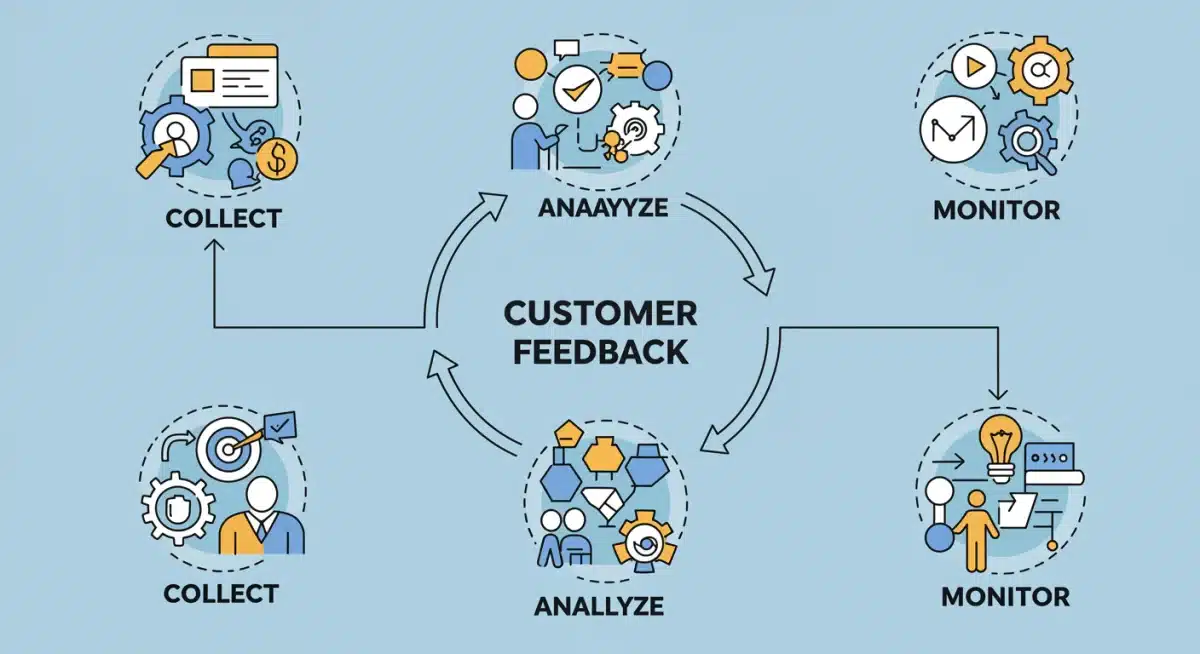
Monitoring, Measuring, and Iterating for Continuous Improvement
The feedback loop is not a one-time project but an ongoing cycle of improvement. Once solutions are implemented, the next crucial step is to continuously monitor their impact, measure changes in customer satisfaction scores, and iterate on the process. This ensures that improvements are sustained and that the feedback mechanism remains agile and responsive to evolving customer needs.
Regular monitoring allows businesses to track the effectiveness of implemented solutions and identify any new issues that may arise. It’s a dynamic process that requires vigilance and a commitment to perpetual refinement. Without this continuous oversight, even the best initial improvements can degrade over time.
Establishing a Continuous Monitoring Framework
To effectively monitor and measure progress, businesses need to establish a robust framework that integrates feedback data with operational metrics. This framework should provide real-time insights and allow for quick adjustments as needed.
- Set Up Dashboards: Visualize key customer satisfaction metrics (NPS, CSAT, CES) in real-time.
- Schedule Regular Reviews: Conduct weekly or monthly meetings to discuss feedback trends and action progress.
- A/B Test Solutions: Experiment with different approaches to find the most effective solutions.
- Gather Follow-Up Feedback: Survey customers again after implementing changes to gauge their satisfaction with the resolution.
Iteration is key to long-term success. Based on monitoring results, businesses should be prepared to refine existing solutions or develop new ones. This agile approach to customer feedback ensures that the business remains customer-centric and continuously strives for excellence. The goal is not just to reach the 12% improvement target but to embed a culture of continuous improvement into the organizational DNA.
Overcoming Common Challenges in Feedback Loop Implementation
Implementing a robust customer feedback loop is not without its hurdles. Businesses often face challenges ranging from data overload and resource constraints to resistance to change within the organization. Addressing these obstacles proactively is crucial for the successful and sustained operation of the feedback system.
One of the most common issues is the sheer volume of data, which can be overwhelming to process and analyze effectively. Without the right tools or a clear strategy, businesses can find themselves drowning in information without gaining meaningful insights. Another significant challenge is securing buy-in from various departments, as customer satisfaction is often seen as solely the responsibility of customer service, when in fact, it’s a company-wide effort.
Strategies for Success
To navigate these challenges, a strategic and integrated approach is necessary. This involves not only technological solutions but also cultural shifts within the organization. Overcoming these barriers paves the way for a more efficient and impactful feedback loop.
- Invest in Technology: Utilize CRM systems, feedback platforms, and analytics tools to manage data efficiently.
- Foster a Customer-Centric Culture: Educate and train all employees on the importance of customer feedback and their role in the loop.
- Start Small: Begin with a pilot program or focus on a specific customer segment to refine the process before scaling.
- Allocate Dedicated Resources: Ensure there are sufficient personnel and budget to manage the feedback process, from collection to action.
- Celebrate Wins: Highlight successful implementations and their positive impact on customer satisfaction to encourage continued effort.
By anticipating and addressing these challenges, businesses can build a resilient feedback loop that not only improves customer satisfaction but also fosters a culture of continuous learning and adaptation. This proactive stance ensures that the investment in feedback management yields significant and lasting returns, driving the targeted 12% improvement and beyond.
| Key Point | Brief Description |
|---|---|
| Closed Loop Importance | Ensures customer feedback leads to actionable changes and improves trust. |
| Goal Setting & Metrics | Define clear targets like a 12% CSAT increase and track with NPS, CSAT, CES. |
| Multi-Channel Collection | Utilize diverse channels like surveys, social media, and service interactions. |
| Continuous Iteration | Monitor impact, measure changes, and refine solutions for ongoing improvement. |
Frequently Asked Questions About Feedback Loops
The primary benefit of a closed customer feedback loop is building customer trust and loyalty. By demonstrating that their feedback is heard and acted upon, businesses foster stronger relationships, leading to increased retention and positive brand perception. It ensures that customer insights directly drive business improvements.
While some minor improvements might be noticeable within weeks, significant, measurable changes, such as a 12% increase in customer satisfaction, typically require a sustained effort over several months. Our guide targets a six-month timeframe, allowing for data collection, analysis, implementation, and monitoring to show concrete results.
The most crucial metrics for tracking customer satisfaction include Net Promoter Score (NPS), Customer Satisfaction Score (CSAT), and Customer Effort Score (CES). NPS measures loyalty, CSAT gauges direct satisfaction, and CES evaluates ease of interaction. Together, they provide a comprehensive view of the customer experience.
Small businesses can start by focusing on a few key feedback channels like simple email surveys or direct customer service interactions. Prioritize the most impactful issues and communicate changes directly. Leveraging free or low-cost survey tools and fostering a customer-centric culture internally are also effective strategies.
Technology plays a vital role in streamlining feedback collection, analysis, and action. Tools ranging from CRM systems to specialized feedback platforms and AI-driven sentiment analysis software help manage large volumes of data, identify trends, and automate responses, making the feedback loop more efficient and scalable for businesses of all sizes.
Conclusion
Implementing a robust customer feedback loop is not merely a task but a transformational strategy for businesses committed to excellence. By systematically collecting, analyzing, acting on, and monitoring customer insights, organizations can achieve significant improvements in satisfaction scores, as targeted by our 12% goal within six months. This continuous engagement fosters trust, drives innovation, and ultimately secures a stronger, more loyal customer base, positioning the business for sustained success in a dynamic market.