Revenue Growth: CLV’s 18% Profit Boost for Retailers
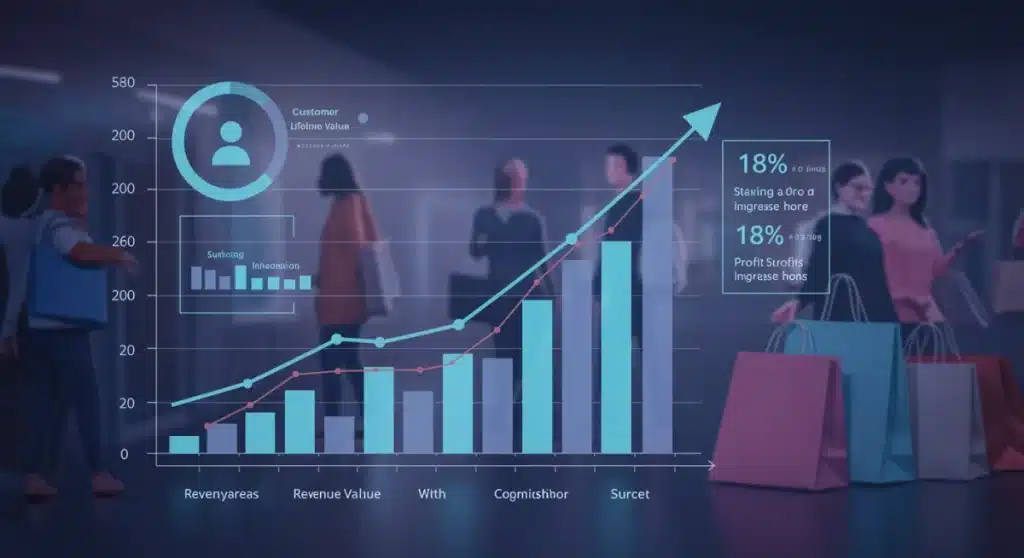
Understanding and optimizing customer lifetime value (CLV) is crucial for retailers aiming for sustainable revenue growth, as it directly impacts profitability and can lead to an 18% annual increase in profits by focusing on long-term customer relationships.
In today’s competitive retail landscape, merely acquiring new customers is no longer a sustainable strategy for long-term success. True revenue growth: how understanding customer lifetime value can increase profits by 18% annually (financial impact) lies in nurturing existing customer relationships, transforming one-time buyers into loyal advocates. This shift in focus towards CLV is not just a theoretical concept; it’s a proven pathway to significant and measurable financial gains.
Decoding Customer Lifetime Value (CLV)
Customer Lifetime Value (CLV) represents the total revenue a business can reasonably expect from a single customer account throughout their relationship with the company. It’s a forward-looking metric that transcends individual transactions, offering a holistic view of a customer’s potential worth. Instead of focusing solely on the immediate sale, CLV encourages businesses to invest in strategies that foster loyalty and repeat purchases over time.
This metric is critical because it highlights the often-underestimated power of customer retention. Acquiring new customers can be five times more expensive than retaining existing ones. By understanding CLV, retailers can allocate resources more effectively, prioritizing initiatives that maximize the long-term value of their customer base.
Calculating CLV: The Essentials
While there are various complex models for calculating CLV, a foundational approach involves a few key components. Understanding these elements is the first step towards leveraging CLV for strategic decision-making.
- Average Purchase Value: The average amount a customer spends per transaction.
- Purchase Frequency Rate: How often a customer makes purchases from your business.
- Customer Lifespan: The average duration a customer remains active with your business.
- Gross Margin: The profit percentage earned on sales after deducting the cost of goods sold.
By combining these metrics, businesses can derive a practical estimate of CLV, providing a quantifiable basis for strategic planning. This calculation informs decisions regarding marketing spend, customer service investments, and product development, ensuring that every effort contributes to enhancing customer value over time. Focusing on these metrics allows businesses to project future revenue streams more accurately and identify areas for improvement.
In essence, CLV moves beyond transactional thinking, pushing businesses to cultivate enduring relationships. It’s a powerful tool for recognizing that a customer’s true value extends far beyond their initial purchase, laying the groundwork for sustained financial health and growth.
The Direct Link Between CLV and Profitability
The connection between a high Customer Lifetime Value and increased profitability is undeniable and forms the cornerstone of sustainable business growth. When customers remain engaged with a brand over an extended period, they tend to spend more, require less marketing effort, and often become brand advocates, driving organic growth through word-of-mouth referrals.
Businesses with a strong understanding and focus on CLV typically experience lower customer acquisition costs (CAC) because they retain customers more effectively. This reduction in CAC directly translates to higher profit margins. Furthermore, loyal customers are often less sensitive to price fluctuations and more open to trying new products or services from a trusted brand, increasing their average transaction value.
How CLV Drives Revenue Growth
Optimizing CLV isn’t just about reducing costs; it’s about actively cultivating revenue streams. By extending the average customer lifespan and increasing purchase frequency, businesses can achieve significant revenue uplift without necessarily expanding their customer base exponentially.
- Increased Repeat Purchases: Loyal customers return more often, contributing consistently to revenue.
- Higher Average Order Value: Engaged customers are more likely to purchase premium products or add-ons.
- Reduced Churn Rate: A focus on CLV inherently leads to strategies that minimize customer attrition.
- Referral Marketing: Satisfied, high-CLV customers often refer new business, lowering acquisition costs.
These factors collectively contribute to a robust financial impact, allowing companies to reinvest in customer experience and product innovation, further solidifying their market position. The compounding effect of these improvements can lead to substantial profit increases year over year, making CLV a central pillar of financial strategy.
Ultimately, a business that prioritizes CLV understands that each customer represents a potential stream of income that can be nurtured and grown. This long-term perspective ensures that profitability is not just a short-term goal but a continuous outcome of strong customer relationships.
Strategies to Enhance Customer Lifetime Value
Boosting customer lifetime value requires a multi-faceted approach, integrating various customer-centric strategies across the business. The goal is to create an ecosystem where customers feel valued, understood, and consistently satisfied, encouraging them to return and engage more deeply with the brand.
Effective CLV enhancement strategies often begin with personalized experiences. Generic marketing approaches are less effective in fostering loyalty. Instead, leveraging data to understand individual customer preferences and behaviors allows businesses to tailor communications, product recommendations, and offers, making each interaction more relevant and impactful.
Personalization and Customer Experience
Personalization goes beyond addressing a customer by their first name. It involves anticipating their needs, offering solutions before they realize they need them, and creating seamless, enjoyable experiences at every touchpoint. This level of attention builds trust and strengthens the emotional connection with the brand.
- Tailored Product Recommendations: Use purchase history and browsing behavior to suggest relevant items.
- Personalized Communication: Send targeted emails, SMS, or app notifications with offers specific to their interests.
- Exceptional Customer Service: Provide prompt, effective, and empathetic support to resolve issues quickly.
- Seamless Omnichannel Experience: Ensure a consistent and integrated experience across all channels, from online to in-store.
By investing in these areas, businesses can significantly improve customer satisfaction and reduce the likelihood of churn. A superior customer experience is a powerful differentiator that encourages repeat business and fosters a sense of loyalty that competitors find hard to replicate. This focus on individual customer journeys is what truly drives CLV upwards.
Moreover, active feedback loops are essential. Regularly soliciting customer opinions and acting on them demonstrates that their voice matters, further solidifying their commitment to the brand. This continuous improvement cycle is vital for sustained CLV growth.
Leveraging Data Analytics for CLV Insights
In the pursuit of maximizing customer lifetime value, data analytics emerges as an indispensable tool. It provides the necessary insights to understand customer behavior, predict future actions, and identify opportunities for intervention. Without robust data analysis, CLV strategies risk being based on assumptions rather than concrete evidence.
By collecting and analyzing data from various touchpoints – purchase history, website interactions, customer service logs, and social media engagement – businesses can construct a detailed profile of their customers. This comprehensive view allows for the segmentation of customers into groups based on their CLV potential, enabling more targeted and effective marketing and retention efforts.
Key Data Points for CLV Optimization
Several data points are crucial for accurate CLV prediction and optimization. Focusing on these metrics helps businesses understand what drives customer value and how to enhance it.
- Purchase Frequency: How often customers buy.
- Average Order Value (AOV): The typical spend per transaction.
- Recency of Purchase: How recently a customer made a purchase.
- Product Categories Purchased: Insights into customer preferences.
- Engagement Metrics: Website visits, email opens, app usage.
- Customer Service Interactions: Frequency and nature of support requests.
Analyzing these data points allows retailers to identify patterns, detect potential churn risks, and proactively engage with customers. For instance, a sudden drop in purchase frequency for a high-value customer might trigger a personalized re-engagement campaign. Predictive analytics can even forecast which customers are most likely to churn, allowing for preventative measures.
Furthermore, understanding the profitability of different customer segments through CLV analysis helps businesses allocate marketing budgets more efficiently. Instead of spreading resources thinly, they can concentrate efforts on segments with the highest CLV potential, thereby maximizing ROI and driving significant financial impact. Data-driven decisions are the bedrock of any successful CLV strategy.
Implementing CLV in Your Business Model
Integrating Customer Lifetime Value into the core of your business model represents a strategic shift from short-term transactional thinking to long-term relationship building. This integration requires a commitment across all departments, from marketing and sales to product development and customer service, ensuring that every touchpoint contributes to enhancing customer loyalty and value.
The first step is often to educate internal teams on the significance of CLV and how their roles directly impact this metric. When everyone understands the financial implications of customer retention, there’s a collective drive to prioritize customer satisfaction and engagement. This cultural shift is as important as any technological implementation.
Practical Steps for CLV Integration
Successfully embedding CLV into daily operations involves a series of actionable steps that can transform how a business interacts with its customers and manages its resources.
- Define Clear CLV Goals: Establish measurable objectives for increasing CLV, such as reducing churn by a certain percentage or increasing average purchase frequency.
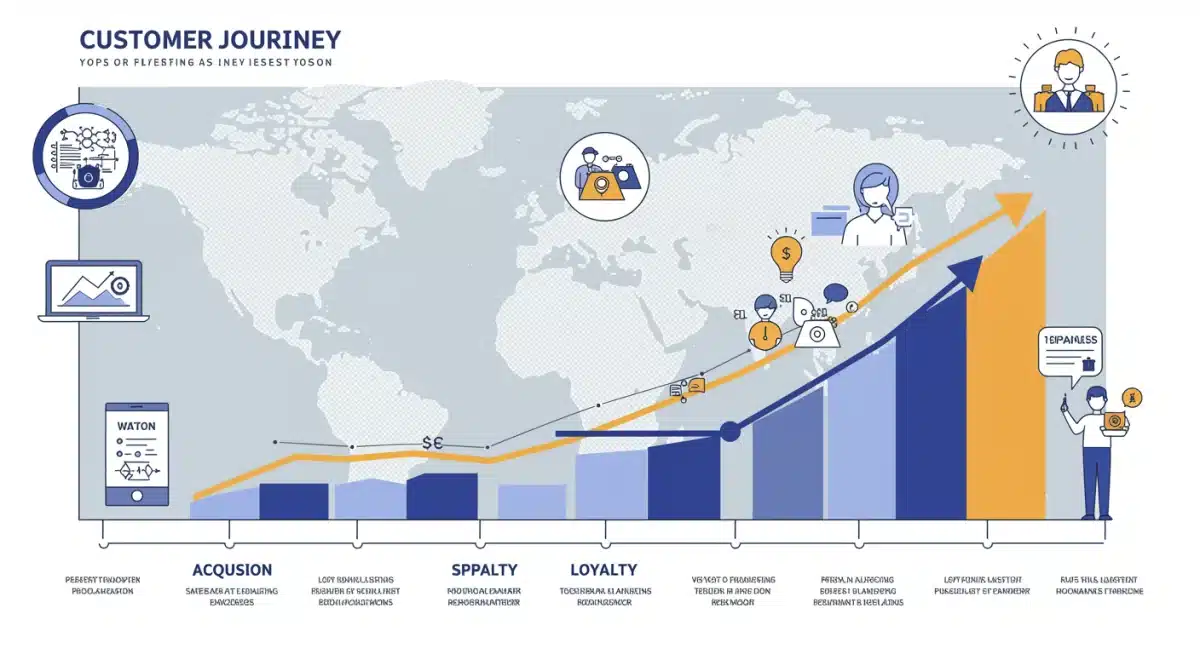
- Map the Customer Journey: Identify all customer touchpoints and optimize them to deliver consistent, positive experiences.
- Invest in CRM Systems: Utilize robust Customer Relationship Management (CRM) platforms to track customer interactions and data effectively.
- Develop Loyalty Programs: Create programs that reward repeat purchases and encourage deeper engagement.
- Personalize Marketing Campaigns: Tailor messages and offers based on individual customer data and preferences.
- Prioritize Customer Service: Ensure swift, effective, and personalized support to build trust and resolve issues.
By systematically implementing these strategies, businesses can create a virtuous cycle where satisfied customers lead to higher CLV, which in turn fuels further investment in customer experience. This approach not only boosts profitability but also builds a resilient customer base that is less susceptible to competitor influence.
Ultimately, a CLV-centric business model fosters sustainable growth by recognizing that loyal customers are the most valuable asset. It’s about building relationships that endure, providing consistent value, and continuously adapting to customer needs and expectations.
Measuring the Impact: CLV’s Financial Returns
Quantifying the financial impact of focusing on customer lifetime value is crucial for demonstrating the return on investment (ROI) of CLV-centric strategies. While the benefits of customer loyalty may seem intuitive, presenting concrete data on how CLV increases profits strengthens the case for continued investment in these areas.
Measuring the impact involves tracking key performance indicators (KPIs) over time, comparing them against baseline data or industry benchmarks. The goal is to show a direct correlation between CLV initiatives and tangible financial improvements, such as increased revenue, improved profit margins, and a stronger bottom line.
Key Metrics for Financial Impact Assessment
To accurately assess the financial returns of CLV strategies, businesses should monitor a range of metrics that reflect both customer behavior and financial outcomes.
- Revenue per Customer Segment: Track how much revenue is generated by different CLV customer groups.
- Profit Margin per Customer: Calculate the profitability associated with individual customers or segments.
- Customer Retention Rate: Measure the percentage of customers who continue to do business over a specific period.
- Churn Rate: Monitor the rate at which customers stop doing business with you.
- Customer Acquisition Cost (CAC) vs. CLV: Ensure that the cost to acquire a customer is significantly less than their lifetime value.
- Return on Marketing Investment (ROMI): Evaluate the effectiveness of marketing spend in relation to CLV growth.
By meticulously tracking these metrics, businesses can identify which CLV initiatives are most effective and where adjustments might be needed. For example, if a loyalty program is implemented, its success can be measured by an increase in purchase frequency and average order value among program participants, directly translating to higher CLV and, consequently, greater profits.
The reported 18% annual increase in profits for businesses effectively leveraging CLV is not an arbitrary figure; it’s a testament to the power of a customer-centric approach. This financial uplift is a direct result of reduced marketing spend, increased repeat business, and the organic growth driven by loyal customer advocacy. Regularly reviewing these financial indicators ensures that CLV remains a cornerstone of strategic decision-making, continuously driving sustainable revenue growth.
| Key Aspect | Brief Description |
|---|---|
| CLV Definition | Total revenue expected from a customer over their entire relationship with a business. |
| Profit Impact | Understanding CLV can increase annual profits by up to 18% through retention and loyalty. |
| Key Strategies | Personalization, exceptional customer service, loyalty programs, and data analytics. |
| Measurement | Track retention rates, average order value, churn, and ROMI to validate CLV efforts. |
Frequently Asked Questions About CLV
CLV is a metric that estimates the total revenue a business can expect from a single customer throughout their entire relationship. It helps businesses understand the long-term profitability of their customer base, shifting focus from one-time transactions to sustained engagement.
By focusing on CLV, businesses can increase repeat purchases, boost average order values, and reduce customer acquisition costs. This leads to higher profit margins and sustainable revenue growth, with studies showing potential profit increases of up to 18% annually.
Key strategies include enhancing customer experience through personalization, implementing effective loyalty programs, providing exceptional customer service, and leveraging data analytics to understand and anticipate customer needs. Consistent engagement is vital.
Data analytics provides crucial insights into customer behavior, allowing businesses to segment customers, predict churn, and tailor marketing efforts. It enables informed decision-making, ensuring resources are allocated efficiently to maximize customer value and profitability.
Absolutely. Small businesses often have closer customer relationships, making CLV even more impactful. By prioritizing retention and personalized service, they can build a loyal customer base that drives consistent revenue without the need for large acquisition budgets.
Conclusion
The journey to sustainable revenue growth: how understanding customer lifetime value can increase profits by 18% annually (financial impact) is fundamentally rooted in a deep appreciation for customer relationships. By shifting focus from fleeting transactions to enduring loyalty, businesses can unlock significant financial gains, evidenced by the potential for an 18% annual increase in profits. This strategic pivot demands a comprehensive approach, integrating data-driven insights, personalized experiences, and unwavering commitment to customer satisfaction across all operational facets. As the retail landscape continues to evolve, those who master the art and science of CLV will not only survive but thrive, building resilient businesses supported by a loyal and highly valuable customer base.