Unlocking Loyalty: 3 Insider Strategies to Boost Customer Retention by 10% in 2025

Boosting customer retention by 10% in 2025 is achievable through strategic implementation of personalized engagement, proactive support, and continuous feedback mechanisms, fostering deeper brand relationships and sustained growth.
In today’s competitive retail landscape, merely attracting new customers is no longer enough; the true measure of success lies in keeping them. This article delves into customer retention strategies, offering three insider approaches designed to help businesses significantly boost customer retention by 10% in 2025.
The imperative of customer retention in 2025
As we approach 2025, the retail sector continues to evolve at a breakneck pace. Consumers are more informed, more connected, and more demanding than ever before. In this environment, customer retention has transformed from a desirable goal into an absolute imperative for sustainable growth. The cost of acquiring a new customer consistently outstrips the cost of retaining an existing one, making a strong retention strategy a financial cornerstone for any forward-thinking business.
Retaining customers isn’t just about saving money on acquisition; it’s about building a loyal base that acts as brand advocates, provides valuable feedback, and contributes disproportionately to revenue. Loyal customers tend to spend more over time, are less price-sensitive, and are more forgiving of occasional missteps. Understanding these dynamics is the first step toward crafting effective strategies that resonate with modern consumers and secure their long-term allegiance. The focus must shift from transactional interactions to building enduring relationships.
The digital age has amplified both the opportunities and challenges in customer retention. While data analytics offers unprecedented insights into customer behavior, the sheer volume of choices available means that brands must work harder to stand out and earn continued trust. Businesses that prioritize retention are better positioned to weather economic fluctuations and capitalize on emerging market trends, solidifying their competitive advantage in the long run.
Strategy 1: hyper-personalization through AI-driven insights
The first insider strategy to significantly boost customer retention in 2025 revolves around hyper-personalization, powered by advanced AI-driven insights. Generic marketing messages and one-size-fits-all approaches are increasingly ineffective. Modern consumers expect brands to understand their individual needs, preferences, and behaviors, delivering experiences that feel uniquely tailored to them. AI and machine learning provide the tools to achieve this at scale, transforming raw data into actionable insights.
Leveraging predictive analytics for customer needs
Predictive analytics allows businesses to anticipate customer needs and potential churn before they even happen. By analyzing past purchase history, browsing behavior, engagement with marketing materials, and even social media interactions, AI algorithms can identify patterns that signal a customer might be considering leaving. This foresight enables brands to intervene proactively with targeted offers, personalized communications, or enhanced support.
- Anticipate product preferences: AI can suggest products or services a customer is likely to need next, based on their past purchases and similar customer profiles.
- Identify churn risk: Machine learning models can flag customers exhibiting behaviors associated with churn, allowing for timely re-engagement efforts.
- Optimize communication timing: AI determines the best time and channel to reach out to individual customers, ensuring messages are received when most impactful.
Crafting dynamic, individualized experiences
Hyper-personalization extends beyond product recommendations to every touchpoint of the customer journey. This means dynamic website content that adapts to individual visitors, email campaigns that speak directly to their interests, and even in-store experiences that acknowledge their online interactions. The goal is to create a seamless, cohesive, and deeply relevant experience that makes customers feel valued and understood.
Implementing AI-driven personalization requires robust data infrastructure and a commitment to continuous learning. It’s not a set-it-and-forget-it solution; models need to be constantly refined with new data to maintain accuracy and relevance. Businesses that master this strategy will not only improve retention but also enhance customer lifetime value by fostering deeper, more meaningful connections.
Strategy 2: proactive engagement and community building
Beyond personalization, the second critical strategy for boosting customer retention by 10% involves proactive engagement and fostering a strong sense of community around your brand. In an age where consumers seek more than just products, building a connection that transcends transactions is paramount. Proactive engagement means reaching out to customers not just when they buy, but throughout their journey, offering support, value, and opportunities for interaction.
This strategy shifts the focus from reactive customer service to building relationships before problems arise. It’s about demonstrating that your brand cares, not just about their wallet, but about their overall experience and satisfaction. Community building takes this a step further, creating spaces where customers can connect with each other and the brand, fostering a sense of belonging and shared identity.
Empowering customers through self-service and support
Proactive engagement often begins with empowering customers. Providing intuitive self-service options, such as comprehensive knowledge bases, AI-powered chatbots, and user forums, allows customers to find answers quickly and efficiently. This reduces frustration and builds confidence in the brand’s support infrastructure, demonstrating a commitment to their autonomy.
- Contextual help: Offer in-app or in-site help based on the customer’s current activity, anticipating questions.
- Tutorials and guides: Provide easy-to-understand resources that help customers maximize product utility.
- Proactive notifications: Alert customers to potential issues or provide useful tips before they even realize they need them.
Cultivating brand communities and user-generated content
Creating a brand community provides a platform for customers to share experiences, offer advice, and feel connected to a larger group. This can take the form of online forums, social media groups, or even local meetups. Encouraging user-generated content, such as reviews, testimonials, and social media posts, further strengthens this bond, turning customers into advocates and co-creators of the brand story.
When customers feel they are part of something bigger, their loyalty deepens. They become invested in the brand’s success and are less likely to switch to competitors. This strategy not only improves retention but also generates authentic marketing content and invaluable insights directly from your most engaged users. It’s about turning customers into partners, fostering a symbiotic relationship that benefits everyone involved.
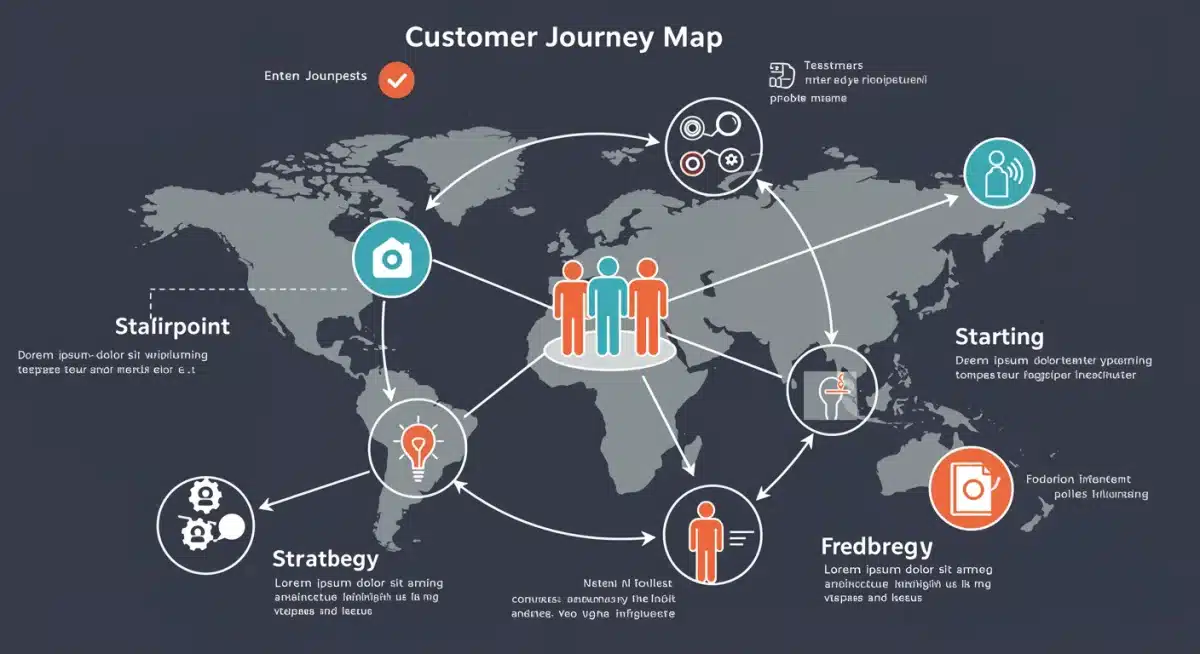
Strategy 3: robust feedback loops and continuous improvement
The third insider strategy crucial for boosting customer retention by 10% in 2025 is the establishment of robust feedback loops coupled with a genuine commitment to continuous improvement. In today’s dynamic market, customer expectations are constantly shifting. Brands that listen intently, act decisively on feedback, and transparently communicate their efforts to improve will build unparalleled trust and loyalty.
Feedback loops are not merely about collecting data; they are about creating a continuous dialogue with your customers that informs every aspect of your business, from product development to service delivery. This strategy transforms customer complaints into opportunities for innovation and demonstrates that the brand values its customers’ voices, making them feel heard and respected.
Implementing multi-channel feedback collection
To capture a comprehensive understanding of customer sentiment, businesses must implement multi-channel feedback collection methods. This includes traditional surveys, but also extends to more passive and real-time approaches. The key is to make it easy and convenient for customers to provide feedback at various touchpoints, ensuring a steady stream of insights.
- Post-purchase surveys: Short, targeted surveys sent immediately after a transaction or service interaction.
- In-app/in-site feedback widgets: Tools that allow customers to rate their experience or report issues without leaving the platform.
- Social listening: Monitoring social media conversations and online reviews to gauge public sentiment and identify emerging trends.
- Customer advisory boards: Inviting a select group of loyal customers to provide in-depth feedback on new products or services.
Actioning feedback and communicating changes
Collecting feedback is only half the battle; the real value comes from actioning it. This requires a systematic approach to analyzing feedback, identifying recurring themes, and translating them into tangible improvements. Equally important is communicating these changes back to the customers who provided the feedback. This transparency reinforces trust and shows that their input directly contributes to a better experience.
Brands that consistently demonstrate they are listening and evolving based on customer input will cultivate a highly loyal customer base. This continuous improvement cycle not only boosts retention but also enhances brand reputation and attracts new customers through positive word-of-mouth. It’s a virtuous loop where listening leads to improvement, which in turn fuels loyalty and growth.
Integrating strategies for maximum impact
While each of the three strategies—hyper-personalization, proactive engagement, and robust feedback loops—offers significant benefits on its own, their true power is unlocked when integrated. Imagine a system where AI-driven insights not only personalize product recommendations but also inform proactive engagement initiatives, such as tailored educational content or early access to new features. This integrated approach creates a seamless, highly responsive customer experience that is difficult for competitors to replicate.
For example, feedback collected through surveys or social listening can be fed back into AI models to refine personalization algorithms, making future recommendations even more accurate. Similarly, insights from community forums can highlight areas where proactive support or new self-service tools are needed. This synergy ensures that every customer touchpoint is optimized, reinforcing loyalty at every stage of the customer journey.
Building a unified customer view
The foundation of successful integration lies in building a unified customer view. This means consolidating data from all customer interactions—sales, marketing, service, and community platforms—into a single, accessible database. A comprehensive understanding of each customer allows for consistent and relevant communication across all channels, preventing disjointed experiences.
Furthermore, cross-functional collaboration is essential. Marketing, sales, product development, and customer service teams must work together, sharing insights and coordinating efforts to deliver a cohesive and customer-centric experience. This organizational alignment ensures that the strategies are not siloed but rather form a holistic approach to nurturing customer relationships.
Measuring success and adapting for the future
To truly boost customer retention by 10% in 2025, it is crucial to establish clear metrics for success and commit to continuous adaptation. Without precise measurement, it’s impossible to know which strategies are working and where adjustments are needed. Key performance indicators (KPIs) must be defined at the outset, providing a baseline against which progress can be tracked. This data-driven approach ensures that investments in retention strategies yield tangible returns.
The retail landscape is constantly shifting, influenced by technological advancements, economic trends, and evolving consumer preferences. What works today might not be effective tomorrow. Therefore, a successful retention strategy is not static; it is a dynamic process of experimentation, learning, and refinement. Businesses must foster a culture of agility, ready to pivot and innovate based on new insights and market realities.
Key metrics for retention success
Several key metrics can help businesses measure the effectiveness of their customer retention efforts. Tracking these KPIs provides a clear picture of how well strategies are performing and where improvements can be made. Regularly reviewing these metrics allows for timely interventions and strategic adjustments, ensuring continuous progress towards the 10% retention goal.
- Customer churn rate: The percentage of customers who stop doing business with your company over a given period.
- Customer lifetime value (CLTV): The total revenue a business can reasonably expect from a single customer account over their relationship.
- Repeat purchase rate: The percentage of customers who have made more than one purchase from your business.
- Net Promoter Score (NPS): A measure of customer loyalty and satisfaction, indicating how likely customers are to recommend your brand.
Embracing an agile approach to retention
Adopting an agile methodology for customer retention means treating strategies as hypotheses to be tested, rather than fixed plans. This involves running small-scale experiments, gathering data, analyzing results, and then scaling up successful initiatives or iterating on those that fall short. This iterative process allows for rapid learning and optimization, crucial in a fast-paced market.
Furthermore, staying abreast of emerging technologies and consumer trends is vital. New platforms, communication methods, and customer expectations will continue to emerge, and brands that proactively adapt will maintain their competitive edge. By continually refining their retention strategies, businesses can not only meet but exceed the 10% retention boost target, securing long-term success.
| Key Strategy | Brief Description |
|---|---|
| Hyper-Personalization | Utilize AI to deliver tailored experiences, anticipating customer needs and preferences. |
| Proactive Engagement | Build brand communities and offer self-service options to foster deeper customer connections. |
| Robust Feedback Loops | Actively collect and implement customer feedback, communicating changes transparently. |
| Integrated Approach | Combine all strategies for a unified, seamless, and highly responsive customer experience. |
Frequently asked questions about customer retention
Customer retention is crucial because acquiring new customers is significantly more expensive than retaining existing ones. Loyal customers also spend more, provide valuable feedback, and act as brand advocates, ensuring sustainable growth in a competitive market.
AI analyzes vast amounts of customer data, including purchase history and browsing behavior, to predict individual preferences and potential churn. This allows brands to deliver highly tailored product recommendations, content, and timely communications, enhancing the customer experience.
Brand communities foster a sense of belonging and shared identity among customers. They provide platforms for interaction, support, and user-generated content, deepening loyalty and turning customers into active advocates for the brand.
Effective use of feedback involves collecting it through multiple channels, systematically analyzing it for insights, and transparently communicating how that feedback leads to tangible improvements. This builds trust and shows customers their input is valued.
Key metrics include customer churn rate, customer lifetime value (CLTV), repeat purchase rate, and Net Promoter Score (NPS). Tracking these KPIs provides clear insights into the effectiveness of retention strategies and areas for improvement.
Conclusion
Achieving a 10% boost in customer retention by 2025 is an ambitious yet entirely attainable goal for businesses willing to embrace insider strategies focused on deep customer understanding and continuous engagement. By strategically implementing hyper-personalization through AI, fostering proactive engagement and vibrant brand communities, and establishing robust feedback loops, companies can transform transactional relationships into enduring loyalty. The integrated application of these strategies, coupled with rigorous measurement and an agile approach to adaptation, will not only secure a competitive edge but also build a resilient foundation for long-term growth and sustained success in the dynamic retail landscape.