Contactless Payment Tech: Boost US Store Transaction Speeds by 20%
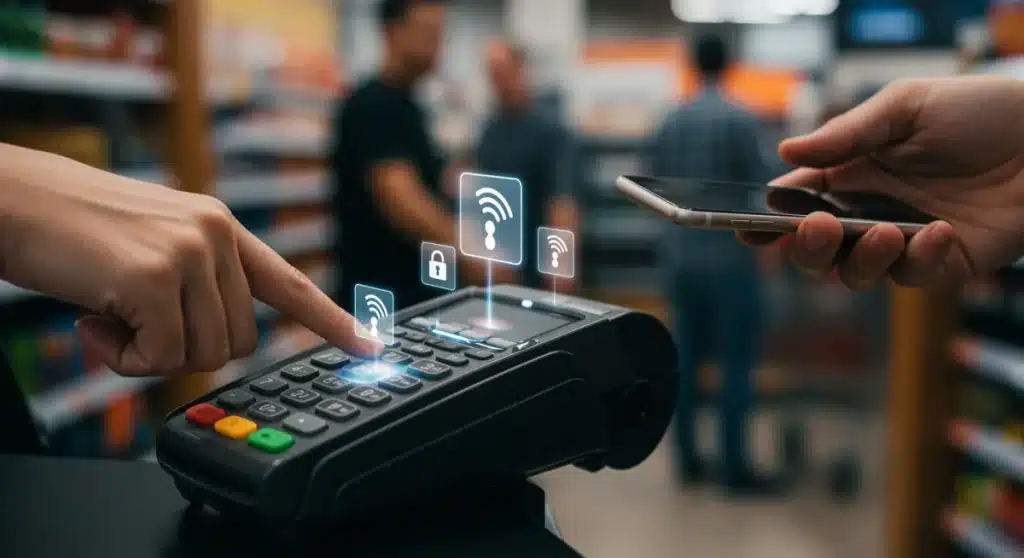
The latest advancements in contactless payment technology are poised to significantly enhance the retail experience in the United States, with a projected 20% boost in transaction speeds for stores by mid-2025.
Imagine a world where checkout lines are a relic of the past, and transactions are completed in mere seconds. This isn’t a futuristic dream; it’s the imminent reality driven by the latest in contactless payment technology. For US stores, the goal is clear: boost transaction speeds by 20% by mid-2025, fundamentally transforming the customer experience and operational efficiency.
The rise of contactless payments in US retail
Contactless payment methods, once a niche offering, have rapidly transitioned into a mainstream expectation for consumers across the United States. This shift is not merely a convenience; it represents a fundamental re-evaluation of how transactions are conducted in a fast-paced retail environment.
The journey towards widespread adoption has been propelled by several factors, including the global health crisis which underscored the importance of touch-free interactions, and a growing consumer demand for speed and simplicity. Retailers, in turn, have recognized that embracing these technologies is no longer optional but a strategic imperative for staying competitive.
Consumer adoption and market penetration
The past few years have seen a dramatic increase in consumer comfort and preference for tapping to pay. This includes using credit cards, debit cards, smartphones, and even wearables. The convenience factor is undeniable, allowing shoppers to complete purchases quickly without fumbling for cash or swiping cards.
- Increased use of NFC-enabled devices for payments.
- Growing acceptance of digital wallets like Apple Pay and Google Pay.
- Higher consumer satisfaction with faster checkout experiences.
- Reduced friction at the point of sale, leading to fewer abandoned carts.
The market penetration of contactless-enabled terminals is also on an upward trajectory. Major payment networks and financial institutions have actively promoted the upgrade of point-of-sale (POS) systems, ensuring that more stores are equipped to handle these modern transactions. This infrastructure development is crucial for achieving the ambitious goal of significantly boosting transaction speeds nationwide.
The convergence of consumer readiness and technological infrastructure sets the stage for a new era of retail efficiency. As more consumers adopt contactless methods, the pressure on retailers to provide seamless experiences intensifies, driving further investment and innovation in this critical area.
Technological innovations driving speed enhancements
The projected 20% increase in transaction speeds by mid-2025 isn’t just about consumer adoption; it’s deeply rooted in significant technological advancements. These innovations are making contactless payments not only more secure but also remarkably faster than their traditional counterparts.
At the core of this transformation are improvements in near-field communication (NFC) technology, enhanced payment processing infrastructures, and sophisticated data encryption methods. Together, these elements create a robust ecosystem that minimizes latency and maximizes throughput at the point of sale.
NFC and payment processing optimization
NFC technology continues to evolve, offering faster and more reliable communication between payment devices and terminals. Modern NFC chips are designed for quicker data transfer, reducing the milliseconds it takes for a transaction to be authorized. This might seem like a small increment, but collectively, these shaved milliseconds contribute significantly to overall speed improvements.
- Optimized NFC chipsets for faster data exchange.
- Upgraded POS systems with enhanced processing power.
- Cloud-based payment gateways for quicker authorization.
- Batch processing improvements for off-peak transaction handling.
Beyond the hardware, the software and network infrastructure supporting these payments are undergoing continuous optimization. Payment processors are leveraging artificial intelligence and machine learning to streamline authorization processes, detect fraud more efficiently, and route transactions through the quickest available channels. This backend sophistication is invisible to the consumer but profoundly impacts the speed and reliability of every tap.
Furthermore, the integration of tokenization and end-to-end encryption ensures that while transactions are fast, they remain highly secure. This dual focus on speed and security is paramount for building consumer trust and fostering widespread adoption of contactless solutions.
Benefits for US retailers: beyond just speed
While the primary focus of the latest in contactless payment technology is boosting transaction speeds by 20% for US stores by mid-2025, the benefits extend far beyond mere efficiency. Retailers adopting these advanced systems stand to gain a competitive edge through improved customer experiences, enhanced operational insights, and reduced costs.
Faster transactions directly translate to shorter lines, which significantly improves customer satisfaction. Nobody enjoys waiting, and a quick, seamless checkout process can be a decisive factor in a shopper’s choice of where to spend their money. This positive experience fosters loyalty and encourages repeat business.
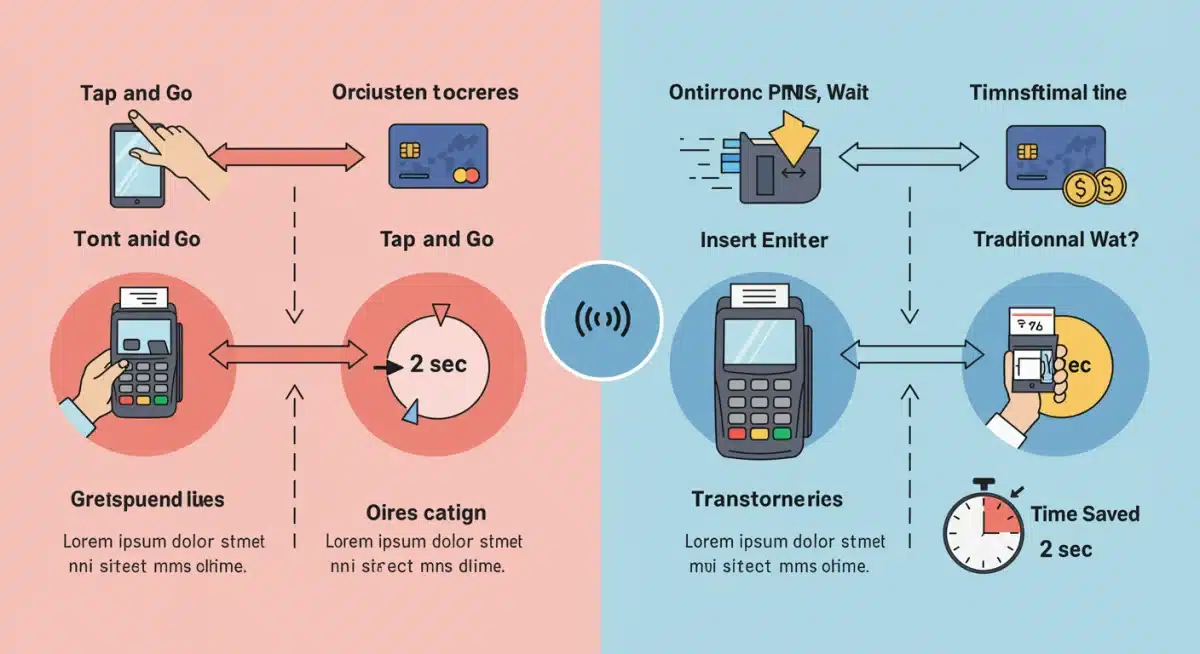
Beyond the immediate customer interaction, contactless payments offer a wealth of data. Retailers can gain deeper insights into purchasing patterns, peak transaction times, and customer preferences. This data can then be leveraged to optimize inventory, staffing, and marketing strategies, leading to more informed business decisions.
Moreover, the inherent security features of contactless payments, such as encryption and tokenization, reduce the risk of fraud and chargebacks. This not only protects the retailer financially but also minimizes the administrative burden associated with resolving payment disputes. The reduced handling of cash also leads to fewer errors and less time spent on reconciliation.
The efficiency gains from contactless payments also empower staff to focus on more value-added activities, such as assisting customers or managing inventory, rather than being bogged down by slow checkout processes. This leads to a more engaged workforce and an overall more productive retail environment.
Ultimately, investing in the latest contactless payment technology is a strategic move that positions US retailers for future growth, fostering a more agile, secure, and customer-centric operation.
Meeting the 20% speed boost target: challenges and solutions
Achieving a 20% boost in transaction speeds across US stores by mid-2025 is an ambitious goal, and it comes with its share of challenges. While the technology is readily available, successful implementation requires overcoming hurdles related to infrastructure, legacy systems, and merchant education.
One of the primary challenges lies in the sheer diversity of retail operations in the US, ranging from large national chains to small independent businesses. Each has different IT capabilities, budget constraints, and levels of technical expertise. Ensuring uniform adoption and effective integration of new payment systems across such a varied landscape is a complex undertaking.
Overcoming implementation hurdles
Many smaller retailers still rely on older POS systems that may not be compatible with modern contactless technology without significant upgrades. The cost of replacing or upgrading these systems can be a barrier, especially for businesses operating on thin margins. Solutions often involve offering affordable, cloud-based POS solutions or government incentives for technology adoption.
- Addressing the cost of POS system upgrades for small businesses.
- Ensuring seamless integration with existing inventory and accounting software.
- Providing comprehensive training for staff on new payment procedures.
- Educating consumers on the benefits and security of contactless payments.
Another critical aspect is merchant education. Many store owners and their staff may be hesitant to adopt new technologies due to a lack of understanding or fear of disruption. Providing clear, concise training and demonstrating the tangible benefits of increased speed and efficiency is crucial for successful rollout. This includes showcasing how faster transactions can lead to higher sales volumes and improved customer satisfaction.
Furthermore, maintaining robust cybersecurity measures during the transition is paramount. Retailers need assurances that their new payment systems are secure against evolving threats. Partnerships with trusted payment processors and adherence to industry security standards are key to building and maintaining this trust.
By proactively addressing these challenges with targeted solutions and collaborative efforts, the US retail sector can confidently work towards achieving and even exceeding the 20% speed boost target, ushering in a new era of payment efficiency.
Security and reliability in contactless transactions
The rapid adoption of contactless payment technology raises valid questions about security and reliability. Consumers and retailers alike need assurances that these faster transactions do not come at the expense of safety. Fortunately, the latest advancements in this field have made contactless payments remarkably secure, often surpassing traditional methods.
At the heart of contactless security lies advanced encryption and tokenization. When a customer taps their card or device, sensitive payment information is not directly transmitted. Instead, a unique, single-use token is generated for each transaction. This token is meaningless if intercepted, making it extremely difficult for fraudsters to compromise account details.
Protecting customer data and ensuring trust
The layers of security built into contactless systems are designed to protect both the consumer and the retailer. This includes:
- End-to-End Encryption: Data is encrypted from the moment it leaves the payment device until it reaches the bank.
- Tokenization: Sensitive card numbers are replaced with unique, randomly generated tokens.
- Dynamic Data: Each transaction generates a unique cryptogram, preventing replay attacks.
- Device Authentication: Many mobile payment systems require biometric authentication (fingerprint, face ID) or a PIN for added security.
Reliability is another cornerstone of widespread adoption. Modern contactless systems are built on robust infrastructure designed for high availability and minimal downtime. Payment networks are continuously optimized to handle vast volumes of transactions with speed and accuracy, ensuring that retailers can process payments without interruption.
Furthermore, industry standards like EMVCo (Europay, MasterCard, and Visa) ensure global interoperability and a consistent level of security across different payment providers and devices. This standardization helps build consumer trust and simplifies the adoption process for retailers.
The combination of cutting-edge security protocols and highly reliable infrastructure makes contactless payments a safe and dependable choice for US retailers aiming to boost transaction speeds while safeguarding sensitive financial data.
The future outlook: beyond 2025 for contactless payments
While the immediate goal is to boost transaction speeds by 20% for US stores by mid-2025 through contactless payment technology, the trajectory of innovation suggests an even more transformative future. The evolution of payment methods is continuous, and the coming years promise further integration, personalization, and efficiency gains.
We can anticipate a deepening integration of payment systems with broader retail technology ecosystems. This includes seamless links with loyalty programs, inventory management, and customer relationship management (CRM) platforms. Imagine a scenario where a single tap not only completes a purchase but also automatically applies loyalty points, updates stock levels, and personalizes future offers.
Emerging trends and continued evolution
Several emerging trends are set to shape the post-2025 landscape:
- Biometric Payments: Increased use of fingerprint and facial recognition directly at POS terminals, removing the need for cards or phones.
- Invisible Payments: Systems that automatically detect and charge customers as they leave a store, similar to Amazon Go.
- Wearable Tech Integration: Even more sophisticated payment capabilities embedded in smartwatches, rings, and other wearables.
- IoT Payments: Everyday devices, such as smart refrigerators, making autonomous purchases.
The role of artificial intelligence and machine learning will become even more pronounced. AI will not only optimize transaction routing and fraud detection but also provide hyper-personalized shopping experiences based on real-time payment data. This level of personalization will elevate customer engagement to new heights.
Furthermore, sustainability will play a larger role. Contactless payments inherently reduce the need for physical receipts, contributing to paperless initiatives. Future innovations might also integrate carbon footprint tracking with purchases, appealing to environmentally conscious consumers.
The future of contactless payments is not just about faster transactions; it’s about creating an intelligent, integrated, and almost invisible payment experience that enhances convenience, security, and personalization, fundamentally reshaping the retail landscape for decades to come.
| Key Aspect | Impact on US Retail |
|---|---|
| Transaction Speed Boost | Targeting 20% increase by mid-2025, reducing queues and improving customer flow. |
| Customer Experience | Enhanced satisfaction due to quicker, seamless checkout processes. |
| Security & Reliability | Advanced encryption and tokenization reduce fraud risks and build trust. |
| Operational Efficiency | Staff can focus on value-added tasks, improving overall store productivity. |
Frequently Asked Questions About Contactless Payments
Contactless payment technology allows customers to make purchases by tapping a payment card or mobile device near a compatible point-of-sale terminal. It uses Near Field Communication (NFC) to securely transmit payment information without physical contact, significantly speeding up the checkout process.
The 20% speed boost comes from eliminating steps like swiping, inserting, or signing for transactions. Modern NFC chips and optimized payment processing infrastructure reduce authorization times. This efficiency compounds across multiple transactions, leading to substantial overall time savings at the checkout.
Yes, contactless payments are highly secure. They utilize advanced encryption and tokenization, where sensitive card details are replaced with unique, single-use codes for each transaction. This makes it extremely difficult for fraudsters to intercept or misuse payment information, protecting both parties.
Beyond speed, retailers benefit from improved customer satisfaction due to shorter lines, enhanced operational efficiency, reduced fraud risks, and valuable data insights into purchasing behaviors. This leads to increased sales, better resource allocation, and a more modern shopping experience.
Challenges include the cost of upgrading legacy POS systems, integrating new technology with existing retail software, and educating staff and customers. Overcoming these requires strategic investment, accessible solutions, and comprehensive training to ensure smooth adoption across diverse retail environments.
Conclusion
The drive to boost transaction speeds by 20% for US stores by mid-2025 through the latest in contactless payment technology represents a pivotal moment for the retail sector. This shift is not merely about accelerating checkout lines but about fundamentally redefining the shopping experience, enhancing security, and empowering businesses with greater efficiency. As technology continues to evolve, the integration of contactless solutions will undoubtedly pave the way for a more streamlined, secure, and customer-centric future in retail, ensuring that both merchants and consumers reap the benefits of this payment revolution.