OSHA’s Retail Safety Updates: What You Need to Know by 2025
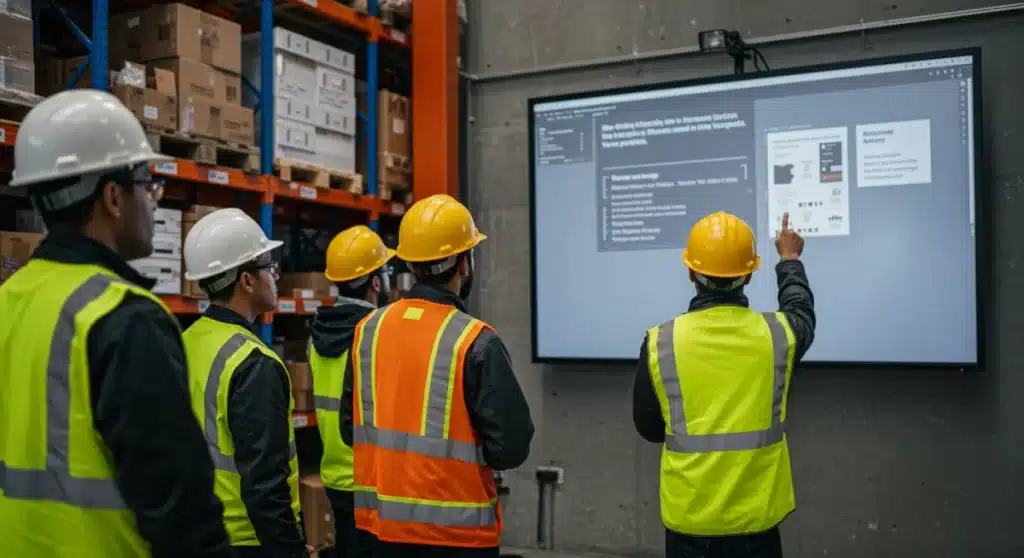
OSHA’s updated safety standards for retail workplaces, with mandatory implementation by March 2025, introduce crucial changes designed to enhance employee protection and operational safety across the sector, requiring proactive compliance from businesses.
The landscape of workplace safety is continuously evolving, and the retail sector is no exception. With OSHA’s Updated Safety Standards for Retail Workplaces: Implementing Changes by March 2025, businesses face a critical juncture. Understanding these new regulations and preparing for their integration is not merely a legal obligation but a fundamental commitment to employee well-being and operational resilience. This comprehensive overview aims to equip retail leaders and safety professionals with the insights needed to navigate these pivotal changes effectively.
Understanding the impetus behind OSHA’s revised retail safety standards
The Occupational Safety and Health Administration (OSHA) continually reviews and updates its regulations to address emerging hazards and improve worker protection. The recent revisions to safety standards for retail workplaces, mandated for implementation by March 2025, stem from a detailed analysis of incident data, technological advancements, and evolving operational practices within the retail industry. These updates are a proactive measure to safeguard employees from a broader spectrum of risks, ensuring that safety protocols keep pace with the dynamic nature of retail environments.
Historically, retail has presented unique safety challenges, from slips, trips, and falls to ergonomic injuries from manual handling, and even risks associated with workplace violence. The previous standards, while foundational, sometimes struggled to comprehensively cover the nuances of modern retail operations, which now include extensive e-commerce fulfillment, automated warehousing components within stores, and diverse customer interaction models. OSHA’s updated guidelines aim to close these gaps, providing clearer, more robust frameworks for risk assessment and mitigation.
The evolution of retail safety concerns
Retail environments are complex and varied, ranging from small boutiques to large department stores and expansive distribution centers. Each setting presents its own set of potential hazards. The rise of online shopping, for instance, has shifted many retail employees from front-of-house customer service roles to back-of-house logistics positions, involving more material handling, powered industrial truck operation, and extended periods of physical exertion. These changes necessitate a re-evaluation of traditional safety paradigms.
- Increased material handling and lifting tasks due to e-commerce growth.
- Prevalence of powered industrial trucks in retail warehouses and large stores.
- Extended working hours and rapid pace contributing to fatigue and errors.
- Exposure to diverse customer behaviors, sometimes leading to conflict.
These evolving operational models underscore the need for updated safety standards that are adaptable and comprehensive, addressing both long-standing issues and contemporary risks. The March 2025 deadline emphasizes the urgency for retail businesses to conduct thorough internal reviews and implement necessary changes to their safety programs.
Ultimately, these revisions reflect OSHA’s commitment to fostering safer workplaces across all industries. For retail, this means a renewed focus on proactive hazard identification, comprehensive training, and the implementation of controls that effectively protect employees from harm. Compliance is not just about avoiding penalties; it’s about cultivating a culture where safety is paramount, thereby enhancing employee morale, reducing turnover, and improving overall operational efficiency.
Key changes and additions in the new OSHA standards for retail
The updated OSHA standards introduce several significant changes and additions that retail businesses must meticulously review and integrate into their existing safety management systems. These modifications are designed to provide more specific guidance and stricter requirements across various hazard categories common in retail settings. Understanding these key areas is the first step towards achieving full compliance before the March 2025 deadline.
One of the most notable shifts is an intensified focus on ergonomic hazards, recognizing the strain repetitive tasks and improper lifting techniques place on retail workers. While general industry standards have always touched upon ergonomics, the new retail-specific guidelines offer more prescriptive measures, including recommendations for workstation design, lifting aids, and mandatory training on proper body mechanics. This aims to significantly reduce musculoskeletal disorders (MSDs), which are prevalent in the sector.
Enhanced emphasis on powered industrial truck safety
For retail operations that utilize forklifts, pallet jacks, and other powered industrial trucks, the updated standards bring more stringent requirements for operator training, equipment maintenance, and operational procedures. This includes more frequent refresher training, stricter controls on speeds and pedestrian pathways, and enhanced pre-shift inspection protocols. The goal is to minimize accidents involving these powerful machines, which can lead to severe injuries or fatalities.
- Mandatory annual refresher training for all operators.
- Clear demarcation of pedestrian and vehicle traffic areas.
- Requirement for documented daily equipment inspections.
- Stricter guidelines for loading and unloading procedures.
Furthermore, the revised standards place a greater emphasis on emergency preparedness, particularly concerning active shooter situations and other forms of workplace violence. Retail establishments are now expected to develop and regularly practice comprehensive emergency action plans that include evacuation routes, shelter-in-place procedures, and communication protocols. This reflects a growing concern for employee safety in the face of external threats, ensuring that staff are adequately prepared to respond to unforeseen crises.
Another critical area of change involves hazard communication. While the core principles of hazard communication remain, the updated standards mandate more accessible and user-friendly formats for safety data sheets (SDS) and labels, especially for cleaning agents and other chemicals commonly found in retail environments. Employers must ensure that all employees who handle or are potentially exposed to hazardous chemicals receive thorough training on understanding and interpreting these safety resources. These changes collectively aim to create a safer, more transparent, and better-prepared retail workplace.
Developing a robust compliance strategy for March 2025
Meeting the March 2025 deadline for OSHA’s updated retail safety standards requires a strategic and systematic approach. Simply reacting to the changes will likely lead to rushed implementations and potential non-compliance. Instead, retail businesses should embark on a comprehensive strategy that encompasses assessment, planning, implementation, and ongoing evaluation. This proactive stance not only ensures regulatory adherence but also fosters a culture of safety that benefits both employees and the business.
The initial phase of any compliance strategy should involve a thorough gap analysis. This means comparing current safety policies, procedures, and training programs against the new OSHA requirements. Identifying discrepancies early allows businesses to prioritize areas needing immediate attention and allocate resources accordingly. Engaging key stakeholders, including management, supervisors, and front-line employees, in this assessment process can provide valuable insights and foster a sense of shared responsibility.
Key steps in building your compliance framework
Once gaps are identified, the next step is to develop a detailed action plan. This plan should outline specific tasks, assign responsibilities, set realistic timelines, and define measurable outcomes. It’s crucial to treat this as a project with clear milestones leading up to the March 2025 deadline. The plan should address all aspects of the new standards, from physical facility modifications to training programs and documentation requirements.
- Conduct a comprehensive audit of existing safety practices against new OSHA rules.
- Develop a detailed action plan with assigned responsibilities and timelines.
- Allocate necessary resources, including budget and personnel, for implementation.
- Establish a system for ongoing monitoring and regular review of compliance efforts.
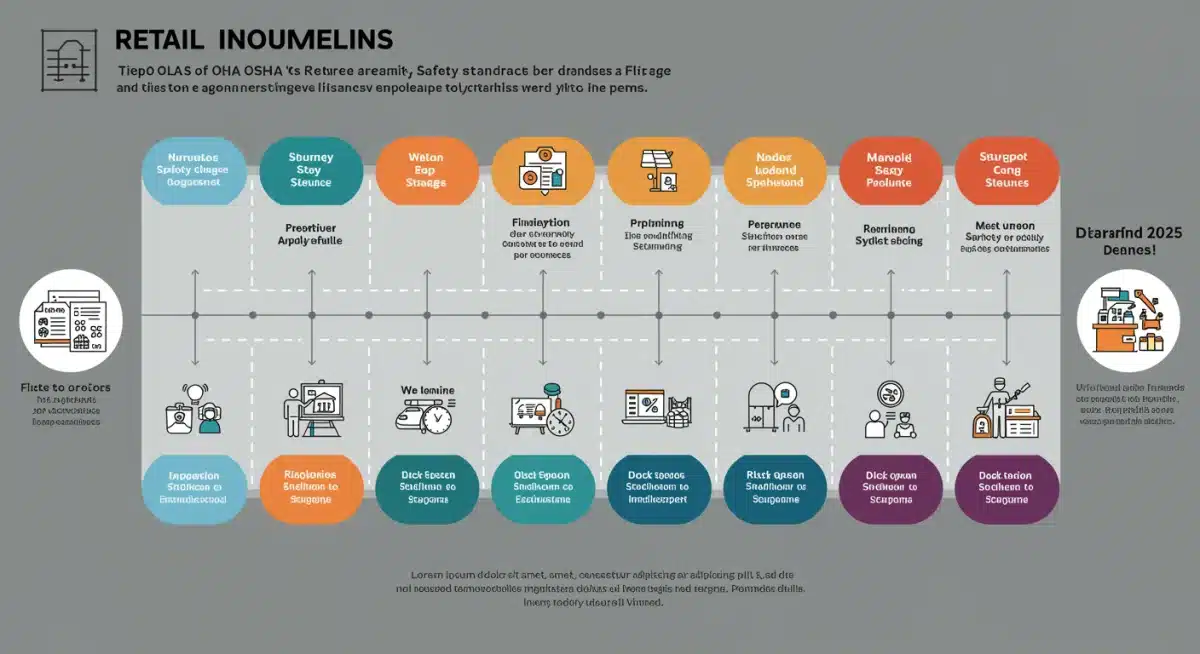
Implementation will likely involve a combination of facility upgrades, equipment purchases, and significant investment in employee training. For instance, if new ergonomic guidelines require different types of shelving or lifting equipment, these procurements need to be planned well in advance. Similarly, updated training modules on powered industrial truck operation or emergency response need to be developed and delivered to all relevant staff. Documentation is equally critical; maintaining meticulous records of training, inspections, and incident reports demonstrates due diligence.
Finally, compliance is not a one-time event but an ongoing process. Once the new standards are implemented, businesses must establish mechanisms for continuous monitoring and periodic review. This includes regular safety audits, employee feedback channels, and staying informed about any subsequent regulatory updates. A robust compliance strategy ensures that retail workplaces remain safe, productive, and fully aligned with OSHA’s evolving mandates.
Training and education: empowering your retail workforce for safety
Effective training and education are cornerstones of successful implementation for OSHA’s updated safety standards in retail workplaces. It’s not enough to simply have new policies; employees must understand them, know how to apply them, and recognize their role in maintaining a safe environment. A well-designed training program empowers the workforce, transforming passive recipients of information into active participants in workplace safety. This proactive approach significantly reduces incidents and fosters a culture of shared responsibility.
The updated standards often require specific training modules that address new hazards or reinforce existing ones with greater emphasis. For instance, if ergonomic guidelines are more stringent, training should include practical demonstrations of proper lifting techniques, workstation adjustments, and the use of ergonomic tools. Similarly, if there are new protocols for handling hazardous materials, employees need hands-on training on personal protective equipment (PPE), spill response, and emergency procedures. The goal is to make safety knowledge actionable and ingrained in daily routines.
Crafting impactful safety training programs
To maximize the effectiveness of training, retail businesses should move beyond generic presentations. Tailoring content to specific roles and tasks within the retail environment makes the information more relevant and memorable. For example, a stockroom employee will need different safety training than a cashier or a store manager. Incorporating interactive elements, such as simulations, group discussions, and practical exercises, can significantly enhance engagement and retention.
- Develop role-specific training modules addressing unique hazards.
- Utilize a blend of instructional methods: lectures, demonstrations, and hands-on practice.
- Regularly update training materials to reflect new equipment or procedures.
- Implement competency assessments to ensure understanding and application of safety principles.
Furthermore, training should not be a one-off event. Regular refresher courses, safety briefings, and ongoing communication about safety performance are essential to keep safety top of mind. New employee onboarding programs must also incorporate the updated OSHA standards from day one, ensuring that every team member understands the company’s commitment to safety and their individual responsibilities. Documentation of all training sessions, including attendance records and topics covered, is vital for compliance and demonstrating due diligence.
By investing in comprehensive and continuous training, retail businesses not only meet OSHA requirements but also cultivate a more aware, skilled, and safer workforce. Empowered employees are more likely to identify and report hazards, adhere to safety protocols, and contribute positively to the overall safety culture, ultimately leading to a more secure and productive retail operation.
The role of technology in achieving retail safety compliance
In the modern retail landscape, technology plays an increasingly pivotal role in achieving and maintaining compliance with OSHA’s updated safety standards. From sophisticated monitoring systems to digital training platforms, leveraging technological solutions can streamline processes, enhance data accuracy, and provide real-time insights into safety performance. Embracing these innovations is not just about efficiency; it’s about building a more intelligent and responsive safety management system that can adapt to evolving regulatory demands.
One significant application of technology is in hazard identification and risk assessment. Advanced sensors and IoT devices can monitor environmental conditions, such as air quality, temperature, and noise levels, in retail spaces and warehouses, alerting management to potential hazards before they escalate. Similarly, AI-powered video analytics can identify unsafe behaviors, such as improper lifting techniques or unauthorized access to restricted areas, allowing for immediate corrective action and targeted training interventions.
Leveraging digital tools for enhanced safety management
Digital platforms are transforming how safety training is delivered and managed. Learning Management Systems (LMS) can host interactive training modules, track completion rates, and manage certification renewals, ensuring that all employees receive and comprehend necessary safety information. Virtual Reality (VR) and Augmented Reality (AR) tools offer immersive training experiences, allowing employees to practice safety procedures in realistic, risk-free environments, from operating powered industrial trucks to responding to emergency scenarios.
- Implement IoT sensors for real-time environmental monitoring and hazard detection.
- Utilize AI-powered video analytics to identify unsafe practices and behaviors.
- Employ Learning Management Systems (LMS) for efficient safety training delivery and tracking.
- Explore VR/AR for immersive and practical safety training simulations.
Furthermore, technology simplifies compliance documentation and reporting. Digital record-keeping systems can securely store safety data, incident reports, inspection checklists, and training records, making them easily accessible for audits and internal reviews. Mobile applications can empower employees to report hazards or near misses instantly, fostering a more proactive safety culture. Data analytics tools can then process this information to identify trends, pinpoint high-risk areas, and inform strategic safety improvements.
By integrating these technological solutions, retail businesses can create a more robust, efficient, and data-driven safety program. This not only aids in meeting the March 2025 OSHA requirements but also cultivates a continuously improving safety environment, protecting employees and enhancing overall operational resilience in a rapidly changing industry.
Financial implications and return on investment of safety improvements
Implementing OSHA’s updated safety standards by March 2025 will undoubtedly involve financial investment for retail businesses. This might include costs associated with facility modifications, new equipment purchases, enhanced training programs, and the adoption of safety technologies. While these expenditures might seem daunting, it’s crucial for retail leaders to view them not as mere costs, but as strategic investments that yield significant returns in the long term. Understanding the financial implications and the potential return on investment (ROI) is key to securing executive buy-in and allocating resources effectively.
Initially, businesses might face direct costs for compliance. This could involve upgrading security systems to address workplace violence concerns, purchasing ergonomic equipment to mitigate MSD risks, or investing in new powered industrial trucks that meet updated specifications. Training programs, whether in-house or outsourced, also represent a direct cost. However, these upfront investments are often dwarfed by the potential costs of non-compliance and workplace incidents.
Calculating the ROI of safety investments
The ROI of safety improvements is multifaceted and extends beyond simply avoiding OSHA fines. Workplace accidents and injuries lead to a cascade of direct and indirect costs. Direct costs include medical expenses, workers’ compensation claims, and legal fees. Indirect costs, often more substantial, encompass lost productivity due to employee absence, damaged equipment, investigation time, decreased employee morale, increased insurance premiums, and reputational damage. A single serious incident can far exceed the cost of proactive safety measures.
- Reduced workers’ compensation claims and associated premiums.
- Decreased lost workdays and enhanced employee productivity.
- Lower legal costs and potential fines from non-compliance.
- Improved employee morale, leading to higher retention rates.
Moreover, a strong safety record can positively impact a company’s public image and attract talent. Employees are increasingly seeking workplaces that prioritize their well-being, and a reputation for safety can be a significant competitive advantage in recruitment and retention. By protecting employees, businesses also protect their most valuable asset, ensuring continuity of operations and minimizing disruptions.
Ultimately, while there are initial financial outlays, the long-term benefits of robust safety programs far outweigh the costs. By strategically investing in compliance with OSHA’s updated standards, retail businesses can create safer workplaces, reduce operational risks, enhance employee satisfaction, and ultimately improve their bottom line. It’s a testament to the principle that good safety is good business.
Future outlook: continuous safety improvements beyond 2025
While the March 2025 deadline for OSHA’s updated safety standards for retail workplaces marks a significant milestone, it should not be viewed as the finish line for safety efforts. Instead, it represents a crucial stepping stone towards a culture of continuous improvement. The retail environment is constantly evolving, influenced by technological advancements, shifting consumer behaviors, and new operational models. Therefore, workplace safety must also be dynamic, adapting to these changes and anticipating future challenges.
Looking beyond 2025, retail businesses should establish frameworks for ongoing safety assessment and adaptation. This involves regularly reviewing incident data, conducting periodic risk assessments, and staying abreast of emerging technologies and best practices in safety management. Engaging employees in this continuous process is vital, as they are often the first to identify new hazards or suggest improvements based on their daily experiences. Their input can drive innovative solutions and foster a stronger sense of ownership over safety protocols.
Embracing proactive safety management
The future of retail safety will likely see an even greater integration of predictive analytics and artificial intelligence. By analyzing vast amounts of data—from weather patterns and foot traffic to sales volumes and staffing levels—businesses may be able to predict potential hazards and implement preventative measures before incidents occur. For example, AI could identify patterns leading to slips and falls in specific areas or predict peak times for ergonomic strain, allowing for proactive adjustments to staffing or task rotation.
- Establish a permanent safety committee with cross-functional representation.
- Regularly review and update safety policies and procedures.
- Invest in research and development of new safety technologies.
- Foster an open communication culture where safety concerns are encouraged and addressed.
Furthermore, the emphasis on employee well-being is expected to broaden, encompassing not just physical safety but also mental health and psychological well-being. Retail environments can be stressful, and future safety initiatives may include programs to support mental health, reduce stress, and prevent burnout. This holistic approach recognizes that a truly safe workplace considers all aspects of an employee’s health and happiness.
In conclusion, while the March 2025 deadline is a critical focal point, the ultimate goal for retail safety extends far beyond mere compliance. It’s about cultivating an ingrained safety culture that is proactive, adaptive, and continuously striving for excellence. By embracing this forward-looking perspective, retail businesses can ensure their workplaces remain secure, productive, and supportive environments for all employees, well into the future.
| Key Aspect | Brief Description |
|---|---|
| Implementation Deadline | March 2025 is the mandatory date for all retail businesses to comply with updated OSHA standards. |
| Key Changes | Includes enhanced focus on ergonomics, powered industrial truck safety, and emergency preparedness. |
| Compliance Strategy | Requires gap analysis, action planning, resource allocation, and continuous monitoring. |
| ROI of Safety | Proactive safety investments reduce direct and indirect costs of incidents, enhance morale, and improve reputation. |
Frequently Asked Questions about OSHA’s Retail Safety Updates
The primary goal is to enhance worker protection by addressing emerging hazards and refining existing safety protocols in retail environments. These updates aim to reduce workplace injuries and illnesses by providing more specific guidance and stricter requirements, ensuring a safer working environment for all retail employees.
Key areas most impacted include ergonomic hazard mitigation, powered industrial truck operation safety, and comprehensive emergency preparedness plans, particularly for workplace violence. These focus areas reflect observed trends in retail incidents and aim to provide more robust preventative measures.
Effective preparation involves conducting a thorough gap analysis of current safety practices against the new standards, developing a detailed action plan, allocating sufficient resources, and implementing comprehensive training programs. Proactive engagement with employees and continuous monitoring are also crucial for success.
Technology can significantly aid compliance through real-time hazard monitoring with IoT sensors, AI-powered video analytics for unsafe behavior detection, and Learning Management Systems (LMS) for efficient training. Digital tools also streamline documentation and reporting, creating a more responsive safety management system.
Beyond compliance, long-term benefits include reduced workers’ compensation costs, increased productivity due to fewer incidents, improved employee morale and retention, and enhanced brand reputation. Investing in safety is a strategic decision that fosters a healthier workforce and contributes to overall business resilience and profitability.
Conclusion
The implementation of OSHA’s Updated Safety Standards for Retail Workplaces: Implementing Changes by March 2025 represents a pivotal moment for the retail industry. These comprehensive revisions underscore a collective commitment to enhancing employee safety and fostering healthier work environments. While the journey to full compliance requires diligent planning, strategic investment, and consistent effort, the benefits far outweigh the initial challenges. By embracing these standards, retail businesses not only fulfill their regulatory obligations but also cultivate a more robust, productive, and ethical operational framework. The deadline serves as a powerful catalyst for positive change, ensuring that safety remains at the forefront of retail operations long into the future.