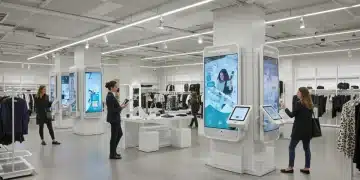
5G impact on in-store shopper experience: 2025 US retail outlook
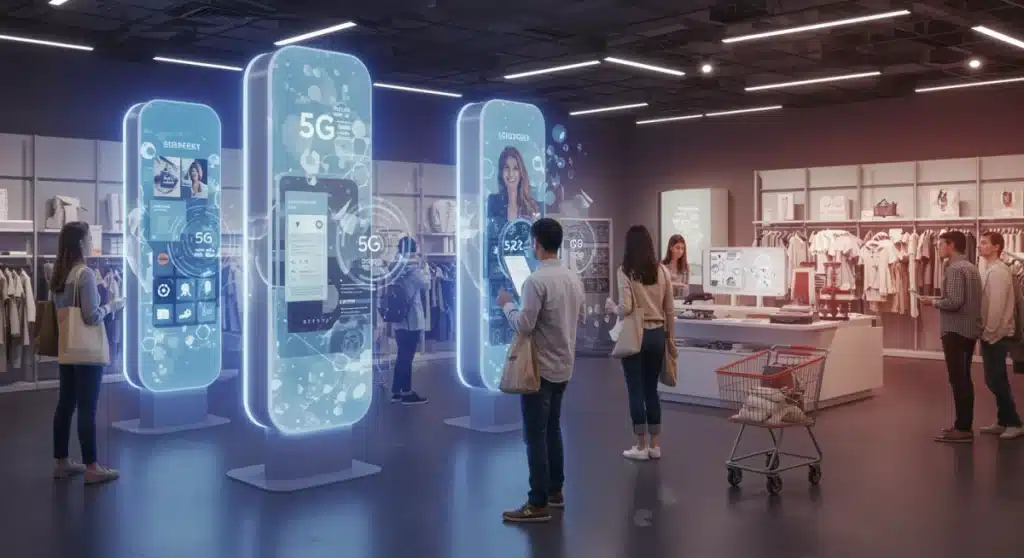
5G will fundamentally reshape the in-store shopper experience in US retail by 2025, enabling a new era of hyper-personalized interactions, immersive augmented reality, and operational efficiencies.
The retail landscape is in constant flux, driven by technological advancements and evolving consumer expectations. As we approach 2025, the proliferation of 5G in-store experience is poised to fundamentally redefine how consumers interact with physical retail spaces in the United States. This next-generation wireless technology promises to unlock unprecedented levels of connectivity, speed, and responsiveness, paving the way for innovative solutions that were once confined to science fiction.
The foundational shift: 5G’s core capabilities in retail
5G is far more than just a faster version of 4G. It represents a paradigm shift in network capabilities, bringing ultra-low latency, massive connectivity, and significantly higher bandwidth. These attributes are critical for supporting the advanced retail technologies that are set to emerge by 2025, transforming every facet of the in-store journey.
Retailers are beginning to grasp the strategic importance of this technological leap. The ability to process vast amounts of data in real-time, connect numerous devices simultaneously, and deliver instantaneous feedback loops will enable a level of personalization and efficiency previously unattainable. This foundational shift empowers businesses to move beyond traditional retail models, embracing a future where the physical store becomes a dynamic, interactive hub.
Redefining connectivity standards
The enhanced network capabilities of 5G are not merely incremental; they are exponential. This means that applications and services requiring robust, reliable, and rapid data transfer can finally move from concept to widespread reality within retail environments.
- Ultra-low latency: Near-instantaneous response times, crucial for AR/VR applications and real-time inventory management.
- Higher bandwidth: Supports high-definition video streaming, large data transfers, and complex interactive experiences without lag.
- Massive machine-type communications (mMTC): Connects millions of IoT devices per square kilometer, enabling widespread sensor deployment and smart infrastructure.
Ultimately, 5G’s core capabilities lay the groundwork for a truly interconnected retail ecosystem. It provides the necessary backbone for sophisticated technologies to operate seamlessly, ensuring that the consumer experience is smooth, engaging, and devoid of frustrating technical delays. This robust infrastructure is the silent enabler of the retail innovations we will see.
Hyper-personalization: Tailoring the shopper journey with 5G
One of the most profound impacts of 5G on the in-store shopper experience will be the ability to deliver hyper-personalized interactions. With faster data processing and enhanced connectivity, retailers can leverage real-time analytics and artificial intelligence to tailor product recommendations, promotions, and even store navigation to individual preferences.
Imagine walking into a store where your past purchases, browsing history, and stated preferences instantly inform the digital displays you encounter. This is not just about showing you relevant ads; it’s about creating a bespoke shopping path, guiding you to new products you might love, and offering exclusive deals that resonate with your unique profile. 5G facilitates the rapid data exchange needed for such dynamic, individualized experiences.
AI-driven recommendations and dynamic pricing
The speed and capacity of 5G networks allow AI algorithms to operate with unparalleled efficiency in real-time. This translates into immediate, contextually relevant recommendations delivered directly to a shopper’s device or via smart screens within the store.
- Instantaneous product suggestions: Based on current location, browsing history, and even facial recognition (with consent).
- Personalized promotions: Flash sales or discounts triggered as a shopper approaches a specific item.
- Dynamic pricing: Adjusting prices in real-time based on demand, inventory, and competitor pricing, displayed on e-ink labels.
This level of personalization not only enhances the shopping journey but also drives sales and customer loyalty. By making every interaction feel curated and special, retailers can build stronger connections with their clientele, fostering a sense of value and understanding. The seamless integration of these technologies, powered by 5G, is key to their success.
Immersive experiences: AR, VR, and interactive displays
The low latency and high bandwidth of 5G are game-changers for augmented reality (AR) and virtual reality (VR) applications within retail. These immersive technologies will transform how shoppers discover, try, and evaluate products, blurring the lines between the physical and digital worlds.
Shoppers will be able to virtually try on clothes, visualize furniture in their homes, or explore intricate product details through AR overlays, all without any noticeable lag. Interactive displays will become more sophisticated, offering engaging and dynamic content that responds instantly to gestures or voice commands. This creates a highly engaging and memorable shopping experience that goes beyond simply viewing products on a shelf.
Virtual try-ons and product visualization
Gone are the days of guessing how an item might look or fit. 5G enables highly realistic and responsive AR/VR experiences that empower shoppers to make more informed decisions.
- AR mirrors: Instantly project clothing onto a shopper’s reflection, allowing for quick style comparisons.
- Virtual product placement: Use AR to see how a new sofa might fit in your living room before purchase.
- Interactive product guides: Overlay digital information, reviews, and tutorials directly onto physical products.
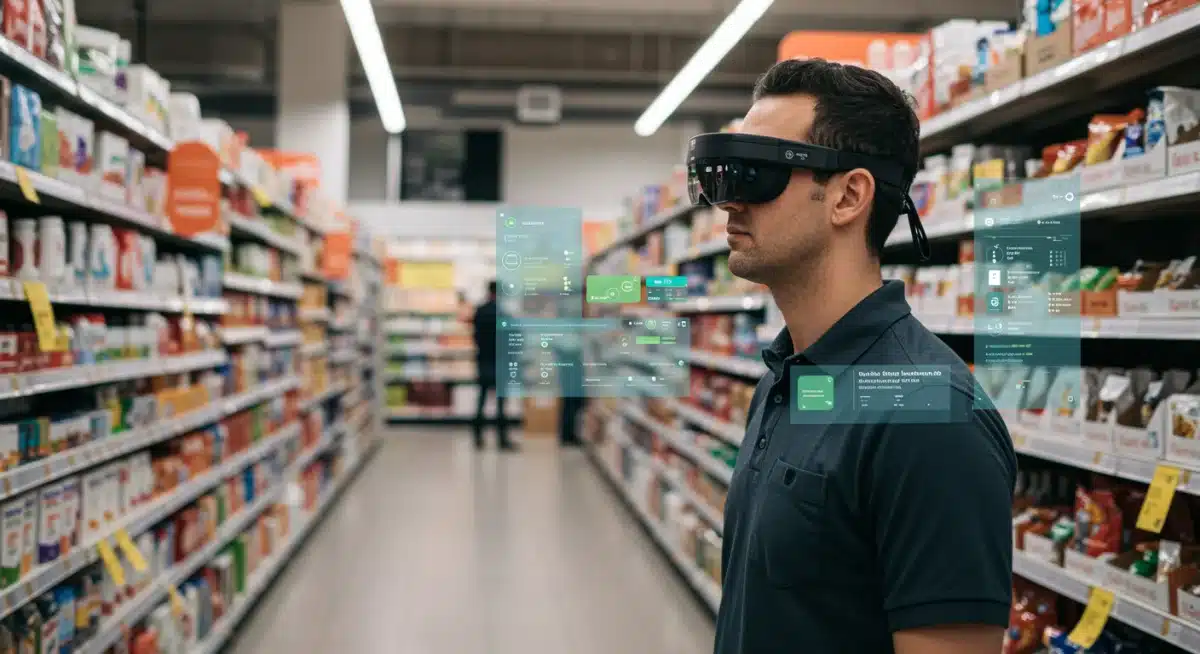
These immersive tools not only enhance customer engagement but also reduce returns by providing a clearer understanding of products pre-purchase. The speed of 5G ensures that these digital overlays and virtual interactions are fluid and realistic, making them truly valuable additions to the in-store experience.
Operational efficiencies: Streamlining retail with 5G
Beyond customer-facing innovations, 5G will also bring significant operational efficiencies to US retail stores. Its ability to connect a vast number of IoT devices with low latency will revolutionize inventory management, supply chain logistics, and store automation, freeing up staff to focus more on customer service.
Real-time data from smart shelves, automated robots, and interconnected sensors will provide a comprehensive overview of store operations, enabling proactive decision-making. This means less time spent on manual tasks and more time dedicated to creating value for the shopper. The result is a more agile, responsive, and cost-effective retail environment.
Smart inventory and asset tracking
The precision and speed of 5G enable highly sophisticated inventory systems that virtually eliminate stockouts and optimize product placement.
- Real-time stock levels: Sensors on shelves provide immediate updates on product availability, preventing empty displays.
- Automated reordering: Systems trigger orders automatically when stock falls below a certain threshold.
- Asset tracking: Monitor the location and condition of high-value items or equipment within the store.
These operational improvements translate directly into a better shopper experience. Customers can trust that products are in stock, and staff can quickly locate items, reducing frustration and enhancing efficiency. 5G is the backbone that makes this level of granular control and automation possible, creating a smoother process for both retailers and consumers.
Enhanced security and frictionless checkout
The robust connectivity and speed of 5G also open new avenues for enhanced in-store security and truly frictionless checkout experiences. High-definition security cameras can transmit data in real-time without bottlenecks, and advanced sensor networks can monitor store activity with greater precision.
For checkout, 5G supports sophisticated computer vision and RFID technologies that enable shoppers to simply pick up items and leave, with payments processed automatically. This eliminates queues and wait times, significantly improving convenience and satisfaction. The seamless flow of data is critical for these systems to function reliably and securely.
Advanced surveillance and loss prevention
5G’s capabilities boost the effectiveness of security systems, making stores safer and reducing shrinkage.
- High-resolution video analytics: Real-time processing of footage to identify suspicious behavior or potential theft.
- Smart sensors: Monitor entry/exit points and high-value product areas with enhanced accuracy.
- Connected alarms: Instantaneous alerts to staff or security personnel in case of an incident.
Coupled with frictionless checkout systems, these security enhancements create a more trustworthy and efficient shopping environment. The rapid data transfer and low latency provided by 5G are essential for these systems to operate without delay, ensuring both security and convenience.
The road ahead: Challenges and opportunities for 2025
While the potential of 5G in-store experience is immense, its widespread adoption by 2025 will not be without challenges. Retailers must navigate the complexities of infrastructure deployment, data privacy concerns, and the integration of new technologies into existing systems. However, the opportunities for those who embrace this transformation are equally significant, promising a competitive edge in a rapidly evolving market.
Investing in 5G infrastructure requires careful planning and significant capital, but the long-term benefits in terms of enhanced customer engagement, operational efficiency, and increased sales are compelling. Early adopters will gain valuable insights and establish themselves as leaders in the retail technology space, setting new standards for the shopper experience.
Addressing implementation hurdles
The journey to a fully 5G-enabled retail environment involves overcoming several practical obstacles.
- Infrastructure costs: Deploying robust 5G networks within stores and across retail chains.
- Data security and privacy: Ensuring consumer data is protected, especially with increased personalization.
- Staff training: Equipping employees with the skills to manage and leverage new technologies.
Despite these challenges, the trajectory points towards an inevitable integration of 5G into the retail fabric. The opportunities for innovation, customer loyalty, and operational excellence far outweigh the initial hurdles. Retailers who strategically plan and invest in 5G now will be best positioned to thrive in the competitive landscape of 2025 and beyond, delivering unparalleled in-store experiences.
| Key Impact | Description for US Retail by 2025 |
|---|---|
| Hyper-Personalization | Real-time, AI-driven recommendations and promotions tailored to individual shoppers. |
| Immersive Experiences | Seamless AR/VR for virtual try-ons and interactive product visualization. |
| Operational Efficiency | Real-time inventory, automated logistics, and smart store management. |
| Frictionless Checkout | Accelerated, queue-free payment systems using computer vision and RFID. |
Frequently asked questions about 5G in retail
5G’s ultra-low latency and high bandwidth enable real-time data processing for AI-driven recommendations. This means instant, tailored product suggestions, promotions, and dynamic pricing delivered to shoppers based on their preferences and in-store behavior, creating a unique and relevant experience.
Augmented reality (AR) will allow shoppers to virtually try on clothes, visualize furniture in their homes, or explore product details through interactive overlays. 5G’s speed eliminates lag, making these experiences seamless, realistic, and highly engaging for consumers, enhancing product understanding before purchase.
5G will revolutionize operations by enabling massive IoT connectivity and real-time data flow. This supports smart inventory management, automated reordering, and efficient asset tracking. Staff can then focus more on customer service, leading to a more agile and cost-effective retail environment.
Yes, 5G’s high speed and low latency are crucial for frictionless checkout. It supports advanced computer vision and RFID technologies that process payments automatically as shoppers leave the store. This eliminates queues and wait times, significantly improving convenience and the overall customer journey.
Key challenges include significant infrastructure deployment costs, ensuring robust data security and customer privacy, and adequately training staff to manage and leverage new 5G-enabled systems. Overcoming these requires strategic planning and investment, but the long-term benefits are substantial.
Conclusion
The year 2025 is poised to be a pivotal moment for US retail, largely driven by the transformative capabilities of 5G technology. The enhanced speed, low latency, and massive connectivity offered by 5G are not just incremental upgrades; they are foundational shifts that will enable a new generation of in-store experiences. From hyper-personalized interactions and immersive AR/VR applications to streamlined operational efficiencies and truly frictionless checkout, 5G will redefine how consumers engage with physical stores. While challenges related to infrastructure and data management exist, the strategic adoption of 5G presents unparalleled opportunities for retailers to innovate, foster deeper customer loyalty, and secure a competitive advantage in an increasingly digital world. The future of retail is connected, intelligent, and undeniably 5G-powered.