Automated Checkout Systems: 10% Labor Cost Reduction for US Supermarkets in 2025
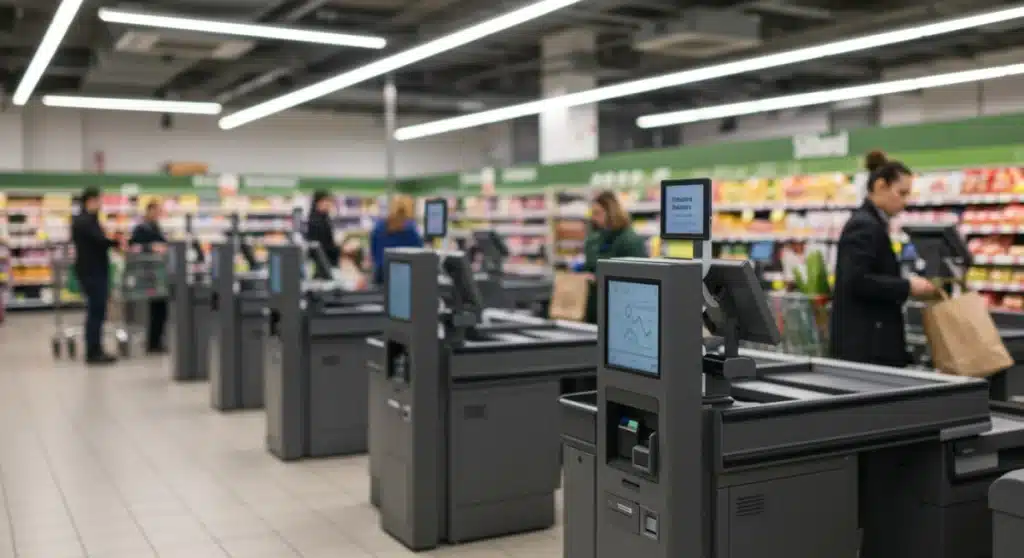
Implementing automated checkout systems is poised to deliver a crucial 10% reduction in labor costs for US supermarkets by 2025, streamlining operations and reallocating human resources for enhanced customer service and strategic growth.
The landscape of retail is continuously evolving, and US supermarkets are at the forefront of this transformation. A key area of focus for efficiency and profitability in the coming years is the strategic adoption of advanced technologies. Specifically, implementing automated checkout systems: achieving a 10% reduction in labor costs for US supermarkets in 2025 is not merely an aspiration but a tangible goal that many are actively pursuing. This shift promises to redefine operational models, optimize resource allocation, and ultimately enhance the overall shopping experience for consumers.
The imperative for automation in US supermarkets
The supermarket industry in the United States faces persistent challenges, including rising operational costs, labor shortages, and increasing customer expectations for speed and convenience. These pressures make the adoption of automation not just beneficial, but essential for sustained growth and competitiveness. Automated checkout systems offer a multifaceted solution to these complex issues.
By automating the checkout process, supermarkets can significantly mitigate the impact of labor-related expenses. This includes not only the direct costs of wages and benefits but also the indirect costs associated with hiring, training, and managing a large workforce dedicated to manual checkout operations. The strategic deployment of these systems allows for a reallocation of human capital to areas that directly enhance customer engagement and store efficiency, such as stocking, customer assistance, and fresh food preparation.
Addressing labor shortages and rising wages
One of the most pressing concerns for US supermarkets is the ongoing challenge of labor availability and the upward trend in minimum wage requirements. Automated checkout systems provide a viable alternative to expand checkout capacity without linearly increasing staff headcount.
- Reduced dependency on a large front-end staff.
- Mitigation of wage inflation impacts on operational budgets.
- Improved staff retention by reassigning employees to more value-added roles.
In essence, the move towards automation is a proactive measure to stabilize operational costs and ensure service continuity, even in a fluctuating labor market. It’s about working smarter, not just harder, to deliver a seamless retail experience.
Understanding automated checkout systems
Automated checkout systems encompass a range of technologies designed to facilitate the payment process with minimal human intervention. These systems are evolving rapidly, moving beyond basic self-scanners to include more sophisticated solutions that leverage AI, computer vision, and advanced sensor technology. The primary goal is to empower customers to complete their transactions quickly and efficiently, reducing wait times and improving satisfaction.
The most common form is the self-checkout kiosk, familiar to most shoppers. However, the future points towards even more integrated and frictionless experiences, where customers can simply walk out of a store with their items, and payment is processed automatically. This evolution promises to further revolutionize the retail experience, making shopping faster and more convenient than ever before.
Types of automated checkout technologies
The spectrum of automated checkout solutions is broad, each offering distinct advantages depending on the supermarket’s specific needs and scale. From traditional self-service to cutting-edge cashierless stores, the options are expanding.
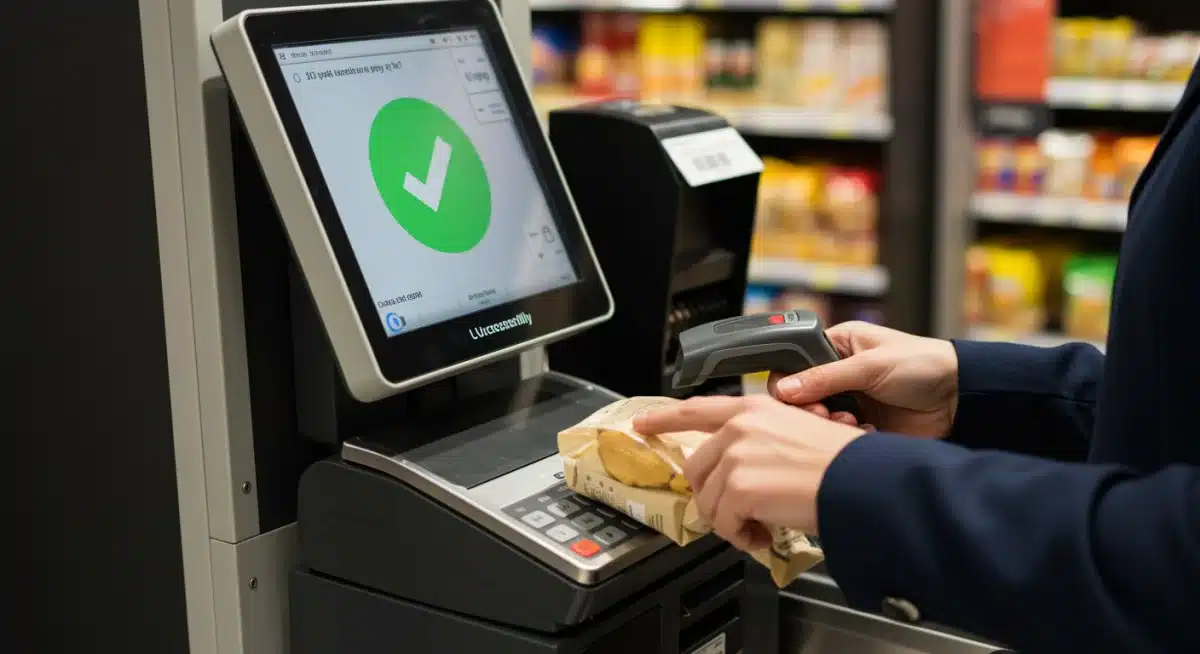
- Self-checkout kiosks: Allow customers to scan and pay for items themselves.
- Scan-and-go apps: Enable shoppers to scan items with their smartphones as they shop, then pay digitally.
- Cashierless stores: Utilize advanced sensors and cameras to track items, charging customers automatically upon exit.
Each technology presents a unique set of implementation challenges and benefits, but all contribute to the overarching goal of reducing reliance on manual labor for routine transactions. The selection often depends on the desired customer experience and the store’s infrastructure.
The path to a 10% labor cost reduction by 2025
Achieving a 10% reduction in labor costs through automated checkout systems by 2025 is an ambitious yet attainable target for US supermarkets. This reduction will not happen overnight but requires a phased and strategic approach that considers both technological implementation and workforce management. The key lies in optimizing the ratio of automated checkouts to traditional lanes and effectively reassigning staff.
Supermarkets must carefully analyze their current operational expenditures related to front-end staffing. This involves calculating the average cost per transaction, the number of employees required per shift, and the peak hour demands. With this data, a clear roadmap for automation can be developed, identifying where automated systems can yield the greatest impact on labor efficiency without compromising service quality.
Strategic implementation steps
The journey towards significant labor cost reduction involves several critical stages, each requiring careful planning and execution. A well-defined strategy ensures that the transition is smooth and yields the desired financial outcomes.
- Pilot programs: Start with a limited rollout in select stores to test efficiency and gather customer feedback.
- Phased expansion: Gradually integrate more automated systems across the chain based on successful pilot results.
- Staff retraining and reallocation: Move existing staff to roles that enhance customer service, inventory management, or specialized departments.
This systematic approach minimizes disruption and allows supermarkets to adapt to the new operational model effectively. It’s about evolution, not revolution, in the checkout process.
Benefits beyond cost savings
While the primary driver for implementing automated checkout systems is often labor cost reduction, the benefits extend far beyond financial savings. These systems also play a crucial role in enhancing customer satisfaction, improving operational efficiency, and providing valuable data insights that can inform future business strategies. A more streamlined checkout process directly translates to a better shopping experience.
Customers today value convenience and speed above almost everything else. Automated checkouts cater to this demand by reducing wait times, particularly during peak hours, and offering a sense of control over the transaction. This improved customer experience can lead to increased loyalty and repeat business, which are invaluable assets in the competitive retail market.
Enhanced customer experience and efficiency
The direct impact on the customer journey is perhaps the most visible benefit of automated systems. Shoppers appreciate the ability to quickly complete their purchases, especially when they have only a few items.
- Reduced queue lengths and waiting times.
- Increased customer satisfaction and loyalty.
- Opportunity for staff to focus on higher-value customer interactions.
Moreover, the data collected by automated systems can offer insights into purchasing patterns, peak shopping times, and system performance, allowing supermarkets to continuously optimize their operations.
Challenges and considerations for adoption
Despite the compelling benefits, the widespread adoption of automated checkout systems is not without its challenges. Supermarkets must carefully consider various factors, including initial investment costs, potential customer resistance, and the need for robust technical support. Addressing these challenges proactively is crucial for a successful transition and for realizing the projected labor cost reductions.
One significant hurdle is the capital expenditure required to install and maintain these advanced systems. While the long-term savings are clear, the upfront investment can be substantial. Additionally, some customers may prefer human interaction or find automated systems less intuitive, leading to a need for clear signage, user-friendly interfaces, and readily available staff assistance.
Overcoming common hurdles
Successful implementation requires a comprehensive strategy to mitigate potential problems. This includes everything from system design to staff training and customer education.
- Initial capital investment: Plan for significant upfront costs and secure financing.
- Customer adoption: Provide clear instructions and offer assistance to ease the transition.
- System maintenance: Ensure robust IT infrastructure and prompt technical support.
- Shrinkage concerns: Implement advanced surveillance and AI to minimize theft.
By thoughtfully addressing these considerations, supermarkets can maximize the benefits of automation while minimizing potential drawbacks. It’s a balance between innovation and practicality.
The future of supermarket operations with automation
Looking ahead to 2025 and beyond, automated checkout systems are set to become an integral part of supermarket operations in the US. The trajectory suggests an increasing reliance on technology to manage routine tasks, freeing up human staff for more complex and customer-centric roles. This shift will not only drive down labor costs but also foster a more dynamic and efficient retail environment.
The continuous advancements in AI and machine learning will further enhance the capabilities of automated systems, leading to even greater efficiency and accuracy. Imagine systems that can identify produce without manual input or detect potential issues before they become problems. The future of supermarket operations is intertwined with smart, adaptive technologies that serve both the business and the customer.
Innovations shaping future checkouts
The pace of technological innovation promises even more sophisticated solutions, further refining the checkout experience and operational efficiency. The next generation of automated systems will likely be even more seamless and intuitive.
- AI-powered inventory management: Integrating checkout data with real-time stock levels.
- Personalized shopping experiences: Using data from automated transactions to offer tailored promotions.
- Biometric payment options: Exploring even faster and more secure payment methods.
These innovations highlight a future where the checkout process is not just a transaction point but a data hub that drives intelligent business decisions and enhances the overall customer journey.
Measuring success: key performance indicators
To truly ascertain the impact of implementing automated checkout systems and confirm the achievement of a 10% labor cost reduction, supermarkets must establish clear key performance indicators (KPIs). These metrics will provide a quantitative measure of success, allowing for ongoing adjustments and optimizations. Without precise measurement, it’s difficult to validate the return on investment and the overall effectiveness of the automation strategy.
Beyond the direct financial savings in labor, KPIs should also encompass operational efficiency and customer satisfaction. This holistic view ensures that the pursuit of cost reduction does not inadvertently compromise other critical aspects of the business. By consistently tracking these indicators, supermarkets can refine their approach and ensure that automation serves its intended purpose.
Essential metrics for evaluation
A robust evaluation framework relies on a combination of financial, operational, and customer-centric metrics. This comprehensive data allows for a nuanced understanding of the automation’s impact.
- Labor cost percentage: Track as a proportion of total revenue or operating costs.
- Transaction speed: Measure average time per transaction at automated vs. traditional lanes.
- Customer satisfaction scores: Utilize surveys and feedback to gauge shopper sentiment.
- Shrinkage rates: Monitor for any changes in inventory loss due to theft or errors.
- Employee reallocation success: Assess the effectiveness of moving staff to new roles.
By focusing on these KPIs, supermarkets can gain a clear picture of their progress towards the 10% labor cost reduction target and the broader benefits of automation.
| Key Aspect | Brief Description |
|---|---|
| Labor Cost Reduction | Targeting a 10% decrease by 2025 through automation for US supermarkets. |
| Automated Systems | Includes self-checkout, scan-and-go, and cashierless technologies. |
| Strategic Implementation | Phased rollout, staff reallocation, and continuous performance monitoring. |
| Key Benefits | Beyond cost savings, improved customer experience and operational efficiency. |
Frequently asked questions about automated checkout systems
The main objective is to achieve a significant 10% reduction in labor costs. This is accomplished by streamlining the checkout process, reducing reliance on manual labor, and reallocating staff to more critical, customer-facing roles within the store. The goal is to enhance overall operational efficiency and profitability.
Automated systems reduce the need for a large number of cashiers, especially during non-peak hours. This directly lowers wage expenses, benefits, and costs associated with hiring and training. Staff can then be deployed to tasks like inventory management, customer assistance, or specialized department support, optimizing human resource allocation.
Relevant technologies include traditional self-checkout kiosks, mobile scan-and-go applications, and advanced cashierless store models utilizing AI and sensor technology. Each offers varying degrees of automation and customer interaction, allowing supermarkets to choose solutions that best fit their operational strategy and customer base.
Beyond cost savings, automated checkouts enhance customer satisfaction by reducing wait times and offering convenience. They also improve operational efficiency through faster transactions and provide valuable data insights for inventory management and personalized marketing. This contributes to increased customer loyalty and a modern shopping experience.
Challenges include significant initial capital investment for hardware and software, potential customer resistance due to unfamiliarity, and the need for robust technical support and maintenance. Addressing shrinkage (theft) and ensuring system reliability are also crucial considerations for a successful and profitable implementation.
Conclusion
The strategic move towards implementing automated checkout systems: achieving a 10% reduction in labor costs for US supermarkets in 2025 represents a pivotal shift in the retail industry. This transition is not merely about cutting costs but about fundamentally redefining operational efficiency, enhancing customer experiences, and preparing supermarkets for the demands of a modern, technology-driven market. By carefully planning, investing in the right technologies, and thoughtfully managing their workforce, US supermarkets can successfully navigate this transformation, securing a more profitable and sustainable future.