Automated Retail Technologies: 18% Cost Reduction for US Retailers
Automated retail technologies are projected to cut operational costs by an impressive 18% for U.S. retailers by 2025, fundamentally transforming business models and enhancing profitability.
The retail landscape is constantly evolving, and in 2025, a significant shift is underway as automated retail technologies promise to reduce operational costs by an impressive 18% for U.S. retailers. This isn’t just about minor tweaks; it’s a fundamental transformation in how businesses operate, aiming for greater efficiency and profitability.
The Rise of Automation in Retail Operations
The integration of automation into retail operations is no longer a futuristic concept; it is a present reality rapidly gaining traction. U.S. retailers are keenly adopting these technologies to streamline processes, minimize human error, and ultimately, bolster their bottom lines.
This widespread adoption is driven by a clear understanding of the competitive advantages that automation offers. From inventory management to customer interaction, every facet of retail is being re-imaginéd through an automated lens, promising substantial operational savings.
Key Drivers for Automation Adoption
- Labor Shortages: Automation addresses challenges posed by a tight labor market.
- Efficiency Gains: Automated systems perform repetitive tasks faster and more accurately.
- Data-Driven Decisions: Technology provides insights for optimized operations.
- Enhanced Customer Experience: Faster service and personalized interactions improve satisfaction.
The journey towards fully automated retail is multifaceted, requiring careful planning and strategic investment. However, the projected 18% reduction in operational costs serves as a powerful incentive, encouraging retailers to embrace this technological revolution with open arms.
Inventory Management Revolutionized by Automation
Effective inventory management is the backbone of any successful retail business, and automation is fundamentally transforming this critical area. Traditional methods, often prone to human error and inefficiency, are being replaced by sophisticated automated systems that offer unparalleled accuracy and speed.
These advanced solutions not only track stock levels in real-time but also predict demand with greater precision, preventing both overstocking and stockouts. This leads to significant savings by reducing waste and optimizing capital tied up in inventory.
Implementing Smart Inventory Systems
Modern inventory systems leverage a combination of sensors, AI, and robotics. These components work in concert to create a seamless and highly efficient stock management ecosystem.
Retailers are finding that these systems drastically cut down on the time and resources previously allocated to manual inventory tasks, allowing employees to focus on more value-added activities.
- Automated Stock Counting: Robots and drones conduct fast and accurate inventory checks.
- Predictive Analytics: AI algorithms forecast demand to optimize reordering.
- Smart Shelves: Sensors detect low stock levels and trigger automated alerts.
- Reduced Shrinkage: Improved tracking and monitoring minimize theft and loss.
The impact of automated inventory management extends beyond mere cost savings; it enhances overall supply chain responsiveness and customer satisfaction by ensuring products are always available when needed. This strategic advantage is crucial for U.S. retailers aiming for sustained growth.
Streamlining Supply Chain and Logistics
The supply chain and logistics sector is another area where automated retail technologies are delivering substantial cost reductions. From warehousing to last-mile delivery, automation is creating more efficient, transparent, and resilient supply networks for U.S. retailers.
By automating key processes, retailers can significantly reduce lead times, minimize transportation costs, and improve the overall flow of goods from manufacturers to consumers. This optimization is critical in today’s fast-paced retail environment.
Automation in Warehousing and Distribution
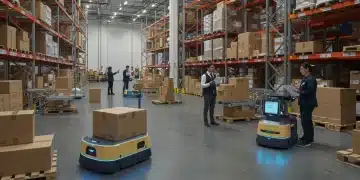
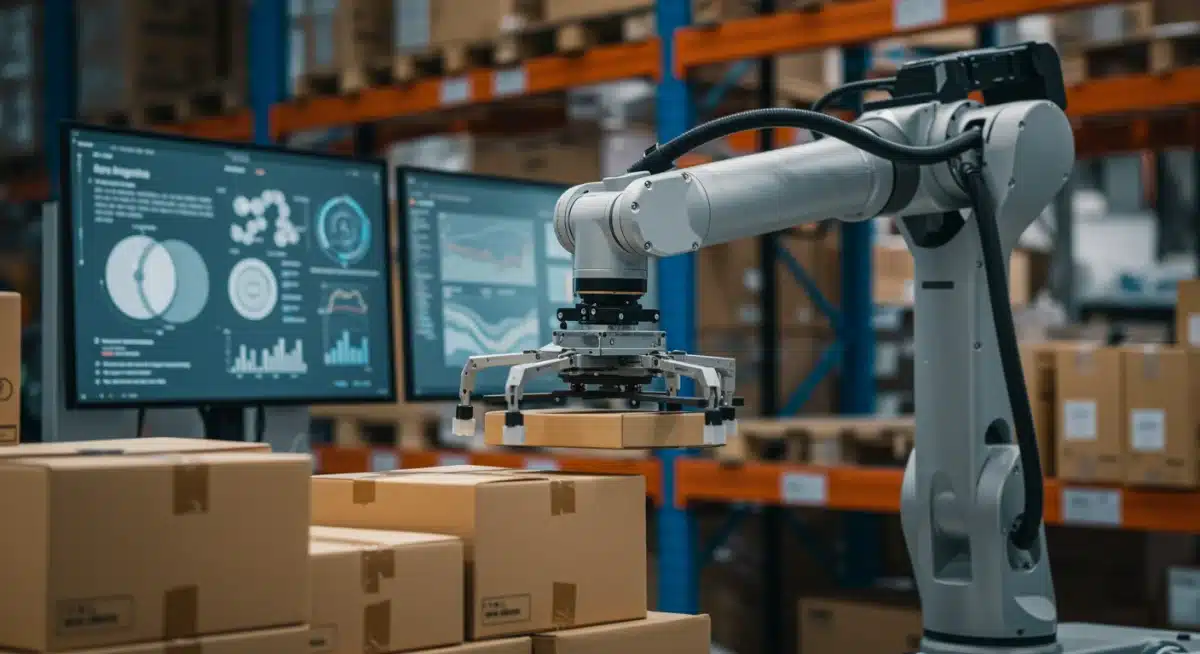
Warehouses are transforming into highly automated hubs, utilizing robotics for picking, packing, and sorting. This not only speeds up operations but also reduces the physical strain on human workers and decreases instances of damage to goods.
The integration of AI into logistics planning allows for dynamic route optimization and predictive maintenance of delivery vehicles, further contributing to cost savings and operational efficiency.
- Robotic Picking Systems: Automated robots retrieve and sort products in warehouses.
- Automated Guided Vehicles (AGVs): Transport goods within distribution centers efficiently.
- AI-Powered Route Optimization: Reduces fuel consumption and delivery times.
- Automated Receiving and Dispatch: Accelerates the processing of incoming and outgoing shipments.
The efficiencies gained through automated supply chain and logistics processes are directly contributing to the projected 18% operational cost reduction. Retailers are finding that these investments pay off quickly through improved service levels and reduced operational overhead.
Enhancing Customer Experience with Automated Service
While cost reduction is a primary driver, automated retail technologies also play a pivotal role in enhancing the customer experience. U.S. retailers are leveraging automation to provide faster, more personalized, and more convenient services, which in turn fosters customer loyalty and drives sales.
From self-checkout options to AI-powered chatbots, these technologies empower customers with more control and access to information, leading to a more satisfying shopping journey. This focus on customer satisfaction, combined with operational efficiency, creates a powerful competitive advantage.
Automated Customer Interaction Points
The implementation of automated service points significantly reduces wait times and frees up human staff to handle more complex customer inquiries. This balanced approach ensures that technology supports, rather than replaces, human interaction where it is most valued.
Personalized recommendations driven by AI further enhance the shopping experience, making customers feel understood and valued, which is crucial for repeat business.
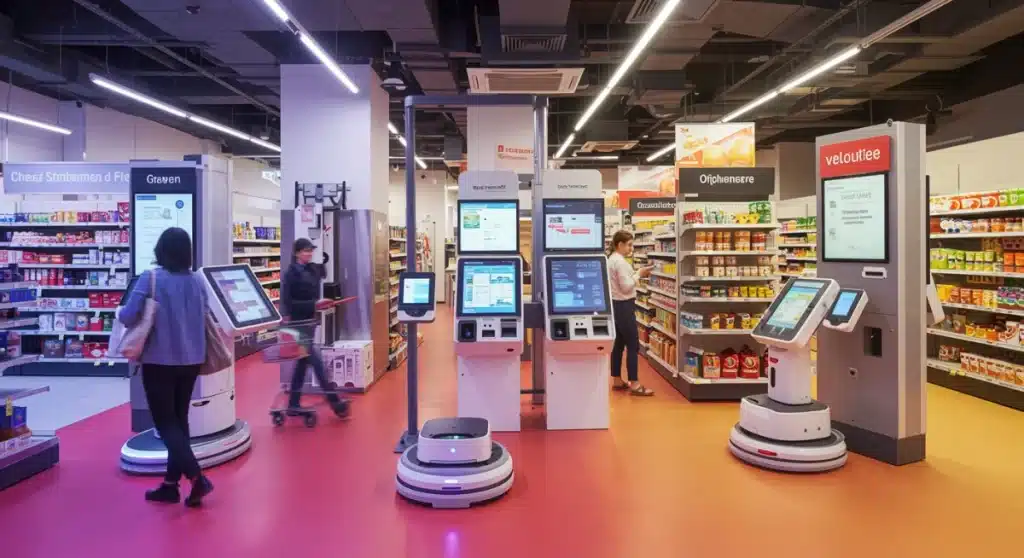
- Self-Checkout Kiosks: Accelerate transaction times and reduce staffing needs.
- AI Chatbots: Provide instant support and answer common customer queries 24/7.
- Personalized Recommendation Engines: Boost sales through tailored product suggestions.
- Interactive Digital Signage: Offers real-time product information and promotions.
By strategically deploying automated customer service solutions, retailers are not only cutting operational costs but also building stronger relationships with their clientele, ensuring long-term success in a competitive market.
Data Analytics and AI: The Brains Behind Automation
At the core of effective automated retail technologies are advanced data analytics and artificial intelligence (AI). These sophisticated tools are the brains that power the automation, enabling retailers to make smarter, more informed decisions that lead to significant cost reductions and improved performance.
AI algorithms process vast amounts of data, identifying patterns and predicting trends that would be impossible for humans to discern. This predictive capability is invaluable for optimizing operations across the entire retail value chain.
Leveraging AI for Operational Insights
The ability of AI to analyze customer behavior, market trends, and operational data allows retailers to fine-tune their strategies. This leads to more efficient resource allocation, reduced waste, and ultimately, a healthier profit margin.
From optimizing pricing strategies to personalizing marketing campaigns, AI and data analytics provide the intelligence needed to stay ahead in a dynamic retail landscape.
- Predictive Maintenance: AI anticipates equipment failures, reducing downtime and repair costs.
- Dynamic Pricing: Algorithms adjust prices in real-time based on demand and competition.
- Customer Segmentation: AI identifies distinct customer groups for targeted marketing.
- Fraud Detection: Automated systems flag suspicious transactions, minimizing losses.
The strategic application of data analytics and AI is fundamental to achieving the projected 18% operational cost reduction. These technologies transform raw data into actionable insights, driving continuous improvement and innovation within U.S. retail.
Challenges and Future Outlook for Retail Automation
While the benefits of automated retail technologies are clear, their adoption also presents certain challenges. U.S. retailers must navigate issues such as initial investment costs, integration complexities, and the need for a skilled workforce to manage these advanced systems.
However, the long-term outlook remains overwhelmingly positive. As technology evolves and becomes more accessible, the barriers to entry will diminish, paving the way for even broader adoption and greater efficiencies across the retail sector.
Overcoming Implementation Hurdles
Addressing the challenges requires a strategic approach, including phased implementation, investment in employee training, and collaboration with technology providers. Retailers who successfully overcome these hurdles will be best positioned to reap the full benefits of automation.
The future of retail is undoubtedly automated, with continuous innovation promising even more sophisticated solutions to enhance operational efficiency and customer satisfaction.
- High Initial Investment: Requires careful financial planning and ROI analysis.
- Data Security Concerns: Robust cybersecurity measures are essential to protect sensitive data.
- Workforce Retraining: Employees need new skills to operate and maintain automated systems.
- Integration Complexity: Ensuring seamless operation across diverse systems can be challenging.
Despite these challenges, the trajectory towards increased automation in retail is irreversible. The projected 18% operational cost reduction by 2025 underscores the immense value these technologies bring, solidifying their role as a cornerstone of modern retail strategy.
| Key Aspect | Impact on Retail Operations |
|---|---|
| Operational Cost Reduction | Projected 18% decrease for U.S. retailers by 2025 through automation. |
| Inventory Efficiency | Automated systems reduce errors and optimize stock levels, cutting waste. |
| Supply Chain Optimization | Robotics and AI streamline logistics, from warehousing to delivery. |
| Enhanced Customer Experience | Automated services provide faster, more personalized interactions and support. |
Frequently Asked Questions About Retail Automation
Automated retail technologies encompass a range of solutions like AI, robotics, and smart systems designed to streamline retail operations. They handle tasks from inventory management and supply chain logistics to customer service, aiming to boost efficiency and reduce costs.
Automation reduces operational costs by minimizing labor expenses, improving inventory accuracy, optimizing supply chain routes, and decreasing errors. These efficiencies lead to less waste, better resource allocation, and ultimately, significant financial savings for retailers.
By 2025, automated retail technologies are projected to enable U.S. retailers to achieve an 18% reduction in their overall operational costs. This substantial saving is a key driver for the rapid adoption of these innovative solutions across the industry.
While automation handles repetitive tasks, it often redefines human roles rather than eliminating them entirely. Employees can shift to more strategic, customer-facing, or technical roles, focusing on tasks that require critical thinking, creativity, and interpersonal skills, enhancing overall productivity.
AI provides predictive analytics for demand forecasting, optimizes pricing strategies, enhances personalized customer experiences, and improves fraud detection. Its ability to process and interpret vast datasets is critical for making informed decisions and driving efficiency across all retail functions.
Conclusion
The retail sector in the U.S. is on the cusp of a transformative era, largely driven by the rapid adoption of automated retail technologies. The projected 18% reduction in operational costs by 2025 is a compelling testament to the power of these innovations. By embracing automation in inventory management, supply chain logistics, and customer service, retailers are not only achieving significant financial savings but also enhancing overall efficiency and customer satisfaction. While challenges remain, the clear benefits and continuous technological advancements ensure that automation will be a cornerstone of successful retail strategies for years to come, shaping a more profitable and responsive industry.