Blockchain for Supply Chain: 40% Faster Verification for US Retailers
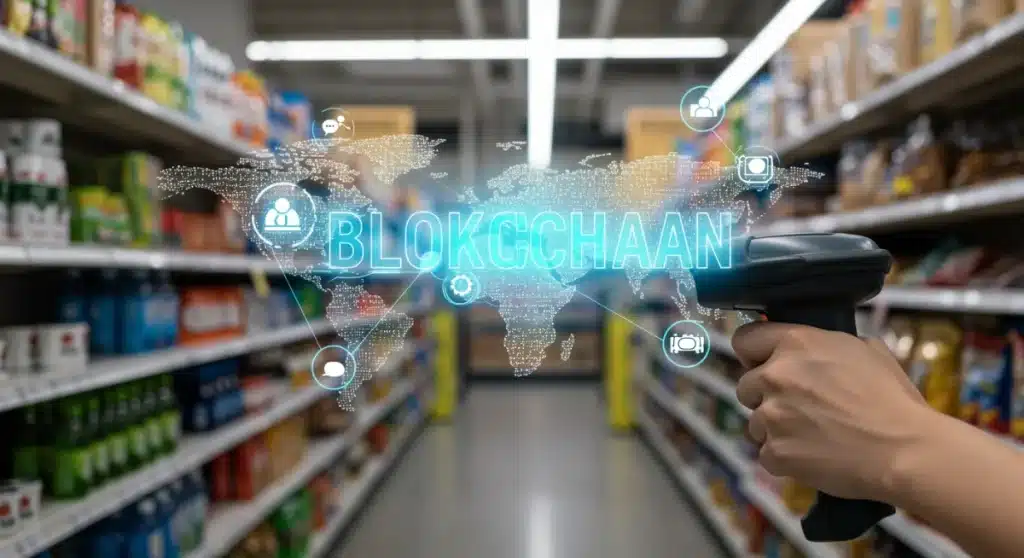
Blockchain for supply chain transparency is projected to reduce verification times by 40% for US retailers by late 2025, streamlining operations and fostering greater consumer trust.
The landscape of retail is undergoing a profound transformation, driven by consumer demand for authenticity and operational efficiency. Central to this evolution is the emergence of blockchain for supply chain transparency, a technology poised to revolutionize how products move from source to shelf. By late 2025, US retailers anticipate a remarkable 40% reduction in verification times, fundamentally altering the dynamics of their operations and enhancing trust.
The imperative for supply chain transparency in US retail
US retailers face increasing pressure to provide clear, verifiable information about their products. Consumers are no longer satisfied with vague assurances; they demand to know the origins, ethical sourcing, and environmental impact of the goods they purchase. This shift necessitates a complete overhaul of traditional, often opaque, supply chain practices.
The current state of many retail supply chains is characterized by fragmented data, manual processes, and a lack of real-time visibility. This complexity leads to significant delays in product verification, making it difficult to trace items back to their source quickly and accurately. Such inefficiencies not only impact operational costs but also erode consumer confidence, especially in an era where brand reputation can be made or broken by a single ethical lapse or product recall.
Challenges in traditional supply chain verification
- Fragmented data systems: Information often resides in disparate systems across multiple stakeholders, hindering a unified view.
- Manual verification processes: Relying on paper trails and human intervention introduces errors and delays.
- Lack of real-time visibility: Difficulty in tracking products at every stage of their journey from origin to store.
- Vulnerability to fraud: Opaque systems create opportunities for counterfeiting and misrepresentation.
Addressing these challenges is paramount for US retailers aiming to remain competitive and meet evolving consumer expectations. The need for a robust, immutable, and easily accessible record of every product transaction has never been more critical, paving the way for innovative solutions like blockchain technology.
How blockchain technology enhances supply chain visibility
Blockchain, at its core, is a decentralized, distributed ledger that records transactions across a network of computers. Each ‘block’ in the chain contains a timestamped record of transactions, and once recorded, it cannot be altered. This inherent immutability and transparency are precisely what makes it a game-changer for supply chain management.
When applied to supply chains, blockchain technology creates an unchangeable record of every step a product takes. From raw material sourcing to manufacturing, shipping, customs, and finally, retail shelf placement, each event is logged as a transaction on the blockchain. This digital trail provides an unprecedented level of visibility and traceability, accessible to all authorized participants in the network.
Key mechanisms of blockchain in supply chains
- Immutable records: All transaction data, once entered, cannot be changed, ensuring data integrity.
- Decentralization: No single entity controls the data, reducing points of failure and increasing trust among participants.
- Smart contracts: Automated agreements that execute when predefined conditions are met, streamlining complex processes like payments or quality checks.
- Enhanced traceability: Ability to pinpoint the exact origin and journey of a product instantly.
This enhanced visibility translates directly into faster verification times. Instead of sifting through fragmented databases or waiting for manual confirmations, retailers can access a comprehensive, real-time history of any product with a few clicks. This technological leap is not just about efficiency; it’s about fundamentally reshaping the trust dynamics within the entire retail ecosystem.
Projected impact: reducing verification times by 40%
The ambitious target of reducing verification times by 40% for US retailers by late 2025 is not merely a hopeful projection but a realistic outcome driven by blockchain’s inherent capabilities. This significant reduction stems from several key areas where blockchain streamlines operations and eliminates bottlenecks.
Currently, verifying a product’s journey, authenticity, or compliance often involves extensive paperwork, cross-referencing multiple databases, and waiting for responses from various intermediaries. This process can take days or even weeks. With blockchain, much of this manual effort is automated and digitized. Each participant in the supply chain contributes to the shared ledger, creating a single source of truth that is instantly verifiable.
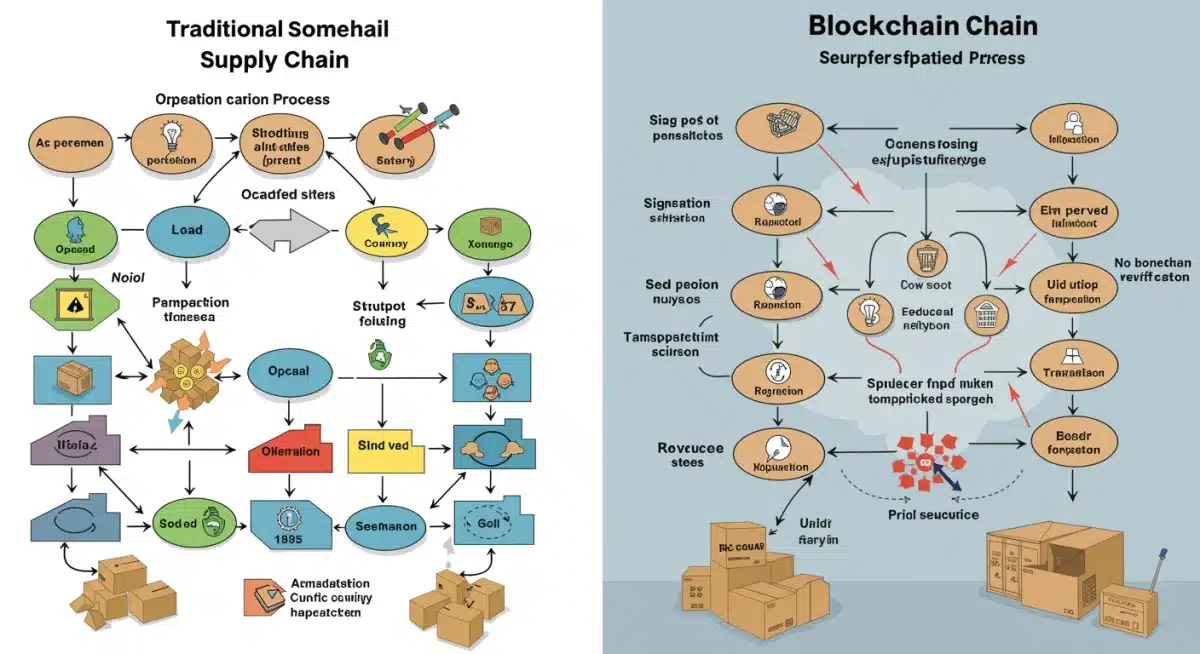
Consider a scenario where a US retailer needs to verify the organic certification of a food product. In a traditional system, this might involve requesting certificates from the supplier, which then needs to be cross-referenced with the farm, potentially involving third-party auditors. On a blockchain, these certifications can be uploaded as immutable records, linked directly to the product batch. A quick scan of a QR code or an entry into a system provides instant access to all relevant verification data.
Operational benefits of faster verification
- Reduced administrative burden: Less time spent on manual data entry and document management.
- Faster dispute resolution: Clear, immutable records expedite tracing issues and assigning accountability.
- Improved inventory management: Real-time data allows for more accurate forecasting and stock control.
- Enhanced compliance: Easier adherence to regulatory requirements and industry standards.
This 40% reduction is a conservative estimate, as early adopters are already reporting even greater efficiencies. The compounding effect of faster verification across numerous products and supply chains will translate into substantial cost savings and a significant competitive advantage for retailers embracing this technology.
Case studies and early adoption in the US market
While the full impact of blockchain in retail supply chains is still unfolding, several US retailers and industry consortia have already embarked on pilot programs and early implementations, demonstrating promising results. These pioneering efforts provide tangible evidence of blockchain’s potential to deliver on its promise of enhanced transparency and efficiency.
Walmart, for instance, has been a notable early adopter, particularly in its food supply chains. Their initiative to trace leafy greens from farm to store within seconds, rather than days, showcased blockchain’s ability to drastically improve food safety and recall management. This move set a precedent for other food retailers, highlighting the critical importance of rapid verification in perishable goods.
Key examples of blockchain adoption
- Food traceability: Major grocery chains using blockchain to track produce, meat, and seafood for safety and origin.
- Luxury goods authentication: Brands leveraging blockchain to verify authenticity and combat counterfeiting.
- Apparel and ethical sourcing: Companies tracking materials from farm to factory to ensure fair labor practices and sustainability.
- Pharmaceutical supply chains: Ensuring the integrity and temperature control of sensitive medications.
These early successes are not limited to large corporations. Smaller, niche retailers are also finding innovative ways to use blockchain to differentiate their products, particularly those with strong emphasis on ethical sourcing, organic certification, or artisanal craftsmanship. The ability to provide irrefutable proof of origin and quality directly to the consumer creates a powerful marketing tool and builds unparalleled brand loyalty. These real-world applications underscore the profound shift occurring in the retail sector.
Challenges and considerations for widespread implementation
Despite the immense potential of blockchain for supply chain transparency, its widespread implementation in the US retail sector is not without its challenges. Overcoming these hurdles requires a concerted effort from all stakeholders, including retailers, suppliers, technology providers, and even regulatory bodies.
One of the primary challenges is the initial investment in technology and infrastructure. Implementing a blockchain solution can be complex, requiring integration with existing legacy systems, data migration, and training for personnel across the entire supply chain. Small and medium-sized enterprises (SMEs) within the supply chain might find these initial costs prohibitive, creating a barrier to entry for a truly comprehensive network.
Major implementation hurdles
- Interoperability: Ensuring different blockchain platforms and existing systems can communicate seamlessly.
- Data privacy and governance: Balancing transparency with the need to protect sensitive business data.
- Scalability: Handling the vast volume of transactions generated by global retail supply chains.
- Industry standardization: Developing common protocols and standards for data exchange on blockchain networks.
Another significant consideration is the need for collaboration and trust among competing entities. For a blockchain network to be truly effective, all participants must agree to share data and adhere to common protocols. This requires a cultural shift towards greater openness and cooperation, which can be difficult in highly competitive markets. Addressing these challenges through strategic partnerships, industry consortia, and phased implementation approaches will be crucial for realizing the full benefits of blockchain in retail.
The future outlook: beyond 2025 for US retail supply chains
Looking beyond the 2025 target of a 40% reduction in verification times, the trajectory for blockchain in US retail supply chains points towards an even more integrated, intelligent, and autonomous future. The foundational transparency established by blockchain will unlock new levels of efficiency, sustainability, and customer engagement.
One significant area of development will be the integration of blockchain with other emerging technologies. Artificial intelligence (AI) and machine learning (ML) can analyze the vast datasets generated by blockchain to predict supply chain disruptions, optimize routing, and identify potential areas for improvement. Internet of Things (IoT) devices can feed real-time sensor data – such as temperature, humidity, and location – directly onto the blockchain, providing an even richer, more granular view of product conditions throughout its journey.
Innovations on the horizon
- AI-driven supply chain optimization: Predictive analytics based on blockchain data for efficiency.
- IoT integration: Real-time environmental monitoring and automated data entry for enhanced transparency.
- Circular economy enablement: Tracking products through their entire lifecycle, including recycling and reuse.
- Personalized consumer experiences: Providing detailed, verifiable product stories directly to end-users.
Moreover, as consumers become more accustomed to and demanding of transparent supply chains, retailers who fully embrace blockchain will gain a significant competitive edge. The ability to offer verifiable ethical sourcing, sustainable practices, and authentic products will become a baseline expectation, not just a differentiator. The evolution of blockchain technology, coupled with increasing industry adoption, promises a future where retail supply chains are not only efficient but also inherently trustworthy and resilient.
| Key Aspect | Brief Description |
|---|---|
| Verification Time Reduction | US retailers project a 40% decrease in product verification times by late 2025 through blockchain adoption. |
| Enhanced Transparency | Blockchain provides an immutable, real-time record of a product’s journey from origin to consumer. |
| Key Benefits | Improved efficiency, reduced fraud, better compliance, and increased consumer trust. |
| Implementation Challenges | Includes initial investment, interoperability issues, and the need for industry-wide collaboration. |
Frequently Asked Questions about Blockchain in Retail Supply Chains
Blockchain’s primary benefit is creating an immutable, transparent, and decentralized record of all product movements and transactions. This significantly enhances traceability and authenticity, enabling US retailers to verify product information much faster and with greater confidence.
The 40% reduction is achieved by digitizing and automating verification processes. Instead of manual checks and fragmented data, blockchain provides instant access to a unified, verifiable history of each product, drastically cutting down the time spent on administrative tasks and data reconciliation.
Yes, several US retailers, including major players like Walmart, have implemented pilot programs and are seeing positive results, particularly in food traceability. These early adoptions are paving the way for broader industry-wide implementation, setting new standards for efficiency and trust.
Key challenges include the significant initial investment in technology, ensuring interoperability between diverse systems, addressing data privacy concerns, and fostering collaboration among various supply chain partners to create a unified network. Standardization is also a crucial factor.
Consumers benefit from increased trust and confidence in the products they buy. They gain access to verifiable information about a product’s origin, ethical sourcing, and authenticity, helping them make more informed purchasing decisions and supporting brands committed to transparency.
Conclusion
The journey towards a more transparent and efficient retail supply chain is accelerating, with blockchain technology at its forefront. The projected 40% reduction in verification times for US retailers by late 2025 is a testament to blockchain’s transformative power, promising not only operational efficiencies and cost savings but also a fundamental rebuilding of trust between brands and consumers. While challenges remain, the clear benefits and early successes signal a future where opaque supply chains are a relic of the past, replaced by a network of verifiable, immutable data that serves as the bedrock of modern retail.