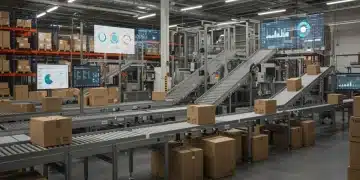
Reverse Logistics: Optimize Returns, Save 15% for US Retailers by 2025
Optimizing reverse logistics is crucial for U.S. retailers, offering a potential 15% cost saving by 2025 through efficient returns processing, improved sustainability, and enhanced customer satisfaction in an increasingly competitive market.

Ethical Sourcing Trends: Boost Trust 20% by 2025
Ethical sourcing trends are fundamentally transforming the retail landscape, driven by increasing consumer demand for transparency and sustainability, and are expected to significantly boost brand trust by 20% by 2025.

Gig Economy’s Impact on Retail Staffing: 2025 Trends & Efficiency
The gig economy is profoundly impacting retail staffing, necessitating strategic adaptation to new labor trends by 2025 to achieve significant operational efficiency gains and maintain market competitiveness.

Future of Payments: Contactless & Mobile Trends by 2025
Contactless and mobile payment trends are rapidly reshaping the U.S. retail landscape, projected to account for 40% of all transactions by 2025, driven by convenience and technological advancements.

AI Retail Trends: Personalization at Scale for 10% CLV Boost
AI retail trends are revolutionizing personalization at scale, offering businesses unprecedented opportunities to boost customer lifetime value by a projected 10% by 2025 through hyper-targeted experiences.

Automated Retail Technologies: 18% Cost Reduction for US Retailers
Automated retail technologies are poised to deliver an 18% reduction in operational costs for U.S. retailers by 2025, revolutionizing inventory management, customer service, and supply chain efficiency.

Subscription Models in Retail: 7% Growth for U.S. Businesses by 2025
Retail subscription models are a significant growth driver, projected to offer a 7% increase for U.S. businesses by early 2025, transforming customer relationships and revenue streams.

Pop-Up Retail Strategies: Boost Brand Awareness 25% by Mid-2025
Pop-up retail strategies offer a dynamic approach for brands to leverage seasonal trends, significantly boosting brand awareness and engagement. This method creates unique, temporary experiences that resonate with consumers and drive market presence.

U.S. Retailers: Adapting to 3-Month Lead Time Shifts in 2025
U.S. retailers are strategically fortifying their supply chains to effectively manage anticipated 3-month lead time shifts in 2025, focusing on agility and data-driven decision-making to maintain operational continuity.

Blockchain in Retail: Transparency, Traceability, and Dispute Reduction
Blockchain in retail is revolutionizing supply chain management by providing unparalleled transparency and traceability, projected to decrease disputes by 15% by 2025 and build stronger consumer trust.