Data-Driven Merchandising: Optimize Inventory by 25% in 2025
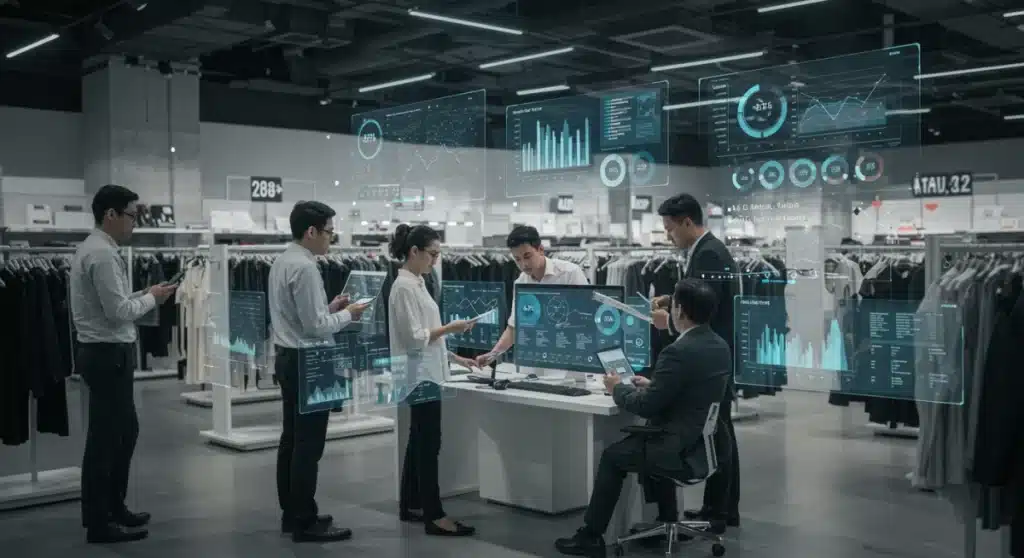
Achieving a 25% inventory optimization by 2025 through data-driven merchandising inventory strategies is a tangible goal for retailers leveraging advanced analytics to refine their stock management and enhance profitability.
In today’s dynamic retail landscape, the ability to make informed decisions is paramount. Data-driven merchandising inventory represents a critical paradigm shift, moving retailers beyond intuition to a realm where every stocking decision is backed by robust analytics. This approach isn’t just about reducing costs; it’s about unlocking new levels of efficiency, enhancing customer satisfaction, and ultimately, driving significant growth.
The foundation of data-driven merchandising
Data-driven merchandising fundamentally transforms how retailers approach inventory management and product placement. It shifts the focus from historical trends alone to predictive analytics, real-time demand signals, and customer behavior insights. This strategic pivot allows for more precise forecasting and allocation, ensuring that the right products are available at the right time and in the right quantities.
Understanding the core components of this strategy is essential for any retailer aiming for substantial improvements. It involves a systematic collection of diverse data points and their subsequent analysis to generate actionable insights. Without a solid data infrastructure and analytical capabilities, the true potential of this approach remains untapped.
Collecting comprehensive retail data
The first step in building a robust data-driven merchandising strategy is the meticulous collection of data from various sources. This includes both internal and external data. Internal data typically encompasses sales records, inventory levels, return rates, and customer purchase histories. External data can include market trends, competitor pricing, social media sentiment, and even weather patterns that might influence purchasing behavior.
- Point-of-Sale (POS) Systems: Capturing transaction data, product performance, and sales velocity.
- E-commerce Platforms: Tracking website traffic, conversion rates, abandoned carts, and customer browsing patterns.
- Inventory Management Systems: Providing real-time stock levels, warehouse movements, and supply chain data.
- Customer Relationship Management (CRM): Offering insights into customer demographics, preferences, and loyalty.
By aggregating and centralizing this diverse data, retailers gain a holistic view of their operations, enabling more informed decision-making. The quality and breadth of this data directly impact the accuracy and effectiveness of subsequent analyses.
Leveraging advanced analytics tools
Once data is collected, advanced analytics tools become indispensable for extracting meaningful insights. These tools range from business intelligence (BI) platforms to more sophisticated machine learning algorithms. They help identify patterns, predict future demand, and uncover hidden opportunities that might otherwise go unnoticed.
The goal is to move beyond mere descriptive analytics (what happened) to predictive (what will happen) and prescriptive (what should we do) analytics. This allows retailers to anticipate market shifts and proactively adjust their merchandising strategies.
The foundation of data-driven merchandising relies on a continuous cycle of data collection, analysis, and strategic adjustment. By understanding customer behavior in depth and predicting market movements, retailers can significantly reduce waste and enhance profitability.
Predictive analytics for demand forecasting
Predictive analytics stands as a cornerstone of effective data-driven merchandising, offering retailers the ability to foresee future demand with remarkable accuracy. This goes far beyond traditional forecasting methods, integrating a multitude of variables to create a more nuanced and reliable outlook. The ability to predict demand precisely is critical for achieving the ambitious goal of 25% inventory optimization by 2025, as it directly impacts purchasing, stocking, and sales strategies.
By accurately anticipating what customers will want and when, retailers can avoid both overstocking and understocking, each of which carries significant financial implications. Overstocking ties up capital, incurs storage costs, and increases the risk of markdowns, while understocking leads to lost sales and customer dissatisfaction. Predictive analytics provides the intelligence needed to strike the perfect balance.
Integrating diverse data points for accuracy
The power of predictive analytics in demand forecasting comes from its capacity to integrate and analyze a vast array of data points. This includes not only historical sales data but also external factors that influence consumer behavior. Modern algorithms can detect subtle correlations and trends that human analysts might miss, leading to more robust forecasts.
- Historical Sales Data: Analyzing past sales volumes, seasonality, and promotional impacts.
- Economic Indicators: Considering factors like GDP growth, unemployment rates, and consumer confidence.
- Social Media Trends: Monitoring popular discussions and emerging product interests.
- Weather Patterns: Predicting demand for seasonal items based on local and regional weather forecasts.
- Competitor Activities: Understanding pricing strategies and product launches of rivals.
The more comprehensive the data input, the more refined and accurate the predictive models become. This multi-faceted approach ensures that forecasts are not only data-rich but also contextually relevant.
Machine learning in action for inventory optimization
Machine learning algorithms are at the forefront of predictive analytics for demand forecasting. These algorithms can learn from past data, identify complex patterns, and continuously improve their predictions over time. For inventory optimization, this means models that become smarter and more accurate with every new piece of sales data and market information.
From time-series forecasting models like ARIMA and Prophet to more advanced neural networks, machine learning enables retailers to handle large datasets and identify non-linear relationships. This capability is particularly vital for products with erratic demand or those influenced by numerous external variables.
The application of predictive analytics, driven by sophisticated machine learning, allows retailers to proactively manage their inventory. This foresight reduces carrying costs, minimizes waste, and ensures products are available when customers want them, directly contributing to the 25% inventory optimization target.
Optimizing inventory levels with real-time insights
Real-time insights are the lifeblood of efficient inventory management, enabling retailers to react swiftly to changing market conditions and customer demands. In the pursuit of a 25% inventory optimization by 2025, relying on static, outdated data is no longer an option. The ability to monitor stock levels, sales velocity, and supply chain movements as they happen empowers businesses to make dynamic adjustments, preventing both stockouts and excess inventory.
This level of responsiveness not only improves operational efficiency but also significantly enhances the customer experience. When products are consistently available and fulfillment is swift, customer satisfaction and loyalty naturally increase. Real-time data provides the clarity needed to maintain optimal stock levels across all channels, from physical stores to e-commerce warehouses.
Dynamic stock allocation and replenishment
Real-time insights facilitate dynamic stock allocation and replenishment strategies. Instead of rigid, pre-set schedules, inventory can be moved and reordered based on immediate demand signals. This agility is crucial in a retail environment characterized by rapid shifts in consumer preferences and unexpected supply chain disruptions.
- Automated Reordering: Systems can trigger purchase orders when stock levels hit predefined thresholds, considering lead times and sales forecasts.
- Cross-Store Transfers: Identifying surplus in one location and deficit in another, enabling efficient reallocation to meet local demand.
- Omnichannel Synchronization: Ensuring consistent inventory availability across online and offline channels, providing a unified customer experience.
By implementing these dynamic processes, retailers can significantly reduce the risk of lost sales due to stockouts, while simultaneously minimizing the costs associated with holding excess inventory.
Reducing waste and obsolescence
One of the most direct benefits of leveraging real-time inventory insights is the substantial reduction in waste and obsolescence. Products that sit on shelves for too long depreciate in value, incur storage costs, and may eventually need to be heavily discounted or discarded. Real-time monitoring helps identify slow-moving items early, allowing for proactive strategies to clear them.
This might involve targeted promotions, bundling with faster-moving products, or even strategically transferring them to locations where demand might be higher. By continuously analyzing sales data and product lifecycles, retailers can make timely decisions to prevent products from becoming obsolete, thus preserving profit margins.
Ultimately, optimizing inventory levels with real-time insights is about creating a lean, responsive supply chain. This proactive approach minimizes financial exposure, enhances operational fluidity, and is a critical driver for achieving significant inventory optimization targets.
Personalized merchandising through customer data
Personalized merchandising, powered by deep insights into customer data, is no longer a luxury but a necessity for retailers aiming for significant inventory optimization and enhanced customer loyalty. Understanding individual customer preferences, purchase histories, and browsing behaviors allows retailers to offer highly relevant product recommendations and tailor their inventory to specific segments. This targeted approach minimizes the risk of stocking products that don’t resonate with the target audience, thereby reducing unsold inventory and improving sales efficiency.
The goal is to move beyond generic product displays and promotions, creating a shopping experience that feels bespoke and intuitive. When customers feel understood, they are more likely to engage, purchase, and return, forming a virtuous cycle that benefits both the consumer and the retailer’s bottom line.
Segmenting customers for targeted inventory
Effective personalization begins with robust customer segmentation. By grouping customers based on shared characteristics, behaviors, and preferences, retailers can tailor their inventory strategies for each segment. This ensures that product assortments in specific stores or online categories are optimized for the customers most likely to purchase them.
- Demographic Segmentation: Grouping customers by age, gender, income, and location to understand general preferences.
- Behavioral Segmentation: Analyzing purchase frequency, average order value, product categories viewed, and brand loyalty.
- Psychographic Segmentation: Understanding customer lifestyles, interests, values, and opinions to predict product appeal.
- Geographic Segmentation: Tailoring inventory based on regional tastes, climate, and cultural influences.
This granular understanding allows for more precise inventory planning, ensuring that stock is allocated where it will generate the most interest and sales, directly supporting efforts to optimize inventory by 25%.
Enhancing product recommendations and assortments
Customer data is invaluable for refining product recommendations and optimizing assortments. Machine learning algorithms can analyze past purchases and browsing patterns to suggest items that customers are highly likely to be interested in. This not only boosts sales but also helps in strategically managing inventory by promoting complementary products or moving slow-selling items.
For instance, if a customer frequently purchases outdoor gear, the system can recommend new hiking boots or camping accessories. Similarly, if a particular product is popular among a specific customer segment, retailers can ensure adequate stock levels for that segment’s preferred shopping channels.
By leveraging personalized merchandising, retailers can create a more engaging and efficient shopping journey for their customers. This data-driven approach ensures that inventory is not just managed, but intelligently curated to meet specific needs, driving both sales and achieving the crucial goal of inventory optimization.
Supply chain collaboration for efficiency
Achieving a 25% inventory optimization by 2025 demands more than just internal data analysis; it requires seamless collaboration across the entire supply chain. From manufacturers and distributors to logistics providers, every link in the chain plays a crucial role in ensuring efficient inventory flow. Siloed operations and communication breakdowns can lead to delays, excess stock, or shortages, directly undermining optimization efforts. Integrated data sharing and collaborative planning are essential to create a resilient and responsive supply chain.
When all parties involved have access to relevant real-time data and work towards common goals, the entire process becomes more transparent and efficient. This collaborative ecosystem helps reduce lead times, minimize buffer stock, and respond more effectively to market fluctuations.
Shared data platforms and communication
The cornerstone of effective supply chain collaboration is the implementation of shared data platforms and robust communication channels. These platforms allow all partners to access critical information such as inventory levels, sales forecasts, production schedules, and shipping statuses in real-time. This transparency eliminates guesswork and ensures everyone is working from the same, accurate information.
- Vendor-Managed Inventory (VMI): Allowing suppliers to monitor inventory levels and manage replenishment for their products.
- Electronic Data Interchange (EDI): Standardizing the exchange of business documents like purchase orders and invoices.
- Cloud-Based Collaboration Tools: Providing a central hub for communication, document sharing, and project management across partners.
By fostering an environment of open data exchange, retailers and their supply chain partners can jointly identify bottlenecks, anticipate potential issues, and optimize inventory movements, leading to significant efficiencies.
Joint planning and demand sensing
Beyond data sharing, true supply chain collaboration involves joint planning and collective demand sensing. This means working closely with suppliers to align production schedules with projected demand, rather than simply placing orders based on historical averages. By combining the retailer’s market insights with the supplier’s production capabilities, a more accurate and responsive supply chain can be built.
For example, if a retailer anticipates a surge in demand for a particular product due to a marketing campaign, this information can be shared with the manufacturer well in advance. This allows the manufacturer to adjust production accordingly, preventing stockouts and ensuring timely delivery. Conversely, if demand is expected to dip, production can be scaled back, reducing the risk of excess inventory.
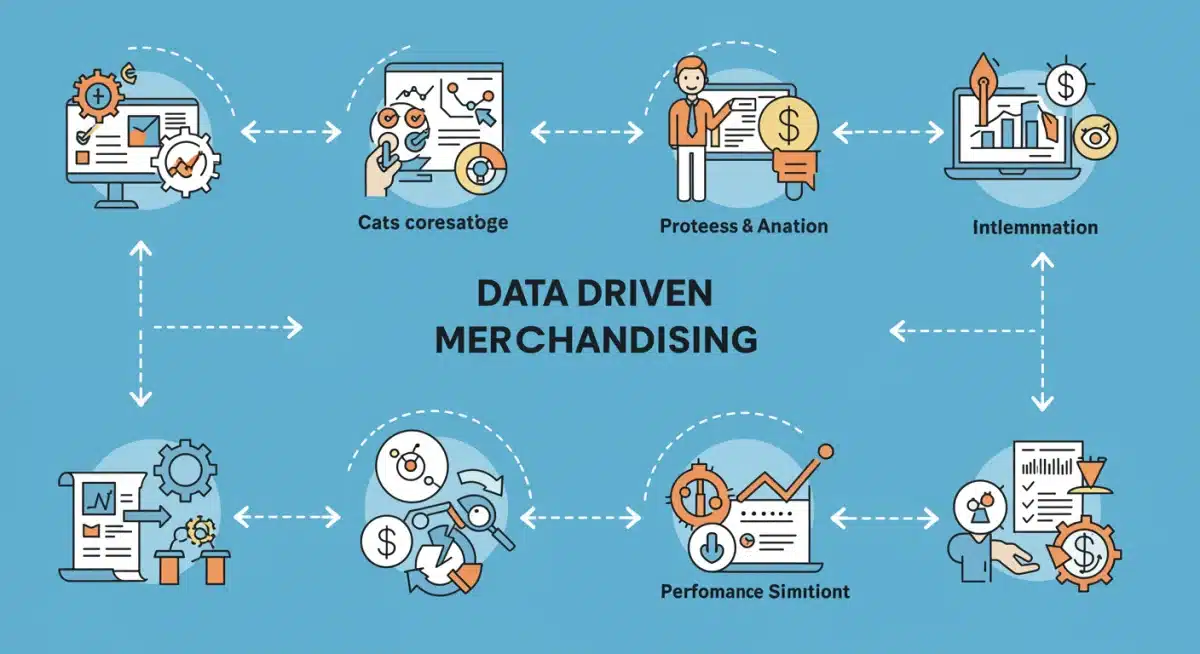
This integrated approach to planning and demand sensing minimizes waste, improves lead times, and strengthens relationships across the supply chain. It is a vital component in achieving the ambitious goal of inventory optimization by fostering a more agile and efficient network.
Measuring success and continuous improvement
Achieving a 25% inventory optimization by 2025 is not a one-time project but an ongoing commitment to measurement and continuous improvement. Without a robust framework for tracking key performance indicators (KPIs) and regularly evaluating the effectiveness of data-driven merchandising strategies, progress can stall. Retailers must establish clear metrics, monitor them diligently, and be prepared to iterate on their approaches based on performance data. This adaptive mindset is crucial for sustaining optimization gains and responding to an ever-evolving market.
The process of measuring success involves more than just looking at the bottom line; it requires a deep dive into operational efficiency, customer satisfaction, and the overall health of the inventory system. Identifying what works and what doesn’t allows for strategic adjustments that drive further improvements.
Key performance indicators for inventory optimization
To effectively measure the success of data-driven merchandising, retailers need to define and track relevant KPIs. These metrics provide tangible proof of progress and highlight areas that require further attention. Focusing on a balanced set of financial, operational, and customer-centric KPIs offers a comprehensive view of performance.
- Inventory Turnover Ratio: Measures how many times inventory is sold or used over a period. Higher ratios often indicate efficient sales and inventory management.
- Days Inventory Outstanding (DIO): Indicates the average number of days it takes for a company to turn its inventory into sales. Lower DIO is generally better.
- Stockout Rate: The percentage of customer demand that cannot be fulfilled due to a lack of inventory. A lower rate signifies better availability.
- Gross Margin Return on Investment (GMROI): Evaluates the profitability of inventory, showing how much gross profit is generated for every dollar invested in inventory.
- Forecast Accuracy: Measures the deviation between predicted and actual demand, indicating the effectiveness of predictive analytics.
Regularly reviewing these KPIs against established benchmarks and industry standards helps retailers gauge their performance and identify areas for strategic intervention.
Iterative process and agile adjustments
Data-driven merchandising thrives on an iterative process of experimentation, measurement, and adjustment. The retail environment is dynamic, and what works today might not be as effective tomorrow. Therefore, retailers must adopt an agile approach, continuously testing new strategies and refining existing ones based on real-world data.
This might involve A/B testing different product placements, adjusting pricing strategies based on competitor analysis, or fine-tuning replenishment algorithms. By fostering a culture of continuous learning and adaptation, retailers can ensure their inventory optimization efforts remain effective and responsive to market changes.
Measuring success and committing to continuous improvement are indispensable for retailers aiming to achieve and sustain significant inventory optimization. This iterative cycle ensures that data-driven merchandising strategies remain sharp, effective, and aligned with the overarching goal of efficiency and profitability.
Overcoming challenges in implementation
While the promise of a 25% inventory optimization by 2025 through data-driven merchandising is compelling, the path to implementation is rarely without its hurdles. Retailers often face a range of challenges, from technological integration complexities to resistance to change within their organizations. Addressing these obstacles proactively is crucial for successful adoption and for realizing the full benefits of a data-centric approach. Ignoring these challenges can lead to stalled initiatives, wasted investments, and a failure to meet optimization targets.
Effective implementation requires not only robust technology but also a clear strategy for change management, skilled personnel, and a commitment to fostering a data-driven culture. Overcoming these challenges ensures that the transition to more sophisticated merchandising practices is smooth and impactful.
Data integration and quality issues
One of the most significant challenges in implementing data-driven merchandising is the integration of disparate data sources and ensuring data quality. Retailers often have data siloed across various systems, making it difficult to create a unified view. Furthermore, inconsistent data formats, missing information, or inaccuracies can compromise the reliability of analytical insights.
- Siloed Systems: Data residing in separate POS, CRM, ERP, and e-commerce platforms.
- Legacy Infrastructure: Older systems that are not easily integrated with modern analytics tools.
- Data Duplication and Inconsistency: Multiple entries for the same customer or product, leading to unreliable analysis.
- Lack of Data Governance: Absence of clear policies and procedures for data collection, storage, and maintenance.
Investing in robust data integration platforms and establishing strong data governance protocols are essential steps to overcome these challenges and ensure a solid foundation for data-driven decisions.
Talent gap and organizational resistance
Another common hurdle is the talent gap and organizational resistance to new ways of working. Implementing data-driven merchandising requires individuals with analytical skills, data science expertise, and a deep understanding of retail operations. Many organizations may lack these specialized skills internally, necessitating investment in training or hiring new talent.
Moreover, employees accustomed to traditional merchandising methods may resist adopting new technologies and processes. This resistance can manifest as a lack of engagement, skepticism, or even active opposition, hindering the successful rollout of new initiatives. Effective change management strategies are vital to address this, including clear communication, training programs, and demonstrating the benefits of the new approach.
By proactively addressing data integration challenges, investing in talent development, and managing organizational change effectively, retailers can navigate the complexities of implementing data-driven merchandising. Overcoming these hurdles is paramount for unlocking the full potential of analytics and achieving ambitious inventory optimization goals.
| Key Aspect | Brief Description |
|---|---|
| Data Collection | Gathering diverse data from POS, e-commerce, CRM, and external sources for comprehensive insights. |
| Predictive Analytics | Utilizing machine learning to forecast demand accurately, preventing overstocking and stockouts. |
| Real-time Insights | Monitoring inventory and sales in real-time for dynamic allocation and replenishment strategies. |
| Supply Chain Collaboration | Sharing data and coordinating with partners for efficient inventory flow and reduced lead times. |
Frequently asked questions about data-driven merchandising
Data-driven merchandising is a retail strategy that uses analytics and insights from various data sources to make informed decisions about product assortment, pricing, placement, and inventory management, moving beyond intuition to optimize sales and profitability.
By leveraging predictive analytics, real-time insights, and personalized merchandising, retailers can accurately forecast demand, dynamically adjust stock levels, and reduce waste, leading to substantial inventory optimization, potentially up to 25% by 2025.
Crucial data includes historical sales, inventory levels, customer purchase history, e-commerce traffic, market trends, competitor data, and even external factors like weather, all integrated for a holistic view.
Key challenges include integrating disparate data systems, ensuring data quality, overcoming a talent gap in analytics, and managing organizational resistance to adopting new technologies and processes within the retail environment.
Supply chain collaboration is vital for efficiency. Shared data platforms and joint planning with manufacturers and distributors reduce lead times, minimize buffer stock, and enhance responsiveness to demand fluctuations, directly aiding inventory optimization.
Conclusion
The journey towards achieving a 25% inventory optimization by 2025 through data-driven merchandising is a strategic imperative for modern retailers. It demands a comprehensive approach that integrates advanced analytics, leverages real-time insights, embraces personalized strategies, and fosters robust supply chain collaboration. While challenges in data integration and organizational change are inevitable, their proactive management is crucial for success. By committing to continuous measurement and agile adjustments, retailers can transform their inventory management from a cost center into a powerful driver of profitability and customer satisfaction, positioning themselves for sustainable growth in a competitive market.