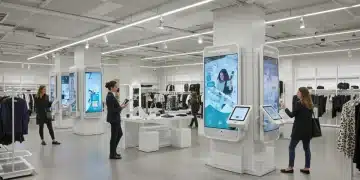
Digital Signage Technology: Captivating US Customers & Boosting Sales by 8% in 2025
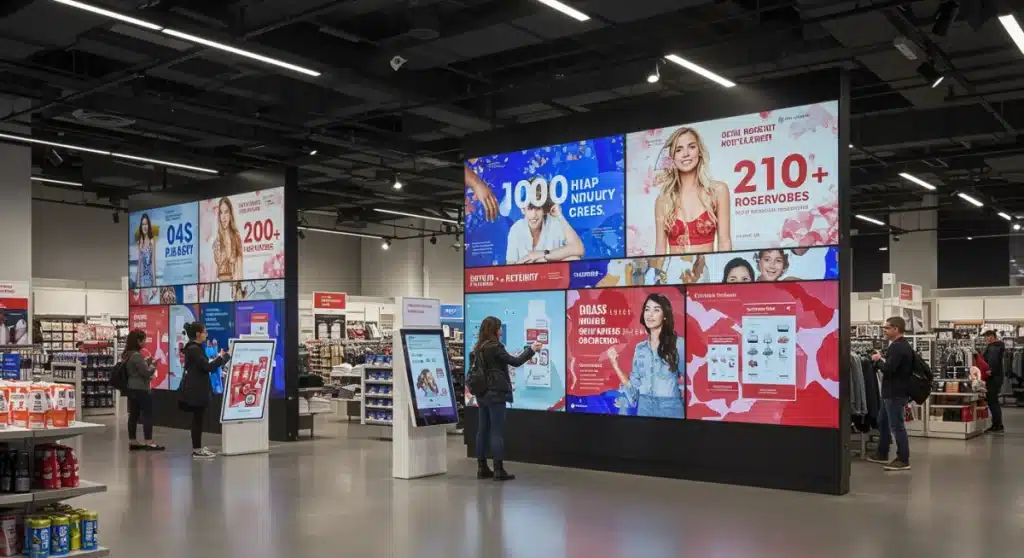
The latest digital signage technology is revolutionizing US retail by creating captivating in-store experiences, driving customer engagement, and is projected to boost sales by 8% in 2025 through interactive displays, AI, and personalized content.
In the rapidly evolving landscape of US retail, staying ahead means embracing innovation. Digital signage US retail is no longer just about static screens displaying ads; it has transformed into a dynamic, interactive tool poised to captivate customers and significantly boost sales. As we approach 2025, the integration of cutting-edge digital display technologies is set to redefine the in-store experience, making it more engaging, personalized, and ultimately, more profitable for businesses across the United States.
The evolution of digital signage: beyond static displays
Digital signage has come a long way from its early days of simply replacing printed posters. Today, it represents a sophisticated ecosystem of hardware, software, and content designed to deliver targeted messages and create immersive experiences. This evolution is driven by advancements in display technology, network capabilities, and analytics, allowing retailers to deploy more flexible and impactful solutions.
From passive viewing to active engagement
Modern digital signage encourages active participation rather than passive observation. Touchscreen interfaces, gesture control, and QR code integrations transform displays into interactive brand ambassadors. This shift allows customers to explore products, customize options, and even make purchases directly from the screen, fostering a deeper connection with the brand.
- Interactive Kiosks: Enable self-service, product lookup, and virtual try-ons.
- Gesture Control Screens: Allow hands-free navigation and exploration of content.
- QR Code Integration: Connects physical displays to online content and promotions.
- Gamified Experiences: Engage customers with interactive games related to products or brands.
The transition from passive viewing to active engagement is crucial for retailers aiming to capture the attention of today’s tech-savvy consumers. By offering interactive elements, digital signage can provide a more memorable and personalized shopping journey, moving beyond traditional advertising to become an integral part of the customer experience.
Personalization and AI: tailoring the retail experience
The true power of modern digital signage lies in its ability to deliver personalized content, a feat made possible through the integration of artificial intelligence (AI) and data analytics. Retailers can now understand customer preferences in real-time and adapt their messaging accordingly, creating highly relevant and impactful interactions.
AI-driven content delivery
AI algorithms analyze various data points, such as foot traffic patterns, demographics, weather conditions, and even local events, to determine the most effective content to display at any given moment. This ensures that promotions and information are always timely and relevant, maximizing their potential impact on purchasing decisions.
- Dynamic Product Recommendations: AI suggests products based on browsing history or current store stock.
- Contextual Advertising: Content changes based on time of day, weather, or nearby events.
- Audience Recognition: Anonymously detects demographics to display age and gender-appropriate content.
- Sentiment Analysis: Adjusts messaging based on customer mood or reaction to previous displays.
Through AI, digital signage transforms into a smart, responsive marketing tool that continuously learns and adapts. This level of personalization not only enhances the customer experience but also significantly improves the efficiency and effectiveness of marketing campaigns, directly contributing to increased sales.
Enhanced customer engagement: immersive and memorable experiences
Captivating US customers requires more than just displaying information; it demands creating an experience. Digital signage technology now offers tools that enable retailers to craft immersive and memorable encounters, fostering stronger brand loyalty and encouraging repeat visits.
Interactive and experiential displays
Beyond simple touchscreens, advanced digital signage can create entire interactive environments. Think of large-scale video walls that respond to movement, augmented reality (AR) mirrors that allow virtual try-ons, or projection mapping that transforms store interiors. These technologies turn shopping into an event, making it more exciting and engaging for consumers.
Retailers are leveraging these capabilities to build unique brand narratives and showcase products in innovative ways. For example, a clothing store might use AR mirrors to allow customers to virtually try on different outfits without entering a fitting room, while a home goods store could use projection mapping to visualize how furniture would look in various room settings.
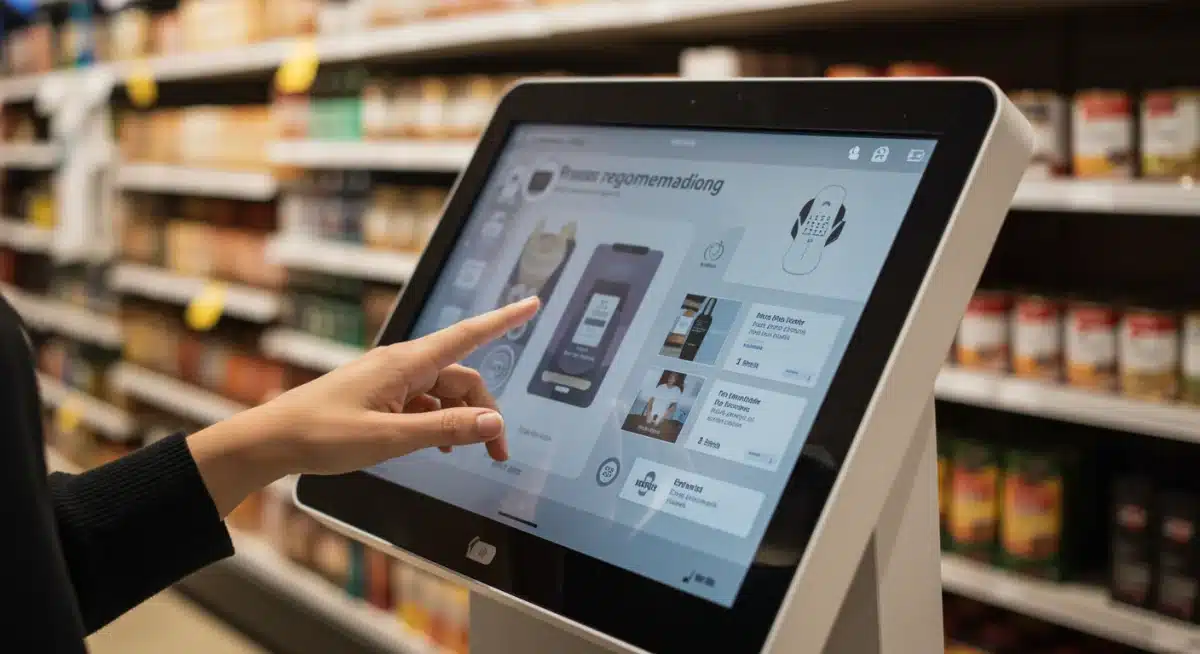
This focus on experiential retail is critical for differentiating physical stores from online competitors. By providing unique, in-store experiences that cannot be replicated elsewhere, digital signage helps to draw customers back into brick-and-mortar locations and keeps them engaged once they are there. The result is a more dynamic and enjoyable shopping journey that leaves a lasting impression.
The impact on sales: an 8% boost by 2025
The ultimate goal of any retail technology investment is to drive profitability. For digital signage, the projections are highly optimistic, with an anticipated 8% boost in sales for businesses that effectively implement these solutions by 2025. This growth is not accidental but a direct consequence of improved customer engagement, personalized marketing, and operational efficiencies.
Driving impulse purchases and upsells
Strategically placed digital displays can influence purchasing decisions at critical moments. Dynamic promotions, cross-selling suggestions, and urgent calls to action displayed on screens near product shelves or at checkout points can significantly increase impulse purchases and upsell opportunities. The visual appeal and real-time adaptability of digital signage make it a powerful tool for converting browsing into buying.
- Point-of-Sale Promotions: Displaying last-minute offers at checkout.
- Complementary Product Suggestions: Showcasing items that pair well with what a customer is viewing.
- Limited-Time Offers: Creating urgency with countdown timers on promotions.
- Brand Storytelling: Building emotional connections that encourage purchases.
Furthermore, the ability to quickly update content means retailers can react to changing market conditions, inventory levels, or promotional strategies in real-time, optimizing their sales efforts without the delays associated with traditional signage. This agility is a key factor in achieving the projected sales growth.
Operational efficiencies and cost savings
Beyond direct sales increases, digital signage also contributes to operational efficiencies and cost savings, indirectly boosting the bottom line. By streamlining various in-store processes, retailers can reallocate resources more effectively and reduce expenditures associated with traditional marketing methods.
Reducing print and labor costs
One of the most immediate benefits is the elimination of printing costs for promotional materials. Digital screens can be updated instantly and remotely, saving money on design, printing, and distribution. This also reduces the labor required to manually change physical signage, freeing up staff to focus on customer service and other value-added tasks.
Moreover, digital signage can serve multiple functions, acting as an informational kiosk, an advertising platform, and even an entertainment hub. This versatility means fewer individual systems are needed, leading to further cost reductions and a simplified technological footprint within the store. The long-term savings associated with these efficiencies contribute significantly to overall profitability.
Future trends: integration with IoT and augmented reality
The trajectory of digital signage technology points towards even deeper integration with other emerging technologies, particularly the Internet of Things (IoT) and augmented reality (AR). These integrations promise to unlock new levels of interactivity, personalization, and data-driven insights, further solidifying digital signage’s role as a cornerstone of modern retail.
Smart store environments
IoT sensors within a retail environment can feed real-time data to digital signage systems. For instance, shelf sensors can detect low stock levels and trigger a display to promote alternative products or notify staff. Similarly, footfall sensors can adjust content based on crowd density, ensuring optimal message delivery. This creates a truly ‘smart’ store where every element works in concert to enhance the customer journey.
- Connected Inventory: Displays show real-time stock availability and location.
- Personalized Greetings: Screens greet customers by name via loyalty program integration.
- Interactive Wayfinding: Guides customers through the store based on their shopping list.
- Environmental Control: Displays adapt to lighting and temperature for optimal viewing.
The fusion of digital signage with IoT and AR is not just about technological advancement; it’s about creating a seamless, predictive, and highly engaging retail ecosystem. These future trends will continue to push the boundaries of what is possible in customer engagement and sales optimization, ensuring that digital signage remains a vital tool for US retailers.
| Key Aspect | Description |
|---|---|
| Interactive Displays | Transform passive viewing into active engagement through touchscreens and gesture control. |
| AI Personalization | Delivers tailored content based on real-time data, enhancing relevance and impact. |
| Sales Boost Projection | Expected 8% increase in sales for US retailers by 2025 due to digital signage adoption. |
| Operational Efficiency | Reduces printing costs and labor, freeing up resources for better customer service. |
Frequently Asked Questions About Digital Signage in US Retail
The primary benefit is enhanced customer engagement through dynamic and interactive content. This leads to more memorable shopping experiences, better brand recall, and ultimately, a significant boost in sales, projected to be 8% by 2025 for implementing businesses.
AI integrates by analyzing real-time data like foot traffic, demographics, and weather to deliver personalized and contextually relevant content. This ensures optimal messaging, dynamic product recommendations, and targeted promotions, maximizing their effectiveness and driving conversions.
Yes, significantly. Digital signage eliminates the need for printing physical promotional materials, saving on design, printing, and distribution costs. It also reduces labor expenses associated with manually changing traditional signage, allowing staff to focus on higher-value tasks like customer service.
Key emerging trends include deeper integration with the Internet of Things (IoT) for smart store environments and augmented reality (AR) for immersive virtual try-ons or product visualizations. These technologies create highly interactive and personalized retail experiences, further captivating customers.
Interactive digital signage drives impulse purchases by displaying dynamic, real-time promotions and cross-selling suggestions at critical points, such as near product displays or at checkout. The visual appeal and immediate calls to action effectively influence customer decisions at the moment of purchase.
Conclusion
The latest advancements in digital signage technology are fundamentally reshaping the retail landscape in the United States. By moving beyond simple displays to embrace interactivity, AI-driven personalization, and immersive experiences, retailers are not merely showcasing products but creating engaging environments that captivate customers. The projected 8% boost in sales by 2025 underscores the tangible benefits of these innovations, positioning digital signage as an indispensable tool for future-proofing retail operations, enhancing customer loyalty, and driving sustained growth in a competitive market.