FTC’s New Guidelines: Avoiding 2025 Subscription Penalties

The Federal Trade Commission (FTC) is rolling out stringent new guidelines for subscription models, demanding businesses proactively adjust by 2025 to avoid significant penalties and ensure consumer protection.
The landscape of consumer commerce is constantly evolving, with subscription models becoming an increasingly prevalent feature across various industries. However, this convenience often comes with complexities, leading to new regulatory scrutiny. The Federal Trade Commission’s New Guidelines on Subscription Models: Avoiding 2025 Penalties with Proactive Adjustments represents a pivotal moment for businesses, demanding a thorough reevaluation of their practices to ensure compliance and foster consumer trust.
Understanding the FTC’s Renewed Focus on Subscription Models
The Federal Trade Commission (FTC) has significantly intensified its scrutiny of subscription models, signaling a clear shift towards stronger consumer protections. This renewed focus stems from a surge in consumer complaints regarding deceptive practices, such as hidden fees, confusing cancellation processes, and unexpected auto-renewals. Businesses operating in the United States must recognize this as more than just an update; it’s a fundamental recalibration of expectations for how subscription services are marketed and managed.
The FTC’s objective is to ensure transparency and fairness, preventing practices that trap consumers in unwanted subscriptions. Their guidelines aim to empower consumers with clear information and easy control over their recurring charges. Ignoring these directives can lead to severe consequences, making proactive compliance an immediate priority for any enterprise utilizing subscription-based revenue.
The Rise of ‘Dark Patterns’ and Regulatory Backlash
One of the primary drivers behind the FTC’s stricter stance is the proliferation of ‘dark patterns’—design choices that manipulate users into making unintended decisions. These tactics often obscure critical information or make canceling subscriptions unnecessarily difficult.
- Hidden Fees: Additional charges not clearly disclosed during the initial sign-up process.
- Confusing Opt-Outs: Cancellation procedures buried deep within websites or requiring multiple, frustrating steps.
- Pre-checked Boxes: Automatic enrollment in premium services or extended trials without explicit user consent.
- Bait-and-Switch Tactics: Advertising a low initial price that dramatically increases without clear notification.
These practices erode consumer trust and are now squarely in the FTC’s crosshairs. Businesses must prioritize ethical design and clear communication to avoid being labeled as engaging in deceptive practices, which carry significant legal and reputational risks.
Key Areas of FTC Scrutiny
The FTC’s guidelines pinpoint several critical areas for businesses to address. These include the clarity of disclosures, the ease of cancellation, and the transparency of billing practices. Businesses should conduct internal audits to identify any practices that might fall short of these new expectations.
Ultimately, the FTC’s renewed focus is about leveling the playing field for consumers. Companies that embrace these guidelines not only avoid penalties but also build stronger, more trustworthy relationships with their customer base, which is invaluable in the long run.
Decoding the “Click to Cancel” Mandate and its Implications
A cornerstone of the FTC’s new guidelines is the “Click to Cancel” mandate, a seemingly simple requirement with profound implications for businesses offering subscription services. This directive aims to rectify a long-standing consumer frustration: the often-convoluted and deliberately difficult processes designed to retain subscribers against their will. The FTC asserts that if a consumer can sign up for a service with a click, they should be able to cancel it with similar ease.
For businesses, this means a fundamental re-evaluation of their cancellation flows. No longer can companies rely on phone calls, lengthy email exchanges, or obscure website navigation to deter customers from canceling. The “Click to Cancel” mandate requires a straightforward, easily discoverable, and immediate cancellation option, often mimicking the sign-up process in its simplicity. This shift necessitates not just a technical update but a philosophical one, prioritizing consumer autonomy over retention tactics that border on deceptive.
Operational Changes Required
Implementing “Click to Cancel” is not merely about adding a button. It requires a comprehensive overhaul of several operational aspects:
- Website and App Redesign: Cancellation options must be prominently displayed and easily accessible within user accounts or service settings.
- Streamlined Workflows: Backend systems must be capable of processing cancellations immediately and accurately, without requiring human intervention for basic requests.
- Clear Confirmation: Consumers must receive immediate confirmation of their cancellation, including the effective date and any remaining service period.
Failure to comply with these operational changes could result in significant fines and reputational damage. Businesses should view this as an opportunity to enhance their user experience rather than a burdensome regulation.
Impact on Customer Retention Strategies
The “Click to Cancel” mandate will inevitably force businesses to rethink their customer retention strategies. Instead of relying on friction to prevent churn, companies will need to focus on genuine value proposition and customer satisfaction.
This shift encourages a healthier relationship with subscribers, where continued engagement is based on positive experience rather than contractual entrapment. Companies might explore offering pause options, downgrades, or personalized incentives at the point of cancellation to genuinely address customer needs, rather than creating obstacles.
Transparency in Billing and Disclosure Requirements
The FTC’s new guidelines place a heavy emphasis on unprecedented transparency in billing and disclosure practices for subscription models. This is a direct response to widespread consumer complaints about hidden fees, unexpected price increases, and a general lack of clarity regarding recurring charges. Businesses are now expected to provide crystal-clear information at every stage of the customer journey, from initial sign-up to renewal notifications.
The core principle here is informed consent. Consumers must fully understand what they are signing up for, how much it will cost, and how often they will be billed, without having to dig through fine print or navigate complex terms and conditions. This means prominent, easy-to-understand disclosures that are not buried or obscured by other information. The FTC is moving towards a standard where ambiguity is no longer an acceptable business practice.
Key Disclosure Mandates
Businesses must adhere to several specific disclosure requirements to meet the new FTC standards:
- Clear Price and Terms: The total cost, billing frequency, and any potential future price changes must be explicitly stated before the consumer commits to the subscription.
- Trial Period Details: If a trial period is offered, its duration, the cost after the trial, and clear instructions on how to cancel before being charged must be conspicuously displayed.
- Renewal Notifications: For subscriptions with automatic renewals, businesses must provide timely and clear notifications before each renewal, reminding consumers of the upcoming charge and how to cancel.
These mandates are designed to eliminate surprises and ensure consumers are always aware of their financial commitments. Compliance requires a meticulous review of all customer-facing communications and billing processes.
Preventing Unwanted Charges
Beyond initial disclosures, the FTC is also targeting practices that lead to unwanted charges. This includes ensuring that any changes to subscription terms or pricing are communicated effectively and that consumers have a clear opportunity to opt-out if they do not agree to the new terms. The onus is on the business to prove that consent was truly informed and explicit.
This increased focus on transparency cultivates trust and reduces the likelihood of disputes, ultimately benefiting both consumers and businesses by fostering a fairer marketplace.
Proactive Adjustments: Strategies for 2025 Compliance
With the 2025 deadline looming, businesses cannot afford to wait for enforcement actions to begin making necessary changes. Proactive adjustments are not just about avoiding penalties; they are about future-proofing your subscription model and building a more ethical, consumer-centric brand. The strategies for compliance should be integrated across all facets of the business, from marketing and sales to customer service and legal. This holistic approach ensures that the spirit of the FTC guidelines is embedded into the company’s operational DNA.
Starting early allows for thorough testing and refinement of new processes, minimizing disruption and maximizing positive customer impact. Companies that adapt quickly will gain a competitive advantage, demonstrating a commitment to transparency and fairness that resonates with modern consumers.
Conducting a Comprehensive Audit
The first step towards compliance is a detailed internal audit of all subscription-related practices. This should involve cross-functional teams to ensure all angles are covered.
- Review Marketing Materials: Ensure all advertisements and promotional content clearly state terms, pricing, and cancellation policies.
- Evaluate Onboarding Flow: Verify that the sign-up process provides explicit consent mechanisms and transparent disclosures at every step.
- Assess Cancellation Process: Test the “Click to Cancel” functionality to ensure it is genuinely easy and immediate, without undue friction.
- Examine Billing Practices: Confirm that all recurring charges are clearly communicated and that renewal notifications are sent out consistently and timely.
This audit will identify potential areas of non-compliance, allowing businesses to prioritize their corrective actions effectively.
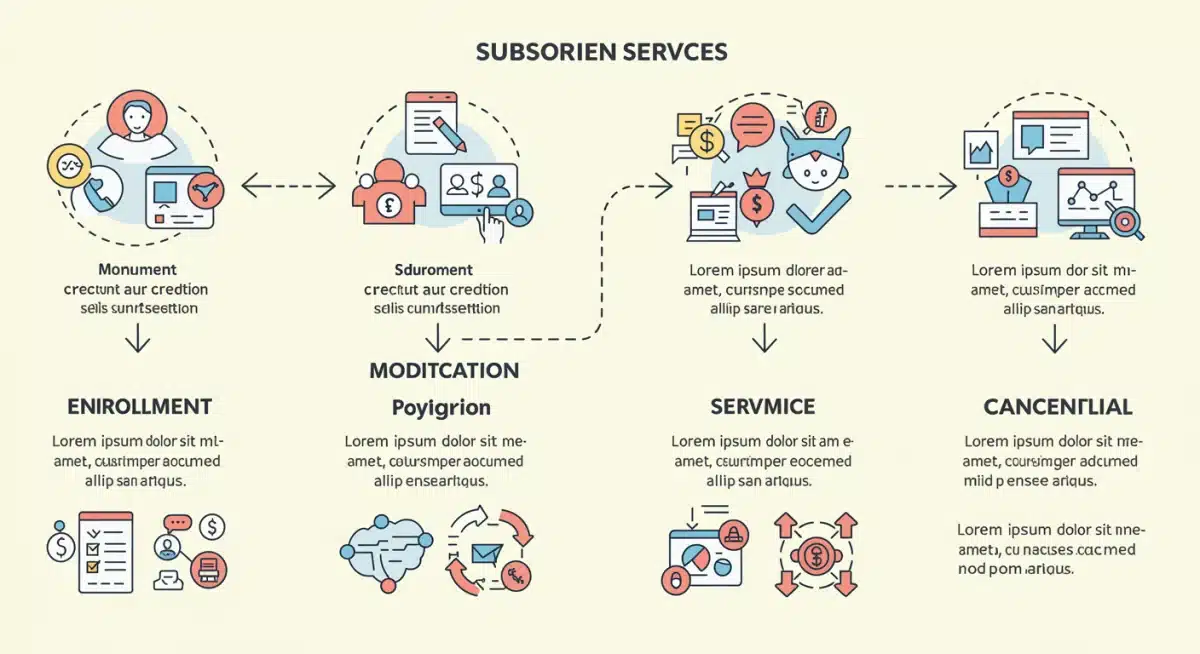
By systematically reviewing each stage of the customer journey, companies can pinpoint vulnerabilities and implement targeted improvements.
Embracing Consumer-Centric Design
Beyond mere compliance, businesses should embrace a consumer-centric design philosophy for their subscription services. This means designing interfaces and processes that prioritize user experience and transparency.
Instead of viewing regulations as obstacles, consider them as opportunities to enhance customer satisfaction and loyalty. A genuinely easy cancellation process, for example, can paradoxically lead to higher retention rates as customers feel more in control and trust the brand.
The Cost of Non-Compliance: Penalties and Reputational Damage
Ignoring the Federal Trade Commission’s new guidelines on subscription models is a perilous path for businesses. The FTC is not a regulatory body that issues mere warnings; it wields significant power to impose substantial penalties that can cripple even large corporations. The financial repercussions are often just the tip of the iceberg, as the long-term damage to a company’s reputation can be far more devastating and difficult to repair. The 2025 deadline is not just a suggestion; it’s a firm marker for when enforcement will be in full swing, and the costs of non-compliance will become painfully clear.
The FTC operates under a mandate to protect consumers, and its enforcement actions are designed to deter deceptive practices and ensure market fairness. Businesses that fail to adapt their subscription models to meet the new standards will find themselves in a challenging position, facing both legal battles and a public backlash.
Financial Penalties and Legal Actions
The financial penalties for violating FTC regulations can be severe. These often include:
- Monetary Fines: Significant civil penalties, which can be millions of dollars depending on the scale and nature of the violation.
- Consumer Redress: Orders requiring companies to refund consumers for unlawfully charged subscriptions.
- Injunctive Relief: Court orders prohibiting certain business practices and mandating specific operational changes.
- Legal Fees: The substantial cost of defending against FTC investigations and lawsuits.
These costs can quickly escalate, making a strong case for proactive compliance over reactive damage control. The FTC has a history of aggressive enforcement, and businesses should expect no less with these new subscription guidelines.
Erosion of Consumer Trust and Brand Reputation
Beyond the direct financial costs, non-compliance can severely damage a company’s brand and consumer trust. In today’s interconnected world, negative publicity travels fast, and a reputation for deceptive practices can be incredibly difficult to shake. Consumers are increasingly discerning and quick to abandon brands they perceive as untrustworthy.
A tarnished reputation can lead to decreased customer acquisition, increased churn, and a general reluctance from consumers to engage with the brand. This long-term impact can far outweigh any short-term gains from non-compliant practices. Investing in compliance is, therefore, an investment in brand longevity and customer loyalty.
Building a Trustworthy Subscription Ecosystem
In the wake of the FTC’s new guidelines, the focus for businesses must shift from merely avoiding penalties to actively building a trustworthy subscription ecosystem. This goes beyond minimum compliance; it involves embedding transparency, fairness, and consumer control into the very fabric of your business model. A trustworthy ecosystem benefits everyone: consumers gain confidence and peace of mind, while businesses foster loyalty, reduce churn, and cultivate a positive brand image. This proactive approach transforms regulatory challenges into opportunities for sustainable growth and stronger customer relationships.
By prioritizing ethical practices and clear communication, companies can differentiate themselves in a competitive market. Trust is a valuable currency, and in the subscription economy, it’s becoming an indispensable asset for long-term success. Businesses that embrace this philosophy will not only meet regulatory requirements but also thrive in an environment where consumer expectations are continually rising.
Key Pillars of Trustworthy Subscriptions
Creating a trustworthy subscription ecosystem relies on several core principles:
- Radical Transparency: Clear, upfront communication about all terms, conditions, pricing, and cancellation processes. No hidden fees or confusing jargon.
- Empowered Control: Giving consumers easy and immediate control over their subscriptions, including simple sign-up, modification, and cancellation options.
- Ethical Design: Avoiding ‘dark patterns’ and instead using user interface design that guides consumers towards informed decisions, rather than manipulating them.
- Proactive Communication: Sending timely reminders for renewals, trial expirations, and any changes to service terms.
These pillars collectively build a foundation of trust that encourages long-term customer engagement and reduces the likelihood of disputes or regulatory complaints.
Long-Term Benefits of Trust
While adapting to new regulations might seem challenging, the long-term benefits of fostering trust are undeniable. Businesses that operate with integrity often experience:
- Higher Customer Lifetime Value: Loyal customers who feel respected are more likely to remain subscribers for longer periods.
- Reduced Churn: Transparency and ease of management decrease frustration, a common driver of cancellations.
- Positive Brand Reputation: A reputation for fairness attracts new customers and enhances brand equity.
- Fewer Legal Issues: Proactive compliance significantly reduces the risk of costly litigation and fines.
Ultimately, building a trustworthy subscription ecosystem is not just about meeting regulatory demands; it’s about creating a sustainable and ethical business model that thrives on genuine customer satisfaction.
The Road Ahead: Navigating the Evolving Regulatory Landscape
The Federal Trade Commission’s new guidelines are a clear indicator that the regulatory landscape for subscription models is not static; it is continually evolving, driven by consumer protection concerns and technological advancements. Businesses must recognize that 2025 is not an endpoint but rather a significant milestone in an ongoing journey towards greater accountability and transparency in recurring billing. Navigating this evolving environment requires continuous vigilance, adaptability, and a commitment to staying informed about potential future changes. The FTC’s actions often set precedents, influencing state-level regulations and even international standards.
Companies should view these guidelines as a baseline, anticipating that consumer expectations and regulatory scrutiny will only increase over time. This forward-thinking approach is crucial for maintaining compliance and fostering sustainable business practices in the dynamic world of subscription services.
Anticipating Future Regulatory Trends
While the current guidelines provide a clear framework, businesses should also look ahead to potential future regulatory trends. Areas that might see increased scrutiny include:
- Data Privacy: How subscriber data is collected, used, and protected, especially in the context of personalized offers.
- AI and Algorithmic Bias: The ethical implications of using AI in pricing, customer segmentation, and retention strategies.
- Accessibility: Ensuring that subscription management and cancellation processes are accessible to individuals with disabilities.
- International Harmonization: Growing pressure for global standards in subscription practices, especially for businesses operating across borders.
Staying informed about these potential developments allows businesses to prepare proactively rather than reactively, maintaining a competitive edge.
Continuous Monitoring and Adaptation
Compliance is not a one-time fix; it requires continuous monitoring and adaptation. Businesses should establish internal processes for regularly reviewing their subscription practices against current and emerging regulations.
This includes assigning clear responsibilities, conducting periodic audits, and investing in training for relevant teams. Engaging with legal counsel specializing in consumer protection and FTC regulations is also advisable to ensure ongoing adherence. The goal is to embed a culture of compliance that is resilient to change and prioritizes consumer welfare.
| Key Aspect | Brief Description |
|---|---|
| Transparency | Clear disclosure of terms, pricing, and auto-renewal before commitment. |
| Easy Cancellation | Mandatory “Click to Cancel” functionality, as simple as signing up. |
| Proactive Adjustments | Businesses must audit practices and implement changes before 2025. |
| Penalties | Significant fines and reputational damage for non-compliance. |
Frequently Asked Questions About FTC Subscription Guidelines
The core changes focus on enhanced transparency, requiring clear disclosures of terms and pricing, and mandating an easy “Click to Cancel” option for subscriptions. This aims to combat deceptive practices like hidden fees and difficult cancellation processes, ensuring consumers have full control over their recurring charges.
Businesses must proactively adjust their subscription models to comply with the new guidelines by 2025. While specific enforcement dates may vary slightly, the FTC expects companies to be fully compliant, making proactive audits and adjustments critical to avoid penalties.
The “Click to Cancel” mandate requires that if consumers can subscribe to a service online with a click, they must also be able to cancel it online with similar ease. This means prominently displayed, straightforward cancellation options without requiring phone calls or complex steps.
Non-compliance can lead to significant financial penalties, including substantial civil monetary fines and orders for consumer redress. Additionally, businesses face severe reputational damage, loss of consumer trust, and increased churn, which can have long-term negative impacts.
Businesses should conduct comprehensive internal audits of their marketing, onboarding, billing, and cancellation processes. Adopting a consumer-centric design, ensuring transparent disclosures, and continuously monitoring for new regulatory trends are crucial steps for proactive preparation and compliance.
Conclusion
The Federal Trade Commission’s new guidelines for subscription models mark a significant shift towards greater consumer protection and transparency. Businesses operating in the United States must recognize the urgency of this regulatory evolution and proactively adjust their practices well before 2025. By embracing principles of clear disclosure, easy cancellation, and ethical design, companies can not only avoid substantial penalties but also build a more trustworthy and sustainable relationship with their customer base. The future of subscription commerce hinges on integrity and consumer empowerment, making these adjustments an investment in long-term success rather than merely a compliance burden.