Micro-Segmentation: 15% Higher Conversions by 2025 (Insider)

Micro-segmentation is poised to deliver a significant strategic advantage, enabling retailers to achieve a 15% higher conversion rate by 2025 through highly personalized customer experiences and precise targeting.
In the fiercely competitive retail landscape of today, achieving a substantial edge requires more than just broad marketing strokes. The true strategic advantage: leveraging micro-segmentation to achieve a 15% higher conversion rate in 2025 (insider knowledge) lies in understanding and catering to the nuanced needs of individual customer groups. This isn’t just about segmenting by demographics; it’s about diving deep into behavioral patterns, preferences, and intent to unlock unprecedented growth.
The Dawn of Hyper-Personalization: Defining Micro-Segmentation
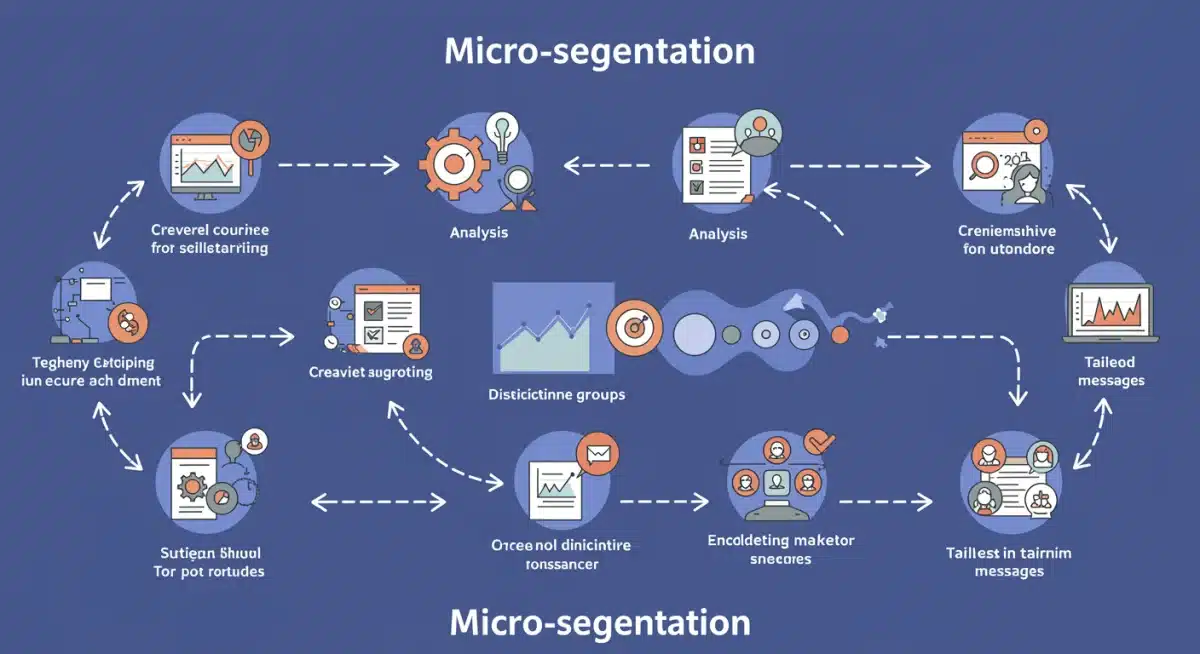
Micro-segmentation represents the evolution of traditional market segmentation, moving from broad categories to incredibly granular groups. It’s about identifying small, distinct clusters of customers who share very specific characteristics, behaviors, or needs. This level of detail allows for marketing messages and product offerings that resonate deeply, fostering a stronger connection and driving conversions.
Retailers who master micro-segmentation are not just sending out generic emails; they are crafting experiences. They understand that a customer who browsed a specific product three times in the last week, abandoned their cart, and previously purchased a complementary item, requires a vastly different approach than a first-time visitor. This precision is what fuels a significant uplift in conversion rates.
Beyond Basic Demographics
While demographics provide a foundational layer, micro-segmentation necessitates going far beyond age, gender, and location. It delves into the digital footprint, purchase history, browsing behavior, engagement with past marketing campaigns, and even psychographic traits. This rich data tapestry enables the creation of truly unique customer profiles.
- Behavioral Data: Analyzing clicks, page views, time spent, search queries, and cart abandonment.
- Transactional Data: Understanding purchase frequency, average order value, product categories, and brand loyalty.
- Psychographic Data: Inferring interests, values, lifestyles, and opinions from online activity and survey responses.
- Contextual Data: Considering device type, time of day, location, and even weather patterns to optimize offers.
By combining these diverse data points, businesses can identify segments as small as a few dozen customers, each ripe for a highly tailored engagement strategy. This meticulous approach ensures that every marketing dollar is spent more effectively, leading directly to improved conversion metrics.
Data as the Gold Standard: Fueling Micro-Segmentation Efforts
The bedrock of effective micro-segmentation is robust, accurate, and actionable data. Without a comprehensive data strategy, even the most sophisticated segmentation models will fall short. Retailers must invest in the right tools and processes to collect, clean, analyze, and interpret vast amounts of customer information.
This includes leveraging Customer Relationship Management (CRM) systems, Data Management Platforms (DMPs), and Customer Data Platforms (CDPs) that integrate information from various touchpoints. The goal is to create a unified customer view, eliminating data silos and providing a holistic understanding of each individual’s journey.
Essential Data Sources for Granular Insights
A multi-faceted approach to data collection is critical. Relying on just one or two sources will provide an incomplete picture, hindering the ability to create truly effective micro-segments. Integrating data from across the customer lifecycle is paramount.
- Website Analytics: Google Analytics, Adobe Analytics, providing insights into on-site behavior.
- CRM Systems: Salesforce, HubSpot, capturing customer interactions, purchase history, and service requests.
- Social Media Data: Engagement metrics, sentiment analysis, and demographic insights from platforms.
- Email Marketing Platforms: Open rates, click-through rates, and conversion data from campaigns.
- Point-of-Sale (POS) Systems: Detailed in-store purchase information, linking online and offline behavior.
The challenge isn’t just collecting data, but making sense of it. Advanced analytics, machine learning, and artificial intelligence play a pivotal role in identifying patterns and predicting future behavior, transforming raw data into strategic insights that drive higher conversion rates.
Crafting Irresistible Offers: Tailoring Content and Campaigns
Once micro-segments are identified, the real work begins: crafting highly personalized content and campaigns that speak directly to each group’s unique needs and preferences. This moves beyond simply swapping out a name in an email; it involves a fundamental shift in how marketing messages are conceived and delivered.
Think about product recommendations, promotional offers, website content, and even customer service interactions. Each should be subtly, yet powerfully, aligned with the specific segment being targeted. This level of personalization creates a sense of being understood and valued, significantly increasing the likelihood of a conversion.
Strategies for Personalized Engagement
Effective personalization requires a strategic framework. It’s not about one-off campaigns but an ongoing, iterative process of testing, learning, and optimizing. The goal is to build long-term customer relationships, not just secure a single sale.
- Dynamic Website Content: Displaying different product carousels, banners, or calls-to-action based on segment.
- Targeted Email Campaigns: Sending emails with specific product categories, loyalty rewards, or educational content.
- Personalized Product Recommendations: Using AI to suggest products based on past purchases, browsing, and segment-specific trends.
- Customized Ad Experiences: Serving highly relevant ads on social media and other platforms to specific micro-segments.
- Exclusive Offers: Providing discounts or early access to products that align with a segment’s demonstrated interests.
The key is to ensure that every interaction feels relevant and timely. This not only boosts conversions but also enhances customer satisfaction and loyalty, creating a virtuous cycle of engagement and sales.
Measuring Success: Metrics and KPIs for Micro-Segmentation
Implementing micro-segmentation without a clear framework for measuring its impact is akin to sailing without a compass. To truly achieve a 15% higher conversion rate by 2025, retailers must meticulously track key performance indicators (KPIs) and continuously optimize their strategies based on performance data. This involves A/B testing, multivariate testing, and detailed segment-specific reporting.
It’s not enough to look at overall conversion rates; businesses need to analyze how each micro-segment performs against its tailored campaigns. This granular reporting allows for rapid identification of what’s working and what isn’t, enabling agile adjustments and maximizing ROI.
Key Metrics to Monitor
A comprehensive measurement strategy will include both direct conversion metrics and indicators of customer engagement and satisfaction. This provides a holistic view of micro-segmentation’s effectiveness.
- Segment-Specific Conversion Rate: The primary metric, showing how well each segment converts.
- Average Order Value (AOV) per Segment: Understanding if certain segments spend more when effectively targeted.
- Customer Lifetime Value (CLTV) per Segment: Assessing the long-term profitability of different micro-segments.
- Engagement Rates: Open rates, click-through rates, and time on site for personalized content.
- Churn Rate per Segment: Identifying segments with higher attrition and addressing their specific pain points.
By regularly reviewing these metrics, retailers can refine their micro-segmentation models, adjust their targeting strategies, and ultimately drive the significant conversion rate improvements projected for 2025.
Overcoming Challenges: Implementation Best Practices
While the benefits of micro-segmentation are clear, its successful implementation comes with its own set of challenges. These include data privacy concerns, the complexity of managing numerous segments, and the need for specialized analytical talent. Retailers must approach these hurdles strategically to fully realize the potential of this advanced marketing technique.
Addressing these challenges proactively is crucial for establishing a sustainable and effective micro-segmentation program. It requires a commitment to continuous learning, technological investment, and a customer-centric organizational culture.
Strategies for Seamless Implementation
A phased approach, starting with smaller, manageable segments and gradually expanding, can help mitigate risks and build internal expertise. Investing in the right technology and training is non-negotiable for long-term success.
- Start Small, Scale Big: Begin with a few high-value segments to demonstrate ROI before broader rollout.
- Invest in Technology: Utilize CDPs, AI-powered analytics, and automation tools to manage complexity.
- Prioritize Data Governance: Implement strong data privacy measures and ensure compliance with regulations like CCPA.
- Foster Cross-Functional Collaboration: Marketing, sales, and IT teams must work together seamlessly.
- Continuous Learning and Iteration: Regularly review strategies, test hypotheses, and adapt to evolving customer behaviors.
By focusing on these best practices, businesses can navigate the complexities of micro-segmentation, turning potential obstacles into opportunities for innovation and competitive advantage.
The Future is Granular: Micro-Segmentation in 2025 and Beyond
Looking towards 2025, micro-segmentation will cease to be a competitive differentiator and will become a fundamental requirement for retail success. As consumer expectations for personalized experiences continue to rise, businesses that fail to adopt granular targeting will be left behind. The future of retail is not just personalized; it’s hyper-personalized, dynamic, and predictive.
Emerging technologies like real-time analytics, predictive AI, and even quantum computing will further enhance the ability to identify and cater to micro-segments with unparalleled precision. The 15% conversion rate increase anticipated by 2025 is merely the beginning of what’s possible when businesses fully embrace this strategic approach.
Evolving Trends in Granular Targeting
The evolution of micro-segmentation will be driven by advancements in data processing and artificial intelligence, enabling even more sophisticated and automated targeting.
- Real-Time Personalization: Instantaneous adjustments to offers and content based on live customer behavior.
- Predictive Analytics: Anticipating future needs and preferences to proactively engage customers.
- AI-Driven Segment Discovery: Algorithms automatically identifying new, profitable micro-segments.
- Ethical AI and Privacy: Balancing personalization with customer data privacy and transparency.
- Omnichannel Integration: Seamlessly applying micro-segmentation strategies across all customer touchpoints, both online and offline.
Retailers who begin laying the groundwork for advanced micro-segmentation now will be best positioned to capture market share and achieve significant growth in the coming years, transforming their customer relationships and conversion rates.
| Key Aspect | Brief Description |
|---|---|
| Definition | Divides customers into very small, distinct groups based on highly specific behaviors and preferences. |
| Core Benefit | Enables hyper-personalized marketing, leading to significantly higher conversion rates. |
| Key Data | Leverages behavioral, transactional, psychographic, and contextual data for deep insights. |
| Future Outlook | Will be a fundamental retail requirement by 2025, driven by AI and real-time analytics. |
Frequently Asked Questions About Micro-Segmentation
The primary goal of micro-segmentation is to create highly specific customer groups to enable hyper-personalized marketing efforts. This precision targeting aims to increase relevance for each customer, leading to enhanced engagement, improved customer satisfaction, and ultimately, significantly higher conversion rates and revenue growth for businesses.
Traditional market segmentation divides customers into broad groups based on general demographics or psychographics. Micro-segmentation, however, uses a much finer lens, creating very small, distinct clusters based on granular behavioral data, purchase history, and real-time interactions, allowing for a far more tailored approach to marketing.
Effective micro-segmentation relies on a rich blend of data, including behavioral data (browsing, clicks), transactional data (purchase history, frequency), psychographic data (interests, values), and contextual data (device, time, location). Integrating these diverse sources provides a comprehensive customer view essential for precise targeting.
Key challenges include managing the vast amounts of data required, ensuring data privacy and compliance, the complexity of creating and managing numerous small segments, and the need for advanced analytical tools and skilled personnel. Overcoming these requires strategic planning and continuous technological investment.
By delivering highly relevant and personalized messages, product recommendations, and offers to specific micro-segments, businesses significantly increase the likelihood of customer engagement and purchase. This precision reduces wasted marketing spend and directly addresses individual customer needs, driving a substantial uplift in conversion rates.
Conclusion
The journey towards achieving a 15% higher conversion rate by 2025 is inextricably linked to the adoption of advanced micro-segmentation strategies. This isn’t just a marketing tactic; it’s a fundamental shift in how retailers understand and interact with their customers. By meticulously analyzing granular data, crafting hyper-personalized experiences, and continuously measuring impact, businesses can unlock unparalleled growth and solidify their competitive position in an increasingly personalized marketplace. The future of retail is undoubtedly granular, and those who embrace this reality today will be the leaders of tomorrow.