The Phygital Store: Enhancing Customer Journeys in 2025
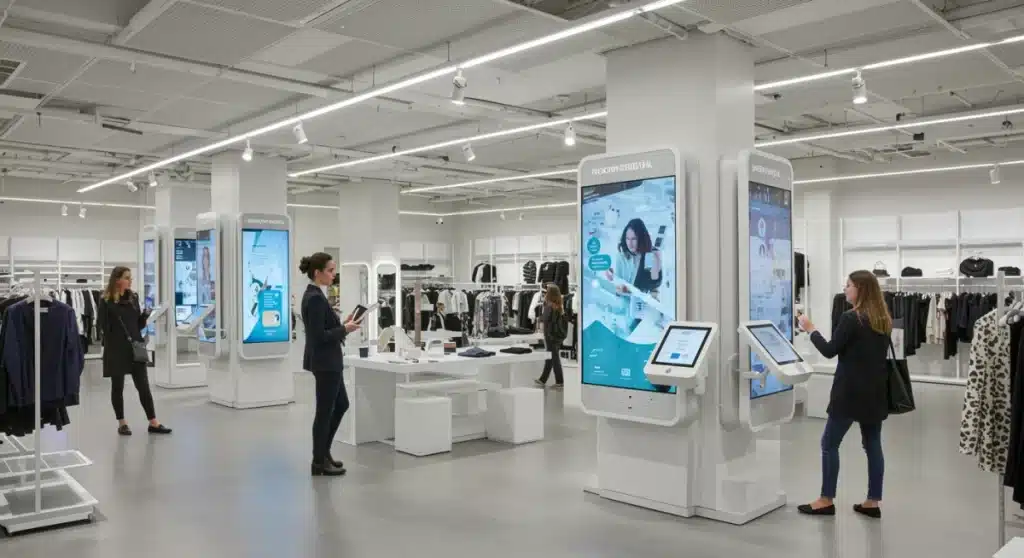
The phygital retail experience merges digital convenience with physical interaction, creating a cohesive and compelling customer journey that is set to enhance engagement by 30% by 2025.
The retail landscape is undergoing a profound transformation, moving beyond the traditional divide between online and brick-and-mortar. The emergence of The Phygital Store: Integrating Digital and Physical Retail for a 30% Enhanced Customer Journey in 2025 represents a pivotal shift, offering consumers an unprecedented, seamless experience. This innovative approach is not merely about adding screens to a physical space; it’s about fundamentally rethinking how customers interact with brands, products, and services, creating a cohesive narrative that spans both digital and physical realms.
Understanding the Phygital Retail Concept
The term ‘phygital’ encapsulates the convergence of physical and digital experiences, a strategy designed to leverage the strengths of both. In a retail context, this means creating an environment where the convenience and data-rich nature of online shopping merge with the sensory and social aspects of in-store interaction. The goal is to eliminate friction points and provide a consistent, personalized journey that resonates deeply with modern consumer expectations.
This integration is driven by a deep understanding of customer behavior. Consumers today expect instant gratification, personalized recommendations, and the flexibility to engage with brands on their own terms, whether that’s browsing online from home or trying on clothes in a physical store. Phygital retail addresses these demands by creating a fluid transition between channels, ensuring that every touchpoint adds value to the overall shopping experience.
The evolution of retail engagement
Retail has always evolved, from bustling marketplaces to department stores, then e-commerce, and now the sophisticated blend of phygital. This current evolution isn’t just about technology; it’s about understanding the human desire for both efficiency and connection. The phygital store aims to fulfill both, offering a richer, more engaging journey.
- Seamless channel integration: Customers can start their journey online and seamlessly continue in-store, or vice-versa.
- Personalized interactions: Data from online behavior informs in-store experiences, leading to tailored recommendations.
- Enhanced convenience: Features like click-and-collect or endless aisle technology streamline the shopping process.
- Immersive brand experiences: Digital elements add depth and interactivity to physical spaces.
Ultimately, understanding the phygital retail concept is crucial for any business aiming to thrive in the competitive landscape of 2025 and beyond. It’s about building bridges, not barriers, between the digital and physical worlds, ensuring that the customer remains at the center of every strategic decision.
Key Technologies Driving Phygital Transformation
The successful implementation of phygital retail relies heavily on a suite of advanced technologies that bridge the gap between the online and offline worlds. These innovations enable retailers to collect valuable data, personalize experiences, and streamline operations, all contributing to that promised 30% enhancement in customer journeys. From artificial intelligence to augmented reality, these tools are reshaping how consumers interact with stores.
It’s not just about adopting new gadgets; it’s about strategically integrating these technologies to create a cohesive and intuitive experience. Retailers must carefully select and implement solutions that align with their brand identity and customer needs, ensuring that technology serves to enhance, rather than complicate, the shopping process. The right technological backbone is essential for sustained phygital success.

Augmented reality and virtual try-ons
Augmented Reality (AR) and Virtual Reality (VR) are no longer futuristic concepts; they are practical tools revolutionizing the phygital experience. AR allows customers to virtually try on clothes, visualize furniture in their homes, or interact with digital product overlays in a physical store. This reduces purchase uncertainty and enhances engagement.
- Virtual try-on apps: Customers can use their smartphones to see how clothing or makeup looks on them.
- In-store AR mirrors: Interactive mirrors allow for virtual try-ons and product customization.
- Product visualization: AR apps help customers place virtual products in their living spaces before buying.
AI and data analytics for personalization
Artificial Intelligence (AI) and robust data analytics form the intelligence core of phygital retail. By analyzing customer data from both online and offline interactions, AI can predict preferences, offer personalized recommendations, and optimize inventory. This level of personalization makes the customer feel understood and valued, fostering loyalty.
Beyond personalization, AI also plays a critical role in optimizing store operations. From predictive maintenance for in-store technology to intelligent staffing based on foot traffic patterns, AI ensures that the physical environment is as efficient and responsive as its digital counterpart. This operational excellence directly translates into a smoother, more enjoyable customer experience.
Designing an Immersive Phygital Store Layout
The physical layout of a phygital store is far more than just shelves and display racks; it’s a carefully curated environment designed to encourage exploration, interaction, and seamless transitions between digital and physical elements. The goal is to create an immersive experience that delights customers and reinforces brand identity, making every visit memorable and productive. This requires a thoughtful approach to space planning and technology integration.
Retailers are moving away from purely transactional spaces towards experiential hubs. These new layouts prioritize comfort, discovery, and personalized service, transforming shopping from a chore into an engaging activity. The design must be intuitive, guiding customers through a journey that leverages both the tactile appeal of physical products and the rich information of digital platforms.
Interactive displays and smart shelves
Interactive displays are central to the phygital store. These screens can provide detailed product information, customer reviews, styling suggestions, and even allow for instant online ordering of out-of-stock items. Smart shelves, equipped with sensors, can track inventory levels, monitor customer interactions, and trigger personalized promotions on nearby screens.
- Digital signage: Dynamic content that changes based on customer proximity or time of day.
- Touchscreen kiosks: Self-service stations for product lookup, ordering, and endless aisle access.
- RFID-enabled displays: Provide real-time product information and inventory tracking.
Experiential zones and community spaces
Beyond product displays, phygital stores often incorporate experiential zones and community spaces. These areas might include workshops, product testing stations, or comfortable lounges where customers can relax, interact with brand ambassadors, or attend events. These zones foster a sense of community and allow customers to engage with the brand on a deeper level, transforming the store into a destination rather than just a point of sale.
Consider a beauty retailer offering virtual makeup tutorials in a dedicated studio within their store, or a sports brand hosting fitness classes. These experiential elements not only drive foot traffic but also create emotional connections, significantly enhancing the overall customer journey and brand loyalty. The physical space becomes a stage for brand storytelling and community building, complementing the digital narrative.
Personalization at the Core of Phygital Experiences
True phygital success hinges on the ability to deliver hyper-personalized experiences that anticipate and meet individual customer needs. This goes beyond simply addressing a customer by name; it involves leveraging data from every touchpoint – online browsing history, past purchases, in-store interactions – to create a truly bespoke journey. The aim is to make each customer feel uniquely understood and catered to, fostering a deeper connection with the brand.
This level of personalization requires sophisticated data integration and analysis, allowing retailers to paint a comprehensive picture of each customer. When executed effectively, personalization transforms a generic shopping trip into a highly relevant and enjoyable experience, significantly contributing to the projected 30% enhancement in customer satisfaction and loyalty. It’s about moving from mass marketing to individual engagement.
Tailored recommendations and offers
One of the most immediate benefits of personalization in phygital retail is the delivery of tailored recommendations and offers. Imagine a customer browsing shoes online, then receiving a notification for a discount on a similar pair when they walk into a physical store. Or, an in-store associate, armed with data from the customer’s online wishlist, can immediately guide them to relevant products.
- Contextual offers: Discounts or promotions triggered by in-store location or past online behavior.
- Curated product selections: Digital screens or sales associates present products based on individual preferences.
- Loyalty program integration: Seamless recognition of loyalty status and rewards across all channels.
Seamless customer recognition across channels
For personalization to truly flourish, retailers must implement robust systems for seamless customer recognition across both digital and physical channels. This means that a customer’s profile, preferences, and purchase history should be accessible whether they are interacting with an e-commerce site, a mobile app, or a sales associate in a brick-and-mortar store. This holistic view enables consistent and relevant interactions, regardless of the channel chosen by the customer.
This recognition can be facilitated through various means, such as login-based accounts, loyalty program IDs, or even advanced facial recognition (with appropriate privacy safeguards). The key is to ensure that the customer’s journey feels continuous and connected, eliminating the frustration of having to repeat information or start anew at each different touchpoint. This continuity is a cornerstone of an enhanced phygital experience.
Measuring the Impact: Metrics for Phygital Success
Implementing a phygital strategy is a significant investment, and understanding its impact is crucial for continuous optimization and demonstrating ROI. Retailers must move beyond traditional metrics and adopt a comprehensive measurement framework that accounts for the interconnected nature of digital and physical interactions. This means tracking customer journeys across all touchpoints and attributing success holistically.
The projected 30% enhancement in customer journey is not an arbitrary figure; it’s a quantifiable goal that requires careful monitoring of specific key performance indicators (KPIs). By focusing on metrics that reflect true customer engagement and conversion across channels, businesses can refine their phygital strategies and ensure they are delivering maximum value to both customers and the bottom line.
Unified customer journey analytics
One of the most critical aspects of measuring phygital success is the implementation of unified customer journey analytics. This involves consolidating data from online platforms (website, app, social media) with in-store data (POS systems, foot traffic sensors, loyalty program interactions). By analyzing this combined dataset, retailers can gain a holistic view of customer behavior, identifying patterns, preferences, and pain points across the entire shopping journey.
This integrated approach allows businesses to see how digital interactions influence in-store visits, and vice-versa. For example, tracking how many customers browse a product online before visiting a physical store to purchase it, or how in-store promotions drive online sales. Understanding these interconnected pathways is essential for optimizing the phygital experience and attributing success accurately.
Key performance indicators for phygital retail
Specific KPIs are essential for evaluating the effectiveness of phygital initiatives. These go beyond simple sales figures and delve into the nuances of customer engagement and satisfaction. By consistently monitoring these metrics, retailers can identify areas for improvement and capitalize on successful strategies.
- Conversion rates (omnichannel): Tracking conversions that involve both digital and physical touchpoints.
- Customer lifetime value (CLV): Assessing the long-term value of customers engaged through phygital channels.
- In-store engagement metrics: Time spent in experiential zones, interaction rates with smart displays.
- Online-to-offline (O2O) attribution: Measuring how digital campaigns drive physical store visits and purchases.
- Customer satisfaction scores (CSAT/NPS): Gathering feedback on the integrated experience.
By focusing on these comprehensive metrics, retailers can not only justify their phygital investments but also continually refine their strategies to achieve and surpass that 30% enhancement in customer journeys, ensuring sustainable growth and competitive advantage in the evolving retail landscape.
Challenges and Future Outlook for Phygital Retail
While the promise of phygital retail is immense, its implementation is not without challenges. Integrating disparate systems, managing vast amounts of data, and ensuring a consistent brand experience across all touchpoints requires significant strategic planning and investment. Overcoming these hurdles is critical for retailers aiming to fully capitalize on the phygital opportunity and achieve the projected enhancements in customer engagement.
Despite these complexities, the future outlook for phygital retail remains overwhelmingly positive. As technology continues to advance and consumer expectations evolve, the blend of digital and physical will become not just a competitive advantage, but a fundamental requirement for success. Retailers who embrace this evolution will be best positioned to thrive in the dynamic market of 2025 and beyond.
Overcoming integration complexities
One of the primary challenges lies in seamlessly integrating existing legacy systems with new digital technologies. Many retailers operate with siloed data and separate platforms for online and offline operations, making it difficult to create a unified customer view. Overcoming these integration complexities requires a modular approach, robust APIs, and often, a complete overhaul of IT infrastructure.
- Data siloing: Consolidating customer data from various sources into a single, actionable profile.
- Legacy system updates: Modernizing outdated POS and inventory management systems.
- API development: Creating robust interfaces for different technologies to communicate effectively.
The evolving role of store associates
In a phygital environment, the role of store associates evolves significantly. They transform from transactional staff to brand ambassadors and technology facilitators. Associates need to be trained not only on product knowledge but also on how to leverage in-store technology, assist with digital tools, and provide personalized service informed by customer data. Empowering associates with the right tools and training is crucial for delivering a truly enhanced customer journey.
The associates become the human face of the phygital experience, guiding customers through interactive displays, helping with virtual try-ons, and offering expert advice informed by a holistic view of the customer’s preferences. Their ability to seamlessly blend human connection with technological assistance is a cornerstone of the phygital store’s success, directly impacting customer satisfaction and loyalty.
Implementing Your Phygital Strategy: A Roadmap for Success
Embarking on a phygital transformation requires a clear, strategic roadmap. It’s not a one-size-fits-all solution, but rather a tailored approach that aligns with a brand’s unique identity, customer base, and business objectives. A well-defined strategy ensures that investments are targeted, implementation is efficient, and the desired 30% enhancement in customer journey is a tangible, achievable outcome. Success lies in methodical planning and agile execution.
The roadmap should encompass various stages, from initial assessment and pilot programs to full-scale deployment and continuous optimization. Each step must be carefully considered, with a strong emphasis on understanding the customer’s perspective and leveraging technology to solve real-world problems. This iterative process allows for flexibility and adaptation, ensuring the phygital strategy remains relevant and effective in a rapidly changing market.
Starting small and scaling up
For many retailers, the most effective approach to phygital implementation is to start with pilot programs in a few select stores or for specific product categories. This allows businesses to test new technologies and strategies, gather customer feedback, and refine their approach before a wider rollout. Starting small minimizes risk and provides valuable learning opportunities.
- Pilot store selection: Choose locations that represent a diverse customer base or have high foot traffic.
- Focused technology integration: Implement one or two key phygital elements, such as smart mirrors or interactive kiosks.
- Customer feedback loops: Actively solicit and incorporate customer and associate feedback for iterative improvements.
- Performance tracking: Closely monitor KPIs in pilot stores to evaluate effectiveness.
Continuous innovation and adaptation
The retail landscape is constantly evolving, driven by new technologies and changing consumer preferences. Therefore, a successful phygital strategy is not a static plan but an ongoing commitment to continuous innovation and adaptation. Retailers must stay abreast of emerging trends, regularly evaluate the performance of their phygital initiatives, and be prepared to iterate and evolve their offerings. This agility is key to maintaining a competitive edge and consistently delivering an enhanced customer journey.
This involves fostering a culture of innovation within the organization, encouraging experimentation, and investing in research and development. Regular market analysis, competitor benchmarking, and active listening to customer feedback are all vital components of this continuous adaptation. By remaining agile and forward-thinking, retailers can ensure their phygital stores continue to captivate customers and drive growth well into 2025 and beyond.
| Key Aspect | Description |
|---|---|
| Phygital Definition | Seamless integration of digital convenience with physical interaction in retail environments. |
| Core Technologies | AR/VR, AI, data analytics, IoT, and interactive displays for enhanced experiences. |
| Customer Journey | Expected 30% enhancement through personalization, convenience, and immersive experiences. |
| Strategic Implementation | Requires starting small, continuous innovation, and overcoming integration complexities. |
Frequently Asked Questions About Phygital Retail
A phygital store is a retail concept that seamlessly integrates digital and physical elements to create a unified customer experience. It combines the sensory aspects of brick-and-mortar shopping with the convenience, data, and personalization offered by online channels, aiming to enhance engagement and satisfaction.
Phygital retail enhances the customer journey by offering personalization through data, interactive in-store experiences, and seamless transitions between online and offline touchpoints. This reduces friction, provides more information, and creates a more engaging, convenient, and memorable shopping experience, leading to higher satisfaction and loyalty.
Essential technologies for phygital stores include Augmented Reality (AR) for virtual try-ons, Artificial Intelligence (AI) for personalization and data analytics, IoT devices (smart shelves, sensors), interactive displays, and robust omnichannel integration platforms. These tools bridge the gap between physical products and digital information and services.
Retailers adopting phygital strategies can expect increased customer engagement, higher conversion rates, improved customer loyalty, deeper insights into consumer behavior, and optimized operational efficiency. The ability to offer a unique, integrated experience helps brands stand out in a competitive market and drive sustainable growth.
Retailers may face challenges such as integrating disparate legacy systems, managing complex data streams, ensuring consistent brand experience across all channels, and training staff for new roles. Overcoming these requires significant investment in technology, strategic planning, and a commitment to continuous innovation and adaptation.
Conclusion
The journey towards The Phygital Store: Integrating Digital and Physical Retail for a 30% Enhanced Customer Journey in 2025 is not just a trend; it’s a fundamental reshaping of the retail paradigm. By thoughtfully blending the best of digital convenience with the richness of physical interaction, retailers can unlock unprecedented levels of customer engagement and loyalty. The future of retail is dynamic, personalized, and seamlessly integrated, promising a more intuitive and rewarding experience for every consumer. Embracing this phygital evolution is no longer optional but essential for sustained success and relevance in the years to come.