Q4 2024 vs. Q1 2025 Consumer Spending: 7 Critical Differences

Analyzing consumer spending comparison between Q4 2024 and Q1 2025 reveals distinct shifts influenced by seasonal cycles, economic outlook, and evolving consumer priorities, offering crucial insights for strategic planning.
Understanding the nuances of consumer spending comparison between peak holiday season and the start of a new year is vital for any business. The transition from Q4 2024 to Q1 2025 marks a significant shift in consumer behavior, driven by seasonal patterns, economic realities, and emerging trends.
The Q4 2024 Spending Spree: Holiday Highs and Economic Undercurrents
The fourth quarter of any year traditionally represents the zenith of consumer spending, fueled by holiday gifting, seasonal celebrations, and year-end sales events. Q4 2024 was no exception, characterized by robust retail activity as consumers opened their wallets for everything from electronics to experiential gifts. However, beneath the surface of festive spending, economic undercurrents played a significant role, shaping purchasing decisions and overall market dynamics.
Retailers leveraged aggressive promotional strategies to capture market share during this critical period. Discounts, loyalty programs, and extended return policies were commonplace, designed to entice consumers navigating a complex economic landscape. The focus was often on maximizing basket size, with bundled offers and impulse buys contributing substantially to overall revenue.
Key Drivers of Q4 2024 Spending
- Holiday Gifting: The primary catalyst for increased spending, encompassing a wide array of products across various price points.
- Seasonal Entertainment: Increased expenditure on travel, dining out, and social gatherings associated with holiday festivities.
- Year-End Sales: Black Friday, Cyber Monday, and post-Christmas sales events drove significant transaction volumes.
Despite inflationary pressures and fluctuating interest rates, consumers in Q4 2024 demonstrated a willingness to spend, often prioritizing experiences and meaningful gifts. This resilience suggested a degree of consumer confidence, albeit one tempered by a cautious approach to larger, non-essential purchases. The use of deferred payment options, such as ‘buy now, pay later’ services, also saw a notable uptick, reflecting consumers’ desire to manage their holiday budgets effectively.
The Q4 2024 period served as a crucial barometer for economic sentiment, revealing a consumer base that, while eager to participate in seasonal traditions, remained acutely aware of their financial limits. Retailers who understood this delicate balance and offered value, convenience, and flexible payment solutions were best positioned to succeed.
Q1 2025: The Post-Holiday Reset and Budget Realignments
The transition into Q1 2025 typically brings a sharp contraction in consumer spending, a natural consequence of the preceding holiday extravagance. This quarter is often characterized by a ‘post-holiday reset,’ where consumers shift their focus from discretionary purchases to financial recovery and essential needs. Budgets are realigned, and spending habits become more conservative, reflecting a renewed emphasis on saving and debt reduction.
This period sees a significant drop in gift-related purchases, replaced by a surge in demand for items related to personal wellness, home organization, and practical necessities. Consumers are more likely to seek out value, opting for sales on clearance items or stocking up on staples. The initial weeks of Q1 are particularly lean, as credit card bills from holiday spending begin to arrive, prompting increased financial prudence.
Shifting Priorities in Q1 2025
- Financial Prudence: A strong emphasis on budgeting, saving, and debt repayment following holiday excesses.
- Health and Wellness: Increased spending on gym memberships, healthy food options, and personal care products for New Year’s resolutions.
- Home Improvement: Smaller-scale home organization and improvement projects gain traction as consumers nest.
Retailers often respond to this shift by adjusting their inventory and marketing strategies. The focus moves from celebratory promotions to messages of self-improvement, efficiency, and smart spending. Clearance sales on holiday merchandise are common, alongside promotions for health-related products and services. The digital realm continues to play a vital role, with online sales remaining strong as consumers seek convenience and compare prices.
Overall, Q1 2025 represents a recalibration for consumers. It’s a period of introspection and practical planning, where spending habits reflect a more measured and needs-driven approach. Businesses that adapt to this change by offering relevant products, value propositions, and empathetic marketing messages are better equipped to navigate the leaner post-holiday landscape.
Critical Difference 1: Discretionary vs. Essential Spending
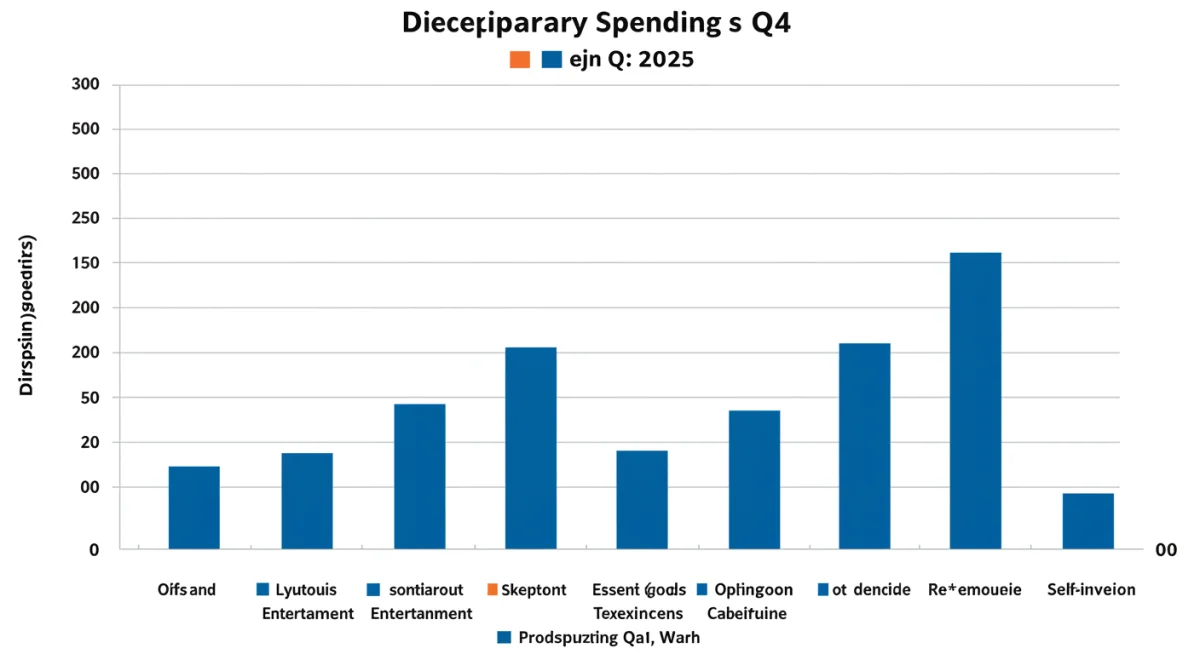
One of the most pronounced differences between Q4 2024 and Q1 2025 lies in the allocation of discretionary versus essential spending. Q4 2024 saw a significant surge in discretionary spending, encompassing categories such as luxury goods, entertainment, travel, and non-essential gifts. Consumers were more inclined to indulge, driven by the festive spirit and the desire to celebrate.
Conversely, Q1 2025 marks a sharp pivot towards essential spending. Post-holiday financial recovery means consumers prioritize necessities like groceries, utilities, and debt repayment. Discretionary purchases are often curtailed, with a heightened focus on value and practicality. This shift is not merely seasonal but also reflects a conscious effort by consumers to regain financial stability after a period of indulgence.
Impact on Retail Sectors
- Q4 2024 Beneficiaries: Luxury retail, electronics, apparel, travel, and hospitality.
- Q1 2025 Beneficiaries: Grocery stores, discount retailers, health and wellness services, and home essentials.
This dynamic creates distinct challenges and opportunities for businesses. Retailers heavily reliant on discretionary spending must strategize to maintain engagement during Q1, perhaps by re-framing their offerings as essential for well-being or leveraging post-holiday sales. Meanwhile, sectors focused on essentials can capitalize on increased demand by emphasizing affordability and convenience. Understanding this fundamental shift is paramount for effective inventory management and marketing campaigns.
Critical Difference 2: Online vs. In-Store Shopping Preferences
While online shopping remains a dominant force across both quarters, the specific drivers and preferences for online versus in-store experiences show a notable divergence. In Q4 2024, online shopping was heavily influenced by convenience for holiday gifting, access to exclusive online deals (e.g., Cyber Monday), and the ability to compare prices quickly. Brick-and-mortar stores, however, experienced a significant footfall as consumers sought the experiential aspect of holiday shopping, browsing, and immediate gratification for last-minute purchases.
Entering Q1 2025, the motivation for online shopping often shifts towards value and efficiency. Consumers are more likely to be searching for post-holiday clearance items, utilizing online platforms to find the best deals and avoid impulse purchases. In-store shopping in Q1 tends to be more purposeful, focusing on essential goods or taking advantage of specific in-store-only promotions. The ‘browsing for pleasure’ aspect diminishes, replaced by a ‘shopping with a list’ mentality.
The role of ‘click and collect’ or ‘buy online, pick up in-store’ (BOPIS) also evolves. In Q4, it was often about securing popular items quickly or avoiding shipping delays. In Q1, it becomes a tool for convenience and avoiding additional shipping costs on budget-conscious purchases. Retailers must adapt their omnichannel strategies to cater to these shifting consumer priorities, ensuring a seamless experience regardless of the shopping channel.
Critical Difference 3: Promotional Sensitivity and Deal Seeking
The degree of consumer sensitivity to promotions and their proclivity for deal-seeking behavior undergoes a significant transformation from Q4 2024 to Q1 2025. In Q4, promotions are often perceived as an opportunity to purchase desired items at a reduced price, facilitating larger, often aspirational, purchases for gifts or personal indulgence. Consumers are actively looking for the ‘best deal’ on specific items they already intend to buy.
By Q1 2025, promotional sensitivity intensifies, but with a different underlying motivation. Consumers are often looking to stretch their post-holiday budgets, making them highly responsive to discounts on essential items or clearance sales designed to move leftover holiday inventory. The hunt for a ‘good deal’ in Q1 is less about acquiring aspirational goods and more about financial recovery and maximizing value for every dollar spent. This often translates to a preference for deeper discounts, broader sales events, and loyalty program benefits.
Retailers must adjust their promotional calendars accordingly. Aggressive, high-impact sales events are critical in Q4 to drive volume. In Q1, more targeted promotions, loyalty rewards, and value bundles can be more effective, appealing to the budget-conscious consumer. Understanding this nuanced shift in deal-seeking behavior is key to crafting successful sales strategies across both periods.
Critical Difference 4: Brand Loyalty and New Product Adoption
Brand loyalty and the willingness to adopt new products or try new brands also exhibit distinct patterns between these two quarters. In Q4 2024, brand loyalty might be somewhat diluted, particularly in gifting categories. Consumers are often driven by recipients’ preferences or the desire to find unique gifts, potentially leading them to explore new brands or products they wouldn’t typically consider for themselves. There’s a higher tolerance for experimentation, especially if a new product offers perceived novelty or superior value as a gift.
In contrast, Q1 2025 often sees a resurgence of brand loyalty, especially for essential goods and trusted services. Consumers, facing tighter budgets, tend to stick with familiar brands that they know deliver consistent quality and value. The risk of trying a new, unproven product or brand feels higher when financial resources are scarcer. New product adoption in Q1 is more cautious and often driven by a clear need or a compelling, verifiable benefit, rather than impulse or novelty.
For brands, Q4 is an opportunity to attract new customers through gifting, hoping to convert them into loyal patrons in the new year. Q1, however, requires reinforcing existing customer relationships through loyalty programs, personalized offers, and consistent messaging about value and reliability. Brands introducing new products in Q1 need to offer strong incentives and clear demonstrations of value to overcome consumer hesitancy.
Critical Difference 5: Payment Method Preferences and Credit Usage
The methods consumers employ for payment and their reliance on credit also undergo significant changes from Q4 2024 to Q1 2025. During the holiday shopping frenzy of Q4, there’s a noticeable increase in the use of credit cards, driven by larger purchases and the convenience of deferred payment. Many consumers consciously utilize credit to manage holiday expenses, often with plans to pay it down in the new year. The popularity of ‘buy now, pay later’ (BNPL) services also peaks, allowing consumers to spread out costs without traditional credit card interest immediately.
As Q1 2025 commences, there’s a distinct shift towards more conservative payment methods. Debit card usage typically rises, reflecting a preference for spending within one’s means and avoiding further debt accumulation. Cash payments, while less common overall, might see a slight increase for smaller, everyday purchases as consumers meticulously track their spending. The use of BNPL services may decrease, or consumers might use them for essential, higher-ticket items rather than discretionary ones, reflecting a more strategic approach to debt. This financial reset impacts how retailers structure their payment options and promotions, with an emphasis on transparency and responsible spending.
Critical Difference 6: Influence of Social Media and Influencer Marketing
The role and effectiveness of social media and influencer marketing also vary considerably between these two periods. In Q4 2024, social media platforms are saturated with holiday-themed content, gift guides, and promotional campaigns by influencers showcasing desirable products. Consumers are highly receptive to this content, often using it for gift inspiration and discovering new brands. The emotional appeal and aspirational aspects of influencer marketing are particularly potent during this festive season, driving impulse purchases and brand awareness.
In Q1 2025, while social media remains a powerful tool, its influence shifts. Content tends to pivot towards themes of self-improvement, organization, health, and financial wellness. Influencers often promote products and services aligned with New Year’s resolutions, offering practical advice and value-driven recommendations. Consumers are less swayed by aspirational purchases and more by genuine utility and affordability. Marketing messages need to be more authentic and less overtly promotional, focusing on how a product or service can genuinely improve their lives or help them save money. Brands must adapt their social media strategies to reflect this change in consumer mindset, moving from ‘desire’ to ‘resolve’.
| Key Difference | Brief Description |
|---|---|
| Spending Focus | Q4: Discretionary/Gifting; Q1: Essential/Value-driven. |
| Deal Motivation | Q4: Aspirational purchases; Q1: Budget recovery/Necessity. |
| Payment Methods | Q4: Credit/BNPL rise; Q1: Debit/Cash for control. |
| Brand Loyalty | Q4: More open to new brands; Q1: Return to trusted brands. |
Frequently Asked Questions About Consumer Spending Shifts
The drop is primarily due to the end of the holiday season, which drives peak discretionary spending in Q4. Consumers then enter Q1 with depleted budgets, often facing holiday debt, leading to a natural prioritization of essential purchases and financial recovery over non-essential items.
Economic conditions like inflation, interest rates, and consumer confidence significantly amplify or temper these seasonal shifts. Stronger economies might see a smaller Q1 dip, while challenging conditions can exacerbate the post-holiday spending contraction as consumers become more cautious.
Categories like luxury goods, electronics, and apparel typically see a sharp decline from Q4 to Q1. Conversely, health and wellness products, home organization items, and essential groceries often experience a relative increase in demand during the first quarter.
Retailers can prepare by adjusting inventory to focus on Q1-relevant products, implementing strategic clearance sales for holiday stock, and shifting marketing messages to emphasize value, practicality, and New Year’s resolutions. Loyalty programs become particularly important.
Yes, BNPL services allow consumers to manage holiday spending more flexibly in Q4, potentially leading to higher overall spending. However, the repayment obligations in Q1 can further constrain discretionary budgets, making consumers more conservative with new purchases.
Conclusion
The detailed consumer spending comparison between Q4 2024 and Q1 2025 reveals a predictable yet profoundly impactful cyclical shift in consumer behavior. From the indulgence of holiday spending to the prudence of post-holiday budgeting, these quarters present distinct challenges and opportunities for businesses. Understanding the seven critical differences—ranging from discretionary spending to payment preferences and brand loyalty—is not merely an academic exercise. It forms the bedrock for strategic planning, enabling retailers and marketers to anticipate consumer needs, tailor their offerings, and adapt their engagement strategies effectively to navigate the evolving retail landscape successfully. Retailers who closely monitor these shifts and proactively adjust their operations will be best positioned for sustained growth in an increasingly dynamic market.