Quick Commerce’s Impact on U.S. Retail Logistics & Last-Mile Delivery 2025
Quick commerce is fundamentally reshaping U.S. retail logistics and last-mile delivery, creating a pressing need for advanced infrastructure and operational agility to satisfy burgeoning consumer expectations for rapid fulfillment by 2025.
The landscape of retail is undergoing a seismic shift, driven by an insatiable consumer appetite for immediate gratification. This phenomenon, known as quick commerce, is not merely a trend but a transformative force. In this article, we delve into how quick commerce logistics is poised to fundamentally alter U.S. retail logistics and last-mile delivery by 2025, demanding unprecedented speed and precision from supply chains.
Understanding the Quick Commerce Phenomenon
Quick commerce, often abbreviated as ‘q-commerce,’ represents the next evolution of e-commerce, focusing on ultra-fast delivery of goods, typically within 10 to 30 minutes. This model extends beyond traditional online shopping by prioritizing speed and convenience above all else, catering to immediate consumer needs.
The emergence of quick commerce is a direct response to evolving consumer expectations. In an increasingly digital world, customers are accustomed to instant access to information and entertainment, and this expectation has now permeated the retail sector. Companies that can deliver on this promise gain a significant competitive edge.
The driving forces behind q-commerce growth
Several factors are fueling the rapid expansion of quick commerce across the U.S. Understanding these drivers is crucial to appreciating the profound impact on logistics.
- Changing consumer habits: A growing preference for convenience and instant gratification.
- Technological advancements: Improved GPS, real-time tracking, and efficient delivery platforms.
- Urbanization: Densely populated areas facilitate faster delivery routes and higher order volumes.
- Investment capital: Significant funding pouring into q-commerce startups and established players.
The underlying infrastructure supporting quick commerce is a complex web of technology, physical assets, and human capital. This model necessitates a complete re-evaluation of traditional logistics strategies, moving from large, centralized warehouses to smaller, more agile distribution points closer to the consumer.
As quick commerce continues its ascent, retailers and logistics providers must adapt swiftly or risk obsolescence. The ability to fulfill orders with unparalleled speed is becoming a non-negotiable aspect of market competitiveness, pushing the boundaries of what was once thought possible in last-mile delivery.
Reshaping U.S. Retail Logistics Infrastructure
The rise of quick commerce is compelling a dramatic overhaul of the U.S. retail logistics infrastructure. Traditional supply chain models, designed for slower, more predictable delivery times, are proving inadequate for the demands of instantaneous fulfillment. This necessitates a strategic shift towards decentralized networks.
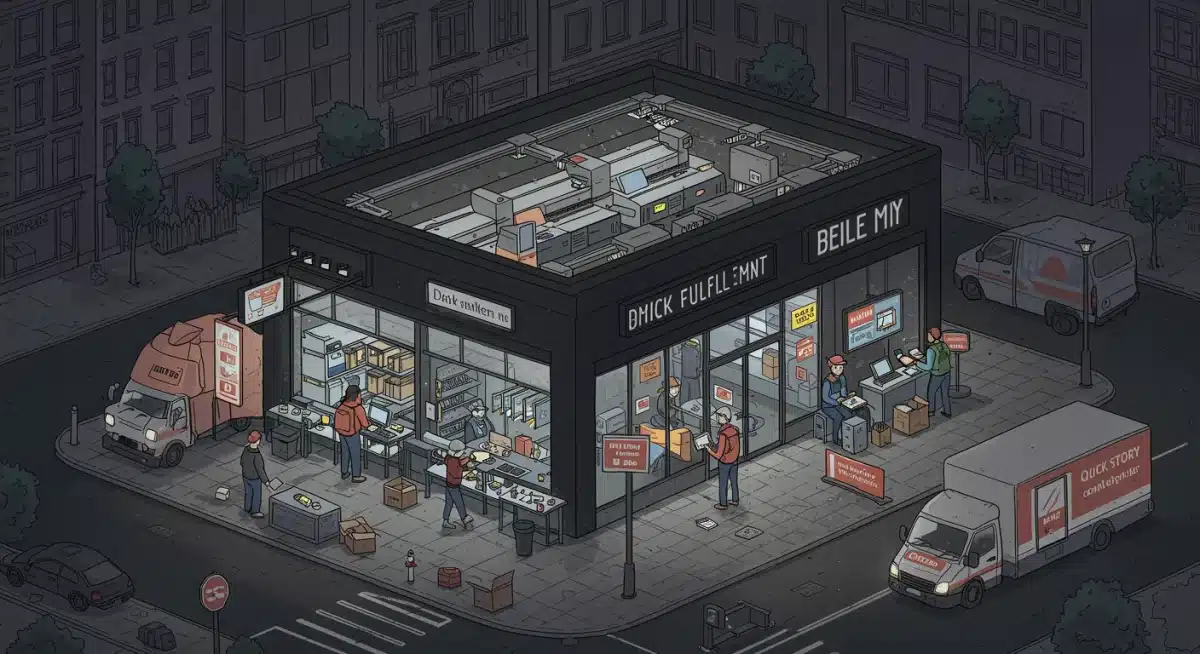
Central to this transformation is the proliferation of micro-fulfillment centers (MFCs) and dark stores. These smaller, strategically located facilities are designed to store a curated inventory of high-demand items, enabling rapid picking and packing processes within urban and suburban areas.
The strategic importance of micro-fulfillment centers
MFCs are not merely smaller warehouses; they are highly automated and technologically advanced hubs positioned to minimize the distance to the end consumer. Their strategic placement significantly reduces last-mile delivery times and costs.
- Proximity to customers: Reduces travel distance and time for delivery riders.
- Optimized inventory: Focuses on fast-moving, high-demand products for efficiency.
- Automation integration: Utilizes robotics and AI for quick picking and packing.
Dark stores, on the other hand, are retail storefronts converted into fulfillment centers, not open to the public. They leverage existing retail footprints in prime locations, offering a cost-effective way to establish quick commerce hubs without new construction.
The development of this new infrastructure requires substantial investment and innovative urban planning. Zoning regulations, traffic congestion, and real estate availability present significant challenges that logistics providers must navigate. However, the competitive advantage offered by these facilities often outweighs the initial hurdles.
Ultimately, the restructuring of retail logistics infrastructure is about creating a network that is both highly responsive and resilient. It’s a move away from the ‘hub-and-spoke’ model towards a more intricate, localized mesh network designed for speed and flexibility in the face of ever-increasing consumer expectations.
Innovations in Last-Mile Delivery for 2025
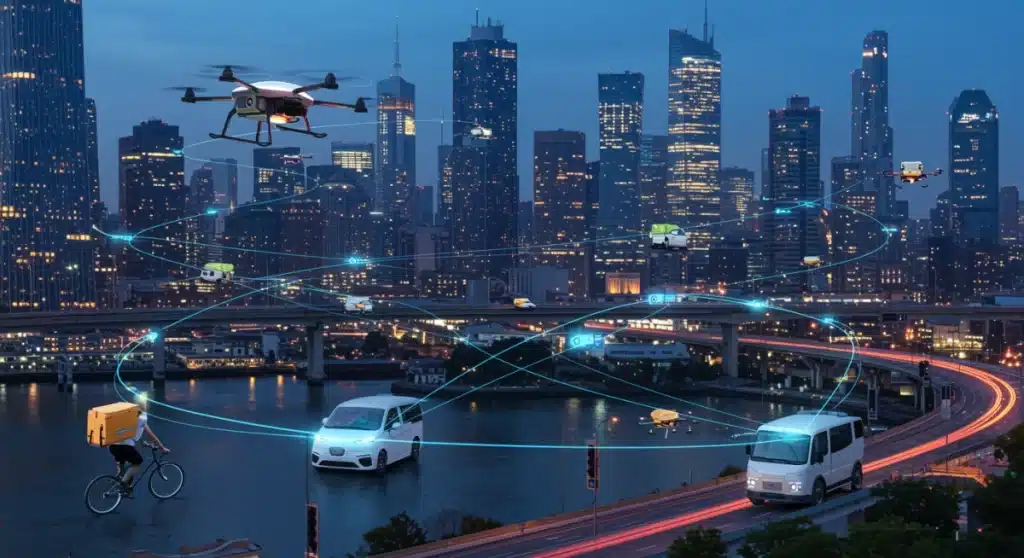
Last-mile delivery is the cornerstone of quick commerce, and by 2025, this segment is expected to witness significant technological and operational innovations. The relentless pursuit of speed and efficiency is driving the adoption of new delivery methods and advanced management systems.
The traditional reliance on human couriers, while still prevalent, is being augmented by a suite of emerging technologies. These innovations aim to reduce labor costs, increase delivery capacity, and enhance overall service reliability.
Emerging delivery technologies and methods
The future of last-mile delivery is multimodal, integrating various solutions to optimize routes, reduce environmental impact, and improve delivery times.
- Drone delivery: Ideal for specific lightweight items in less congested areas, offering rapid aerial transport.
- Autonomous vehicles and robots: Ground-based robots and self-driving vans for short-distance deliveries, especially in residential zones.
- Electric vehicles (EVs): Growing adoption of electric bikes, scooters, and vans to reduce carbon footprint and operational costs.
- Advanced route optimization software: AI-powered algorithms to plan the most efficient delivery paths in real-time, accounting for traffic and demand.
Beyond technology, operational innovations are also critical. This includes dynamic dispatching systems that can quickly assign orders to available couriers based on proximity and route efficiency. The gig economy plays a vital role here, providing a flexible workforce that can scale with demand.
However, the implementation of these innovations is not without its challenges. Regulatory hurdles for drone and autonomous vehicle operation, public acceptance, and the need for robust charging infrastructure for EVs are all factors that need to be addressed. Despite these obstacles, the trajectory towards a more automated and diverse last-mile delivery ecosystem is clear.
By 2025, a hybrid approach combining human ingenuity with technological prowess will define last-mile delivery, ensuring that quick commerce promises are met with precision and speed.
The Role of Data Analytics and AI in Quick Commerce
In the high-stakes world of quick commerce, data analytics and artificial intelligence (AI) are not just advantageous; they are indispensable. These technologies are the brains behind the brawn, enabling intelligent decision-making that optimizes every facet of the operation, from inventory management to delivery routes.
The sheer volume of data generated by quick commerce transactions, delivery logistics, and customer interactions provides a rich source for AI algorithms to learn and predict. This predictive power is key to maintaining the ultra-fast delivery promise.
Leveraging data for operational efficiency
AI and data analytics contribute to quick commerce success by providing actionable insights and automating complex processes.
- Demand forecasting: Predicting consumer demand with high accuracy to optimize inventory levels in MFCs and dark stores.
- Dynamic pricing: Adjusting prices in real-time based on demand, inventory, and competitive landscape.
- Route optimization: AI algorithms constantly recalculate the most efficient delivery routes, considering traffic, weather, and delivery windows.
- Personalized customer experiences: Using data to offer tailored product recommendations and promotions, enhancing customer loyalty.
Furthermore, AI-powered systems are crucial for managing the complex interplay between inventory, couriers, and customer orders. Real-time visibility into the entire delivery ecosystem allows for rapid adjustments to unforeseen circumstances, such as sudden spikes in orders or unexpected traffic delays.
Fraud detection and security are also enhanced through AI, protecting both consumers and businesses in a high-transaction environment. The ability to quickly identify and mitigate risks is paramount for maintaining trust and operational integrity.
By 2025, companies that effectively harness the power of data analytics and AI will be the ones leading the quick commerce race. These technologies will move beyond mere support functions to become core strategic assets, driving innovation and competitive differentiation.
Challenges and Opportunities for U.S. Retailers
The rapid ascent of quick commerce presents both significant challenges and unparalleled opportunities for U.S. retailers. Adapting to this new paradigm requires strategic foresight, substantial investment, and a willingness to reinvent established business models.
One of the primary challenges is the intense pressure on margins. The cost of ultra-fast delivery, including specialized infrastructure, labor, and technology, can erode profitability if not managed efficiently. Retailers must find innovative ways to balance speed with financial viability.
Navigating the quick commerce landscape
Retailers face various hurdles but also stand to gain significantly by embracing quick commerce.
- High operational costs: Managing the expenses associated with micro-fulfillment centers, specialized couriers, and advanced technology.
- Talent acquisition: Recruiting and retaining a skilled workforce for logistics and technology roles.
- Regulatory complexities: Adhering to evolving urban planning and labor laws related to rapid delivery services.
- Intense competition: Differentiating from a growing number of quick commerce players, both new entrants and established giants.
Despite these challenges, the opportunities are immense. Quick commerce allows retailers to significantly expand their market reach, tapping into new customer segments that prioritize convenience. It also fosters stronger customer loyalty by providing an exceptional shopping experience.
Furthermore, quick commerce can serve as a powerful differentiator in a crowded market. Retailers who successfully integrate q-commerce into their strategy can position themselves as innovators, attracting a tech-savvy consumer base and reinforcing their brand image.
By 2025, retailers who strategically invest in quick commerce capabilities, optimize their operations, and leverage technology will be well-positioned for sustained growth. Those who fail to adapt risk falling behind in an increasingly competitive and fast-paced retail environment.
The Future Outlook: 2025 and Beyond
Looking ahead to 2025 and beyond, quick commerce is poised to become an indelible part of the U.S. retail landscape. Its evolution will continue to shape consumer expectations and drive further innovation across the logistics and last-mile delivery sectors. The initial rapid expansion will likely mature into a more refined and sustainable model.
The emphasis will shift from merely achieving speed to perfecting the entire customer journey, encompassing seamless ordering, real-time tracking, and efficient returns. Integration with broader smart city initiatives and sustainable practices will also become increasingly important.
Long-term trends and predictions
Several key trends are expected to define the trajectory of quick commerce in the coming years.
- Consolidation: Smaller players may be acquired by larger entities, leading to a more concentrated market.
- Sustainability focus: Increased pressure for eco-friendly delivery methods, such as electric fleets and optimized routing to reduce emissions.
- Personalization: Even more refined personalization of offerings and delivery options based on individual customer data.
- Hybrid models: Integration of quick commerce with traditional retail, offering diverse fulfillment options like buy online, pick up in store (BOPIS) alongside ultra-fast delivery.
The regulatory environment will also play a crucial role in shaping the future. As quick commerce scales, governments and local authorities will likely introduce new regulations concerning urban logistics, labor practices, and the use of emerging delivery technologies, such as drones and autonomous vehicles.
Ultimately, the future of quick commerce is one of continuous adaptation and innovation. It will demand agility from all stakeholders, from technology developers to urban planners, to create a system that is not only fast but also efficient, equitable, and environmentally responsible.
By 2025, quick commerce will have cemented its place as a critical component of modern retail, fundamentally altering how goods are distributed and consumed across the United States.
| Key Aspect | Brief Description |
|---|---|
| Consumer Demand | Growing expectation for ultra-fast delivery (10-30 minutes) driving market growth. |
| Logistics Shift | Transition from large warehouses to micro-fulfillment centers and dark stores. |
| Last-Mile Innovations | Emergence of drones, autonomous vehicles, and electric fleets for delivery. |
| Technology Integration | AI and data analytics crucial for demand forecasting and route optimization. |
Frequently Asked Questions About Quick Commerce
Quick commerce (q-commerce) focuses on delivering goods, typically groceries or convenience items, within 10-30 minutes, significantly faster than traditional e-commerce which usually offers same-day or next-day delivery. It prioritizes speed and immediate gratification through localized fulfillment centers.
Micro-fulfillment centers (MFCs) are vital for quick commerce in the U.S. by enabling ultra-fast delivery. Their strategic urban placement reduces last-mile distances, and their automated systems facilitate rapid picking and packing, directly supporting the 10-30 minute delivery promise.
By 2025, AI will be critical in U.S. quick commerce logistics for advanced demand forecasting, dynamic route optimization, and real-time inventory management. It will enhance operational efficiency, reduce delivery times, and personalize customer experiences, driving competitive advantage.
Retailers face challenges such as high operational costs due to specialized infrastructure and labor, intense competition, and complex regulatory environments. Balancing the speed demands with profitability while maintaining service quality is a significant hurdle for successful adoption.
Quick commerce will increasingly drive sustainability in last-mile delivery through the adoption of electric vehicles (bikes, scooters, vans) and optimized delivery routes. The focus will be on reducing carbon footprints and noise pollution in urban areas, balancing speed with environmental responsibility.
Conclusion
The transformative power of quick commerce is undeniably reshaping the U.S. retail landscape, particularly its logistics and last-mile delivery components. By 2025, the industry will have fully embraced a decentralized, technology-driven approach, characterized by micro-fulfillment centers and an array of innovative delivery methods. While challenges related to costs, competition, and regulation persist, the strategic integration of AI and data analytics will be paramount for success. Retailers and logistics providers who adapt swiftly, prioritize efficiency, and commit to sustainable practices will not only meet the escalating consumer demand for instant gratification but also secure a dominant position in the evolving future of retail.