Actionable Plan: Reduce Cart Abandonment by 20% in 90 Days
Implementing a strategic 90-day plan leveraging behavioral nudges can effectively reduce e-commerce cart abandonment by 20%, transforming potential losses into completed sales through targeted interventions.
In the dynamic world of e-commerce, a significant challenge faced by online retailers is cart abandonment. This issue, where customers add items to their shopping cart but leave before completing the purchase, represents billions in lost revenue annually. This article presents an actionable plan: how to reduce cart abandonment by 20% in 90 days using behavioral nudges (practical solutions), offering a clear roadmap for businesses to convert more browsers into buyers. By understanding the psychological triggers behind consumer decisions, we can strategically implement interventions that guide customers toward checkout completion.
Understanding cart abandonment psychology
Cart abandonment isn’t merely a technical glitch; it’s a complex interplay of consumer psychology, user experience, and perceived value. Many factors contribute to a shopper’s decision to leave a cart, ranging from unexpected costs to a complicated checkout process. Delving into these underlying psychological triggers is the first step toward crafting effective solutions that resonate with customer behavior.
One primary reason for abandonment is often the element of surprise. Hidden fees, unexpected shipping costs, or taxes that only appear at the final stage can instantly deter a motivated buyer. This violates the principle of transparency and erodes trust. Another critical psychological barrier is decision fatigue, where too many choices or an overly long checkout form overwhelms the customer, leading them to simply give up. Addressing these core psychological issues is paramount for any successful strategy aiming to reduce cart abandonment.
The role of perceived value and urgency
Customers are constantly evaluating the value they receive versus the price they pay. If the perceived value of the items in their cart diminishes during the checkout process, perhaps due to a lengthy wait or a sudden distraction, they are more likely to abandon. Creating a sense of urgency or scarcity can also play a significant role in nudging customers towards completing a purchase, leveraging the fear of missing out (FOMO).
- Pricing Transparency: Clearly display all costs, including shipping and taxes, early in the shopping process. Unexpected charges are a major deterrent.
- Social Proof: Showcase positive reviews, testimonials, or popular product badges to build trust and validate the purchase decision.
- Limited-Time Offers: Implement clear, time-sensitive promotions directly tied to completing the purchase to create urgency.
- Scarcity Indicators: Use phrases like ‘only X left in stock’ or ‘selling fast’ to encourage immediate action without being overly aggressive.
By effectively managing customer expectations and employing subtle psychological cues, businesses can significantly influence the buyer’s journey. Understanding these nuances allows for the development of more empathetic and effective strategies to keep customers engaged and moving towards conversion.
Phase 1: Diagnosis and data collection (days 1-30)
The initial phase of our 90-day plan focuses heavily on diagnosis and data collection. Before implementing any solutions, it is crucial to understand the specific pain points contributing to cart abandonment within your unique e-commerce ecosystem. Generic fixes rarely yield optimal results; a data-driven approach ensures that interventions are targeted and effective. This requires a deep dive into analytics, user feedback, and competitive analysis.
Start by meticulously analyzing your website analytics. Tools like Google Analytics can provide invaluable insights into user behavior, identifying where customers drop off in the sales funnel. Look for patterns in page views, exit rates, and time spent on specific pages within the checkout flow. High exit rates on the shipping information page, for instance, might indicate issues with shipping costs or delivery options. Similarly, a high bounce rate on the payment page could point to a lack of preferred payment methods or security concerns.
Leveraging user feedback and heatmaps
Beyond quantitative data, qualitative insights offer a richer understanding of customer frustrations. Implement short surveys at the point of abandonment or through email follow-ups to directly ask customers why they left. This direct feedback can uncover issues that analytics alone might miss, such as website bugs, confusing navigation, or unmet expectations regarding product information.
- On-site Surveys: Use pop-ups or discreet banners to ask abandoning users about their reasons for leaving.
- Exit-Intent Pop-ups: Offer a small incentive or address common concerns when a user shows signs of leaving the checkout process.
- Heatmaps and Session Recordings: Tools like Hotjar or Crazy Egg can visually represent user interactions, showing where clicks are concentrated, where users hesitate, or where they encounter difficulties.
- A/B Testing Setup: Prepare your analytics and testing platforms for future A/B tests. Define key metrics for success early on.
By combining robust data analysis with direct customer feedback and visual tracking, you build a comprehensive picture of your cart abandonment landscape. This diagnostic phase is the bedrock upon which all subsequent interventions will be built, ensuring that your efforts are focused on the most impactful areas.
Phase 2: Implementing behavioral nudges (days 31-60)
With a solid understanding of your abandonment drivers, Phase 2 shifts into action: implementing targeted behavioral nudges. These aren’t forceful sales tactics but subtle cues designed to gently guide customers toward completing their purchase by making the decision easier, more appealing, or less risky. The goal is to remove friction and reinforce the value proposition at critical junctures in the customer journey.
One highly effective nudge involves simplifying the checkout process. Many abandoned carts result from overly complicated forms or too many steps. Streamline your checkout by reducing the number of fields, enabling guest checkout options, and providing clear progress indicators. A single-page checkout, where all necessary information is collected on one screen, can significantly reduce perceived effort and abandonment rates.
Optimizing the checkout experience
Psychological safety plays a crucial role in online transactions. Customers need to feel confident that their personal and financial information is secure. Displaying trust badges, security certifications, and clear privacy policies can alleviate these concerns. Furthermore, offering multiple, familiar payment options caters to diverse preferences and builds confidence, as customers are more likely to complete a purchase using a payment method they trust.
- Progress Bars: Visually show customers how far along they are in the checkout process, providing a sense of accomplishment and reducing perceived effort.
- Guest Checkout: Offer the option to purchase without creating an account to remove a common barrier for first-time buyers.
- Trust Badges: Display security seals (e.g., SSL certificates, payment provider logos) prominently near payment fields.
- Diverse Payment Options: Include popular methods like credit cards, PayPal, Apple Pay, and Google Pay to cater to all preferences.
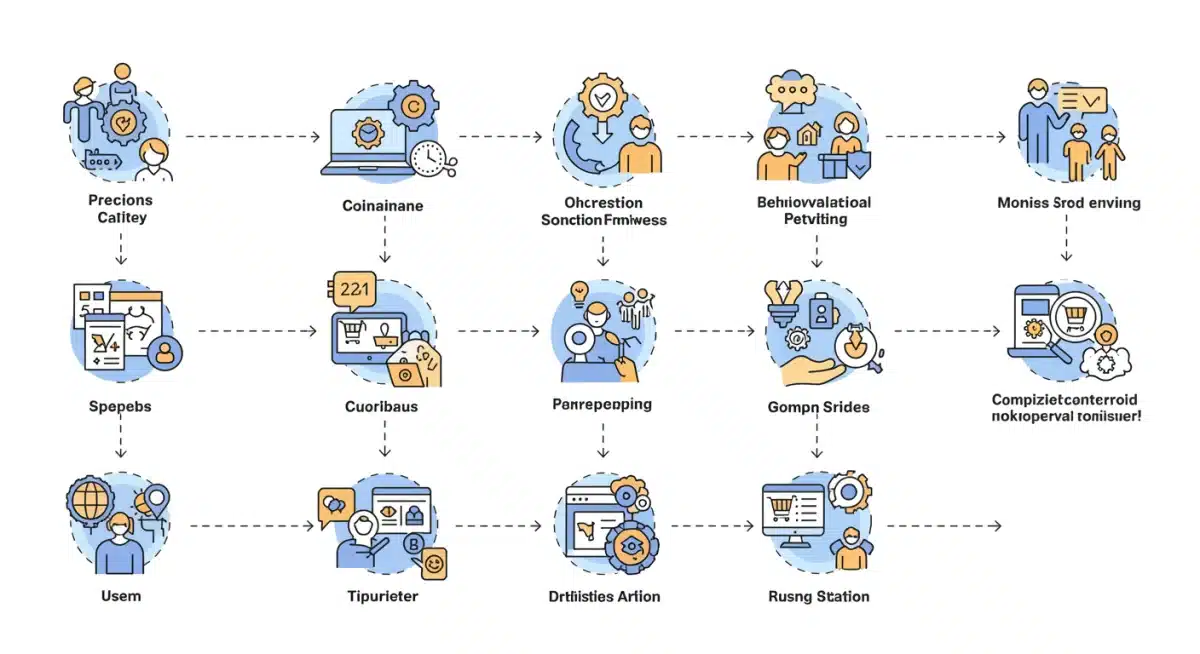
Another powerful nudge is providing clear, concise summaries of the cart contents and total cost at every step. This transparency prevents surprises and reinforces the value the customer is receiving. By making the checkout process intuitive, secure, and transparent, you significantly increase the likelihood of conversion.
Phase 3: Refinement and re-engagement (days 61-90)
The final phase of the 90-day plan focuses on refining your implemented nudges and actively re-engaging customers who still abandon their carts. This iterative process is crucial for sustained improvement, as consumer behavior and market conditions are constantly evolving. It involves continuous monitoring, A/B testing, and personalized outreach to recover lost sales.
Regularly review the performance of your implemented behavioral nudges. Are they yielding the desired results? Use A/B testing to compare different versions of your nudges – for example, try different wording on urgency messages, placement of trust badges, or variations in your checkout flow. Small adjustments can often lead to significant improvements in conversion rates. This continuous optimization ensures that your strategies remain effective and adapt to changing customer preferences.
Personalized re-engagement strategies
Even with optimized nudges, some customers will inevitably abandon their carts. This is where a robust re-engagement strategy comes into play. Abandoned cart emails are a highly effective tool, reminding customers of their items and often including a small incentive to complete the purchase. Personalization is key; tailor these emails with product images, specific recommendations, and a clear call to action.
- Abandoned Cart Email Sequences: Send a series of 2-3 emails. The first can be a simple reminder, the second a reminder with social proof, and the third with a small discount.
- Retargeting Ads: Display ads to users who visited your site but didn’t convert, reminding them of the products they viewed or added to their cart.
- Live Chat Support: Offer proactive live chat support on checkout pages to address real-time customer questions or concerns.
- Personalized Offers: Use customer data to offer relevant discounts or bundled products in re-engagement efforts.
Beyond emails, consider retargeting ads that display the abandoned items across other platforms. However, be mindful of frequency to avoid overwhelming customers. Providing excellent customer support, such as live chat on checkout pages, can also address immediate concerns and prevent abandonment in real-time. This multi-channel approach to re-engagement maximizes your chances of recovering lost sales and fostering long-term customer relationships.
Leveraging social proof and urgency
Social proof and urgency are powerful behavioral nudges that, when used ethically and strategically, can significantly influence purchasing decisions. Humans are inherently social creatures, often looking to others for guidance on what to buy or how to behave. Similarly, the perception of scarcity or a limited-time opportunity can create a compelling reason to act immediately rather than procrastinate.
Incorporating social proof can take many forms. Displaying customer reviews and ratings prominently on product pages and during checkout validates the quality and desirability of your products. Showcasing the number of recent purchases or how many other customers are currently viewing an item can create a sense of popularity and reassure potential buyers. This collective validation reduces perceived risk and builds trust, making customers more comfortable moving forward with their purchase.
Ethical application of urgency and scarcity
Urgency and scarcity nudges, such as ‘only 3 left in stock’ or ‘sale ends tonight,’ can be highly effective. However, it’s critical to use these tactics ethically and transparently. False scarcity or manipulative countdown timers can erode customer trust and damage your brand reputation. When genuine, these nudges tap into the psychological principle of loss aversion, where the fear of missing out on a good deal or a desired product is a strong motivator.
- Real-time Stock Levels: Accurately display low stock quantities to create genuine urgency without manipulation.
- Clear Offer Expiry: Provide a visible countdown timer for genuine limited-time sales, ensuring transparency.
- Customer Testimonials: Feature quotes or video testimonials from satisfied customers throughout the shopping journey.
- ‘People also bought’ Recommendations: Suggest related items based on popular purchases, leveraging collective wisdom.
The key is to integrate these nudges seamlessly into the user experience, making them feel like helpful information rather than aggressive sales pressure. By balancing the power of social influence with transparent urgency, you can effectively nudge customers towards completing their purchases while maintaining a positive brand perception.
Personalization and customer journey mapping
In today’s competitive e-commerce landscape, generic experiences no longer suffice. Personalization stands out as a critical behavioral nudge, transforming a transactional interaction into a tailored journey that resonates deeply with individual customer needs and preferences. Understanding and mapping the customer journey is foundational to implementing effective personalization strategies that reduce cart abandonment.
Customer journey mapping involves visualizing the entire path a customer takes, from initial discovery to post-purchase support. This allows businesses to identify touchpoints where personalization can be most impactful. For instance, if a customer repeatedly views specific product categories but doesn’t add them to the cart, personalized recommendations based on their browsing history can be served on subsequent visits or in retargeting efforts. This demonstrates an understanding of their interests, making the shopping experience more relevant and engaging.
Tailoring experiences to individual preferences
Personalization goes beyond just product recommendations. It can extend to dynamically adjusting website content, displaying personalized promotions, or even customizing the checkout experience based on a customer’s location or past purchase behavior. For example, offering local pickup options to customers within a certain radius or pre-filling shipping information for returning users significantly reduces friction and enhances convenience.
- Dynamic Content: Show different homepage banners or product carousels based on a user’s browsing history or demographics.
- Personalized Product Recommendations: Use AI-driven algorithms to suggest products similar to those viewed or added to the cart.
- Targeted Promotions: Offer specific discounts or free shipping based on a customer’s loyalty status or cart value.
- Remembered Preferences: Save customer details (like shipping addresses or preferred payment methods) for faster checkout on future visits.
By investing in tools and strategies that enable granular personalization, businesses can create a more intuitive and satisfying shopping experience. This tailored approach not only helps to reduce cart abandonment but also fosters stronger customer loyalty and increases lifetime value, turning casual browsers into dedicated patrons.
Continuous monitoring and adaptation
Reducing cart abandonment is not a one-time fix but an ongoing process that requires continuous monitoring, analysis, and adaptation. The e-commerce environment is constantly evolving, with new trends, technologies, and consumer behaviors emerging regularly. A static strategy will quickly become outdated, negating initial gains. Therefore, establishing a robust framework for continuous improvement is essential for long-term success.
Regularly scheduled reviews of your analytics data are paramount. Track key performance indicators (KPIs) such as cart abandonment rate, conversion rate, average order value, and customer acquisition cost. Compare these metrics against your initial benchmarks and industry standards. Look for any spikes or dips that might indicate a new issue or a successful intervention. This consistent data analysis allows you to identify what’s working, what isn’t, and where further optimization is needed.
Adapting to market changes and feedback
Beyond internal data, staying attuned to external factors is equally important. Monitor competitor strategies, industry trends, and shifts in consumer expectations. For instance, if a competitor introduces a new, faster shipping option, you might need to re-evaluate your own delivery promises. Similarly, paying close attention to customer feedback, whether through surveys, social media, or support channels, provides invaluable qualitative insights for adaptation.
- Weekly KPI Reviews: Set up a dashboard to monitor cart abandonment rates and related metrics consistently.
- A/B Test New Nudges: Continuously experiment with different behavioral nudges and checkout flow variations.
- Competitor Benchmarking: Regularly analyze competitor strategies for pricing, shipping, and checkout experience.
- Feedback Loop Implementation: Systematize the collection and analysis of customer feedback to inform strategy adjustments.
The ability to adapt quickly is a hallmark of successful e-commerce businesses. By fostering a culture of continuous learning and experimentation, you can ensure that your strategies for reducing cart abandonment remain effective and responsive to the dynamic needs of your customers and the marketplace. This iterative approach guarantees sustained improvements and a healthier bottom line.
| Key Strategy | Brief Description |
|---|---|
| Diagnose & Collect Data | Analyze analytics and user feedback to pinpoint specific cart abandonment causes. |
| Implement Behavioral Nudges | Streamline checkout, ensure transparency, and build trust with security badges. |
| Refine & Re-engage | Utilize A/B testing, abandoned cart emails, and retargeting for continuous improvement. |
| Personalize Experience | Tailor content, recommendations, and offers to individual customer preferences. |
Frequently asked questions about cart abandonment
The primary cause of cart abandonment often stems from unexpected costs, such as high shipping fees or taxes revealed late in the checkout process. Other significant factors include a complicated checkout, mandatory account creation, and security concerns, all contributing to friction in the purchasing journey.
Behavioral nudges subtly guide customers through the purchasing process by making decisions easier and more appealing. Examples include displaying trust badges, offering guest checkout, showing progress bars, and using transparent pricing, which collectively reduce friction and build confidence to complete a purchase.
Effective re-engagement strategies include sending personalized abandoned cart email sequences, implementing retargeting ads displaying viewed products, and offering live chat support on checkout pages. These tactics remind customers of their interest and address any lingering concerns, encouraging them to return and complete their purchase.
Yes, personalization is crucial. Tailoring the shopping experience with dynamic content, personalized product recommendations, and targeted promotions based on user behavior significantly enhances relevance and engagement. This customized approach reduces friction and makes customers feel understood, increasing the likelihood of conversion.
You should continuously monitor and adapt your cart abandonment strategy. Regular weekly or monthly reviews of KPIs, A/B testing new nudges, and staying updated on market trends are essential. E-commerce is dynamic, so ongoing refinement ensures your strategies remain effective and responsive to customer needs.
Conclusion
Successfully reducing cart abandonment by 20% in 90 days is an ambitious yet achievable goal for any e-commerce business committed to understanding and optimizing its customer journey. By systematically diagnosing pain points, strategically implementing behavioral nudges, and relentlessly refining re-engagement efforts, retailers can transform potential losses into significant revenue gains. The continuous cycle of data analysis, adaptation, and personalization ensures that your e-commerce platform remains competitive, user-friendly, and highly profitable, ultimately fostering stronger customer relationships and sustained growth in the dynamic online marketplace.