Data Analytics Platforms: Uncovering US Retail Trends with 90% Accuracy by 2025
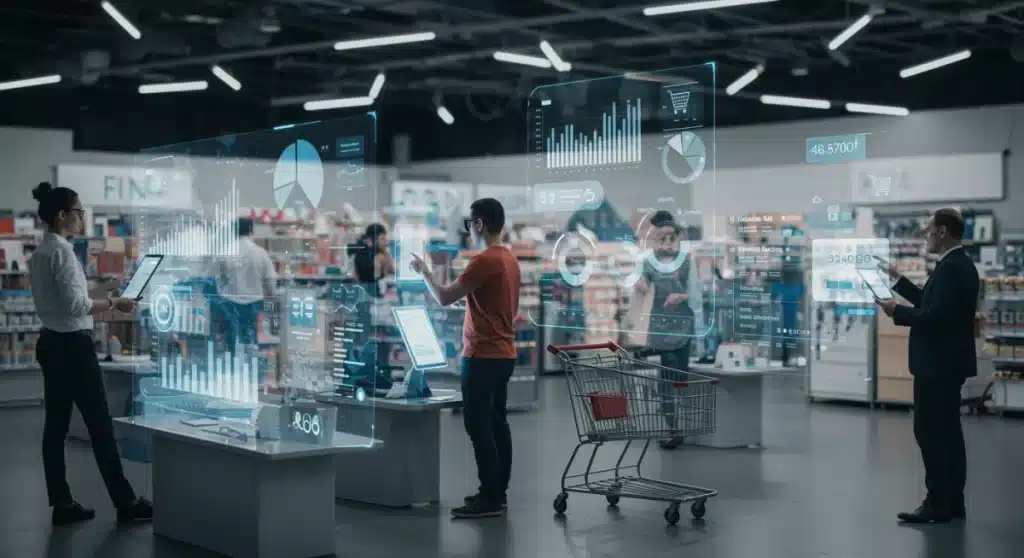
By 2025, advanced data analytics platforms are set to empower US retailers with 90% accuracy in uncovering crucial consumer trends, driving unprecedented precision in strategic decision-making and operational efficiency.
The retail landscape is in constant flux, demanding an acute understanding of consumer behavior to stay competitive. By 2025, the promise of retail data analytics platforms reaching 90% accuracy in uncovering key consumer trends for US retailers is not merely aspirational but increasingly achievable, fundamentally reshaping strategies from inventory to customer engagement.
The evolving role of data in US retail
Data has transcended its traditional role as a mere record-keeping tool, becoming the lifeblood of modern retail. For US retailers, navigating an increasingly complex and competitive market, the ability to harness and interpret vast datasets is no longer an advantage but a necessity. This evolution signifies a shift from reactive business models to proactive, predictive strategies.
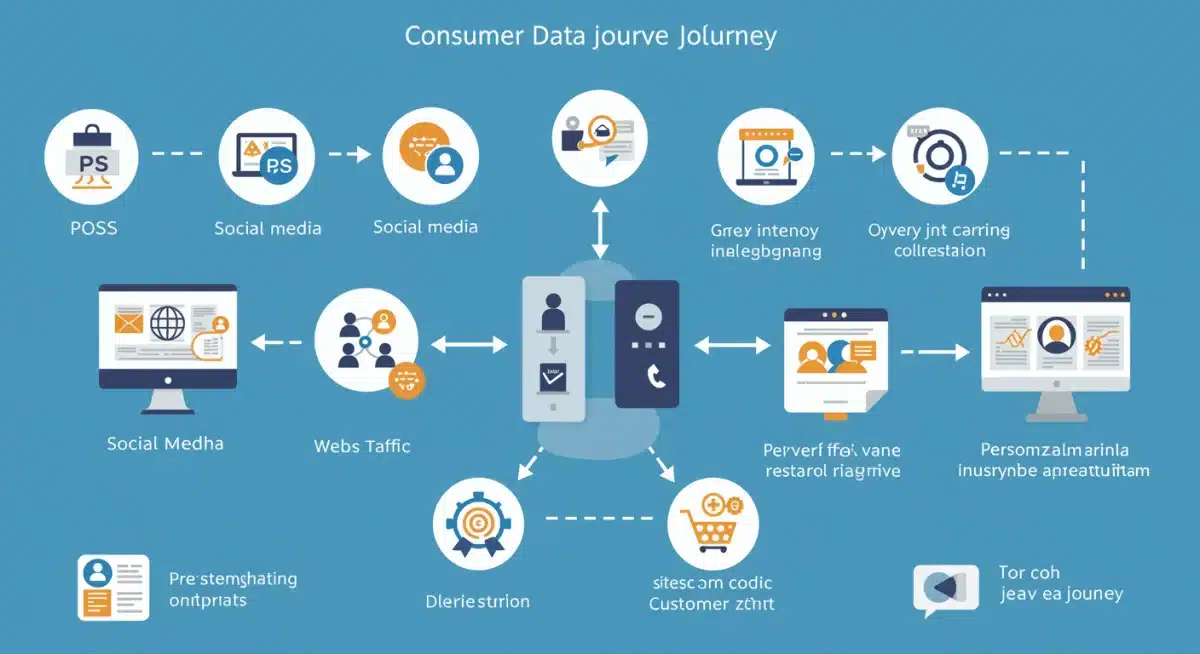
The sheer volume of data generated daily—from point-of-sale transactions and website clicks to social media interactions and loyalty program engagements—offers an unparalleled opportunity. However, without sophisticated tools to process and analyze this information, it remains unharnessed potential. Data analytics platforms bridge this gap, transforming raw data into actionable insights that inform every facet of retail operations.
From raw data to strategic insights
The journey from raw data to strategic insights involves several critical steps, each amplified by advanced analytics. Initially, data collection must be comprehensive, gathering information from all customer touchpoints. Subsequently, this data requires cleansing and structuring to ensure accuracy and usability. Finally, analytical models are applied to identify patterns, predict future behaviors, and uncover hidden relationships.
- Data acquisition: Collecting information from diverse sources, including online, in-store, and third-party data.
- Data integration: Consolidating disparate datasets into a unified view for holistic analysis.
- Data quality: Ensuring the accuracy, completeness, and consistency of data to prevent flawed insights.
- Data visualization: Presenting complex data in an easily digestible format for quick decision-making.
The strategic value lies in anticipating consumer needs and preferences, allowing retailers to optimize product assortments, refine marketing campaigns, and enhance the overall customer experience. This proactive approach minimizes risks associated with market shifts and capitalizes on emerging opportunities, ultimately driving profitability and sustained growth.
Key consumer trends shaped by data analytics
The retail sector is undergoing profound changes driven by evolving consumer expectations and technological advancements. Data analytics platforms are instrumental in identifying and understanding these shifts, allowing US retailers to adapt their strategies effectively. From the rise of personalized shopping experiences to the growing demand for sustainable products, data provides the clarity needed to respond with agility.
Understanding these trends with high accuracy empowers retailers to move beyond guesswork. Instead, they can make data-driven decisions that resonate deeply with their target audience, fostering loyalty and driving sales. The ability to predict future trends with 90% accuracy by 2025 means retailers can innovate ahead of the curve, rather than simply reacting to market changes.
Personalization at scale
Personalization has emerged as a cornerstone of modern retail, with consumers expecting tailored experiences across all channels. Data analytics platforms make this possible by analyzing individual browsing history, purchase patterns, and demographic information to deliver highly relevant product recommendations, promotions, and content.
- Customer segmentation: Grouping customers based on shared characteristics and behaviors for targeted marketing.
- Recommendation engines: Utilizing AI and machine learning to suggest products relevant to individual preferences.
- Dynamic pricing: Adjusting prices in real-time based on demand, inventory levels, and competitor pricing.
- Personalized offers: Delivering unique discounts and promotions directly to specific customer segments.
This level of personalization not only enhances the customer journey but also significantly increases conversion rates and average order value. Retailers who excel in personalization build stronger relationships with their customers, leading to repeat business and positive word-of-mouth.
Leveraging AI and machine learning for predictive accuracy
The pursuit of 90% accuracy in consumer trend forecasting by 2025 relies heavily on the capabilities of artificial intelligence (AI) and machine learning (ML). These advanced technologies move beyond traditional data analysis, enabling platforms to learn from historical data, identify complex patterns, and make highly accurate predictions about future consumer behaviors and market dynamics. For US retailers, this means a competitive edge in anticipating demand, optimizing inventory, and delivering hyper-personalized experiences.
AI and ML algorithms are capable of processing immense volumes of data at speeds and scales impossible for human analysts. This allows for continuous learning and refinement of predictive models, ensuring that forecasts remain relevant and precise even as market conditions evolve. The integration of these technologies into data analytics platforms marks a significant leap forward in retail intelligence.
The power of predictive analytics
Predictive analytics, powered by AI and ML, allows retailers to foresee future events and trends with remarkable precision. This includes everything from anticipating seasonal demand spikes to identifying emerging fashion preferences or shifts in purchasing channels. Such foresight enables strategic planning that minimizes waste and maximizes opportunity.
- Demand forecasting: Predicting future product demand to optimize inventory levels and prevent stockouts or overstock.
- Customer churn prediction: Identifying customers at risk of leaving to implement retention strategies proactively.
- Trend identification: Spotting nascent trends in consumer preferences, social media, and competitor activities.
- Sentiment analysis: Understanding public and customer sentiment towards products, brands, and services from unstructured text data.
The ability to predict with such accuracy transforms decision-making, moving it from reactive adjustments to proactive, data-informed strategies. This translates directly into improved operational efficiency, reduced costs, and enhanced customer satisfaction.
Implementing data analytics platforms: challenges and solutions
While the benefits of data analytics platforms are clear, their successful implementation within US retail organizations presents a unique set of challenges. These can range from technical complexities and data integration issues to a lack of internal expertise and resistance to change. Overcoming these hurdles is crucial for retailers aiming to achieve 90% accuracy in consumer trend analysis by 2025.
Addressing these challenges requires a strategic approach that combines technological investment with organizational development. Retailers must not only adopt the right tools but also cultivate a data-driven culture that values insights and empowers employees to utilize them effectively. Without a holistic strategy, even the most advanced platforms may fail to deliver on their full potential.
Common implementation hurdles
The path to a fully integrated and effective data analytics strategy is often fraught with obstacles. Understanding these common challenges is the first step toward developing robust solutions.
- Data silos: Disparate data sources across different departments make a unified view of the customer difficult.
- Data quality issues: Inconsistent, incomplete, or inaccurate data can lead to flawed insights and poor decisions.
- Lack of skilled personnel: A shortage of data scientists and analysts who can effectively manage and interpret complex data.
- Integration complexities: Integrating new analytics platforms with existing legacy systems can be technically challenging and costly.
Overcoming these challenges often involves phased implementation strategies, investing in data governance frameworks, and prioritizing continuous training for employees. Strategic partnerships with technology providers can also provide access to specialized expertise and accelerate the adoption process.
The impact on US retail operations and profitability
The profound impact of data analytics platforms extends across all facets of US retail operations, fundamentally altering how businesses manage inventory, optimize supply chains, and engage with customers. The achievement of 90% accuracy in consumer trend identification by 2025 is set to unlock unprecedented levels of efficiency and profitability, transforming competitive landscapes.
By providing clear, actionable insights, these platforms enable retailers to move from reactive decision-making to proactive strategic planning. This shift minimizes waste, reduces operational costs, and significantly enhances the return on investment for marketing and product development initiatives. The net effect is a more agile, customer-centric, and ultimately more profitable retail enterprise.
Optimizing inventory and supply chain
One of the most immediate and significant impacts of data analytics is on inventory management and supply chain optimization. Accurate forecasting of consumer demand allows retailers to fine-tune their stock levels, ensuring products are available when and where customers want them, without incurring excessive holding costs or experiencing stockouts.
- Reduced waste: Minimizing overstocking and markdown losses through precise demand prediction.
- Improved fulfillment: Enhancing the speed and accuracy of order fulfillment by optimizing warehouse operations.
- Supplier collaboration: Using shared data insights to foster stronger, more efficient relationships with suppliers.
- Logistics efficiency: Streamlining transportation routes and delivery schedules based on real-time demand and geographic data.
The ability to predict consumer trends with high accuracy means retailers can anticipate shifts in demand for specific products or categories, adjusting their purchasing and distribution strategies accordingly. This not only improves operational efficiency but also contributes directly to the bottom line by reducing costs and maximizing sales opportunities.
Future outlook: 90% accuracy and beyond
The journey towards 90% accuracy in uncovering key consumer trends for US retailers by 2025 is an ambitious yet attainable goal, marking a new era of data-driven decision-making. As technology continues to evolve, the capabilities of data analytics platforms will only become more sophisticated, pushing the boundaries of what is possible in retail intelligence. This future promises even greater precision, personalization, and efficiency for businesses willing to embrace innovation.
Beyond 2025, we can expect to see data analytics platforms integrate more deeply with emerging technologies such as augmented reality (AR) and virtual reality (VR), creating immersive and highly personalized shopping experiences. The continuous feedback loop between consumer interactions and analytical insights will further refine predictive models, potentially exceeding the 90% accuracy benchmark. The focus will shift towards not just predicting what consumers want, but anticipating what they don’t even know they want yet.
Emerging technologies and enhanced capabilities
The synergistic integration of data analytics with other cutting-edge technologies will unlock new dimensions of retail insight and operational excellence. This convergence will allow for a more holistic understanding of the consumer and the market.
- Edge computing: Processing data closer to the source (e.g., in-store sensors) for real-time insights and faster decision-making.
- Generative AI: Creating highly personalized content, product designs, and marketing campaigns based on predicted trends.
- Blockchain for transparency: Enhancing supply chain visibility and product authenticity, appealing to conscious consumers.
- Quantum computing: Potentially enabling the processing of even larger and more complex datasets for unparalleled predictive power.
These advancements will not only increase the accuracy of trend prediction but also empower retailers to innovate their business models, optimize customer engagement across all touchpoints, and build truly resilient and future-proof enterprises. The era beyond 2025 will be characterized by an even more dynamic, intelligent, and consumer-centric retail landscape.
| Key Trend | Brief Description |
|---|---|
| Hyper-Personalization | Tailoring experiences for individual customers based on granular data analysis. |
| Predictive Demand | Forecasting product demand with high accuracy to optimize inventory and supply chain. |
| Ethical AI & Data Privacy | Increasing focus on transparent and secure data practices to build consumer trust. |
| Seamless Omnichannel | Integrating online and offline channels for a consistent and smooth customer journey. |
Frequently asked questions about retail data analytics
Data analytics platforms in retail are sophisticated software solutions designed to collect, process, analyze, and visualize vast amounts of consumer and operational data. They help retailers understand purchasing patterns, predict future trends, and optimize various business functions, from marketing to supply chain management.
Achieving 90% accuracy involves leveraging advanced AI and machine learning algorithms that learn from historical data, identify complex patterns, and continuously refine predictive models. These platforms integrate diverse data sources and apply sophisticated statistical methods to minimize errors and improve forecasting precision significantly.
High-accuracy trend analysis offers numerous benefits, including optimized inventory levels, reduced waste, personalized customer experiences, more effective marketing campaigns, and enhanced supply chain efficiency. Ultimately, it leads to increased profitability, stronger customer loyalty, and a competitive advantage in the dynamic US retail market.
Common challenges include integrating disparate data sources, ensuring data quality, overcoming a lack of skilled personnel, and managing the technical complexities of integrating new platforms with existing systems. Addressing these requires strategic planning, investment in training, and potentially external partnerships.
Beyond 2025, data analytics in retail is expected to integrate further with emerging technologies like edge computing, generative AI, and potentially quantum computing. This will lead to even greater predictive capabilities, hyper-personalized consumer interactions, and real-time operational optimizations, creating a more intelligent and responsive retail ecosystem.
Conclusion
The rapid advancement of data analytics platforms is undeniably setting a new standard for US retailers. The projected 90% accuracy in uncovering key consumer trends by 2025 signifies a transformative shift from reactive guesswork to proactive, data-driven strategy. This evolution will empower retailers to not only meet but anticipate consumer demands with unprecedented precision, optimizing every facet of their operations from inventory management to customer engagement. As the retail landscape continues to evolve, embracing and mastering these sophisticated analytical tools will be paramount for sustained growth, profitability, and competitive advantage in a highly dynamic market.