Reverse Logistics: Optimize Returns, Save 15% for US Retailers by 2025
Optimizing reverse logistics is a critical strategic imperative for U.S. retailers, offering significant cost reduction potential of up to 15% by 2025 through streamlined returns, improved operational efficiency, and enhanced customer satisfaction.
In the dynamic landscape of modern retail, the efficient management of product returns has moved from a mere operational necessity to a strategic imperative. The concept of reverse logistics optimization is no longer just about handling unwanted goods; it represents a powerful lever for U.S. retailers to significantly reduce costs, enhance sustainability, and ultimately improve customer loyalty. As we approach 2025, retailers are facing increasing pressure to refine their returns processes, not only to meet consumer expectations but also to unlock substantial financial benefits, with the potential to save up to 15% on overall operational costs.
Understanding the evolving landscape of reverse logistics
Reverse logistics, at its core, encompasses all operations related to the reuse of products and materials. This includes processing returned merchandise, managing repairs, refurbishing items, and even handling recycling. For U.S. retailers, the sheer volume of returns, particularly in online sales, presents both a formidable challenge and a unique opportunity for optimization.
The traditional view of reverse logistics as a cost center is rapidly shifting. Forward-thinking retailers now recognize it as a critical component of their supply chain that, when managed effectively, can directly impact profitability and brand reputation. The rise of e-commerce has exacerbated the complexity, with customers expecting seamless, no-hassle return experiences, often regardless of the item’s value or reason for return.
The financial impact of inefficient returns
Inefficient reverse logistics can lead to substantial financial drains. These include direct costs like shipping, handling, and inspection, as well as indirect costs such as inventory write-offs, storage fees for returned items, and the lost opportunity to resell products quickly. A poorly managed returns process can also erode customer trust, leading to lost sales in the long run.
- Increased shipping and handling expenses for returns.
- Higher labor costs for manual inspection and sorting.
- Loss of product value due to delays in processing.
- Elevated inventory holding costs for returned items.
By proactively addressing these inefficiencies, retailers can transform their returns process into a value-generating activity. This involves leveraging technology, re-evaluating policies, and collaborating with supply chain partners to create a more agile and responsive system. The goal is not just to minimize losses but to maximize the recovery of value from returned products.
The evolving landscape demands a comprehensive approach to reverse logistics, moving beyond basic returns management to a more integrated and strategic framework. This shift is essential for U.S. retailers aiming to remain competitive and achieve significant cost savings by 2025.
Leveraging technology for streamlined returns processes
Technology plays a pivotal role in transforming inefficient reverse logistics into optimized, cost-saving operations. From AI-powered analytics to automated warehousing, the right technological investments can significantly reduce manual effort, improve accuracy, and accelerate the entire returns cycle. Embracing these innovations is non-negotiable for U.S. retailers aiming for a 15% cost reduction by 2025.
Modern solutions offer unprecedented visibility into the returns process, allowing retailers to track items from the moment they leave the customer’s hands until they are reintegrated into inventory or disposed of. This transparency is crucial for identifying bottlenecks, predicting return trends, and making data-driven decisions that enhance efficiency.
Artificial intelligence and machine learning in returns
AI and machine learning algorithms can analyze vast amounts of data to predict return rates for specific products, identify common reasons for returns, and even suggest optimal disposition paths (e.g., resell, repair, recycle). This predictive capability enables retailers to prepare resources in advance, reducing processing times and associated costs.
- Predicting return volumes and patterns.
- Automating quality inspection and grading.
- Optimizing routing for returned goods.
- Personalizing return options for customers.
Furthermore, AI-driven chatbots can handle initial customer inquiries regarding returns, guiding them through the process and reducing the load on customer service teams. This not only improves efficiency but also enhances the overall customer experience by providing instant support.
Automation and robotics in warehouses
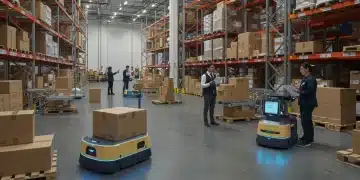
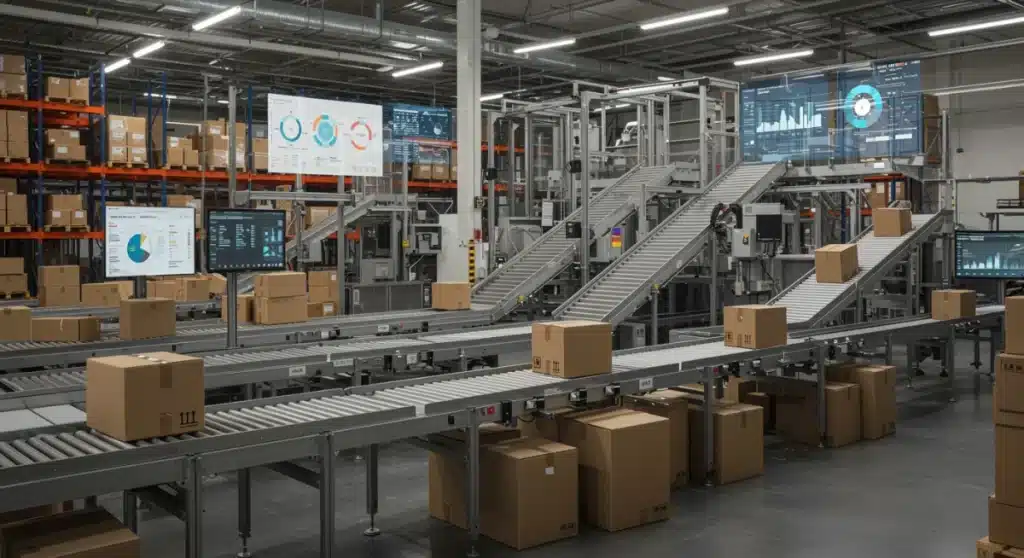
Automated sorting systems and robotic process automation (RPA) in warehouses can drastically speed up the physical handling of returned items. Robots can quickly inspect, sort, and move products to their designated locations, minimizing human error and labor costs. This is particularly beneficial for high-volume retailers.
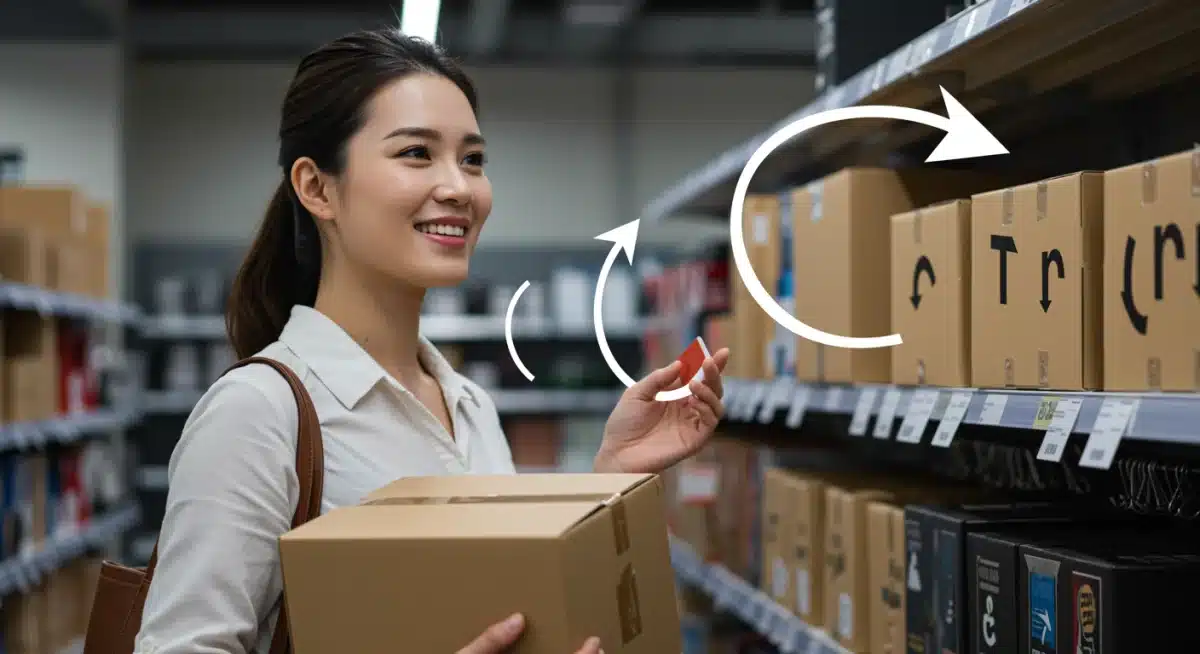
The integration of these technologies creates a seamless flow of information and products, reducing the time items spend in transit or awaiting processing. This quicker turnaround means returned products can be resold faster, recovering their value and preventing further depreciation.
Ultimately, a robust technology infrastructure is the backbone of successful reverse logistics optimization. By investing in smart solutions, U.S. retailers can gain a significant competitive advantage, streamline operations, and realize substantial cost savings.
Enhancing customer experience through flexible return policies
While cost savings are a primary driver for reverse logistics optimization, the impact on customer experience cannot be overstated. In today’s competitive retail environment, a flexible and transparent return policy is a powerful tool for building trust and fostering loyalty. For U.S. retailers, a positive return experience can transform a potentially negative interaction into an opportunity for repeat business.
Customers now expect convenience and flexibility when it comes to returns. This includes multiple return channels (in-store, mail, drop-off points), clear instructions, and quick refunds. Retailers who fail to meet these expectations risk losing customers to competitors who offer a more seamless experience.
Clear and transparent return guidelines
Providing easily accessible and understandable return policies is fundamental. Vague or overly restrictive policies can lead to frustration and distrust. Retailers should clearly communicate return windows, conditions for return, and the refund process, ensuring customers feel informed and respected.
- Clearly state return eligibility criteria.
- Specify return deadlines and exceptions.
- Outline the refund or exchange process.
- Offer multiple convenient return methods.
This transparency also helps to manage customer expectations, reducing the likelihood of disputes and improving the efficiency of customer service interactions related to returns.
Personalized return options and proactive communication
Offering personalized return options, such as instant refunds before the item is even received, or providing prepaid shipping labels, can significantly enhance customer satisfaction. Proactive communication throughout the return process, including status updates, keeps customers informed and reduces anxiety.
By making the return process as painless as possible, retailers can mitigate the negative impact of a product not meeting expectations. A positive return experience can even turn a dissatisfied customer into a loyal advocate, demonstrating that the retailer values their business beyond the initial transaction.
Investing in a customer-centric approach to reverse logistics not only boosts satisfaction but also reduces the operational burden of handling complex or disputed returns. This strategic focus is key for U.S. retailers aiming to thrive in the modern market.
Implementing sustainable practices in returns management
Sustainability is no longer a niche concern; it’s a mainstream expectation for consumers and a critical consideration for responsible businesses. For U.S. retailers, optimizing reverse logistics presents a significant opportunity to integrate sustainable practices, reducing environmental impact while simultaneously achieving cost savings. This dual benefit makes sustainable returns management a vital strategy for 2025.
Traditional returns often result in a considerable amount of waste, with many returned items ending up in landfills due to inefficient processing or high disposal costs. By adopting more sustainable approaches, retailers can minimize waste, conserve resources, and enhance their brand image.
Reducing waste through refurbishment and recycling
Instead of simply discarding returned items, retailers can establish robust programs for refurbishment, repair, and recycling. Products that cannot be resold as new can often be restored to a marketable condition or broken down for their valuable components. This not only reduces landfill waste but also creates new revenue streams.
- Prioritizing repair and refurbishment over disposal.
- Implementing effective recycling programs for components.
- Donating usable returned goods to charities.
- Exploring secondary markets for less-than-perfect items.
Collaborating with specialized third-party logistics (3PL) providers that focus on sustainable disposition can further streamline these efforts, bringing expertise and infrastructure that individual retailers might lack.
Optimizing transportation and packaging
The environmental footprint of reverse logistics extends to transportation. Retailers can optimize return shipping routes, consolidate shipments, and partner with carriers committed to eco-friendly practices to reduce carbon emissions. Additionally, using sustainable packaging for returns, such as reusable or recyclable materials, minimizes waste at the source.
By focusing on these sustainable practices, retailers not only contribute positively to the environment but also appeal to an increasingly eco-conscious consumer base. This commitment to sustainability can become a powerful differentiator, attracting new customers and strengthening brand loyalty, all while contributing to the overarching goal of cost reduction through efficient resource management.
Data analytics and predictive insights for continuous improvement
In the quest for reverse logistics optimization, data analytics and predictive insights are indispensable tools. For U.S. retailers aiming to save 15% on costs by 2025, understanding the ‘why’ behind returns and proactively addressing issues is as crucial as managing the physical flow of goods. Data-driven decision-making transforms reactive returns management into a strategic advantage.
Collecting and analyzing data from every stage of the reverse logistics process provides invaluable insights into product performance, customer behavior, and operational efficiency. This allows retailers to identify root causes of returns, optimize inventory, and refine policies for continuous improvement.
Identifying return patterns and root causes
Advanced analytics can pinpoint specific products or categories with high return rates, often revealing underlying issues such as product defects, inaccurate descriptions, or poor quality control. By addressing these root causes upstream, retailers can reduce the volume of returns in the first place.
- Analyzing return reasons by product, category, and customer segment.
- Identifying trends in return timing and seasonality.
- Correlating returns with product descriptions and marketing.
- Pinpointing supplier quality issues contributing to returns.
Understanding why products are returned allows retailers to collaborate with manufacturers or internal teams to improve product quality, enhance product information, or adjust marketing strategies, thereby preventing future returns.
Forecasting and inventory optimization
Predictive analytics can forecast future return volumes with greater accuracy, enabling better planning for staffing, warehouse space, and financial reserves. This also aids in optimizing inventory levels, ensuring that returned items are quickly processed and reintegrated into available stock or directed to the most profitable disposition channel.
By leveraging these insights, retailers can move from a reactive approach to a proactive one, anticipating challenges and making informed decisions that minimize costs and maximize value recovery. This continuous cycle of data collection, analysis, and action is fundamental to achieving and sustaining significant cost savings in reverse logistics.
Collaborating with partners for an integrated supply chain
Achieving optimal reverse logistics is rarely a solo endeavor. For U.S. retailers targeting a 15% cost saving by 2025, robust collaboration with supply chain partners is essential. An integrated approach, involving manufacturers, 3PL providers, and technology vendors, can streamline the entire returns ecosystem, reducing redundancies and improving overall efficiency.
Effective partnerships ensure that all parties are aligned on goals, processes, and data sharing. This fosters a more transparent and responsive supply chain, where returned products move quickly and efficiently through each stage, from customer to final disposition.
Strategic partnerships with 3PL providers
Third-party logistics (3PL) providers specializing in reverse logistics bring expertise, infrastructure, and economies of scale that many retailers cannot achieve independently. They can manage everything from return shipping and inspection to refurbishment and disposition, often at a lower cost and with greater efficiency.
- Outsourcing complex return processes to experts.
- Accessing specialized facilities and technology.
- Leveraging 3PL networks for optimized transportation.
- Benefiting from economies of scale in processing.
Choosing the right 3PL partner involves evaluating their technological capabilities, sustainability commitments, and ability to integrate seamlessly with existing retail systems. A strong partnership can significantly reduce the operational burden and financial strain of managing returns.
Integrating with manufacturers and vendors
Closer collaboration with manufacturers can address product quality issues at the source, reducing the number of defective items that lead to returns. Sharing return data with vendors can help them improve product design and manufacturing processes, benefiting both parties.
Furthermore, integrating systems with technology vendors ensures that data flows smoothly across platforms, from e-commerce sites to warehouse management systems. This seamless data exchange is crucial for real-time visibility and informed decision-making throughout the reverse supply chain.
By fostering strong, collaborative relationships across the supply chain, U.S. retailers can create a more resilient, efficient, and cost-effective reverse logistics system, ultimately contributing to their 2025 savings goals.
| Key Point | Brief Description |
|---|---|
| Cost Savings Target | U.S. retailers aim to save 15% on costs by 2025 through optimized reverse logistics. |
| Technology Integration | Leveraging AI, machine learning, and automation for efficient processing and predictive insights. |
| Customer Experience | Flexible and transparent return policies enhance loyalty and reduce operational friction. |
| Sustainability Focus | Reducing waste through refurbishment, recycling, and optimized transportation methods. |
Frequently asked questions about reverse logistics optimization
Reverse logistics manages product returns, repairs, and recycling. It’s crucial for U.S. retailers to maximize value recovery from returned goods, reduce operational costs, and enhance customer satisfaction, especially with the surge in e-commerce returns.
Technology like AI, machine learning, and automation streamlines processes by predicting return volumes, automating inspections, and optimizing item disposition. This reduces manual effort, improves accuracy, and accelerates the entire returns cycle for retailers.
A positive customer experience through flexible and transparent return policies builds trust and loyalty. Easy returns, clear instructions, and quick refunds can turn a potentially negative interaction into an opportunity for repeat business and reduced service costs.
Sustainable practices reduce waste by prioritizing refurbishment, repair, and recycling over disposal. This minimizes environmental impact, creates new revenue streams, and enhances brand image, aligning with consumer values and contributing to cost savings.
Collaboration with 3PL providers, manufacturers, and technology vendors creates an integrated supply chain. This streamlines processes, shares data for better decision-making, and leverages external expertise and infrastructure, leading to greater efficiency and cost reduction.
Conclusion
The journey toward optimizing reverse logistics represents a significant opportunity for U.S. retailers to not only achieve substantial cost savings, potentially up to 15% by 2025, but also to fortify brand reputation and enhance customer loyalty. By strategically investing in technology, refining customer-centric return policies, embracing sustainable practices, leveraging data analytics, and fostering strong supply chain partnerships, retailers can transform their returns process from a burdensome cost center into a powerful driver of profitability and competitive advantage. The future of retail demands a proactive and integrated approach to reverse logistics, ensuring resilience and success in an ever-evolving market.