Spring 2025 Shopping: Optimize Now, Don’t Miss Out

To effectively capitalize on consumer spending, businesses must immediately focus on spring 2025 shopping optimization, leveraging current insights to prepare for the limited window of opportunity in the upcoming retail season.
The retail landscape is constantly evolving, and staying ahead means anticipating future trends. For businesses looking to thrive, the critical period to optimize for spring 2025 shopping behavior is not in the distant future, but right now. Missing this limited window could mean lost opportunities, so let’s delve into what makes this moment so crucial for strategic planning.
the urgency of early spring 2025 planning
The notion that retail planning can wait until the season is upon us is a fallacy in today’s fast-paced market. For Spring 2025, the window for effective optimization is already narrowing. Retailers who initiate their strategic planning now stand to gain a significant competitive advantage by fully understanding and adapting to emerging consumer demands.
Early preparation allows for comprehensive data analysis, robust inventory management, and the development of compelling marketing campaigns. This proactive approach helps businesses avoid last-minute rushes and ensures they are well-positioned to meet consumer expectations and capitalize on purchasing trends as soon as the spring season arrives.
understanding the lead time imperative
- Supply Chain Dynamics: Global supply chains require extensive lead times for sourcing, manufacturing, and transportation, especially for seasonal goods.
- Consumer Trend Analysis: Identifying shifts in consumer preferences and purchasing habits necessitates deep, ongoing research, which takes time.
- Marketing Campaign Development: Crafting impactful and targeted campaigns requires conceptualization, content creation, and media buying, all of which benefit from early starts.
In conclusion, the urgency of early planning for Spring 2025 cannot be overstated. It is a strategic imperative that underpins successful retail performance, enabling businesses to navigate complex market conditions and capture consumer attention effectively.
deciphering emerging consumer behaviors for spring 2025
Consumer behavior is a dynamic entity, constantly shaped by economic shifts, technological advancements, and cultural influences. For Spring 2025, several key behavioral patterns are expected to solidify or emerge, and understanding these is paramount for any retailer aiming to connect with their target audience. This requires a deep dive into current data, predictive analytics, and qualitative insights.
From a continued emphasis on sustainability to a growing demand for personalized experiences, the spring 2025 shopper will likely be more discerning and values-driven than ever before. Retailers must move beyond generic assumptions and instead focus on specific, data-backed insights to tailor their offerings and communications.
the conscious consumer evolution
The trend towards conscious consumption is not new, but it is expected to deepen significantly by Spring 2025. Consumers are increasingly scrutinizing brands’ environmental, social, and governance (ESG) practices. They are willing to pay a premium for products that align with their values, demanding transparency and authenticity.
- Sustainability: Preference for eco-friendly materials, ethical production, and minimal environmental impact.
- Ethical Sourcing: Interest in fair labor practices and responsible supply chain management.
- Brand Transparency: Demand for clear communication regarding product origins and company values.
Beyond eco-consciousness, convenience and seamless experiences will remain critical. The hybrid shopping model, blending online and in-store interactions, will continue to evolve, requiring retailers to offer integrated and frictionless purchasing journeys. Deciphering these nuanced behaviors now provides the foresight needed to sculpt a winning strategy for the upcoming spring season.
leveraging data analytics for predictive insights
In the modern retail landscape, data is currency. To truly optimize for spring 2025 shopping behavior, businesses must move beyond descriptive analytics—what happened—to predictive analytics—what will happen. This involves harnessing vast amounts of consumer data to forecast trends, anticipate demand, and personalize marketing efforts with unprecedented accuracy.
The challenge lies not just in collecting data, but in effectively interpreting it and translating those insights into actionable strategies. Investing in advanced analytics tools and skilled data scientists becomes a non-negotiable for retailers aiming to gain a competitive edge in the highly dynamic Spring 2025 market.
forecasting demand and inventory optimization
Predictive analytics plays a pivotal role in optimizing inventory levels. By analyzing historical sales data, seasonal patterns, economic indicators, and even social media sentiment, retailers can forecast demand for specific products with greater precision. This minimizes the risks of overstocking or understocking, both of which can lead to significant financial losses.
- Sales Forecasting: Utilize machine learning models to predict future sales based on past performance and external factors.
- Inventory Management: Implement just-in-time inventory strategies to reduce carrying costs and waste.
- Assortment Planning: Identify high-demand products and categories to ensure optimal product mix for the season.
Furthermore, data analytics can uncover micro-trends and niche markets, allowing retailers to diversify their offerings and cater to specific consumer segments. The ability to predict and adapt based on data-driven insights will be a cornerstone of successful retail in Spring 2025.
crafting compelling marketing and engagement strategies
Once consumer behaviors are deciphered and data insights are generated, the next crucial step is to translate this understanding into effective marketing and engagement strategies. For Spring 2025, generic campaigns will likely fall flat. Consumers expect personalized, relevant, and engaging content that speaks directly to their needs and values.
This means moving beyond traditional advertising to embrace multi-channel approaches that integrate digital and physical touchpoints seamlessly. The goal is not just to sell products, but to build lasting relationships with customers by providing value and fostering a sense of community around the brand.
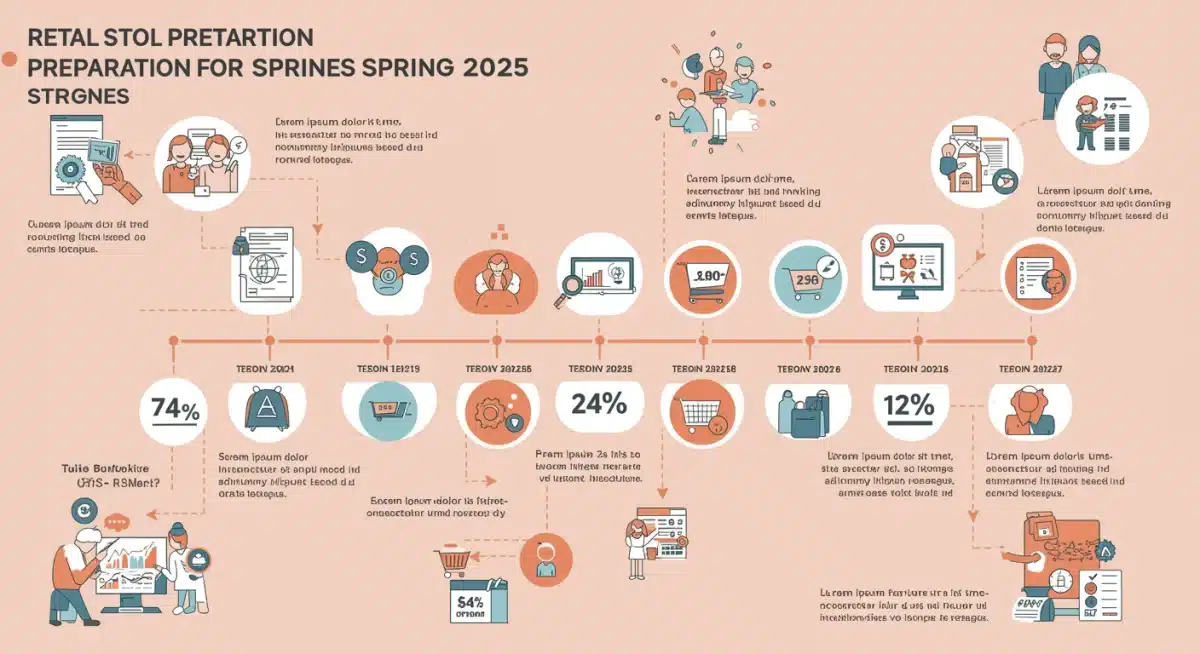
Effective engagement strategies also involve listening to customers, responding to their feedback, and adapting to their evolving preferences in real-time. This iterative process ensures that marketing efforts remain relevant and impactful throughout the spring season.
personalization at scale
Personalization is no longer a luxury but an expectation. By Spring 2025, consumers will expect highly tailored recommendations, offers, and content across all interaction points. This extends beyond simple name recognition to understanding individual preferences, past purchases, and browsing behavior.
- AI-Driven Recommendations: Utilize artificial intelligence to suggest products and content based on individual profiles.
- Segmented Campaigns: Develop distinct marketing messages for different customer segments, addressing their unique motivations.
- Interactive Content: Employ quizzes, polls, and augmented reality (AR) experiences to enhance engagement and personalization.
Moreover, the power of community and user-generated content cannot be underestimated. Encouraging customers to share their experiences and become brand advocates creates authentic connections and builds trust, which are invaluable assets for Spring 2025 and beyond.
optimizing the omnichannel experience
The modern shopper rarely adheres to a single channel. They browse online, visit physical stores, engage on social media, and expect a consistent, seamless experience across all touchpoints. Optimizing the omnichannel experience for spring 2025 shopping behavior is about breaking down silos between departments and creating a unified customer journey.
This involves integrating inventory systems, customer relationship management (CRM) platforms, and marketing automation tools to ensure that customer data flows freely and consistently. A truly optimized omnichannel approach means a customer can start their shopping journey on one channel and seamlessly continue it on another without any friction.
integrating digital and physical retail
The distinction between online and offline shopping continues to blur. For Spring 2025, successful retailers will be those who master the art of integrating these two worlds. This could involve offering buy online, pick up in-store (BOPIS) options, providing in-store technology that enhances the shopping experience, or using physical stores as hubs for online order fulfillment.
- Click-and-Collect Services: Streamline the process for customers to purchase online and pick up in-store.
- In-Store Technologies: Implement smart mirrors, interactive displays, or AR experiences to enrich the physical shopping environment.
- Unified Customer Profiles: Ensure customer data and purchase history are accessible across all channels for personalized service.
Ultimately, a robust omnichannel strategy for Spring 2025 is about putting the customer at the center of every decision. By understanding their preferred pathways and providing consistent, high-quality interactions, retailers can foster loyalty and drive repeat business.
the role of agility and adaptability in 2025 retail
Even with meticulous planning, the retail landscape remains inherently unpredictable. Economic fluctuations, unexpected global events, and rapid shifts in consumer sentiment can all impact even the most well-laid strategies. Therefore, a critical component of optimizing for spring 2025 shopping behavior is building agility and adaptability into every facet of the business.
This means fostering a culture of continuous learning, rapid experimentation, and quick iteration. Retailers must be prepared to pivot their strategies, adjust their inventory, and refine their marketing messages in response to real-time market feedback. Those who remain rigid in their approach risk being left behind.
embracing a test-and-learn mindset
Agility is not just about reacting quickly; it’s about proactively testing new ideas and learning from the outcomes. This involves running A/B tests on website layouts, experimenting with different marketing channels, and piloting new product offerings on a smaller scale before a full launch. The insights gained from these tests can inform broader strategic adjustments.
- Rapid Prototyping: Quickly develop and test new product concepts or service offerings.
- A/B Testing: Continuously optimize website elements, email campaigns, and ad creatives.
- Feedback Loops: Establish mechanisms for collecting and acting on customer and market feedback efficiently.
In essence, adaptability ensures that retailers are not just prepared for Spring 2025, but also resilient enough to navigate the inevitable challenges and seize unforeseen opportunities that may arise. It transforms potential obstacles into pathways for innovation and growth.
| Key Aspect | Strategic Imperative for Spring 2025 |
|---|---|
| Early Planning | Initiate strategic planning now to secure supply chains and prepare marketing campaigns, leveraging the limited optimization window. |
| Consumer Insights | Decipher evolving consumer behaviors, including demand for sustainability and personalized experiences, through deep data analysis. |
| Omnichannel Integration | Create seamless customer journeys by integrating online and offline touchpoints, ensuring consistent experiences across all channels. |
| Agility & Adaptability | Cultivate a test-and-learn mindset to quickly pivot strategies and respond to unforeseen market changes, ensuring resilience. |
frequently asked questions about spring 2025 retail optimization
The current period is crucial due to long lead times required for supply chain management, in-depth consumer trend analysis, and the development of effective marketing campaigns. Proactive planning ensures businesses are well-prepared to meet evolving consumer demands and gain a competitive edge.
Retailers should prioritize the conscious consumer evolution, focusing on sustainability, ethical sourcing, and brand transparency. Additionally, the demand for personalized experiences and seamless omnichannel interactions will continue to shape purchasing decisions.
Data analytics provides predictive insights for forecasting demand, optimizing inventory, and personalizing marketing. It allows retailers to anticipate consumer preferences and market shifts, reducing risks and ensuring the right products are available at the right time.
An optimized omnichannel experience means integrating digital and physical retail seamlessly. This includes offering services like BOPIS (Buy Online, Pick Up In-Store), utilizing in-store technology, and maintaining unified customer profiles across all touchpoints for a consistent and frictionless journey.
The retail environment is dynamic, requiring businesses to be agile and adaptable to respond to unforeseen changes. A test-and-learn mindset, coupled with rapid prototyping and efficient feedback loops, ensures retailers can pivot strategies quickly and seize new opportunities.
conclusion
The window of opportunity to strategically optimize for Spring 2025 shopping behavior is undeniably limited and requires immediate, focused action from retailers. By embracing early planning, meticulously deciphering evolving consumer trends, leveraging advanced data analytics, and crafting compelling omnichannel experiences, businesses can position themselves for significant success. Furthermore, cultivating a culture of agility and adaptability will be paramount in navigating the dynamic retail landscape, ensuring resilience and sustained growth. The time to act is now; proactive preparation is the key to unlocking the full potential of the upcoming spring season.