Voice Commerce Integration: 2025 US Retail Strategy
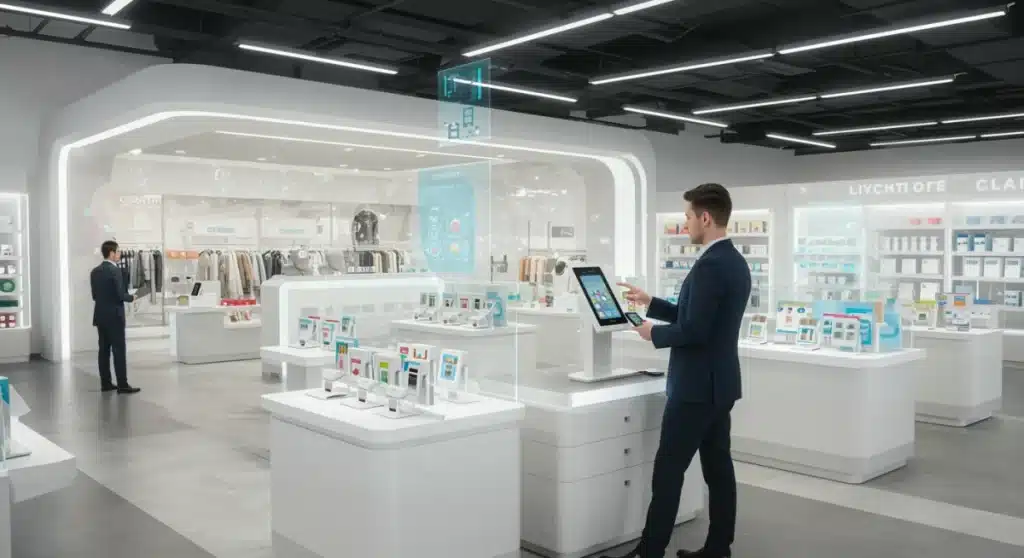
Voice commerce integration is poised to revolutionize US retail, offering a strategic pathway for businesses to secure a significant 10% market share by 2025 through enhanced customer interaction and streamlined purchasing.
The retail landscape is constantly evolving, and by 2025, a significant shift is anticipated with the rise of voice commerce. For US retailers, embracing voice commerce integration isn’t just an option; it’s a strategic imperative to capture a new 10% market share and stay competitive.
Understanding the Voice Commerce Revolution
Voice commerce, often synonymous with conversational commerce, refers to purchasing products or services using voice commands through smart devices. This isn’t just about ordering groceries; it encompasses a wide array of transactions, from reordering household staples to booking travel or even managing subscriptions. The convenience factor is immense, allowing consumers to multitask and complete purchases with minimal effort.
The exponential growth of smart speaker adoption and the increasing sophistication of AI-powered voice assistants are the primary drivers behind this revolution. Consumers are becoming more comfortable interacting with these devices for daily tasks, and shopping is a natural extension of this behavior. Retailers who recognize this trend early and invest in robust voice commerce integration will be well-positioned to reap significant rewards.
The current landscape of voice technology
Today’s voice technology is far more advanced than its predecessors. Natural Language Processing (NLP) has improved dramatically, allowing voice assistants to understand complex commands and nuances in human speech. This means fewer frustrations for users and more successful transactions. Personalization capabilities have also advanced, enabling voice assistants to remember preferences, past purchases, and even anticipate needs.
- AI-driven personalization: Voice assistants can tailor product recommendations based on individual shopping habits.
- Seamless payment integration: Securely link payment methods for quick, voice-activated transactions.
- Multi-device accessibility: Customers can shop from smart speakers, smartphones, and even smart displays.
- Improved natural language understanding: Voice interfaces are more intuitive and less prone to misinterpretation.
The implications for retailers are clear: a well-executed voice commerce strategy can lead to increased customer loyalty, higher conversion rates, and ultimately, a significant boost in market share. Ignoring this trend could mean falling behind competitors who are already investing in these innovative channels.
Identifying the 10% Market Share Opportunity
The projection of capturing a new 10% market share by 2025 through voice commerce is not arbitrary. It’s based on current adoption rates, consumer behavior shifts, and the rapid pace of technological advancement. As voice assistants become more embedded in daily life, a substantial portion of consumer spending will inevitably flow through these channels.
This 10% represents a blend of new customers attracted by the convenience of voice shopping and existing customers who shift a portion of their spending to voice-enabled platforms. It’s also an opportunity to tap into impulse purchases and reorders that might otherwise be forgotten or delayed in traditional e-commerce or brick-and-mortar settings. The sheer accessibility of voice makes it a powerful conversion tool.
Key segments driving voice commerce growth
Several demographic and behavioral segments are particularly ripe for voice commerce adoption. Tech-savvy millennials and Gen Z, already comfortable with digital interactions, are quick to embrace new shopping methods. Busy parents and professionals, who value time-saving solutions, also find voice shopping incredibly appealing. Furthermore, individuals with physical limitations can benefit immensely from hands-free shopping.
Retailers need to understand these segments to tailor their voice commerce strategies effectively. This involves not just making products available via voice, but optimizing the entire experience to meet the specific needs and preferences of these diverse groups. From simplified product discovery to intuitive checkout processes, every step must be designed with the voice user in mind.
Understanding the specific products and services that resonate most with voice users is also crucial. High-frequency, low-consideration purchases like groceries, household goods, and digital content are often ideal candidates for voice-activated reordering. However, as trust and sophistication grow, even more complex purchases could migrate to voice platforms.
Strategic Pillars for Voice Commerce Integration
Successful voice commerce integration requires a multi-faceted approach, focusing on several strategic pillars. It’s not just about enabling voice commands; it’s about creating a seamless, intuitive, and secure shopping journey for the customer. Retailers must consider technology, user experience, data security, and marketing.
The foundation lies in robust technological infrastructure that can handle voice queries, integrate with inventory systems, and process payments securely. Beyond technology, the user experience must be prioritized. Voice interactions are inherently different from visual ones, requiring a unique approach to product discovery and decision-making.
Developing a robust voice-enabled storefront
Creating a voice-enabled storefront involves more than porting your existing e-commerce catalog. It requires optimizing product descriptions for voice search, developing natural language pathways for product discovery, and ensuring that the checkout process is as streamlined as possible. Think conversational flows instead of traditional clicks and scrolls.
- Voice search optimization: Use natural language keywords and phrases customers would speak.
- Conversational UI design: Build intuitive voice menus and prompts.
- Personalized recommendations: Leverage AI to suggest relevant products based on voice history.
- Simplified checkout: Enable quick, secure, voice-activated payment.
Furthermore, integrating with popular voice assistant platforms like Amazon Alexa, Google Assistant, and Apple Siri is paramount. This ensures broad reach and allows customers to shop using their preferred devices. A unified strategy across these platforms can offer a consistent brand experience, regardless of the device used.
Enhancing Customer Experience Through Voice
The true power of voice commerce lies in its ability to significantly enhance the customer experience. By removing friction points and offering unparalleled convenience, retailers can foster deeper loyalty and satisfaction. Voice interactions are often faster and more direct, leading to a more efficient shopping journey.
Imagine a customer realizing they’re out of milk while cooking dinner. With a simple voice command, they can reorder it for next-day delivery without interrupting their task. This level of seamless integration into daily life is what sets voice commerce apart and drives its adoption among busy consumers.
Personalization and proactive engagement
Voice assistants excel at personalization. By analyzing past purchase history and preferences, they can proactively suggest reorders or recommend new products that align with customer needs. This proactive engagement transforms the shopping experience from a reactive search to a helpful, anticipatory interaction.
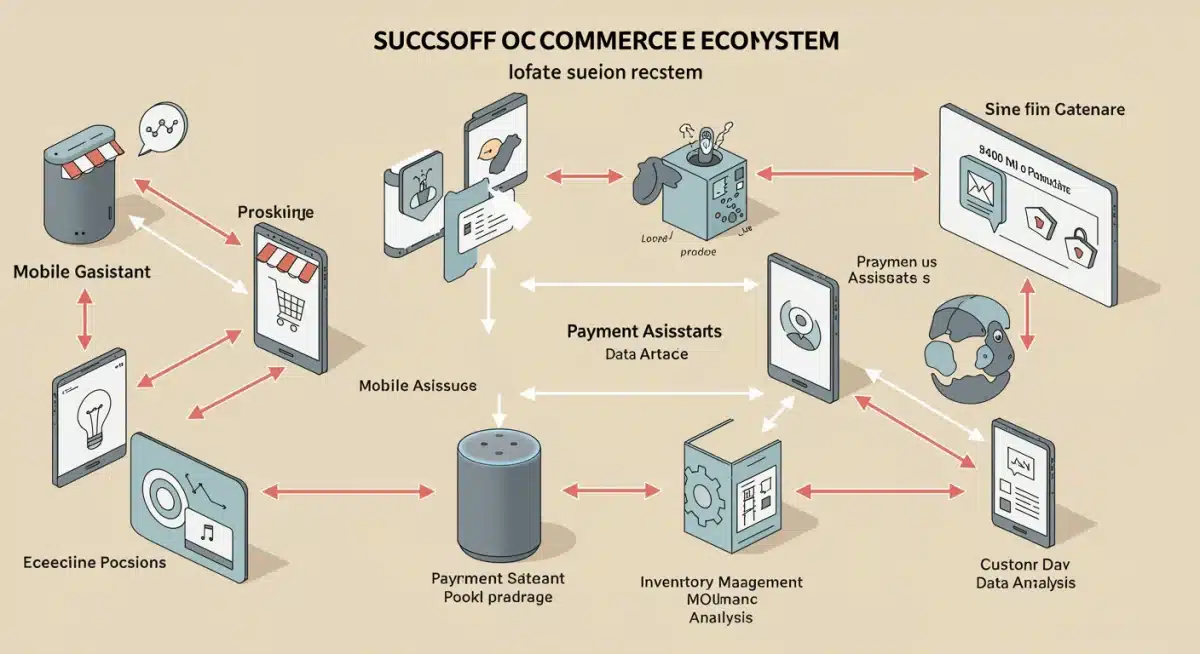
For example, a voice assistant could remind a customer that their favorite coffee is running low and offer to reorder it with a single confirmation. This not only makes shopping easier but also adds a layer of perceived value, as the retailer appears to understand and cater to individual needs.
- Contextual recommendations: Offer products based on real-time situations or past behavior.
- Easy reordering: Streamline the process for frequently purchased items.
- Instant customer support: Provide quick answers to product questions via voice.
- Hands-free convenience: Shop while performing other tasks, enhancing efficiency.
Beyond purchasing, voice can also enhance post-purchase support, allowing customers to track orders, initiate returns, or get answers to FAQs using simple voice commands. This omnichannel approach, integrating voice across the entire customer journey, builds trust and reinforces brand loyalty.
Overcoming Challenges and Ensuring Security
While the opportunities are vast, voice commerce integration presents its own set of challenges that retailers must address proactively. Data privacy and security are paramount, as customers entrust sensitive payment information to voice assistants. Ensuring robust encryption and secure protocols is non-negotiable.
Another challenge lies in the inherent limitations of voice interaction. Visual cues often aid in product discovery and comparison, which are absent in pure voice environments. Retailers must compensate for this by providing clear, concise, and descriptive product information, and by offering intuitive conversational flows that guide the user effectively.
Addressing privacy concerns and building trust
Consumer trust is the bedrock of any successful commerce channel, and voice is no exception. Retailers must be transparent about how voice data is collected, stored, and used. Clear privacy policies and opt-in/opt-out options are essential. Implementing multi-factor authentication for sensitive transactions can also bolster security and consumer confidence.
Furthermore, educating consumers about the security measures in place can help alleviate anxieties. Demonstrating a commitment to protecting customer data will differentiate retailers in a competitive landscape and encourage greater adoption of voice shopping. The perception of security is almost as important as the reality.
- Robust data encryption: Protect all personal and payment information.
- Clear privacy policies: Communicate how data is used and stored.
- Multi-factor authentication: Add extra layers of security for purchases.
- User education: Inform customers about security features and practices.
Beyond security, retailers must also perfect the user experience to minimize frustration. This includes optimizing for accents, varied speech patterns, and complex product names. Continuous testing and iteration based on user feedback will be crucial for refining the voice commerce interface and ensuring a smooth, error-free experience.
Measuring Success and Future Outlook
To effectively capture a 10% market share through voice commerce integration, retailers need clear metrics to measure success and a forward-looking perspective on future developments. Key performance indicators (KPIs) must be established to track adoption rates, conversion rates, average order value, and customer satisfaction specific to voice channels.
Beyond traditional e-commerce metrics, retailers should also monitor voice-specific interactions, such as the success rate of voice commands, the number of voice-initiated reorders, and the usage of voice for customer service inquiries. These insights will be invaluable for optimizing the voice commerce strategy and identifying areas for improvement.
Leveraging analytics for continuous improvement
Data analytics will play a critical role in refining the voice commerce experience. By analyzing conversational data, retailers can identify common frustrations, popular product queries, and areas where the voice interface can be made more intuitive. This continuous feedback loop is essential for staying ahead in a rapidly evolving technological landscape.
The future of voice commerce is likely to see even deeper integration with augmented reality (AR) and virtual reality (VR), creating immersive shopping experiences. Imagine verbally asking an AR assistant to show you how a new piece of furniture would look in your living room, then purchasing it with a simple voice command. The possibilities are endless.
- Track voice conversion rates: Monitor how many voice interactions lead to sales.
- Analyze voice command success: Identify and improve misunderstood commands.
- Gather user feedback: Implement surveys and direct feedback for optimization.
- Explore AI advancements: Stay updated on NLP and voice recognition improvements.
The retailers who embrace innovation, prioritize the customer experience, and continuously adapt their voice commerce strategies will be the ones that successfully capture and retain that new 10% market share by 2025 and beyond. It’s an exciting frontier in retail, offering unprecedented opportunities for growth and customer engagement.
| Key Point | Brief Description |
|---|---|
| Market Opportunity | US retailers can capture a new 10% market share by 2025 through voice commerce, driven by convenience and AI advancements. |
| Strategic Pillars | Successful integration requires robust technology, intuitive UX design, secure payment systems, and effective voice search optimization. |
| Customer Experience | Voice enhances shopping through personalization, proactive engagement, hands-free convenience, and streamlined reordering processes. |
| Challenges & Security | Addressing data privacy, ensuring secure transactions, and optimizing for voice’s unique limitations are crucial for trust and adoption. |
Frequently Asked Questions About Voice Commerce
Voice commerce involves making purchases using voice commands through smart devices. It’s crucial for US retailers because it offers a new channel to reach customers, enhance convenience, and tap into a growing market of consumers adopting voice technology, potentially capturing a 10% market share by 2025.
Retailers must implement robust data encryption, clear privacy policies, and multi-factor authentication for sensitive transactions. Transparency about data handling and educating customers on security features also build trust, which is essential for widespread adoption and safeguarding consumer information.
Voice commerce offers unparalleled convenience, allowing hands-free shopping and multitasking. It enables highly personalized product recommendations, proactive reordering suggestions, and instant customer support, leading to a more efficient, engaging, and satisfying shopping journey for consumers.
High-frequency, low-consideration purchases typically perform best with voice commerce. This includes items like groceries, household staples, and digital content. As technology advances and consumer trust grows, more complex and higher-value purchases are also expected to shift towards voice-activated platforms.
Success can be measured through various KPIs, including voice conversion rates, average order value from voice channels, customer satisfaction scores, and the success rate of voice commands. Analyzing conversational data provides insights for continuous optimization and understanding user behavior in the voice environment.
Conclusion
The trajectory for retail in the US is undeniably heading towards greater integration of voice technology. For retailers looking to thrive and capture a significant portion of the evolving market, a proactive approach to voice commerce integration is not merely advantageous but essential. By focusing on robust technological infrastructure, an intuitive user experience, stringent security measures, and continuous analytical refinement, businesses can unlock substantial growth. The 10% market share anticipated by 2025 represents a tangible reward for those who strategically embrace this conversational future, solidifying their position in a competitive and dynamic retail landscape.